 How-to
How Do You Safely Remove Snow From Your Roof?
Last Updated: October 26, 2026
Quick Summary
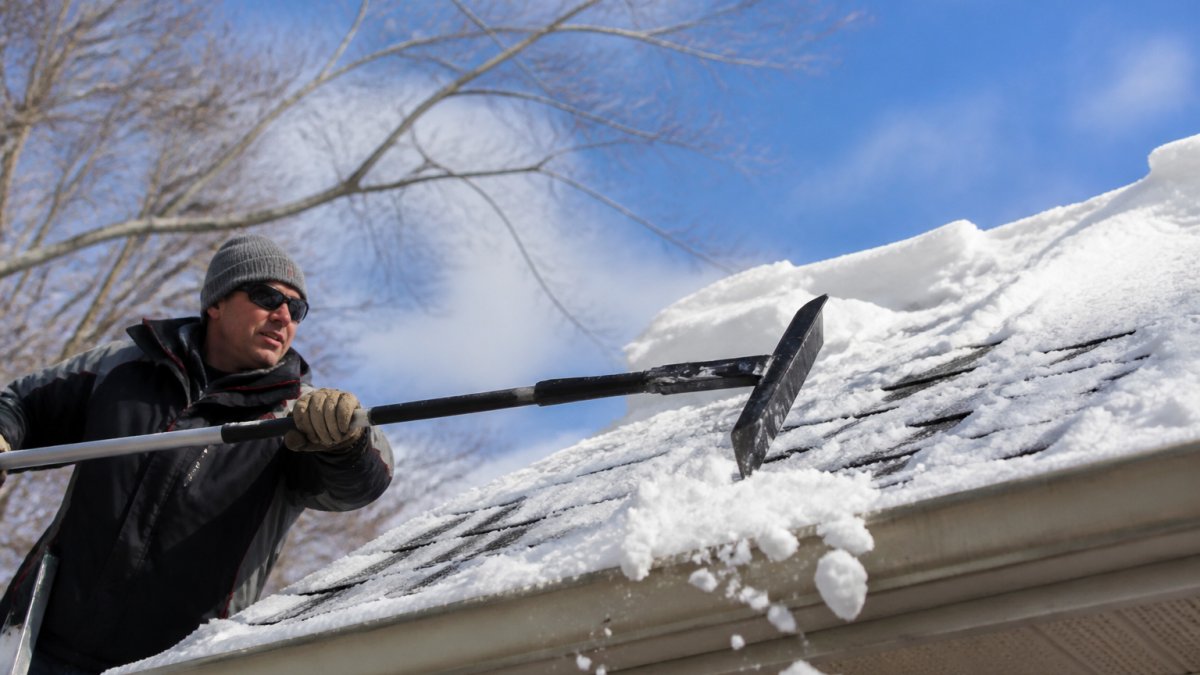
To safely remove snow from your roof, use a long-handled plastic roof rake from the ground and pull the snow down in short strokes, starting at the eaves and leaving the top alone. Stay off ladders and pitched roofs, keep people and pets out of the fall zone, and call a professional once snow passes roughly two or three feet or you see sagging, cracks, or creaking.
- Roof snow becomes a real concern once settled snow passes roughly two or three feet, or one foot of wet, heavy snow.
- Wet snow can weigh several times more than dry powder for the same volume.
- A roof rake is the safest tool because you never leave the ground.
- Use plastic tools, since metal shovels and rake heads scratch shingles and can tear flashing.
- On a flat roof, clear a path to the drains first, because ponding water is far heavier than snow.
Table of Contents
- When to Remove Snow From Roof: Load Thresholds That Matter
- How to Use a Roof Rake: A Ground-Based Removal Walkthrough
- Choosing the Right Tools: Plastic vs. Metal and What to Avoid
- Snow Removal From Flat Roof: Safe Access and Drainage
- Pitched Roofs and Ladder Safety: What Not to Do
- Ice Dams: Prevention Before Removal
- Professional Roof Snow Removal: When to Stop and Call
- Book a Roof Inspection Before the Next Storm
- Frequently Asked Questions
When to Remove Snow From Roof: Load Thresholds That Matter
Learning how to safely remove snow from roof surfaces starts with one question: is it actually time to act?
Here's the part most guides skip. Snow weight depends on water content, not depth alone. A NOAA explanation of snow water equivalent shows that wet snow can weigh several times more than dry powder for the same volume. That single fact changes every decision you make about when to grab a rake.
How Snow Type Changes the Weight on Your Roof
Not all snow loads the roof the same way. Here is how the main types compare:
- Dry powder: light, blows off easily, low risk at moderate depth
- Wet snow: heavy, sticks, packs down, the real threat
- Compacted snow: the worst case, dense and stubborn, hard to move
A roof built to code carries a designed snow load. When wet snow stacks up and refreezes, that margin shrinks fast. Watch the forecast, not just the pile.
Warning Signs of Structural Stress
Stop guessing and look for physical clues. Sagging rooflines, new cracks in drywall, doors that suddenly stick, and creaking sounds all point to stress.
If you spot staining or soft spots near the eaves, our guide to early signs of roof decking water damage walks through what hidden moisture looks like before it becomes a repair bill.
Here are the snow depths and warning signs that tell you when removal is actually needed.
| Item | Value | Note |
|---|---|---|
| Settled snow depth | Roughly two or three feet | Point at which roof snow becomes a real concern |
| Wet, heavy snow | One foot | Different story from the same depth of powder |
| Light, dry powder | Six inches | Rarely a problem |
| Wet snow vs. dry powder | Several times more weight | Same volume, far heavier |
| Warning signs | Sagging rooflines, new drywall cracks, sticking doors, creaking | Any of these means act now and call a professional |
How to Use a Roof Rake: A Ground-Based Removal Walkthrough
A roof rake is the safest tool for the job because you never leave the ground. The Centers for Disease Control and Prevention guidance on fall prevention is blunt about ladders and roofs: falls are a leading cause of home injury, and snow makes every surface worse.
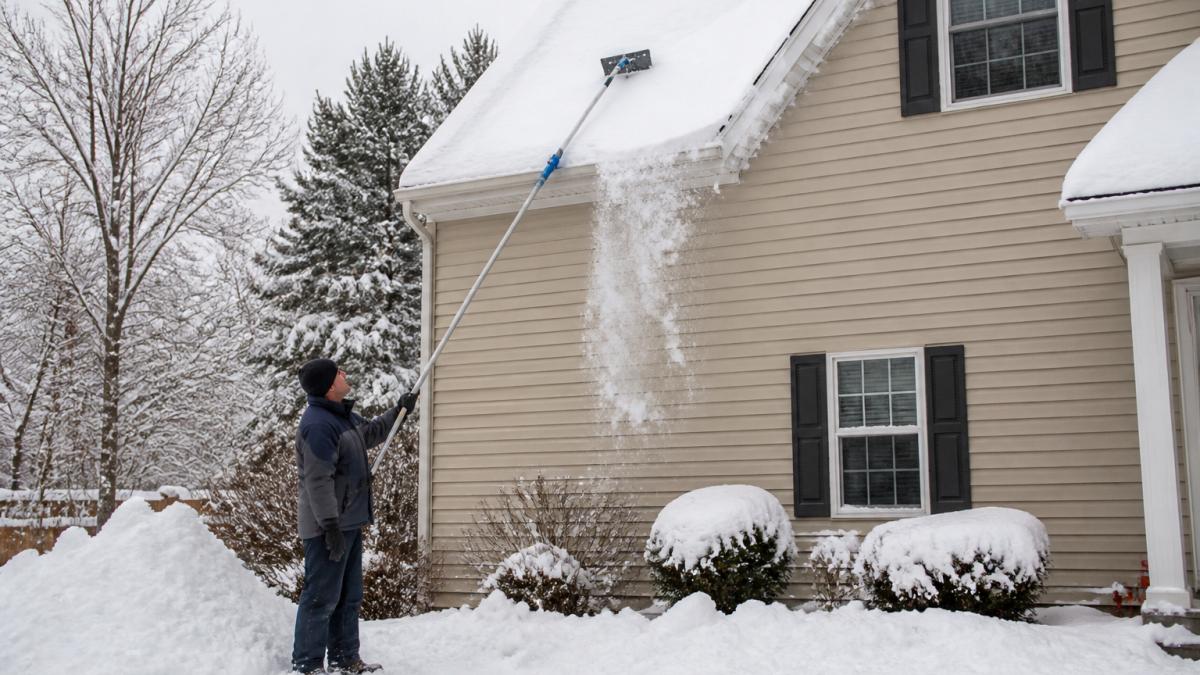
- Assess the area first. Look up for power lines, and check what's below.
- Set your fall zone. Mark where snow will land and keep people and pets out.
- Stand clear of the drop line. Never stand directly under the edge you're clearing.
- Pull, don't push. Start at the eaves and drag snow down in short strokes.
- Work in sections. Clear the lowest few feet first, then move along the edge.
- Leave the top alone. You don't need a bare roof, just relief on the load.
- Take breaks. Long-handled rakes are awkward and tiring.
Planning Your Fall Zone and Clearing the Area Below
Falling snow and ice are heavy. Before you start, clear the ground where snow will land and move anything breakable. Keep kids and pets inside. If you're nervous about any roof access, our safe roof inspection walkthrough covers the risks before you ever consider climbing.
Choosing the Right Tools: Plastic vs. Metal and What to Avoid
Use plastic tools. Metal shovels and metal rake heads scratch shingles, catch on roofing materials, and can tear flashing. A plastic roof rake with a long handle and a soft-bristle broom for lighter work covers almost every situation.
What to avoid:
- Metal snow shovels on the roof surface: they gouge shingles
- Climbing onto a pitched roof: the number one fall hazard
- Propane heaters or torches to melt snow: fire risk and shingle damage
The right tool removes snow. The wrong one removes shingles.
Snow Removal From Flat Roof: Safe Access and Drainage
Flat roofs behave differently from pitched roofs under snow, and the failure mode is different too. On a pitched roof, snow slides and the load sheds. On a flat roof, snow sits, compacts, and holds meltwater. That combination is why flat-roof snow removal is a drainage problem as much as a weight problem.
Why Flat Roofs Accumulate Risk Faster
A few mechanisms drive flat-roof risk:
- No shedding. Snow stays where it lands, so depth builds evenly and compacts under its own weight.
- Ponding. Meltwater that cannot reach a drain pools in low spots, and standing water is far heavier than the same volume of snow.
- Drift. Wind pushes snow against parapet walls and rooftop equipment, creating deep drifts in spots you cannot see from the ground.
That is why the priority order on a flat roof is drains first, snow second.
Safe Access Options
Walking a snow-covered flat roof is a fall hazard even without a pitch. Use one of these approaches instead:
- Interior roof hatch access with a spotter and a fall-arrest harness rated for the work.
- Ground-based roof rake from the edge for the first few feet, keeping your body weight off the roof.
- Professional service for full-surface clearing, especially on commercial buildings with HVAC units, skylights, and parapets.
Never lean a ladder against a snow-loaded gutter or parapet. Never work alone. Never step onto a roof surface you cannot see.
Protecting Drains, Scuppers, and Vents
Before clearing snow, locate and protect the drainage points:
- Clear snow and ice from drain strainers and scuppers so meltwater has somewhere to go.
- Keep roof vents and exhaust stacks clear so the structure and HVAC system can breathe.
- Do not pile removed snow against parapets, over drains, or around rooftop equipment, you are just relocating the load and the blockage.
Residential vs. Commercial Flat Roofs
A residential flat roof over a porch or addition is usually a manageable DIY rake job from the ground. A commercial flat roof with HVAC curbs, skylights, and multiple drains is a maintenance task for a trained crew with fall protection. Property managers should schedule flat-roof snow checks as part of winter maintenance rather than treating them as a weekend project.
When to Stop and Call
Stop flat-roof work and call a professional if you see:
- Sagging or deflection in the roof deck
- Ponding water that is not draining after snow removal
- Cracks in parapet walls or flashing
Flat-roof snow removal is not about getting the roof bare. It is about keeping drains open, keeping the load within design limits, and keeping people off a surface they cannot see.
Pitched Roofs and Ladder Safety: What Not to Do
Don't climb a pitched roof in winter. That's the short version. Ladders slip on ice, snow hides footing, and a fall from even a low eave can be serious. The Occupational Safety and Health Administration ladder safety guidance applies to pros for a reason: ladders are unforgiving.
What not to do:
- Lean a ladder against a snow-covered gutter
- Stand on the top rungs to reach higher
- Work alone with no one spotting you
If the snow is beyond rake reach, that's your signal to call a professional.
Ice Dams: Prevention Before Removal
Ice dams are the part of roof snow removal where the wrong move does the most damage. An ice dam is a ridge of ice at the eaves that traps meltwater behind it, forcing water up under shingles and into the deck.
The key distinction most guides blur: removing snow from a roof is not the same as removing ice. Snow is light and can be pulled down with a rake. Ice is dense, bonded to the roofing, and unforgiving.
How an Ice Dam Actually Forms
The sequence is predictable:
- Heat escapes the attic and warms the upper roof deck.
- Snow on that warm section melts into water.
- The water runs downslope to the cold eave and refreezes.
- A growing ice ridge backs water up under the shingles above it.
That is why attic air sealing and insulation matter more than any tool. A cold roof deck with good ventilation keeps the whole surface below freezing, so meltwater never gets a chance to refreeze at the edge.
When Not to Chip or Apply Chemicals
This is stop-work guidance:
- Do not chip at an ice dam with a hammer, axe, or ice pick. You will crack shingles, puncture flashing, and create a leak that did not exist before.
- Do not apply rock salt or calcium chloride directly to shingles. These chemicals are corrosive to fasteners and metal flashing and can stain or degrade roofing materials.
- Do not walk out onto an icy eave to reach the dam. The ice you are standing on is the hazard.
If an ice dam is actively backing water into the house, the safe move is to call a roofing professional, not to attack the ice yourself.
What You Can Safely Do
- Pull snow off the lower few feet of roof with a roof rake to reduce the meltwater supply feeding the dam.
- Keep gutters and downspouts clear so meltwater that does escape can drain away from the foundation.
- Use a roof rake from the ground, never a ladder on ice.
Prevention beats removal every time, but when a dam has already formed, the correct response is restraint plus a call, not a chisel.
Professional Roof Snow Removal: When to Stop and Call
Stop and call a professional when any of these apply:
- Snow depth passes the two-to-three-foot threshold
- You see sagging, cracks, or creaking
- Ice dams are forming and water is backing up
- The roof is steep, tall, or hard to reach
Professional roof snow removal exists for exactly these moments. For a broader prevention plan, our winter roof prep checklist helps you get ahead of the next storm.
Book a Roof Inspection Before the Next Storm
Snow reveals problems a dry roof hides. You can also read about the benefits of professional roof inspection. If you're weighing the value, you can review what a roof inspection costs before you commit.
Don't wait for a sagging roofline to force the issue.
Winter snow is patient, and roofs fail quietly until they don't. Certified Roofing Solutions Inc. provides residential and commercial roofing services in Marietta, Alpharetta, Dunwoody, and Johns Creek.
Frequently Asked Questions
How much snow is too much for a roof?
Roof snow concerns depend on the roof and conditions. Treat sagging, creaking, or a cracked ceiling as a reason to seek professional advice.
When should you hire a professional to remove roof snow?
Consider seeking professional advice if you see structural warning signs such as sagging rooflines or interior cracks, or if you are unsure about your roof's condition.
Can you remove snow from a roof safely from the ground?
Whether snow can be removed safely from the ground depends on the roof and conditions. Avoid climbing onto a ladder or roof to reach snow if you are unsure about safety.
How do you prevent ice dams while removing roof snow?
Ice-dam prevention and removal depend on the roof and conditions. If ice has built up, avoid attempting removal if you are unsure how to do so safely.