 How-to
How Long an Asphalt Shingle Roof Replacement Takes
Last Updated: November 12, 2026
Quick Summary
Most asphalt shingle roof replacement projects take one to three days of actual work, based on an average-sized home with a single layer of old shingles. A typical roof takes roughly 16 to 30 labor hours spread across a crew, and a three-person crew can finish many homes in one to two days.
- A three-person crew can strip roughly 20 to 30 squares of single-layer asphalt shingles in a morning.
- Two shingle layers cut the tear-off pace by roughly half because each layer must be separated and loaded out.
- A complex roofline can add a full day even when the square count is modest.
- Rain is the number one schedule killer and can push a two-day job into three.
- A roof can be replaced in one day only with a simple roofline, single layer, good weather, and a full crew.
Table of Contents
- How Long an Asphalt Shingle Roof Replacement Takes: The Short Answer
- How Many Hours Does It Take to Replace a Roof?
- The Roof Replacement Process, Stage by Stage
- What Changes the Timeline: Roof Size, Pitch, and Material
- Can a Roof Be Replaced in One Day?
- Weather Delays and How the Roof Replacement Process and Insurance Connect
- How to Prepare Before the Crew Arrives
- Booking Your Roof Replacement With Certified Roofing Solutions Inc.
- Frequently Asked Questions
How Long an Asphalt Shingle Roof Replacement Takes: The Short Answer
Most asphalt shingle roof replacements take one to three days of actual work. That is the honest answer, and it holds for the average-sized home with a single layer of old shingles. Homeowners should plan for a longer window than the work itself, because tear-off, inspections, and weather can stretch the calendar. Below, we break down exactly where the hours go, what slows a job down, and how to tell whether your project is running long.
Asphalt shingle roof replacement is the full removal of an existing shingle roof and the installation of a new shingle system, including underlayment, flashing, and ridge cap. The work itself is fast. The project around it is not.
How Many Hours Does It Take to Replace a Roof?
A typical asphalt shingle roof takes roughly 16 to 30 labor hours spread across a crew. A three-person crew working a normal day can finish many homes in one to two days.
Here is the part that matters. Crew size changes the calendar, not the total hours.
- A small, simple roof: about one long day with a full crew
- An average home with one shingle layer: one to two days
- A larger or steeper roof: two to three days
- Multiple shingle layers or decking repairs: three days or more
The Asphalt Roofing Manufacturers Association publishes guidance on shingle system components, which helps explain why installation is more than laying shingles.
Here is how the calendar shifts with roof size and complexity, assuming a full crew and a single shingle layer.
| Roof type | Time to replace |
|---|---|
| Small, simple roof | About one long day with a full crew |
| Average home, one shingle layer | One to two days |
| Larger or steeper roof | Two to three days |
| Multiple layers or decking repairs | Three days or more |
| Typical labor hours | Roughly 16 to 30 labor hours |
The Roof Replacement Process, Stage by Stage
Every roof replacement process follows the same basic order. Skip a stage and the new roof will not last. What most guides leave out is where the hours actually go. Below is a practical, stage-by-stage schedule for a typical asphalt shingle replacement on an average-sized home with a single layer of old shingles, a crew of three to four, a roof pitch between 4:12 and 6:12, and no major decking repairs.
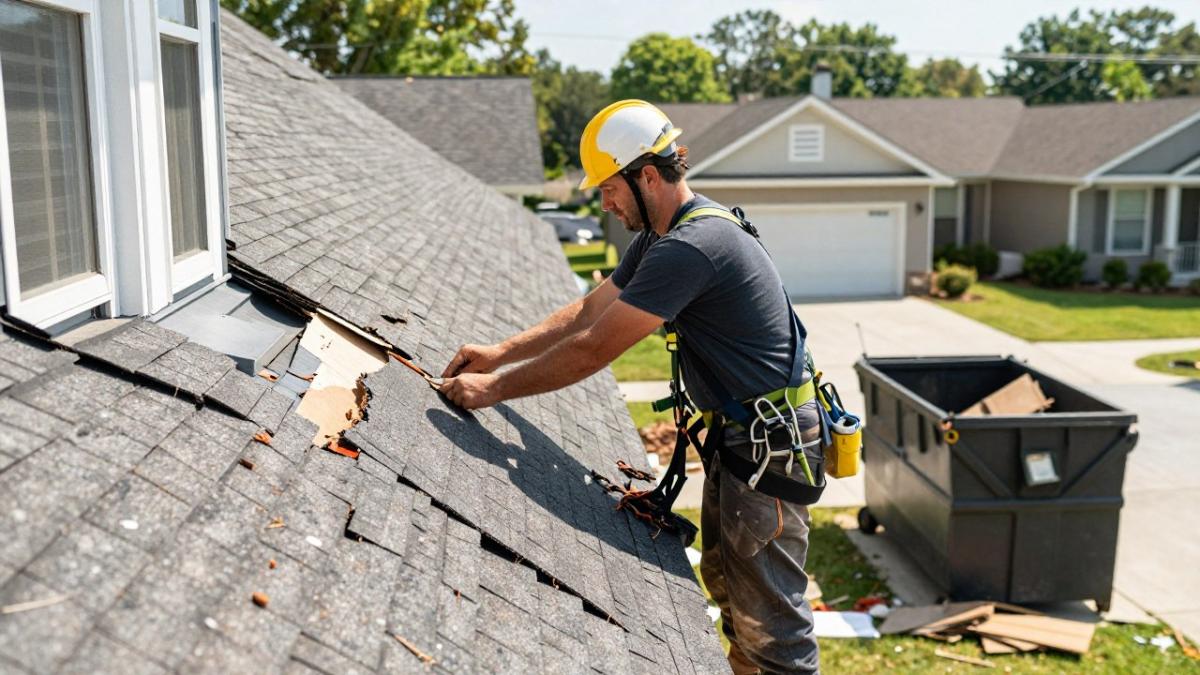
Day 1 Morning: Site Setup and Tear-Off
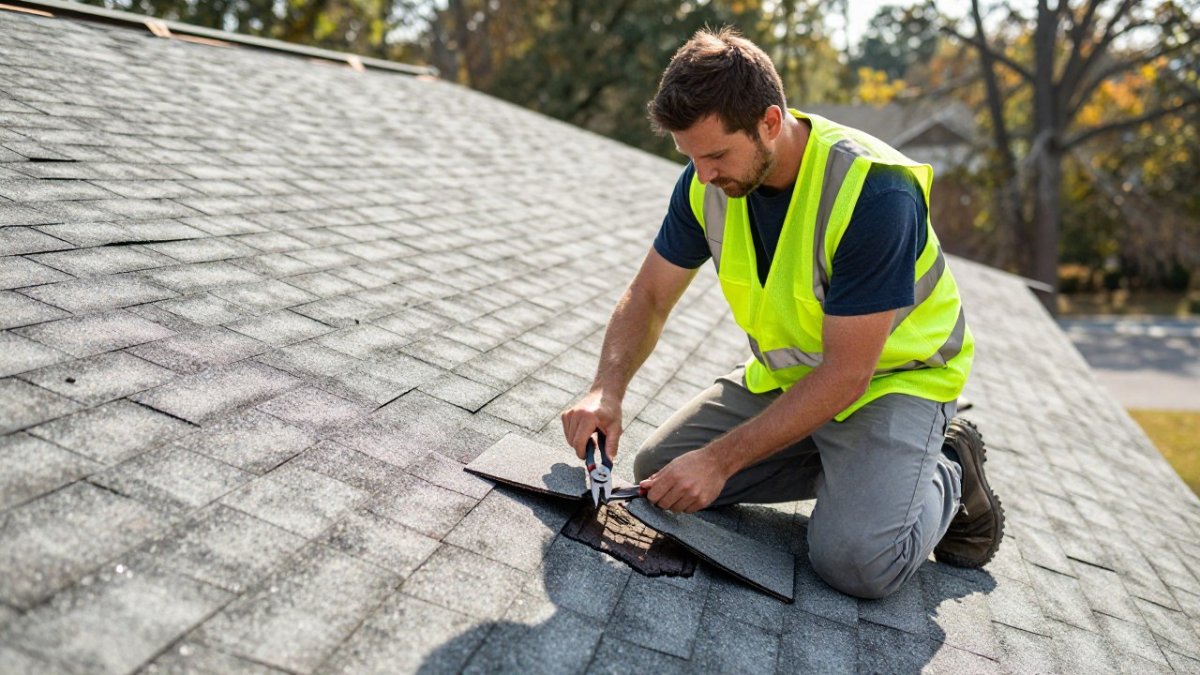
Crews arrive early to stage materials, set ladders and fall protection, and place tarps over landscaping and the driveway. Tear-off usually begins within the first hour. A three-person crew can strip roughly 20 to 30 squares of single-layer asphalt shingles in a morning; a square covers 100 square feet of roof surface. Two layers cut that pace by roughly half because each layer must be separated and loaded out.
Watch out: if the crew starts tearing off before confirming the dumpster is on site and the decking inspection plan is set, debris piles up and the job stalls.
Day 1 Midday: Decking Inspection and Repairs
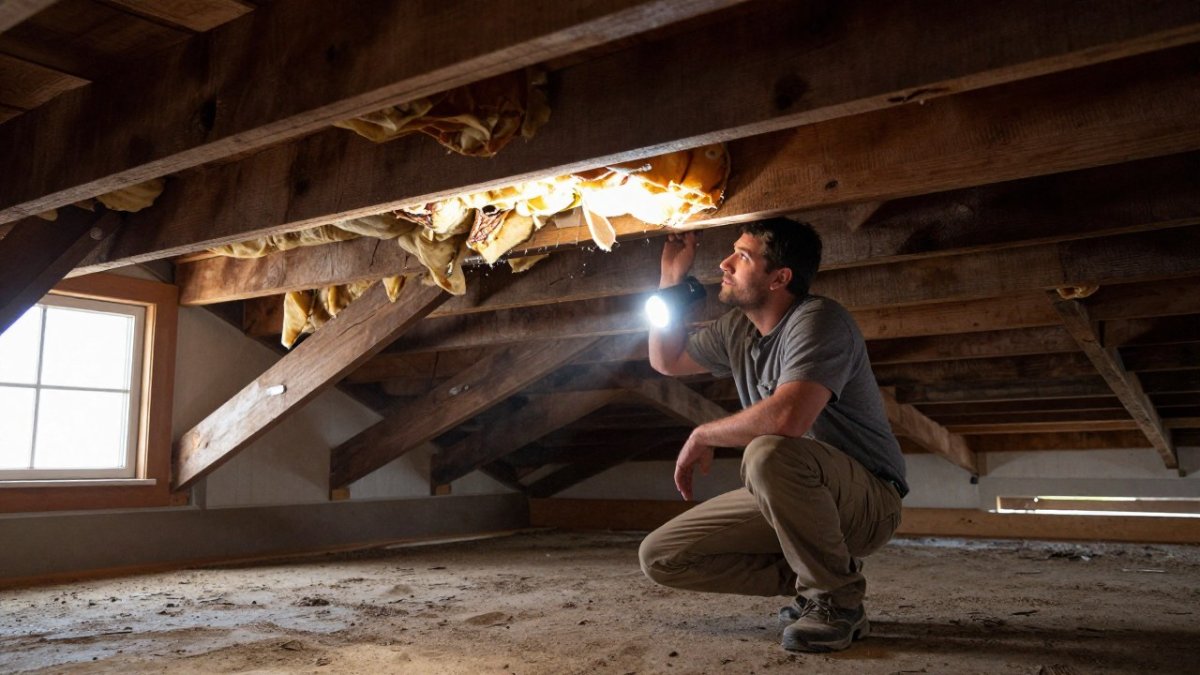
Once the old shingles are off, the crew walks the decking and probes for soft spots, rot, and old leak damage. Good decking is renailed or resecured to code. Damaged sheathing is marked, cut out, and replaced before anything goes back on. This is the stage most likely to extend the calendar, because hidden damage is not visible until tear-off. A common pattern is a handful of small repairs that add a few hours; widespread rot can add a full day or more.
Day 1 Afternoon: Underlayment and Flashing
Underlayment goes down over the decking, followed by ice and water shield in valleys and along eaves where local code requires it. Flashing is installed at valleys, chimneys, sidewalls, and edges. This stage is where careful crews slow down, because flashing mistakes cause leaks, not shingles. A typical crew finishes underlayment and most flashing in an afternoon on a simple roof; complex rooflines push this into Day 2.
Day 1 Late Afternoon or Day 2: Shingle Installation
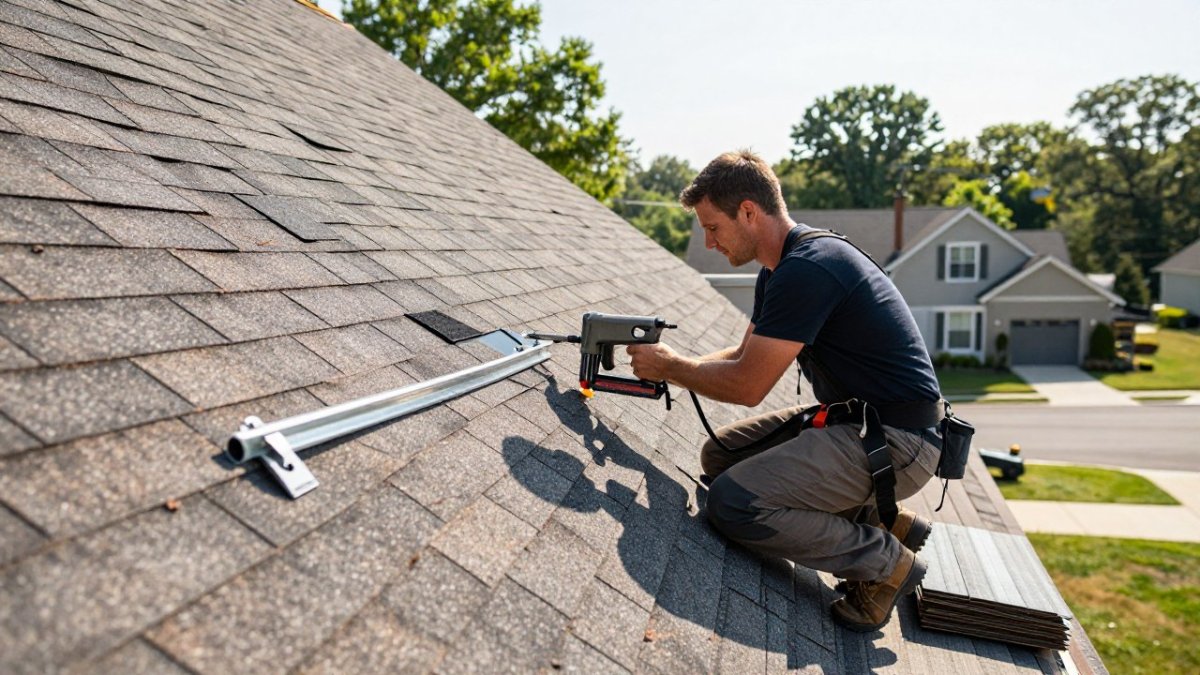
Shingles go down from the bottom edge upward, course by course, with ridge cap finished last. A crew of three to four can install roughly 20 to 30 squares of asphalt shingles in a full day on a straightforward roof. Steep pitch, dormers, and multiple valleys slow the pace. Most average homes are shingled by the end of Day 1 or midway through Day 2.
Day 2: Cleanup and Final Inspection
If you want the fuller walkthrough, read our guide to understanding the roofing process from start to finish.
What Changes the Timeline: Roof Size, Pitch, and Material
Roof size is the biggest single factor, but it only makes sense alongside the assumptions behind the estimate. The one-to-three-day figure assumes an average-sized home of roughly 1,700 to 2,200 square feet of roof surface, a single layer of old shingles, a pitch between 4:12 and 6:12, a crew of three to four, and no major decking repairs. Change any of those and the calendar moves.
Roof Size and Squares
Roofers measure work in squares, where one square equals 100 square feet of roof surface. A 1,500 square foot home might have 15 to 20 squares of roof; a 3,000 square foot home with a complex roofline can reach 35 to 45 squares.
Pitch and Complexity
Pitch matters as much as size. A low-slope roof is faster and safer to walk; a steep roof above 8:12 slows every step and often requires extra fall protection and staging. Roof complexity adds time too: dormers, valleys, multiple chimneys, and skylights all mean more cutting, flashing, and detail work. A complex roofline can add a full day even when the square count is modest.
Crew Size and Experience
Crew size changes the calendar, not the total labor hours. A two-person crew may take twice as long as a four-person crew on the same roof. Ask your contractor how many workers will be on site and whether the same crew stays for the whole job.
Material Comparisons
If cost is on your mind while you weigh size and material, our breakdown of average asphalt shingle roof replacement cost covers what drives the number.
Weather Interruptions
Rain is the number one schedule killer. Crews cannot tear off a roof and leave the decking exposed to water, so work stops before storms arrive. Rain can interrupt a roof replacement and push the schedule back, so weather often becomes the main source of delay.
Work Time Versus Total Lead Time
The installation duration is not the same as the total project lead time. Before work begins, the project may include inspection, permitting, material ordering and delivery, and scheduling. Those steps can add time depending on local permitting and supplier availability. A one-day installation does not mean a one-day project from first call to final inspection.
Signs a Project Is Running Long
Some delays are normal and expected: weather, hidden decking damage, and permit timing. Ask your contractor what caused the delay, whether it affects the completion date, and what the revised schedule looks like. A longer project is not automatically a sign of poor performance, but unclear answers are worth noting.
Can a Roof Be Replaced in One Day?
Yes, a roof can be replaced in one day, but only under tight conditions. The home needs a simple roofline, a single shingle layer, good weather, and a full crew.
Most one-day roofs are smaller homes with easy access. If your roof has steep sections, multiple layers, or visible decking damage, one day is not realistic. Any contractor who promises it without looking at your roof is guessing.
Weather Delays and How the Roof Replacement Process and Insurance Connect
Rain is the number one schedule killer. Crews cannot tear off a roof and leave the decking exposed to water, so work stops before storms arrive. A single rainy afternoon can push a two-day job into three.
Insurance adds its own timeline. If your replacement is part of a storm claim, the roof replacement process and insurance approval have to line up. Adjuster inspections and claim approvals can add days before work even starts. Our guidance on protecting your roof from weather explains how to prepare between storms.
How to Prepare Before the Crew Arrives
Preparation is where homeowners save the most time. A ready property means the crew starts working instead of waiting.
- Move vehicles out of the driveway
- Clear outdoor furniture, grills, and planters from the perimeter
- Trim branches away from the roof edge
- Cover attic items under the work area
- Secure pets and keep kids inside during work hours
- Confirm material delivery timing with your contractor
Moving patio and lawn items is the step most people forget. Our tips on moving outdoor furniture before roof installation cover what to shift and where to put it.
Booking Your Roof Replacement With Certified Roofing Solutions Inc.
The best way to control your timeline is to start with a clear scope. Hidden damage is a common source of surprise delays, so it helps to have the decking and flashing checked before work begins.
Our team handles residential and commercial roofing, including architectural shingle and metal installations, with work tailored to each property. If you are ready to schedule, you can review our residential roofing installation services and book an appointment.
A roof replacement is a short job with a long tail of preparation, weather, and inspection. Getting the timeline right starts with an honest assessment of your roof.
Frequently Asked Questions
How long does it take for roofers to replace shingles?
For a typical asphalt shingle roof, most crews finish in one to three days. A smaller, simple roof on an average-sized home can wrap up in a single day, while a larger or steeper roof with multiple layers to tear off can stretch to three or four days. The asphalt shingle roof replacement timeline depends on roof area, pitch, the number of existing layers, and weather. Ask your contractor for a written schedule before work begins so you know what to expect.
Can a roof be replaced in one day?
Sometimes, yes. A one-day roof replacement is realistic for a smaller, low-slope roof with a single layer of asphalt shingles and no decking repairs. Larger homes, steep roof slopes, multiple shingle layers, or hidden decking damage usually push the job past one day. A crew that promises one day on a complex roof is worth questioning. Get the scope in writing, including tear-off, underlayment, and cleanup, so the timeline matches the actual work.
What can delay an asphalt shingle roof replacement?
Rain is the most common delay, since shingles and underlayment cannot be installed on a wet deck. Other delays include discovering rotted roof decking that needs replacement, material delivery arriving late, and unexpected flashing repairs around chimneys or skylights. Crews also pause in high winds or extreme heat for safety. A reputable roofer builds a weather buffer into the schedule and tells you upfront how hidden damage will be handled before costs change.
Does insurance affect how long a roof replacement takes?
It can. The roof replacement process insurance side runs alongside the physical work: an adjuster inspection, claim approval, and material selection can add days or weeks before the crew starts. Once work begins, the installation itself usually takes one to three days. A contractor who helps document storm damage and communicates with your insurer can keep the claim moving. Ask how they handle supplemental claims if hidden damage turns up mid-project.