 How-to
Cost of Landscaping Restoration After Roof Work in Georgia
Last Updated: November 11, 2026
Quick Summary
Landscaping restoration after roof work in Georgia is usually priced per square foot, with costs driven by the affected area, soil compaction, debris hauling, mature trees and access. Because the scope varies so much, get a site-specific written estimate itemized into labor, materials and disposal rather than relying on any online figure.
- Compaction from heavy equipment is often the hidden damage that costs most to fix correctly.
- Reseeding over compacted soil without aerating first commonly causes the lawn to fail within a season.
- Photograph the yard before work begins so the baseline condition is documented for any claim.
- Confirm the roofing contract includes site-protection, cleanup and damage-repair language, not just debris removal.
- Do not sign a final release until you have a written repair estimate from a landscape contractor.
Table of Contents
- What Landscaping Damage Usually Looks Like After Roof Work
- Average Cost of Landscaping Restoration per Square Foot
- Factors That Influence Restoration Pricing
- How Roofing Contractors Are Responsible for Landscaping Damage
- How to Get a Reliable Landscaping Repair Estimate
- Soil Compaction and Equipment Damage Assessment
- Property Protection Checklist for Your Next Roof Project
- Frequently Asked Questions
Storm season hits Georgia hard, and when a roofer's crew drags ladders, dumps shingles and rolls equipment across a lawn, the yard often pays the price. Homeowners in Marietta, Alpharetta, Dunwoody and Johns Creek regularly find torn sod, compacted soil and crushed beds after roof work ends. Knowing what landscaping restoration after roof work costs, and who should cover it, starts with understanding the damage. This guide walks through what typically goes wrong, how pricing generally works and how to protect your property before the next project begins.
What Landscaping Damage Usually Looks Like After Roof Work
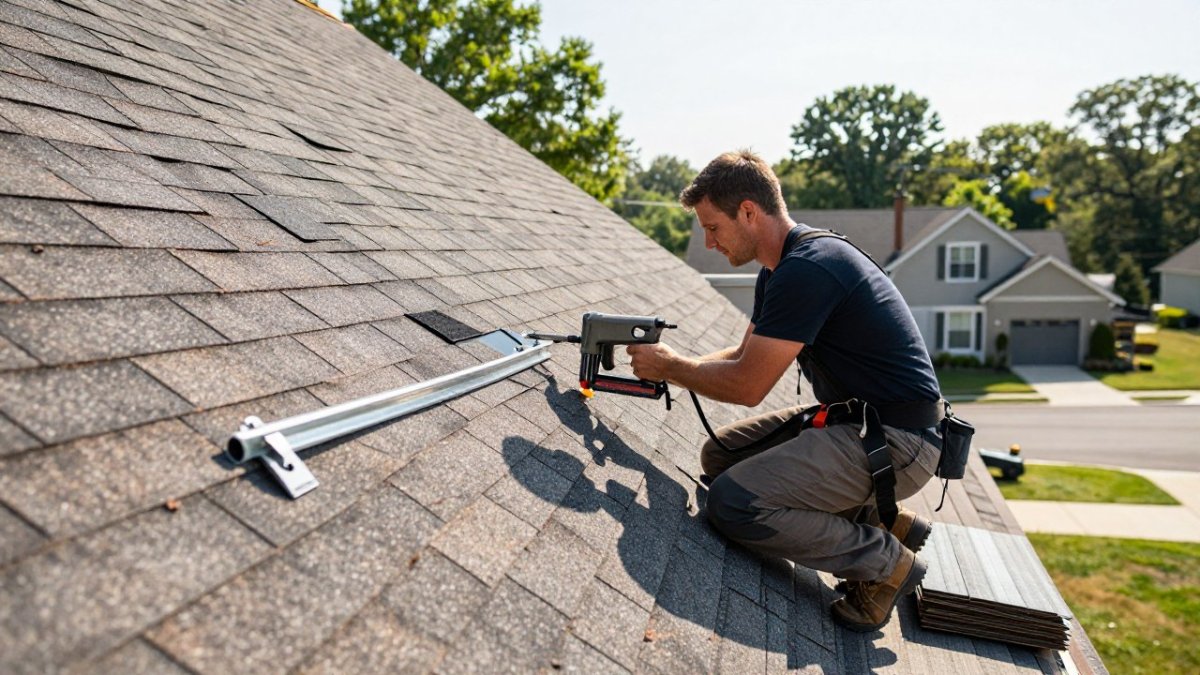
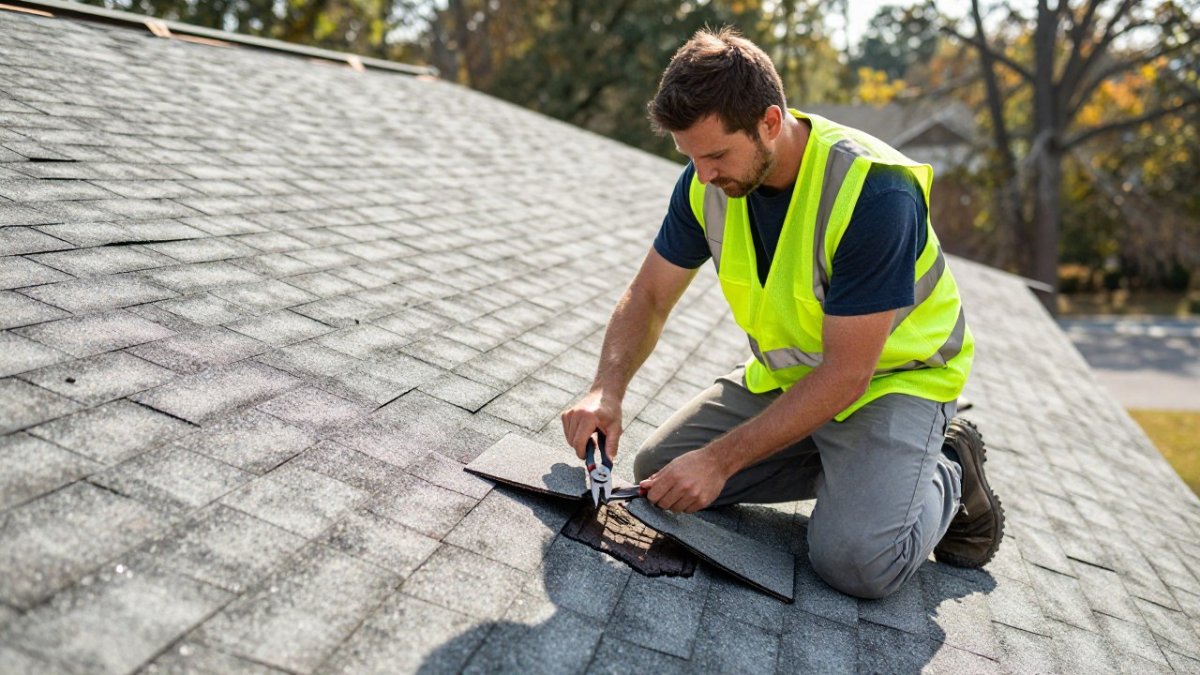
Most yard damage from a roofing project is physical and easy to spot once the crew leaves. Look for tire or outrigger ruts in the lawn, shingle debris and nail fragments scattered across beds, and shrubs snapped or buried under material piles. Foot traffic and dropped tools leave dents in pavers and cracks in edging.
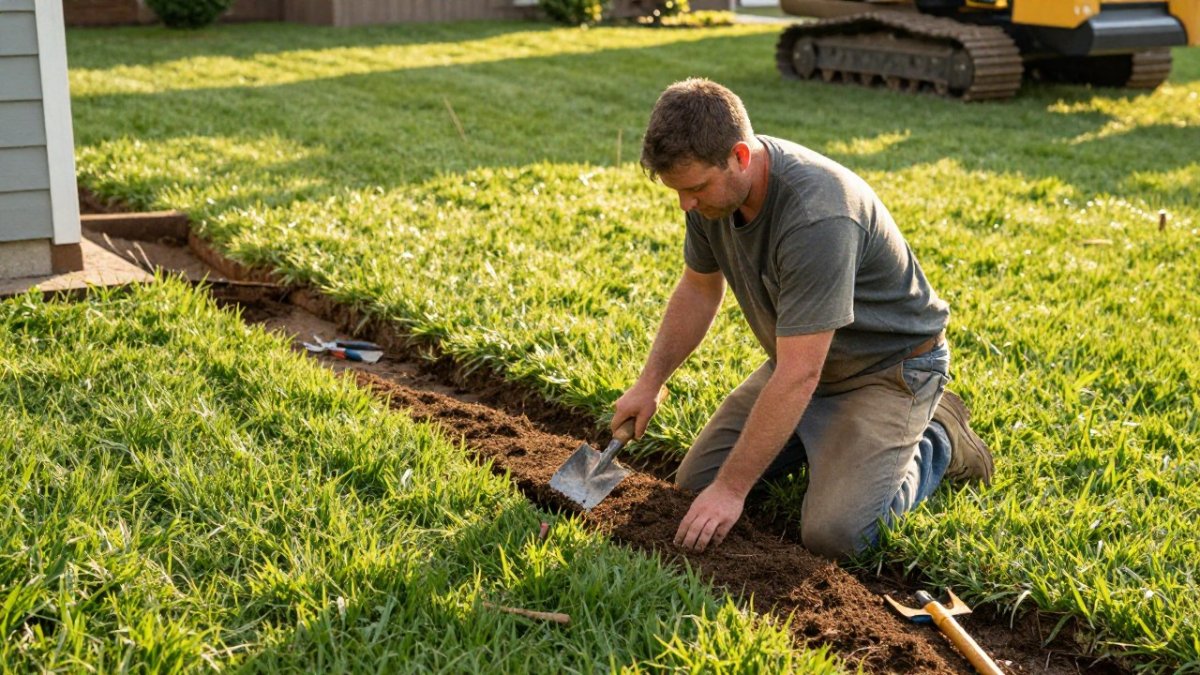
The less visible damage is compaction. Heavy equipment squeezes air out of the soil, and grass roots struggle to grow in dense ground (How soil compaction impacts fertilizer decisions). A common mistake is waiting for brown patches to appear before acting. By then, roots have often already been stressed for weeks.
Average Cost of Landscaping Restoration per Square Foot
Restoration is often estimated by the square foot because the scope varies so much from yard to yard. Ask any contractor to break the estimate into labor, materials and disposal so you can see where the money goes.
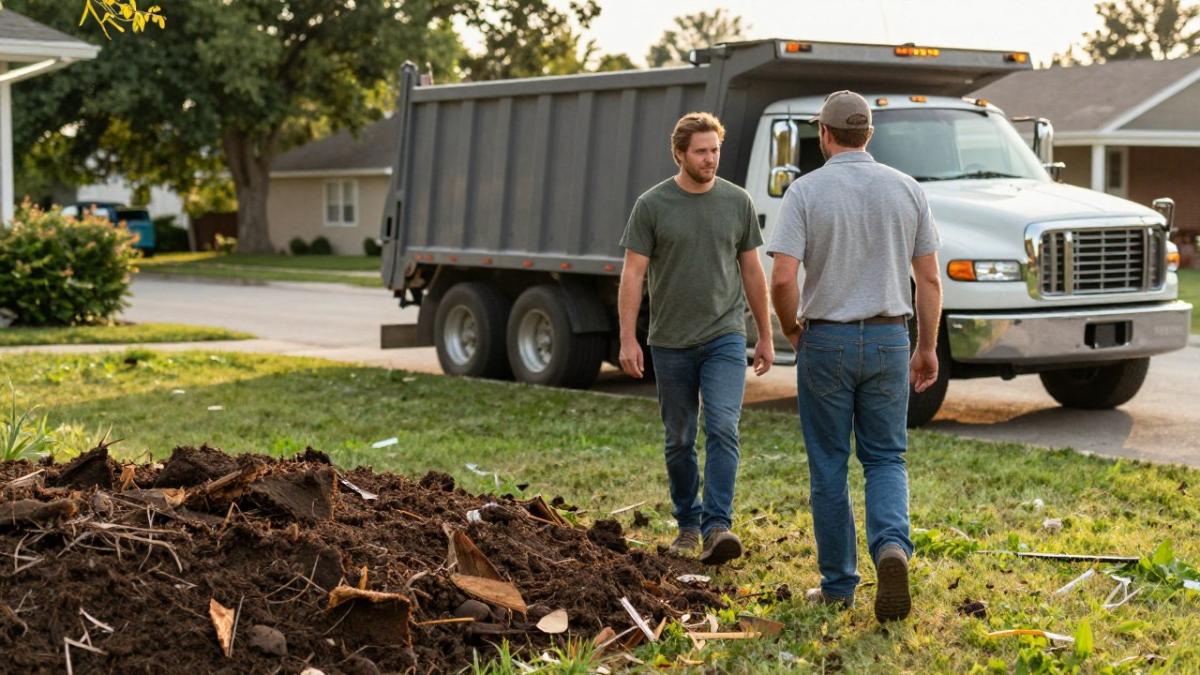
Pricing depends on quantity, timing and the condition of the site, so treat any figure you see online as a starting point rather than a quote. Request a site-specific estimate through the Certified Roofing Solutions Inc. website.
Lawn Repair and Reseeding Costs
Reseeding is the most common repair after light damage. Costs rise when the crew must aerate compacted soil, rake out debris and regrade low spots before seed goes down. Timing matters: seeding in the wrong season can waste the entire investment, so ask whether the estimate includes a follow-up watering plan.
Sod, Topsoil and Mulch Material Costs
Sod is faster to establish than seed but costs more per square foot. Topsoil is needed when the original grade has been stripped or buried. Mulch replaces ground cover in beds where shrubs were damaged. Request itemized material lines so you can compare sourcing options and verify quantities against the actual damaged area.
The main cost drivers for restoration work are summarised below, using the factors the article describes.
| Repair type | Typical driver | What to check |
|---|---|---|
| Lawn repair and reseeding | Aeration and debris removal before seed | Whether the estimate includes a watering plan |
| Sod | Faster establishment, higher cost per sq ft | Itemized material lines |
| Topsoil | Original grade stripped or buried | Quantity against damaged area |
| Mulch | Replaces damaged ground cover in beds | Itemized material lines |
| Restoration pricing | Area size, compaction, debris hauling, mature trees, access | Breakdown into labor, materials and disposal |
Factors That Influence Restoration Pricing
Several variables move the final number. The biggest are the size of the affected area, the severity of compaction, how much debris must be hauled away, and whether mature trees or hardscape need repair. Access also matters: a yard reachable only through a narrow side gap takes more labor than one with open driveway access.
Insurance can change the calculation too. If the damage traces back to a covered event, documentation from the start makes a claim far easier to support. Photograph the yard before work begins and again after it ends.
How Roofing Contractors Are Responsible for Landscaping Damage
Most homeowners assume the roofer will fix the yard, then discover after final payment that the contract is silent on landscaping. Our hiring roofers who protect landscaping guide explains what to look for in a contract before work begins.
Start with the contract. A well-written roofing agreement includes a site-protection clause, a cleanup standard and a damage-repair provision. Look for language that names the specific protections, plywood or turf mats under dumpsters, protection of beds and irrigation, daily nail sweeps with a magnet roller, and a defined walkthrough before final payment.
Watch out: a clause that makes the homeowner responsible for "pre-existing" landscape conditions can be used to deny damage that the crew actually caused. Photograph the yard the morning work begins so the baseline is documented.
When the contract is vague, the fallback is ordinary negligence and property-damage principles. A contractor owes a duty to avoid unreasonable damage to the property while performing the work.
Build the record in this order:
- Photograph the yard, beds, hardscape and irrigation before the crew arrives, with a date stamp.
- Note the equipment you see, ladder placement, dumpster location, any tracked or wheeled machinery, because the damage pattern usually matches the equipment.
- Walk the property with the crew lead at the end of each workday, not just at the end.
- Put every issue in writing by email the same day, with photos and measurements.
- Withhold final payment only to the extent your contract allows, and say in writing why.
Insurance recovery runs on a separate track. The roofing contractor's general liability policy typically responds to property damage the contractor caused to a third party's property, and your landscaping is that third-party property. Ask the contractor for a certificate of insurance before work starts and confirm the policy is current.
Your homeowners policy is a backstop, not a first move. Most policies cover sudden accidental damage to landscaping from a covered peril, but coverage for landscaping is often sublimited and may exclude damage caused by a contractor performing work on the residence.
A common pattern is that the contractor offers a small cash credit at final walkthrough in exchange for a release. Do not sign a release until you have a written repair estimate from a landscape contractor, because the credit is usually priced off the contractor's guess rather than the actual restoration scope.
How to Get a Reliable Landscaping Repair Estimate
A reliable estimate is detailed enough to compare apples to apples. Ask for the scope in writing, including the area measured, the work included, cleanup and disposal, and a warranty on reseeded or resodded areas. Vague one-line bids make it hard to know what you are actually buying.
Compare at least two or three written estimates and ask each provider to walk the yard with you. To learn how to line up roofing contractor quotes side by side, see our homeowner's guide. Be wary of bids that are far below the others, since they often leave out cleanup or materials. Checking a provider's references and asking how they handle disputes will tell you more than the price alone.
Soil Compaction and Equipment Damage Assessment
Compaction is the damage most homeowners miss, and it is also the damage that costs the most to fix correctly. Heavy equipment squeezes air out of the soil, and turf roots need that air. A lawn that looks fine in October can be dead by June because the root zone was crushed under a dumpster.
Assess compaction in three passes. You can also learn how to inspect your roof and property after a storm to catch damage early. First, the screwdriver or penetrometer test: push a sturdy screwdriver into the soil in an undamaged area, then in the tracked area. Second, the water test: ponding that lasts more than a day after rain in areas that previously drained is a strong sign. Third, the turf test: thin, yellowing or patchy grass in straight lines that match tire or outrigger paths.
Equipment-specific damage tells you what the repair scope should be, and the pattern usually identifies the cause:
- Ladders: crushed edging, bent downspouts, dents in pavers and flattened shrubs directly below the roof line. Repair is usually localized and inexpensive.
- Dumpsters and material drops: the heaviest compaction, often in a rectangular footprint, plus gouges where the container was dragged. This is where soil remediation, not just reseeding, is usually required.
- Tracked lifts and outrigger pads: deep ruts, cracked irrigation lines and broken heads, and compaction in a wider pattern than a wheeled vehicle leaves.
- Foot traffic and debris: nail and shingle fragments in beds, matted turf along the crew's path, and crushed ground cover.
Mitigation is more than raking. For moderate compaction, core aeration followed by overseeding and a light topdressing is often enough. For severe compaction under a dumpster footprint, practitioners typically recommend mechanical aeration or deep tilling of the top few inches, amendment with organic matter, regrading to restore the original slope, and then sod rather than seed, because sod establishes faster on disturbed ground.
Watch out: reseeding over compacted soil without aerating first is the most common way homeowners waste a restoration budget. The seed germinates, the roots hit the hard layer, and the lawn fails within a season.
Price the assessment before you price the repair. A landscape contractor can measure the compacted area, test infiltration and give you a scope that separates aeration, soil amendment, regrading, sod and irrigation repair. That scope is also what an insurer or the roofing contractor's carrier will want to see, so keep the measurements and photos with your project file.
Property Protection Checklist for Your Next Roof Project
Before the crew arrives, protect what you can. Use this checklist:
- Photograph the yard, beds, fences and hardscape
- Move planters, furniture and garden decor out of the work zone
- Cover shrubs and delicate plants with breathable fabric
- Confirm with the contractor where equipment and material piles will sit
- Agree on a daily cleanup routine for nails and shingle debris
- Walk the property with the crew lead at the end of the job
- Note any damage in writing and photograph it before paying the final invoice
Contact Certified Roofing Solutions Inc. through the website to ask about its site protection and cleanup practices before work begins.
Protecting your yard during roof work is as important as the roof itself. If you are planning a project in Marietta, Alpharetta, Dunwoody or Johns Creek, contact Certified Roofing Solutions Inc. to discuss your site and get a written estimate.
Frequently Asked Questions
What is a realistic budget for landscaping restoration after roof work?
Budgets vary widely with the size of the damaged area, the type of turf and how much soil has been compacted or displaced. Small patches of lawn repair are usually far less expensive than full sod replacement across a yard. Costs depend on quantity, access and site conditions. Request a written estimate from Certified Roofing Solutions Inc. or your roofing contractor so the scope of restoration is documented before work begins.
Does a roofing contractor pay for landscaping damage?
Many roofing contracts and general liability policies cover damage caused by crews, equipment or debris, but coverage depends on the contract language and insurance terms. Document the damage with dated photos before and after the project, and note any damage on the completion walkthrough. If the damage is disputed, your homeowner's insurance claim process or a written contractor agreement will determine next steps.
How long does it take for a lawn to recover after roof work?
Recovery depends on the grass type, season and extent of the damage. Cool-season lawns in Georgia often need several weeks to establish after reseeding, while sod typically knits within a few weeks when watered consistently. Soil compaction from heavy equipment can take longer to correct and may require aeration. Plan restoration for periods of active growth, typically early fall or spring, for the best results.
Should I get a landscaping estimate before roof work begins?
Yes. A pre-project estimate and a photo record of your landscaping give you a baseline for any damage claim. Ask the roofing contractor how they will protect plants, driveways and turf, such as using tarps, staging areas and magnetic debris sweeps. Keep a copy of the estimate and the property protection plan with your project documents.