 How-to
Early Signs of Roof Decking Water Damage: A Guide
Last Updated: October 22, 2026
Quick Summary
Roof decking water damage shows early warning signs including water stains on ceilings and walls, peeling paint, mold growth in attics, missing or cracked shingles, and soft spots in the decking itself. Early detection prevents costly repairs by catching problems before they reach rafters and walls, potentially saving thousands of dollars.
- Water stains on ceilings and walls are the most visible indicator of roof decking water damage
- Soft or weakened roof decking feels spongy when pressed and indicates wood rot requiring professional assessment
- Active water damage feels damp and smells musty, while old damage is dry but still indicates weakened wood
- Flashing gaps and membrane deterioration allow water to pour directly onto the decking
- Sagging roof areas or visible structural drooping indicate severe damage requiring emergency repair
Table of Contents
- Why Early Detection of Roof Decking Water Damage Matters
- How to Tell If Your Roof Has Water Damage: Visible Interior Signs
- Exterior Roof Indicators: What to Look For From the Ground
- Signs of Roof Deck Rot: Attic Inspection Steps
- Hidden Roof Leak Detection: Active vs. Old Water Damage
- Roof Decking Repair or Replacement: Making the Right Decision
- Safe Inspection Procedures and When to Call a Professional
- Frequently Asked Questions
Why Early Detection of Roof Decking Water Damage Matters
Roof decking water damage is one of the most expensive problems a homeowner can face. Left unchecked, it spreads quickly and compromises structural integrity, but it usually shows warning signs long before it becomes catastrophic.
At Certified Roofing Solutions Inc., we've helped hundreds of homeowners catch these problems early.
Early detection saves money, prevents mold, protects insulation, and keeps your home safe. This guide covers what to look for inside and outside your home.
How to Tell If Your Roof Has Water Damage: Visible Interior Signs
Interior water damage is often the first clue that something's wrong above, usually in attics, ceilings, and upper walls.
Water stains on ceilings and walls
Water stains on ceilings and walls are the most visible indicator of roof decking water damage. They appear as yellow, brown, or gray discoloration on drywall or plaster.
Here's what to look for:
- Yellow or tan stains indicate active or recent water infiltration
- Brown or dark stains suggest older water damage that may have dried
- Rings or halos around the stain show the water traveled horizontally before dripping
Location matters: a stain below a roof peak suggests water coming through the decking, while stains near walls or corners often mean water running along rafters or flashing gaps.
One critical mistake: assuming old stains mean the problem is solved.
Peeling paint and wallpaper damage
Moisture behind walls causes paint and wallpaper to fail when roof leaks travel into wall cavities.
Watch for:
- Bubbling or blistering paint on ceilings or upper walls
- Wallpaper peeling at seams or corners
- Paint that feels soft or spongy when you touch it
These signs mean moisture is actively working behind the surface, water trapped in the wall cavity, soaking insulation and potentially reaching the roof decking above.
Mold and mildew growth
Mold thrives wherever moisture and darkness combine. Attics, wall cavities, and the undersides of roof decking are perfect breeding grounds.
Mold appears as:
- Black, green, or white fuzzy growth on wood surfaces
- Musty odors in attics or upper rooms
- Discoloration on rafters or decking that looks like staining but feels different
Mold isn't just cosmetic: it damages wood fibers, weakening the structure, and poses health risks, especially for people with respiratory sensitivities.
If you spot mold, the roof decking water damage is already significant, moisture has been present long enough for spores to germinate and colonize.
Exterior Roof Indicators: What to Look For From the Ground
You don't need to climb onto your roof to spot problems, many signs of roof decking water damage are visible from the ground.
Shingle damage and granule loss
Shingles protect the decking underneath. When shingles fail, water reaches the decking quickly.
Check for:
- Missing shingles after storms or high winds
- Cracked or split shingles running vertically or horizontally
- Curling shingles with edges lifting away from the roof surface
Granule loss matters most: those pebbles shield the asphalt from UV damage, and once they're gone the shingle deteriorates rapidly. Heavy granules in gutters after storms signal shingles breaking down.
Shingle damage doesn't always mean the decking is wet yet. But it means water will reach it soon if the shingles aren't replaced.
Flashing gaps and membrane deterioration
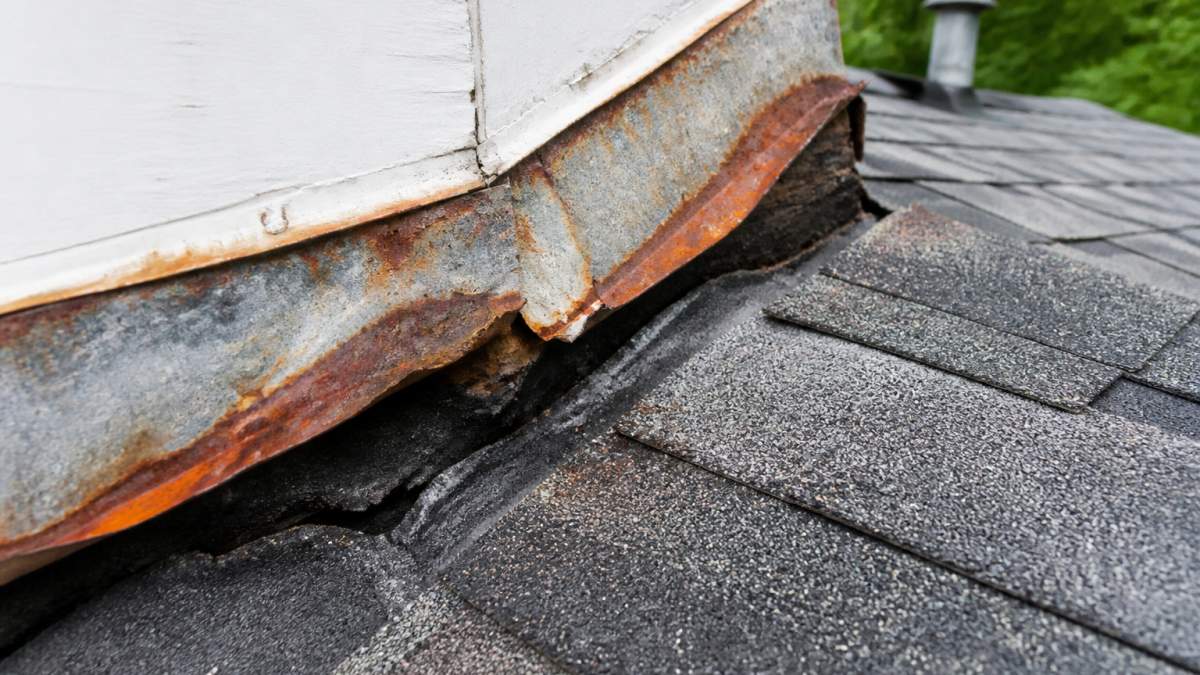
Flashing seals joints where the roof meets chimneys, vents, skylights, and walls. When it fails, water pours directly onto the decking.
Look for:
- Gaps or separations between flashing and the roof surface
- Rusted or corroded flashing (especially around vents and chimneys)
- Lifted or bent flashing edges that no longer seal properly
Flashing problems are insidious because water flows into hidden cavities. By the time you spot an interior stain, water may have soaked the decking for weeks.
Signs of Roof Deck Rot: Attic Inspection Steps
Your attic holds the clearest evidence of roof decking water damage, the decking is right there, and you can often see discoloration and soft spots directly.
Soft spots and weakened decking
Soft or weakened roof decking feels spongy or crumbly when you press on it. This is wood rot, the structural failure of the wood itself.
Here's how to inspect safely:
- Enter the attic during daylight so you can see clearly without relying on flashlights
- Wear a dust mask and gloves to protect yourself from mold spores and debris
- Walk only on rafters or ceiling joists, never on insulation (you'll fall through drywall)
- Use a screwdriver or awl to probe suspicious areas gently
- Press on decking in areas below visible stains or near roof valleys
- Listen for a hollow sound when you tap the wood, solid wood sounds dull, rotted wood sounds hollow
Soft spots mean wood fibers have broken down and the decking loses load-bearing capacity. In severe cases, the roof can sag or collapse under snow load.
Discoloration and wood rot patterns
Water damage leaves visual clues on the decking itself.
Look for:
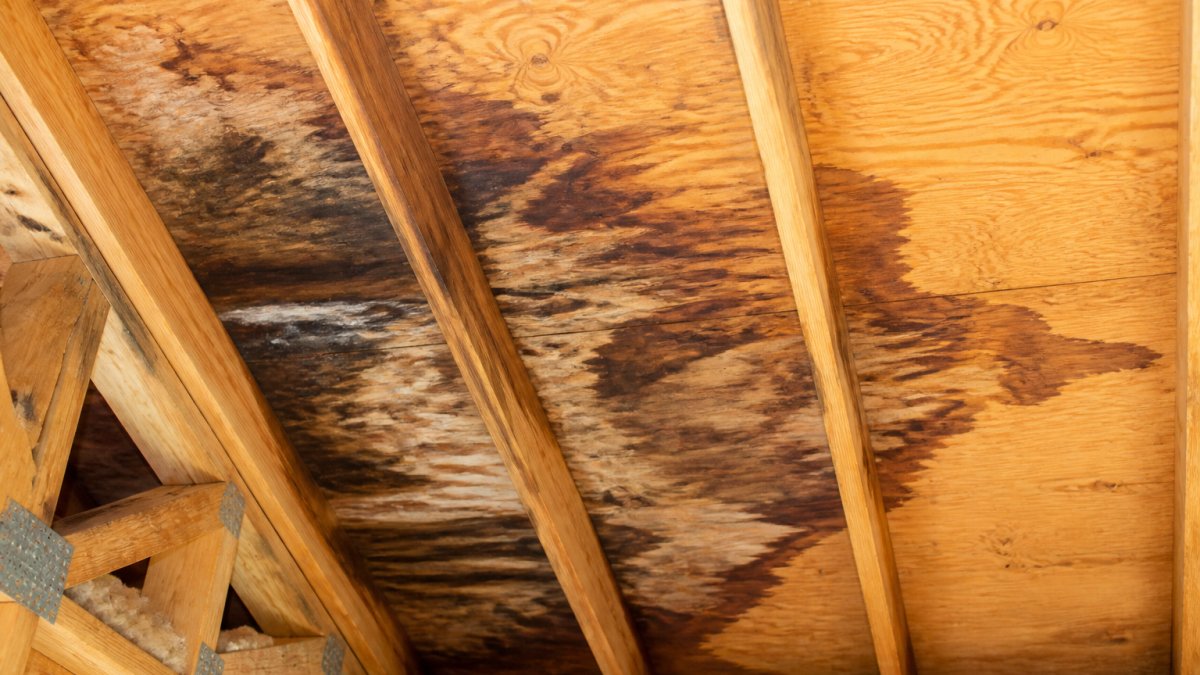
- Dark brown or black discoloration on the wood surface
- Staining concentrated in streaks or patterns following water pathways
- Discoloration spreading outward from a central source (usually a leak point)
Rot patterns follow gravity and water flow: vertical streaks mean water running down from above, while horizontal patterns suggest pooling or sideways flow along the decking.
Not all discoloration means active rot. Old stains may be dry. But they show water has reached the decking. Even dry areas need inspection because the wood may be weakened internally.
Sagging roof areas and structural drooping
Severe roof decking water damage causes visible sagging or drooping.
From inside the attic, look for:
- Decking that sags between rafters instead of running straight
- Rafters that appear bent or curved rather than straight
- Visible gaps between rafters and decking where they've separated
From outside, sagging shows as a dip or wave in the roofline. Severe sagging is a structural emergency, the decking can no longer support its own weight plus snow or rain load.
Hidden Roof Leak Detection: Active vs. Old Water Damage
Not all water stains mean active leaks.
Active water damage is still wet or damp. The wood feels cool or moist.
Old water damage is dry. The stain is visible but the wood feels normal.
Here's how to tell the difference:
- Touch the stained area gently. Active damage feels damp or cool. Old damage feels normal.
- Smell the area. Active damage smells musty or moldy. Old damage smells like dry wood.
- Look for mold. Active damage often has visible mold or mildew. Old damage rarely does.
Active leaks need immediate attention: water is still entering, and damage will worsen rapidly.
Old water damage needs assessment but may not be urgent. However, the wood is compromised.
Roof Decking Repair or Replacement: Making the Right Decision
Once you've identified roof decking water damage, the question becomes: repair or replace?
Repair is possible when damage is localized and the decking is still structurally sound. A small section of soft or rotted decking can be cut out and patched while the surrounding decking stays intact.
Consider these factors:
- Extent of damage. Is it one spot or multiple areas?
- Severity of rot. Is the wood soft throughout or just on the surface?
- Age of the roof. Is the decking original or has it been replaced before?
Most roofing professionals recommend replacement when:
- Damage covers more than one rafter bay
- Decking shows signs of structural failure (sagging, cracking)
- The roof is over 20 years old
Repair makes sense when:
- Damage is isolated to one small area
- The decking is otherwise sound
- The roof is relatively new
We assess each situation individually and help you understand the trade-offs for your home.
Safe Inspection Procedures and When to Call a Professional
Inspecting your own roof can help you spot problems early. But safety matters. Some damage requires professional assessment.
Safe inspection steps for homeowners:
- Inspect from the ground first. Use binoculars to examine shingles, flashing, and roof edges without climbing.
- Check your attic during daylight. Look for stains, discoloration, and soft spots without entering tight spaces.
- After storms, look for debris in gutters and visible damage from the ground.
- Never climb onto the roof unless you're trained and have proper fall protection equipment.
- Document what you find with photos and notes about location and severity.
Call a professional when:
- You find soft spots or obvious rot in the decking
- You see mold or extensive discoloration
- You notice sagging or structural issues
Roof decking water damage progresses quickly once it starts. The interior stains, attic discoloration, and exterior shingle damage you spot today may be just the beginning.
If you've noticed any of these signs, don't wait, the longer water sits in your decking, the more expensive the eventual repair becomes.
| Sign | Location | Urgency | Action |
|---|---|---|---|
| Water stains (yellow/brown) | Ceilings and walls | Medium | Inspect attic; identify leak source |
| Peeling paint or wallpaper | Upper walls and ceilings | Medium | Check for moisture behind walls |
| Mold or mildew | Attic, rafters, decking | High | Call professional; assess extent |
| Missing or cracked shingles | Roof surface | Medium | Schedule replacement soon |
| Flashing gaps or rust | Around vents, chimneys | Medium | Seal or replace flashing |
| Soft or rotted decking | Attic decking | High | Professional assessment required |
| Sagging roof areas | Attic or roofline | Critical | Emergency repair needed |
| Musty odor in attic | Attic spaces | Medium | Investigate moisture source |
Frequently Asked Questions
What are the early signs of roof decking water damage?
Early signs include water stains on ceilings and walls, peeling or bubbling paint, soft spots in the attic, dark discoloration on roof decking, mold or mildew growth, and sagging roof sections. Interior stains often appear first, sometimes months before structural damage becomes visible. Check your attic after heavy rain to spot fresh water infiltration or dampness on rafters and decking.
How can you tell if roof decking is rotting?
Rotting roof decking feels soft or spongy when pressed and may show dark brown or gray discoloration. Wood rot typically spreads along grain lines and weakens the structural integrity of the deck. You may also notice a musty odor in the attic. If you suspect rot, avoid walking on the roof or attic decking, compromised wood can collapse under weight. Contact a professional to assess the extent of damage and recommend repair or replacement.
How do I distinguish an active roof leak from old water stains?
Active leaks show fresh moisture, wet wood, or ongoing dripping during or shortly after rain. Old stains are dry, appear faded or yellowed, and do not feel damp. Check the attic during rainfall to identify active water entry points. If you see wet rafters, moisture buildup, or daylight penetration through the roof deck, the leak is active and requires urgent attention. Old stains alone may indicate past damage that has dried but could signal previous water infiltration pathways.
Should roof decking water damage be repaired or replaced?
Minor surface damage or small soft spots can sometimes be repaired if caught early. However, extensive rot, structural weakness affecting multiple rafters or deck sections, or sagging roof areas typically require full replacement of the damaged decking. A professional inspection using moisture measurement and wood hardness testing determines whether repair is viable. Replacement ensures structural safety and prevents future water infiltration, making it the preferred option for significant damage.