 How-to
Signs of Moisture Damage Under Metal Roofing
Table of Contents
- What Moisture Damage Under Metal Roofing Looks Like
- Common Causes of Moisture Buildup Under Metal Roof Panels
- Condensation vs Roof Leak: How to Tell the Difference
- Condensation Under Metal Roof: Why It Happens and Where It Shows Up
- Metal Roof Leak Signs You Should Never Ignore
- The Role of a Moisture Barrier Under Metal Roof Panels
- How to Inspect for Moisture Damage Safely
- When to Call a Professional Roofer
- Frequently Asked Questions
Last Updated: October 15, 2026
What Moisture Damage Under Metal Roofing Looks Like
Water stains on the underside of your roof deck rarely mean what you think.
Knowing the signs of moisture damage under metal roofing saves you from paying for the wrong fix and stops small problems from becoming mold, rotted framing, and soaked insulation.
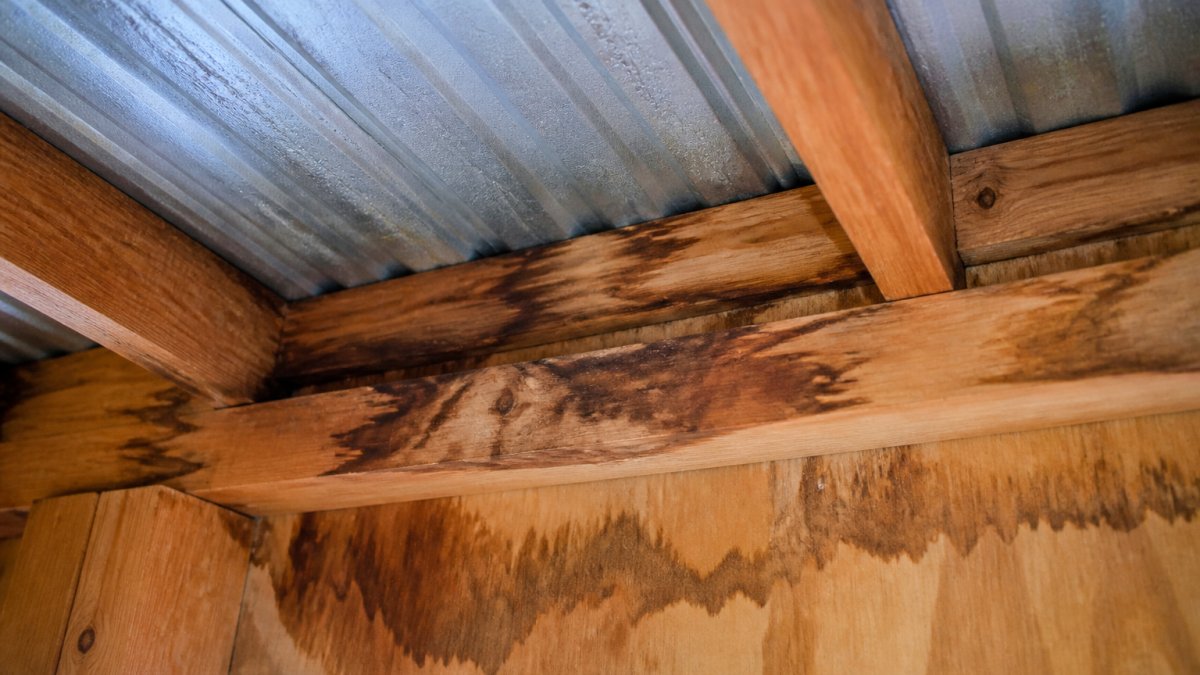
Here's a simple rule: leaks leave a trail, while condensation spreads. A leak stains one area from a single point; condensation leaves broad, even dampness across the deck's underside.
Signs You Can See From Inside the Attic
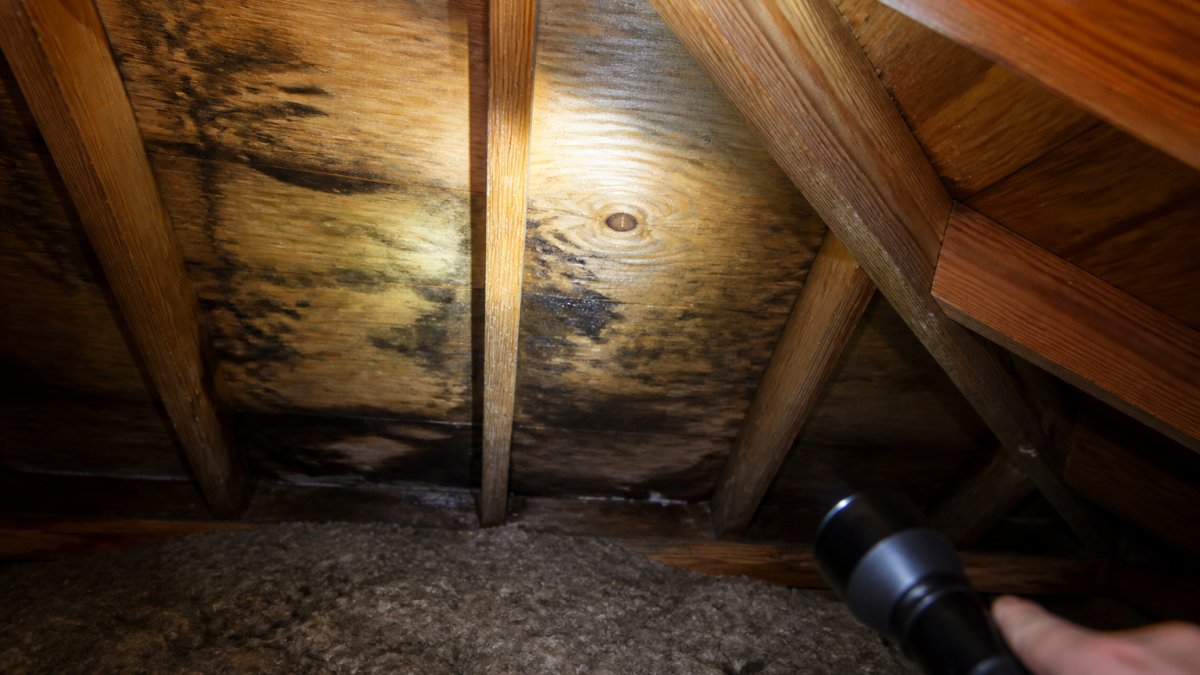
Start with a flashlight and look up at the roof decking. These are the most common clues:
- Dark water stains or streaks on the wood deck
- White or black fuzzy patches on rafters (mold or mildew)
- Damp, matted insulation that smells musty
Several of these together mean moisture has been building for a while.
Signs You Can See From Outside
Some moisture problems show up before you climb into the attic.
- Rust or corrosion along panel edges and seams
- Loose fasteners or lifted flashing
- Water stains on soffits or fascia boards
A quick look from the ground with binoculars catches these early.
Common Causes of Moisture Buildup Under Metal Roof Panels
Moisture under metal roofing comes from one of two sources: water getting in, or water that can't get out.
- Condensation. Warm, humid air from your home rises and hits a cold roof deck. It turns to water right there.
- Missing or failing moisture barrier. A proper underlayment blocks moisture and channeling. When it's missing or torn, water gets through.
- Storm damage. Hail dents, wind-lifted panels, and cracked seals open the door to water intrusion.
Condensation vs Roof Leak: How to Tell the Difference
Telling condensation from a roof leak is the most useful skill here. Get it wrong and you'll pay to fix a leak you don't have, or ignore one you do. Most homeowners guess based on where the stain is, the least reliable clue. The four clues that separate the two are timing, location, pattern, and growth.
The Four Diagnostic Clues
1. Timing. When does the dampness appear?
- Condensation shows up on cold mornings, during heating season, and after long showers, laundry, or cooking. It often gets worse in winter.
- A leak shows up during or within hours of rain, snowmelt, or wind-driven storms. It usually gets worse in spring and fall storm season.
Dampness on a dry, cold morning is almost certainly condensation. Dampness that only appears after rain is almost certainly a leak.
2. Location. Where is the moisture sitting?
- Condensation forms on the coldest surfaces first: the underside of metal panels, the north-facing slope, purlins, and the tops of rafters. It spreads across the whole underside of the deck rather than concentrating.
- A leak concentrates near a penetration or joint: seams, fasteners, pipe boots, ridge caps, valleys, and flashing around chimneys or skylights. It traces back to a single origin point.
3. Pattern. What shape is the stain?
- Condensation leaves broad, even dampness, sometimes with a fuzzy mold bloom across a wide area. It rarely has a defined edge.
- A leak leaves a defined stain, streak, or drip trail. It has an edge you can trace with a finger.
4. Growth over time. How does it change?
- Condensation fluctuates with weather and indoor humidity. It can dry out completely on a warm, dry day and return the next cold morning.
- A leak grows steadily. It does not dry out on its own. Photograph the same spot once a week for three weeks. If it shrinks and returns, that's condensation. If it only grows, that's a leak.
Side-by-Side Comparison
| Clue | Condensation | Roof Leak |
|---|---|---|
| Timing | Cold mornings, heating season, after showers or cooking | During or right after rain, snowmelt, or storms |
| Location | Underside of panels, purlins, north slope, tops of rafters | Seams, fasteners, flashing, penetrations, valleys |
| Pattern | Broad, even dampness with no defined edge | Focused stain, streak, or drip trail |
| Growth | Fluctuates; can dry out and return | Grows steadily; never dries on its own |
| Smell | Musty, whole-attic odor | Localized damp smell near the stain |
| Frost | Common on cold mornings | Rare; frost forms on cold surfaces, not wet ones |
The Ambiguous Case: When Both Are Happening
A common pattern is a small leak that wets the deck, which then feeds condensation because the wet wood stays cold and damp. You'll see a defined stain near a seam or fastener surrounded by a wider halo of even dampness. Treat the leak first; once the deck dries, the halo usually disappears.
When the Clues Conflict
If timing says condensation but location says leak, trust location: a defined stain at a seam or fastener is a leak until proven otherwise.
When in doubt, a professional roof inspection settles it fast. Ask the inspector to check the deck's underside at the stain and take moisture meter readings there before and after the next rain.
Condensation Under Metal Roof: Why It Happens and Where It Shows Up
Condensation under a metal roof forms when warm, humid air meets a cold surface. Metal panels cool fast at night and in winter, and when that cold surface touches moist indoor air, droplets form on the panels' underside.
Where it shows up:
- On the underside of panels and purlins
- Along the roof deck and rafters
- On top of insulation, soaking it from above
That's why airflow and a proper moisture barrier matter: they keep humid air from reaching the cold metal.
Metal Roof Leak Signs You Should Never Ignore
Some metal roof leak signs point to active water intrusion that needs attention now. Ignoring them leads to bigger repairs.
Watch for:
- Active dripping water during or right after rain
- Fresh water stains that grow week to week
- Rust spreading along seams and fasteners
If you see any of these, get a roof inspection before the next storm. Small leaks turn into rotted decking and ceiling damage fast.
The Role of a Moisture Barrier Under Metal Roof Panels
A moisture barrier under metal roof panels stops water from reaching your deck and channels any water that gets past the panels toward the edges.
The barrier does two jobs:
- Blocks moisture. A quality underlayment keeps condensation and wind-driven rain off the wood.
- Protects the deck. It shields the roof decking from long-term dampness and rot.
Missing or saturated underlayment is one of the most common reasons we find moisture damage during repairs. If the barrier is torn, aged, or installed wrong, the deck has no defense.
How to Inspect for Moisture Damage Safely
A safe inspection protects you and gives clear answers. This walkthrough covers the attic, roof underside, and accessible exterior details, plus the moisture measurements that turn a guess into a diagnosis, and when to stop and call a pro.
Before You Start
- Pick a dry day. Never climb on a wet metal roof.
- Wear a respirator if you see visible mold. Disturbing mold releases spores.
- Bring a bright flashlight, a moisture meter, a hygrometer, a notepad, and your phone for photos.
Step 1: Measure Attic Humidity First
Before you look at anything, take a baseline humidity reading with a hygrometer. This one number tells you which problem you're chasing.
- Below 50% relative humidity: the attic is dry. Any dampness you find is likely a leak.
- 50% to 60%: borderline. Watch for condensation on cold mornings.
- Above 60%: high. Condensation is likely, and mold growth becomes a real risk.
Record the reading and outdoor temperature. A high reading on a cold day points strongly to condensation.
Step 2: Scan the Roof Underside From Inside
From the attic, work in a grid: start at the ridge, move downslope, then repeat on the next bay. Look for:
- Dark water stains or streaks on the wood deck
- White or black fuzzy patches on rafters (mold or mildew)
- Damp, matted insulation that smells musty
Note every finding's location. A stain near a seam or fastener is a leak candidate; broad dampness across the whole underside is a condensation candidate.
Step 3: Take Moisture Meter Readings
A pin-type moisture meter gives you a number instead of a guess. Press the pins into the wood deck at each suspicious spot and record the reading.
- Under 15%: dry. Normal for interior wood.
- 15% to 20%: elevated. Watch it and recheck in a week.
- Above 20%: wet enough to support mold and rot. This needs attention now.
Take a reading at the stain and at a known-dry spot nearby. The difference between the two is more useful than either number alone.
Step 4: Check the Insulation and Framing
Pull back insulation at each suspicious spot. Look for:
- Compressed or matted insulation, which loses R-value when wet
- Dark staining on the top of the insulation, which means water is dripping from above
- Soft or crumbly wood at rafters and decking, which means rot has started
If the wood is soft enough to push a screwdriver into with light pressure, stop and call a pro. That's structural.
Step 5: Inspect From the Ground
Use binoculars from a safe distance. Check:
- Rust or corrosion along panel edges and seams
- Loose fasteners or lifted flashing
- Water stains on soffits or fascia boards
Photograph anything suspicious. Zoom in on the photo later to confirm.
Step 6: Log Everything and Recheck
Log the date, outdoor temperature, attic humidity, and every moisture meter reading, and take photos from the same spots. Recheck in one week and after the next rain, the pattern over time tells you whether you have condensation, a leak, or both.
When to Stop and Call a Pro
Stop and call a professional if you find any of these:
- Active dripping water during or right after rain
- Moisture meter readings above 20% across a wide area
- Mold covering more than about 10 square feet (the EPA)
Patching a hidden problem often leads to surprise costs later.
When to Call a Professional Roofer
Call a professional when you find active leaks, widespread mold, or damage you can't trace to one spot. Some problems are too risky or too hidden to handle yourself.
Reach out right away if you notice:
- Water dripping inside during rain
- Mold covering a large area of the deck
- Rust or corrosion across multiple panels
Frequently Asked Questions
How can I tell whether attic moisture is condensation or a roof leak?
Check the pattern and timing. Condensation usually appears as widespread dampness or frost on the cold underside of metal panels, often after temperature swings. A roof leak tends to show up as concentrated water stains, dripping water, or wet spots near seams and fasteners after rain. If the moisture dries out in dry weather, it's likely condensation. If it returns every time it rains, it's probably a leak. When in doubt, a professional roof inspection can confirm.
Can moisture under metal roofing damage the roof deck?
Yes. Prolonged moisture can rot wood decking, cause rust and corrosion on fasteners and panels, and ruin insulation. It can also lead to mold and mildew growth, which affects indoor air quality. If you notice soft spots, sagging, or a musty smell in the attic, the damage may already be significant. Contact a roofer to assess the extent and recommend repairs before the problem spreads to framing or interior ceilings.
What causes condensation under a metal roof?
Condensation forms when warm, humid air from inside your home meets the cold underside of metal roof panels. This happens most often in winter or during large temperature swings. Poor attic ventilation and missing or inadequate moisture barriers make it worse. Without airflow to dry the space, moisture accumulates on panels, fasteners, and the roof deck. Improving ventilation and ensuring a proper moisture barrier under the metal roof are key fixes.
When should I call a roofer about moisture under my metal roof?
Call a roofer if you see water stains, dripping water, mold, or soft spots in the attic, or if you notice loose fasteners, rust, or damaged flashing on the roof itself. These signs of moisture damage under metal roofing can point to a leak that needs immediate repair. A professional can perform a roof inspection, identify the source, and recommend whether you need a simple fix or more extensive repairs. Early action prevents costly damage.
Moisture damage under metal roofing rarely fixes itself, and guessing wrong costs you twice. Certified Roofing Solutions Inc. helps homeowners and property managers across Marietta, Alpharetta, Dunwoody, and Johns Creek find the real source and fix it right. Our experienced team handles both residential and commercial roofing, including metal and TPO systems, with services tailored to each project. Book an appointment today and get a clear answer on what's happening under your roof.