 how-to
Roof Age vs Storm Damage: How to Tell the Difference
Table of Contents
- Why Telling Roof Age vs Storm Damage Apart Matters
- The Average Lifespan of Asphalt Shingles and Other Roofing Materials
- Signs of Wind Damage on Shingles vs. Normal Aging
- Hail, Impact Marks, and Storm Patterns That Point to a Sudden Event
- How to Document Roof Storm Damage for Insurance
- The Discontinued Shingle Dilemma: Repair, Replace, or Match
- DIY Roof Inspection: Safety Limits and When to Call a Professional
- Conclusion: Getting the Diagnosis Right the First Time
- Frequently Asked Questions
Last Updated: October 1, 2026
Why Telling Roof Age vs Storm Damage Apart Matters
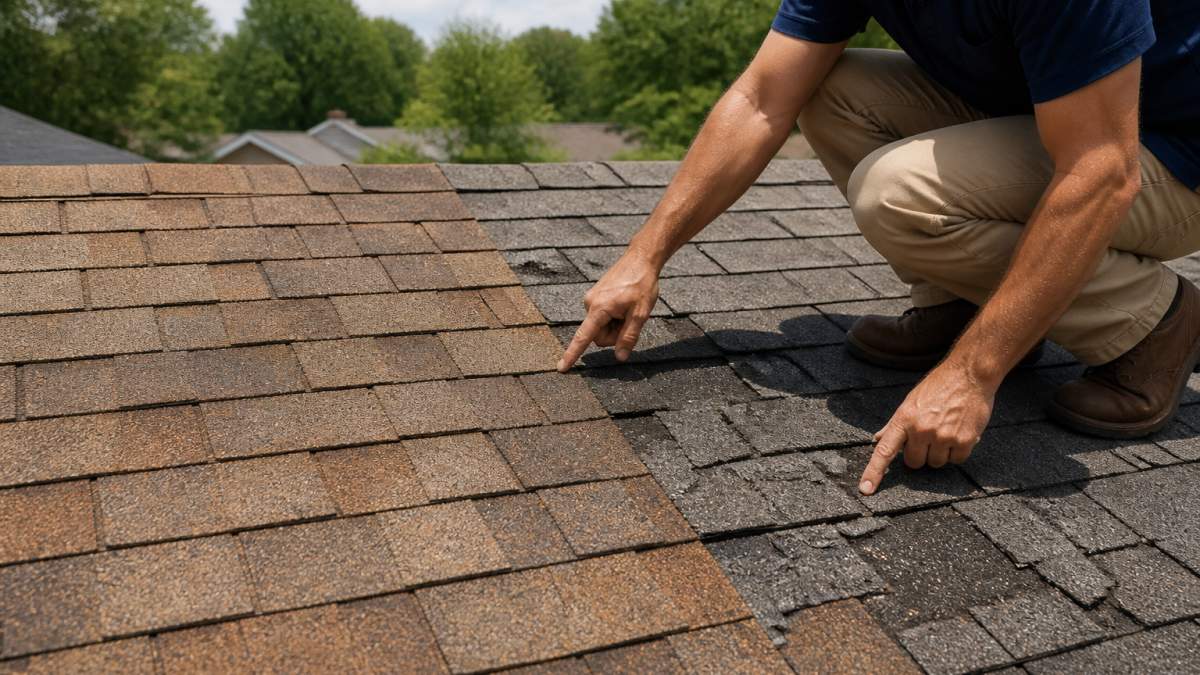
Telling roof age vs storm damage apart is the difference between a covered insurance claim and a denied one. One is normal wear and tear that you pay for. The other may be a sudden event your policy covers. Homeowners in Marietta, Alpharetta, Dunwoody, and Johns Creek face this question every time a storm rolls through. At Certified Roofing Solutions Inc., we see the same pattern: a homeowner spots curling shingles, files a claim, and gets a denial letter that says "wear and tear." The diagnosis matters before you ever call your insurer. This guide shows you how to read the signs yourself, document what you find, and know when to bring in a professional.
The Average Lifespan of Asphalt Shingles and Other Roofing Materials
The average lifespan of asphalt shingles is 15 to 30 years, depending on the product line and how well the roof is ventilated. Three-tab shingles sit at the low end. Architectural shingles last longer. Metal and tile roofs can run far beyond that. Your roof's age sets the baseline. A 22-year-old three-tab roof showing uniform wear is simply old. A 6-year-old architectural roof with sudden damage tells a different story.
- Three-tab asphalt shingles: 15-20 years
- Architectural asphalt shingles: 25-30 years
- Metal roofing: 40-70 years
- Clay or concrete tile: 50+ years
Signs of Wind Damage on Shingles vs. Normal Aging
Signs of wind damage on shingles include missing shingles, lifted tabs, and creased or torn edges concentrated on one slope. Normal aging looks different. It shows up as uniform granule loss, curling, and brittleness across the whole roof. Wind hits one side. Age touches everything.
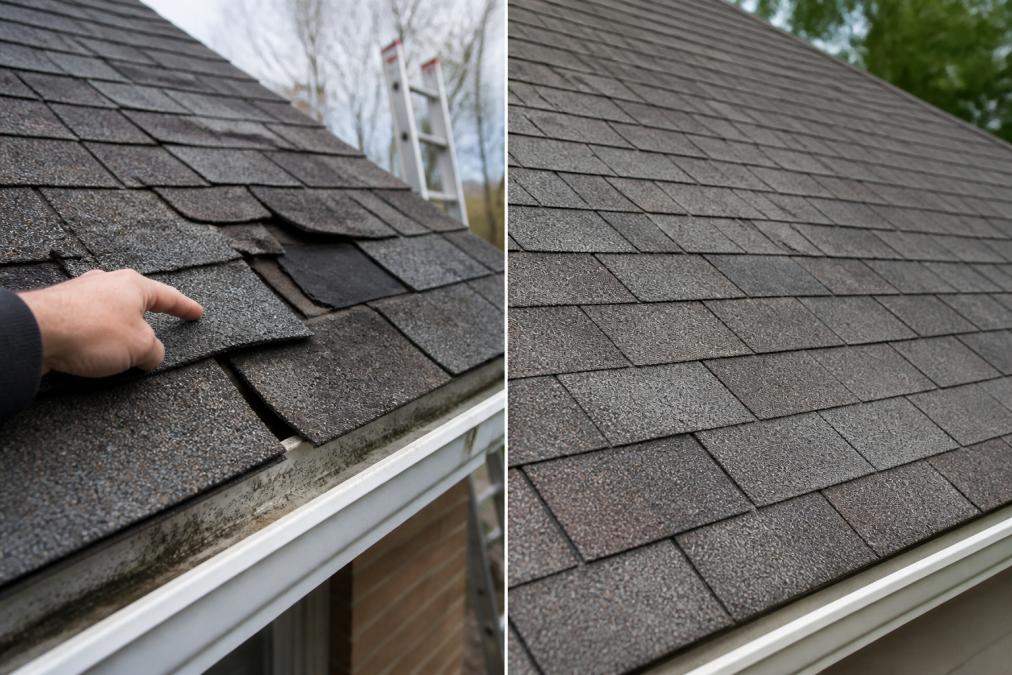
Here is how to tell them apart:
- Wind uplift: shingles peeled back or missing on the windward slope, often near ridges, hips, and edges
- Sealant failure: tabs that lift because the adhesive strip broke, not because the shingle is old
- Flashing integrity: bent or separated flashing at chimneys and valleys, a sign of a sudden event
- Curling edges: uniform curling across all slopes points to age; curling on one slope alone points to wind
- Brittle shingles: shingles that crack when touched are near end of life, not storm-damaged
Hail, Impact Marks, and Storm Patterns That Point to a Sudden Event
Look for these patterns:
- Random impact patterns: dents scattered without a clear direction, often on the same slope as the storm's approach
- Hail bruising: soft, dark spots where granules were knocked loose but the mat underneath stayed intact
- Fractured mat: shingles that crack along a line when flexed, a sign the reinforcing mat was compromised
- Soft spots on ridge caps: ridge caps take the most direct hail hits and fail first
- Metal evidence: dents on gutters, downspouts, vents, valley flashing, and HVAC units
- Splatter marks: granules knocked off and redeposited on siding, fences, or lower roof sections
Wind and hail together create clustered damage on one side of the roof. Wind lifts the tab, hail strikes the exposed mat, and the next rain drives water under the sealant strip. That sequence produces damage that looks random in a photo but follows a clear directional pattern on the roof. Walk the perimeter and note which slope faces the storm. If damage clusters there and the opposite slope looks uniform, you have a strong storm-damage signature.
How to Document Roof Storm Damage for Insurance
- Capture the storm date. Screenshot a weather app, a local news report, or a National Weather Service storm report for your ZIP code. Save the file with the date in the name.
- Shoot wide before close. Take a wide shot of each roof slope from the ground so the adjuster can see the whole roof, not just the damaged area. Wide shots establish context; close-ups establish cause.
- Photograph the damage in sequence. Move from the ridge down: ridge caps, field shingles, valleys, flashing at chimneys and vents, then gutters and downspouts. Number the files in that order.
- Document interior evidence. Photograph ceiling stains, attic decking stains, and any active drips. Include a coin or ruler in the frame for scale.
- Save every receipt. Emergency tarping, temporary patching, and hotel stays during repairs are often reimbursable under a typical homeowner policy. Keep the paper trail.
- Write a timeline. Date, time, what you saw, who you spoke to. A one-page timeline is often the difference between a fast approval and a back-and-forth.
The pre-adjuster checklist. Before the adjuster arrives, confirm you have all of the following:
- Storm date evidence (weather app screenshot, news report, or NWS storm report)
- Wide shots of every roof slope
- Close-ups of damaged shingles, flashing, and gutters
- Photos of metal dents on gutters, downspouts, vents, and HVAC units
- Interior leak or stain photos with a scale reference
- Receipts for emergency tarping or repairs
- Written timeline of the storm and your observations
- Your roof's install date and material spec sheet, if available
- A saved sample of damaged shingles in a labeled bag
The Discontinued Shingle Dilemma: Repair, Replace, or Match
Discontinued shingles create a real problem. If your roof is 12 years old and the manufacturer stopped making that line, a patch repair will not match. Insurers pay based on replacement cost value or actual cash value. Under replacement cost value, they cover the cost to replace with a comparable shingle. Under actual cash value, they subtract depreciation first.
| Situation | Best Option | Why |
|---|---|---|
| Damage on one slope, shingles still made | Spot repair | Cheapest, matches existing roof |
| Damage on one slope, shingles discontinued | Partial replacement with closest match | Visible mismatch, but keeps cost down |
| Damage on multiple slopes, roof near end of life | Full replacement | Repair costs approach replacement |
| Widespread hail or wind damage | Full replacement | Insurer often requires it |
DIY Roof Inspection: Safety Limits and When to Call a Professional
A DIY roof inspection from the ground is safe and useful. Climbing onto the roof is not. Falls are the leading cause of injury for roof work, and wet or steep shingles make it worse. Use binoculars, a phone camera with zoom, and a ladder placed only for gutter-level viewing.
- Check gutters for granule buildup and shingle pieces
- Look for lifted or missing shingles from the ground
- Inspect flashing around chimneys and vents
- Check attic ceiling for water stains
- Note any dents on gutters, vents, or downspouts
A ground-level inspection tells you whether to call a pro. It does not replace one. The photos you gather, though, become the backbone of your claim.
Conclusion: Getting the Diagnosis Right the First Time
The wrong diagnosis costs you twice: once when the claim is denied, and again when you pay out of pocket for damage that should have been covered. Roof age vs storm damage is not a guess. It is a pattern you can read, document, and defend. Certified Roofing Solutions Inc. helps homeowners across Marietta, Alpharetta, Dunwoody, and Johns Creek with expert residential and commercial roofing services.
Frequently Asked Questions
What is the 25% rule in roofing?
The 25% rule is an insurance guideline used by many carriers: if storm damage affects more than 25% of a roof slope or the overall roof area, the insurer may require full replacement of that slope or the entire roof rather than a patch repair. The exact threshold varies by policy and state, so check your specific coverage documents. This rule often decides whether you get a partial repair or a full replacement after a storm.
How to tell if your roof has storm damage?
Look for random impact marks, bruised or soft spots on shingles, granule loss concentrated in one area, and missing or lifted shingles. Storm damage tends to be uneven, with damage clustered on windward slopes or where hail struck. In contrast, aging shows up as uniform wear across the whole roof, with curling edges and brittleness everywhere. If you see sudden changes after a storm, document them with photos and call a professional inspector.
Is a 20 year old roof considered old?
For standard 3-tab asphalt shingles, 20 years is near the end of their average lifespan of 15 to 20 years. Architectural shingles often last 25 to 30 years, so a 20-year-old architectural roof may still have life left. However, age alone does not determine condition. A 20-year-old roof with uniform granule loss and curling is likely due for replacement, while one with isolated storm damage might be repairable. A professional inspection gives you a clear answer.
Can insurance adjusters tell how old hail damage is?
Adjusters cannot pinpoint the exact date of hail damage, but they can distinguish fresh impact marks from older, weathered ones. Fresh hail hits often show exposed asphalt or fractured granules with sharp edges, while older damage appears smoothed by sun and rain. Adjusters also compare damage patterns across the roof and check for corroborating evidence like dents in gutters, vents, and downspouts. Documenting the storm date and taking immediate photos helps support your claim.
Storm damage will not wait, and neither should your roof. Certified Roofing Solutions Inc. brings an experienced team, tailored service for every project, and a commitment to getting the diagnosis right the first time. We serve homeowners and property managers across Marietta, Alpharetta, Dunwoody, and Johns Creek with residential and commercial roofing, from emergency repairs to full replacements. Book an appointment today and get a clear, documented assessment of your roof.