 how-to
Preventing Water Damage in Attic After Storms: 2026 Guide
Table of Contents
- Why Storm Water Invades Your Attic
- Signs of Roof Leak in Attic: What to Look For
- Attic Ventilation and Moisture Control That Works
- Sealing Gaps and Air Leaks Before the Next Storm
- How to Dry Out Attic Insulation After Water Damage
- Post-Storm Inspection Checklist for Your Roof and Attic
- Long-Term Monitoring and Maintenance to Prevent Water Damage in Attic After Storms
- When to Call a Professional
- Frequently Asked Questions
Last Updated: September 29, 2026
Why Storm Water Invades Your Attic
Preventing water damage in attic after storms starts with knowing that storm water gets into your attic in two completely different ways, and they need opposite fixes. Wind-driven rain forces water past shingles and flashing. Trapped moisture condenses on cold surfaces until it drips like rain. The first is a structural leak. The second is what roofers call "attic rain," and it fools a lot of homeowners into replacing perfectly good shingles.
Active Leaks vs. Attic Rain: How to Tell Them Apart
An active leak is water getting in from outside. Attic rain is water that was already inside your house, in the air, condensing on a cold surface. Here's how to separate them:
- Timing. Active leaks show up during or within hours of a storm. Attic rain shows up on cold, clear mornings, often with no rain in the forecast at all.
- Location. Leaks track to a penetration or a roof plane. Attic rain appears on the underside of the roof deck, on nail heads, and on the north-facing sheathing first, because that side stays coldest longest.
- Pattern. Leaks leave streaks, stains, and a defined drip point. Attic rain leaves a uniform frost or bead pattern across a wide area, then drips as it melts.
- Smell. Leaks smell like wet wood and exterior debris. Attic rain smells musty and close, like a damp basement.
- Aftermath. Leaks stain drywall below. Attic rain often leaves no ceiling stain at all, because the water re-evaporates before it travels that far.
What Actually Drives Each Problem
Active leaks come from three failure points:
- Lifted or missing shingles from high winds
- Failed flashing around chimneys, vents, and valleys
- Clogged gutters that push water back under the roof edge
Attic rain comes from a different set of causes:
- Warm, humid air rising from living space through unsealed gaps
- Inadequate intake or exhaust ventilation, so moisture has nowhere to go
- Cold roof deck surfaces in winter, which act like a glass of iced tea on a humid day
- Bath and kitchen exhaust fans venting into the attic instead of outdoors
At Certified Roofing Solutions Inc., we understand that water finds the weakest point in your roof system, not the most obvious one. Sometimes that weakest point is a nail hole. Sometimes it's a bath fan dumping humid air into a cold attic all winter.
Signs of Roof Leak in Attic: What to Look For
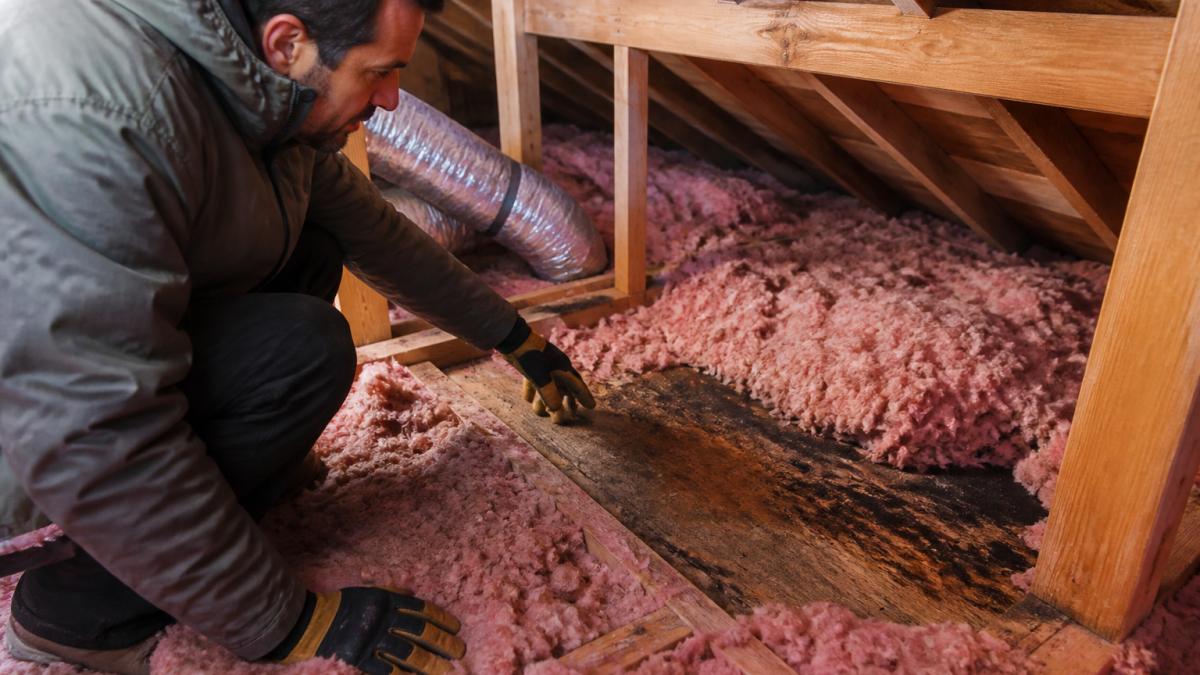
The most reliable signs of a roof leak in the attic are dark water stains on the roof deck, damp or matted insulation, and a musty smell that won't go away. Check after every major storm, not just when you notice a ceiling stain.
Here's what to inspect:
- Brown or gray streaks on rafters and sheathing
- Wet insulation that looks compressed or dark
- Rust on nails poking through the roof deck
- Peeling paint or soft drywall near the attic hatch
- Mold or a damp, earthy odor
Attic Ventilation and Moisture Control That Works
What actually works:
- Keep soffit vents clear of insulation
- Pair intake vents with exhaust vents for steady airflow
- Add a vapor barrier on the warm side of the ceiling
- Run bathroom and kitchen exhaust fans to the outside, never into the attic
Get this right and you solve most "attic rain" complaints before they start.
Sealing Gaps and Air Leaks Before the Next Storm
Air duct sealing and weatherproofing close the gaps that let both air and water into your attic. Most homes have dozens of small openings around pipes, wires, and light fixtures, and each one is a path for moisture.
Focus on these spots:
- Gaps around plumbing and electrical penetrations
- Recessed light fixtures and attic hatches
- Chimney and flue openings
- Cracks where the roof meets the wall
- Loose or missing roof flashing
How to Dry Out Attic Insulation After Water Damage
How to dry out attic insulation depends on what got wet. Fiberglass batts that only caught a light splash can often dry in place. Soaked batts, blown-in cellulose, and any insulation touching mold growth should come out.
Here's the sequence:
- Stop the water source first, or drying is pointless
- Remove standing water and any soaked, unsalvageable insulation
- Set up fans and a dehumidifier to pull moisture from the air
- Check the roof deck and rafters for damp wood
- Replace insulation only after everything is fully dry
Post-Storm Inspection Checklist for Your Roof and Attic
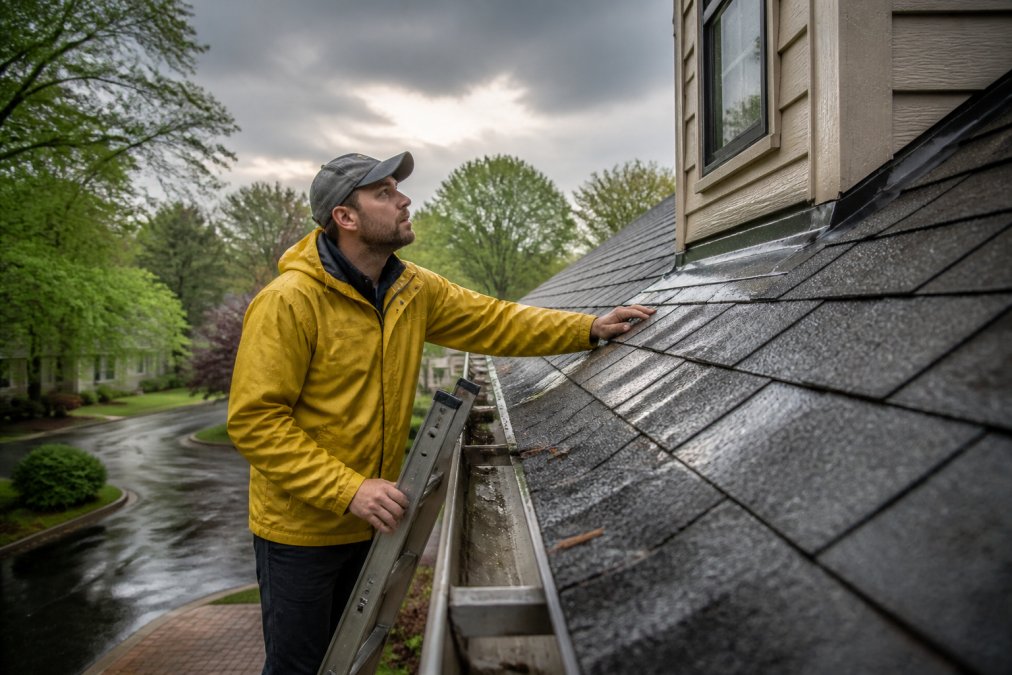
A post-storm inspection should happen within 48 hours of any severe weather, before small leaks become expensive repairs. Walk the attic first, then the roof from the ground with binoculars, and only climb up if it's safe.
Use this checklist:
- Check the attic for water stains, damp insulation, and odors
- Look for missing, lifted, or curled shingles
- Inspect roof flashing around chimneys and vents
- Clear gutters and downspouts of debris
- Check for granules in gutters, a sign of shingle wear
- Look for dents or damage on vents and flashing
- Note any new cracks in the ceiling below
Long-Term Monitoring and Maintenance to Prevent Water Damage in Attic After Storms
Long-term monitoring is what separates a home that survives storm season from one that floods its attic every spring. A few simple habits catch problems while they're still cheap to fix, and a few inexpensive devices catch them while you're asleep.
The Maintenance Calendar That Actually Works
Set a schedule and stick to it:
- Spring and fall: clear gutters, check flashing, scan the attic for stains and damp insulation
- After every major storm: full inspection within 48 hours
- Annually: professional roof and attic review, ideally before storm season
- Monthly in winter: quick attic glance for frost on the roof deck, which is the earliest sign of attic rain
Sensors Worth Installing
You don't need a smart home overhaul. Three device categories cover almost every failure mode:
- Humidity and temperature sensors. Place one near the attic hatch and one near the ridge. A sustained relative humidity reading above roughly 60 percent in a conditioned climate, or visible condensation on the sensor housing, means your attic isn't shedding moisture. Winter frost on the roof deck is the same signal in a colder form.
- Leak detectors. Puck-style or rope-style sensors sit under the roof deck near common leak points: chimneys, plumbing stacks, and valleys. They alert on contact with water, which catches a slow drip long before it stains a ceiling.
- Smart water shutoff or flow monitors. These live at the main line, not the attic, but they catch the downstream consequence of a hidden leak before it becomes a flooded second floor.
What to Do With the Data
- A single high humidity reading after a shower or a rainy day is normal. A week of high readings is not.
- A leak alert is always worth investigating, even if you can't find water. Slow drips hide behind insulation.
- If humidity climbs every winter and drops every summer, your problem is air sealing and ventilation, not your roof.
- If humidity is stable but you get leak alerts after storms, your problem is the roof envelope.
Staying ahead of small repairs is the real secret to preventing water damage in attic after storms. Monitoring just makes sure you find out before the damage does. It's also the cheapest approach.
When to Call a Professional
Call a professional when you find active leaks, soaked insulation, or damage you can't safely reach. Water problems get worse fast, and the cost of waiting always beats the cost of a quick fix.
Signs it's time to bring in help:
- Water still coming in after you've sealed obvious gaps
- Wet or moldy insulation across a large area
- Missing shingles or damaged flashing on a steep roof
- Recurring leaks in the same spot
- Any roof work that requires heights or special tools
Frequently Asked Questions
Will insurance cover storm damage to my roof?
Most homeowners insurance policies cover sudden storm damage from wind, hail, or falling debris, but not damage from lack of maintenance. If your roof was in good condition before the storm and the damage is clearly storm-related, you have a strong claim. Document everything with photos before repairs, file promptly, and ask your contractor to provide a detailed damage report. Policies vary, so review your specific coverage or ask your adjuster directly.
Is there a way to check if my attic has moisture in it?
Yes. Look for water stains on rafters, dark streaks on the roof deck, or frost on nails in cold weather. A simple moisture meter from a hardware store can read wood moisture content; anything above 20% signals a problem. You can also tape a square of plastic sheeting to the underside of the roof deck for 24 hours. Condensation on the inside of the plastic means moisture is rising from below, not leaking from above.
How to dry out a wet attic?
First, stop the water source. Then remove standing water with a wet-dry vacuum. Run fans and a dehumidifier to pull moisture from the air. If insulation is soaked, remove and discard it because wet insulation loses its effectiveness and breeds mold. Open soffit vents and ridge vents to increase airflow. In humid conditions, run the dehumidifier continuously for several days. If the roof deck stays damp, call a professional to assess structural damage.
What are the early signs of attic water damage after a storm?
The earliest signs include dark water stains on ceiling joists or rafters, a musty odor, curling or bubbling paint on the ceiling below, and damp insulation. You might also see rust on nails or metal connectors, which indicates repeated moisture exposure. Check for daylight coming through the roof deck, which means missing shingles or flashing. Catching these signs early prevents mold growth and structural rot that costs thousands to fix.