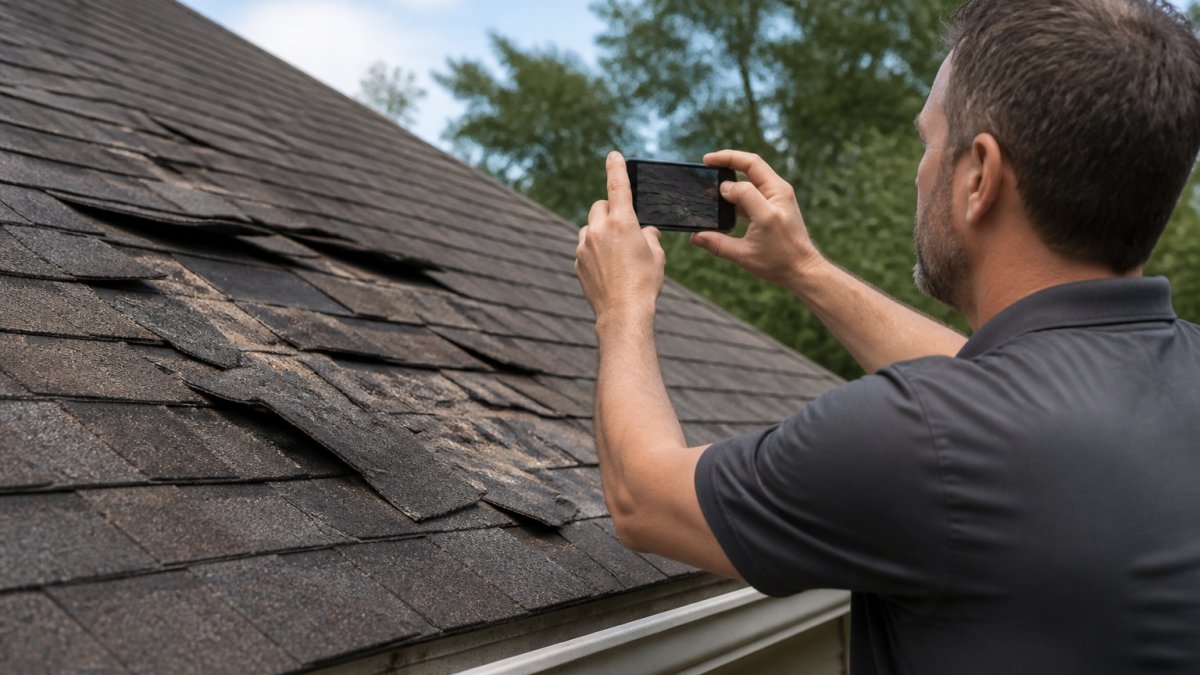
 how-to
How to Document Roof Damage for Insurance Claims in 2026
Table of Contents
- Why Thorough Roof Damage Documentation Makes or Breaks Your Claim
- Your Roof Damage Insurance Claim Checklist: Step-by-Step
- How to Write a Roof Damage Report That Insurers Take Seriously
- Photo and Video Evidence: Capturing Hail Impact vs. Wind Uplift
- What to Say to Insurance Adjusters for Roof Damage (and What to Avoid)
- How Long Does a Roof Insurance Claim Take?
- Conclusion: Protect Your Claim with Professional Verification
- Frequently Asked Questions
Last Updated: September 27, 2026
Why Thorough Roof Damage Documentation Makes or Breaks Your Claim
When a storm rolls through, knowing how to document roof damage for insurance claims is often the difference between a paid claim and a denied one, not the damage itself. Learning how to document roof damage for insurance claims is the single most important thing a homeowner can do after a storm. At Certified Roofing Solutions Inc., we understand the importance of thorough documentation in the insurance claim process.
A roof damage insurance claim checklist is not busywork. It is your evidence file.
Insurance carriers do not pay for what you tell them happened. They pay for what you can prove happened. That means dates, photos, receipts, and a written record that lines up from start to finish.
Most homeowners file a claim with three blurry phone photos and a vague memory of when the storm hit. That is where claims fall apart. Below, we break down exactly what to capture, how to store it, and what to say when the adjuster calls.
Your Roof Damage Insurance Claim Checklist: Step-by-Step
Here is the short version: document the storm, inspect safely, photograph everything, log every action, and keep every receipt. The full process takes a few hours spread over several days, but it protects thousands of dollars in coverage.
Use this table as your master reference before you start:
| Step | What To Do | When | Why It Matters |
|---|---|---|---|
| 1 | Note the date of loss | Same day as storm | Anchors your entire timeline |
| 2 | Photograph exterior from the ground | Within 24 hours | Proves storm was the cause |
| 3 | Check attic for water intrusion | Within 48 hours | Confirms interior damage |
| 4 | Log every call and email | Ongoing | Creates a paper trail |
| 5 | Keep all temporary repair receipts | Ongoing | Supports reimbursement |
| 6 | File proof of loss | Within policy deadline | Formal claim trigger |
Immediate Steps After the Storm Hits
Do not climb on the roof. That is the first rule, and it is the one people break most often. A wet, damaged roof is dangerous, and a fall will cost you far more than the claim is worth.
Instead, do this:
- Write down the date and time the storm hit. This becomes your date of loss.
- Take ground-level photos of your entire property perimeter.
- Check ceilings and walls inside for new stains or sagging.
- Move valuables and furniture away from any leaks.
- Call your insurer to open a claim number the same day if possible.
A common mistake is waiting a week to report the damage. Insurers notice delays, and they will ask why. Report early, even if you are not sure yet how bad it is.
Safe Roof Inspection and Attic Check
An attic inspection is where you find the damage that ground photos cannot show. Grab a flashlight and look for water stains on the underside of the roof deck, damp insulation, and daylight coming through gaps.
From the ground, use binoculars to check for:
- Missing or lifted shingles
- Shingle granules collecting in gutters and downspouts
- Dented vents, flashing, or gutters
- Cracked or displaced ridge caps
If you see any of these, stop and call a professional. Climbing a damaged roof to get a better look is how people get hurt, and it also risks making the damage worse before the adjuster sees it.
How to Write a Roof Damage Report That Insurers Take Seriously
A roof damage report is a written record of what happened, what you observed, and what you did about it. Keep it factual. Dates, locations, and descriptions beat opinions every time.
Your report should answer four questions:
- When did the damage occur?
- What did you observe, and where?
- What temporary steps did you take?
- What have you spent so far?
Write it in plain language. Skip speculation about cause. If you are not a roofing expert, do not claim to be one in writing. State what you saw, not what you think caused it.
Building an Incident Timeline and Documentation Log
Your incident timeline is the backbone of your claim. Start it the day of the storm and add to it every time something happens.
A simple documentation log looks like this:
- Sept 3, 7:15 PM, Hailstorm. Recorded video from porch.
- Sept 4, 8:00 AM, Photographed missing shingles on south slope.
- Sept 4, 10:30 AM, Called insurer, opened claim #.
- Sept 5, Tarped two leak points. Receipt saved.
- Sept 8, Adjuster visit scheduled.
Keep this log in one place, digital or paper. Every call, every email, every receipt goes in. When the adjuster asks "when did you first notice this," you will have the answer in seconds.
Photo and Video Evidence: Capturing Hail Impact vs. Wind Uplift
Hail and wind leave different fingerprints, and your photos need to show which one hit your roof. Hail impact leaves round dents and bruised, soft spots where granules have been knocked loose. Wind uplift lifts and tears shingles, often from the edges and ridges first.
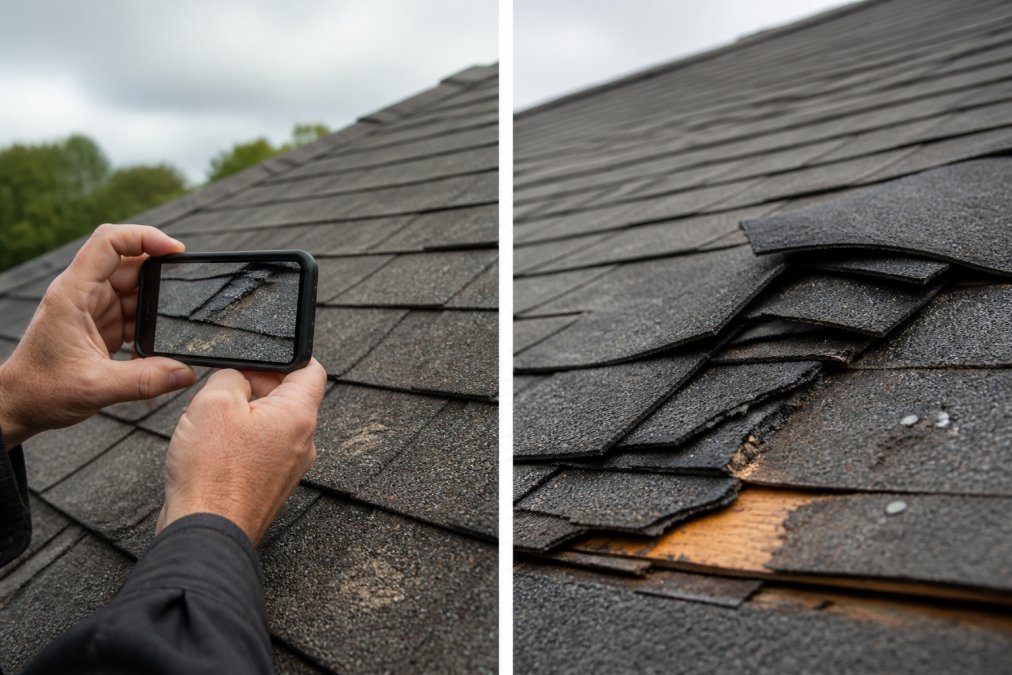
Photograph both the wide view and the close-up. A wide shot shows where the damage sits on the roof.
Digital Evidence Management and Backup
Most homeowners lose their claim evidence to a cracked phone screen or a full storage drive. Do not let that happen.
- Back up every photo and video to cloud storage the same day.
- Name files with the date and location (e.g., "2026-09-03-south-slope.jpg").
- Keep a folder for receipts, a folder for photos, and a folder for correspondence.
- Email yourself copies of important documents so there is a timestamp.
What to Say to Insurance Adjusters for Roof Damage (and What to Avoid)
Keep your answers short, factual, and limited to what you actually saw. The adjuster is not your adversary, but they are also not on your side. They are documenting the claim for the insurer.
Say this:
- "The storm hit on [date]. Here is my photo log and timeline."
- "I noticed water stains in the attic on [date]."
- "I made temporary repairs to prevent further damage. Here are the receipts."
Avoid this:
- Guessing at the cause if you are not sure
- Saying "it's been like that for years"
- Offering opinions on what should be covered
- Agreeing to a settlement before you have reviewed the numbers
How Long Does a Roof Insurance Claim Take?
Most roof claims take a few weeks from filing to decision, but the timeline depends on your policy, the size of the claim, and how fast you supply documents. Some move quickly. Others drag for months if paperwork is missing or the cause is disputed.
Factors that slow a claim down:
- Missing or unclear photos
- No date of loss recorded
- Disputes over depreciation, actual cash value, or replacement cost value
- Unreported temporary repairs with no receipts
Denied Claims: What to Document Next
A denial is not the end. It is a request for better evidence.
- The written denial letter and the stated reason
- Any coverage limits or exclusions cited
- A fresh professional inspection report
- New photos showing damage the first set missed
Conclusion: Protect Your Claim with Professional Verification
Documenting roof damage takes discipline, and most homeowners are doing it while stressed, tired, and worried about the cost. That is exactly when details get missed. A clear checklist, a running timeline, and backed-up photos will carry your claim further than any argument ever will.
Frequently Asked Questions
What documentation do I need for a roof damage claim?
Gather dated photographs of shingle granules, hail impact marks, and wind uplift, plus a written roof damage report noting the date of loss and affected areas. Keep receipts for any temporary repairs and mitigation. Your insurer will also request a proof of loss form, your claim number, and possibly a professional inspection report. A complete roof damage insurance claim checklist prevents gaps that adjusters use to reduce or deny settlements.
What should I not say to a roof insurance adjuster?
Avoid speculating about cause, age, or cost. Do not say the roof was already old or that you are unsure when damage occurred. Do not accept a verbal settlement or sign anything on the spot. Stick to facts: what you observed, when you observed it, and what documentation you have. If you are unsure how to answer, say you will provide the information in writing after reviewing your records.
How do I prove storm damage to my roof?
Use time-stamped photos and video showing hail impact dents on shingles, gutters, and vents, plus wind uplift where shingles are lifted or missing. Include an attic inspection showing water intrusion or daylight through the decking. A written roof damage report with an incident timeline strengthens your proof. For disputed claims, a third-party professional verification from a licensed roofing contractor can confirm the damage source.
How long does a roof insurance claim take from start to finish?
Most roof insurance claims take two to six weeks from filing to settlement, depending on adjuster scheduling and documentation quality. Complex claims involving denied damage or multiple perils can take longer. Submitting a complete roof damage insurance claim checklist and photo evidence upfront reduces back-and-forth delays. If you need temporary repairs, keep every receipt; those costs are often reimbursable under your policy's mitigation coverage.