 Comparison
7 Pros and Cons of Single-Ply Roofing to Know
Last Updated: October 25, 2026
Quick Summary
Single-ply roofing offers fast installation, light structural load, and good reflectivity from one factory-made membrane, but it relies on a single layer of defense where one puncture or bad seam can let water in. TPO, PVC, and EPDM each vary in seams, chemical resistance, and cost, and a well-installed membrane commonly serves 15 to 20 years.
- TPO and PVC membranes use heat-welded seams, while EPDM seams are bonded with adhesive tape or contact adhesive.
- PVC generally offers the broadest chemical resistance and carries the highest material cost of the three common membranes.
- Mechanically attached systems are usually the least expensive to install on suitable decks.
- Warranties often exclude ponding water, foot traffic damage, and certain chemical exposures.
- Built-up roofing stacks multiple plies and is heavy and slow to install, while single-ply uses one membrane.
Table of Contents
- What Single-Ply Roofing Is and Where It Fits
- The Main Pros of Single-Ply Roofing
- The Main Cons and Limitations
- TPO Roofing Pros and Cons
- What Single-Ply Roofing Cost Really Includes
- Single-Ply Roofing Lifespan and What Shortens It
- Single-Ply vs. Built-Up Roofing Compared
- Choosing the Right Membrane for Your Building
- Frequently Asked Questions
What Single-Ply Roofing Is and Where It Fits
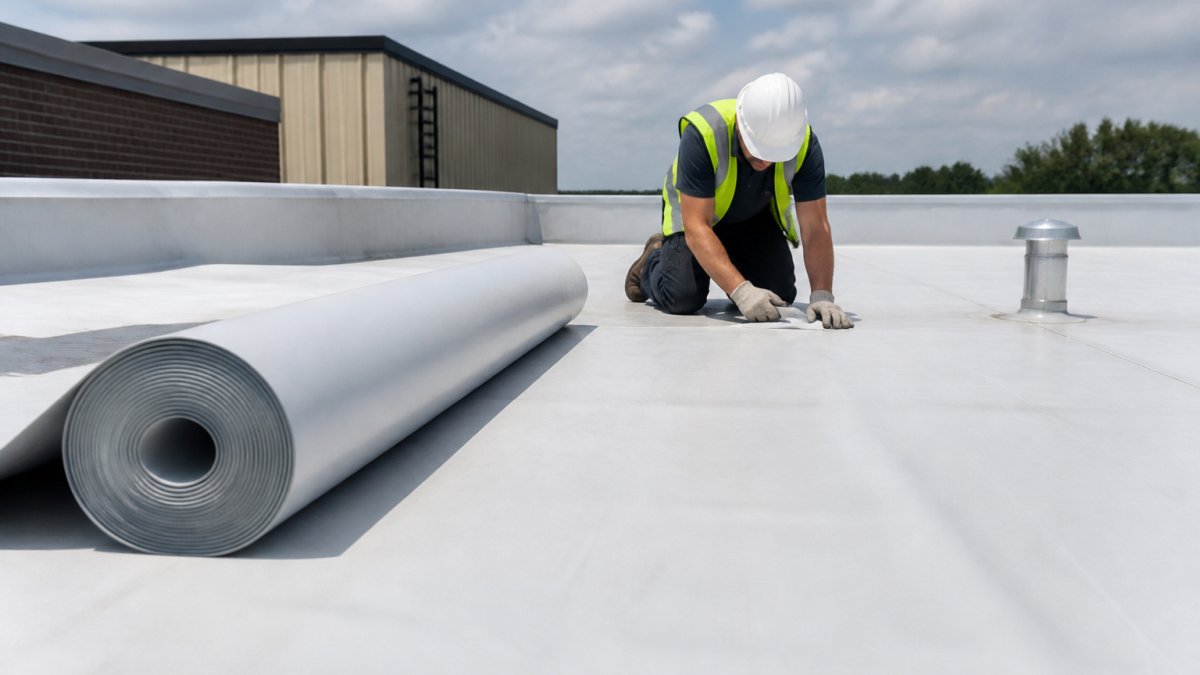
Single-ply roofing is a low-slope roofing system built from one factory-made membrane layer instead of several overlapping plies. That single sheet handles waterproofing, UV resistance, and weather resistance on its own.
The category covers three main materials: TPO, PVC, and EPDM. Each is either a thermoplastic membrane that softens when heated or a thermoset membrane that cures and stays put. That distinction drives how seams close, how repairs work, and how long the roof lasts.
How a Single-Ply Membrane Differs from Multi-Layer Systems
Multi-layer roofs, like built-up roofing or modified bitumen, stack layers of felt and asphalt. Single-ply skips the stacking. You get one thick sheet, mechanically attached, fully adhered, or held down with ballast.
The payoff is simpler: fewer seams to fail, faster installation, and far less structural load. The trade-off is that one membrane takes all the wear with no backup ply underneath.
The Main Pros of Single-Ply Roofing
The advantages of single-ply roofing are real, but they are not uniform across the category. TPO, PVC, and EPDM each deliver a different mix of speed, weight, reflectivity, and chemical resistance, and the strongest case for single-ply is usually membrane-specific rather than category-wide.
Speed and structural load
A single-ply assembly is one factory-made sheet, so a crew can cover a large low-slope roof far faster than a multi-ply built-up or modified bitumen system. The finished assembly also adds very little dead load compared with a flood-coated built-up roof or a ballasted assembly. For older buildings with limited structural capacity, or for occupied commercial buildings where downtime is expensive, that combination of speed and light weight often decides the project before material performance is even discussed.
Attachment method changes the weight and speed picture:
- Mechanically attached systems use fasteners and plates through the membrane or through an insulation layer. They are fast and common on large warehouse and industrial roofs.
- Fully adhered systems bond the membrane to the substrate with adhesive. They handle high wind uplift well and avoid fastener penetrations, but they are slower and more sensitive to substrate moisture and surface prep.
- Ballasted systems hold the membrane down with gravel or pavers. They are simple and quiet under foot traffic, but the ballast adds substantial dead load, which rules them out on many older decks.
Reflectivity and energy performance
White TPO and white PVC membranes reflect solar radiation and can lower peak roof surface temperatures compared with dark EPDM or modified bitumen. For a deeper breakdown of reflective TPO roofing membranes: benefits & energy savings, see our dedicated article. The U.S. Department of Energy guidance on cool roofs explains how reflective surfaces reduce peak roof temperatures and cooling demand.
Reflectivity is not permanent. Dirt, pollen, and biological growth dull the surface over time, and the initial reflectance of a white membrane is not the same as its three-year or five-year performance.
Seams, waterproofing, and repairability
The seam is where single-ply roofs succeed or fail, and the seam method differs by membrane:
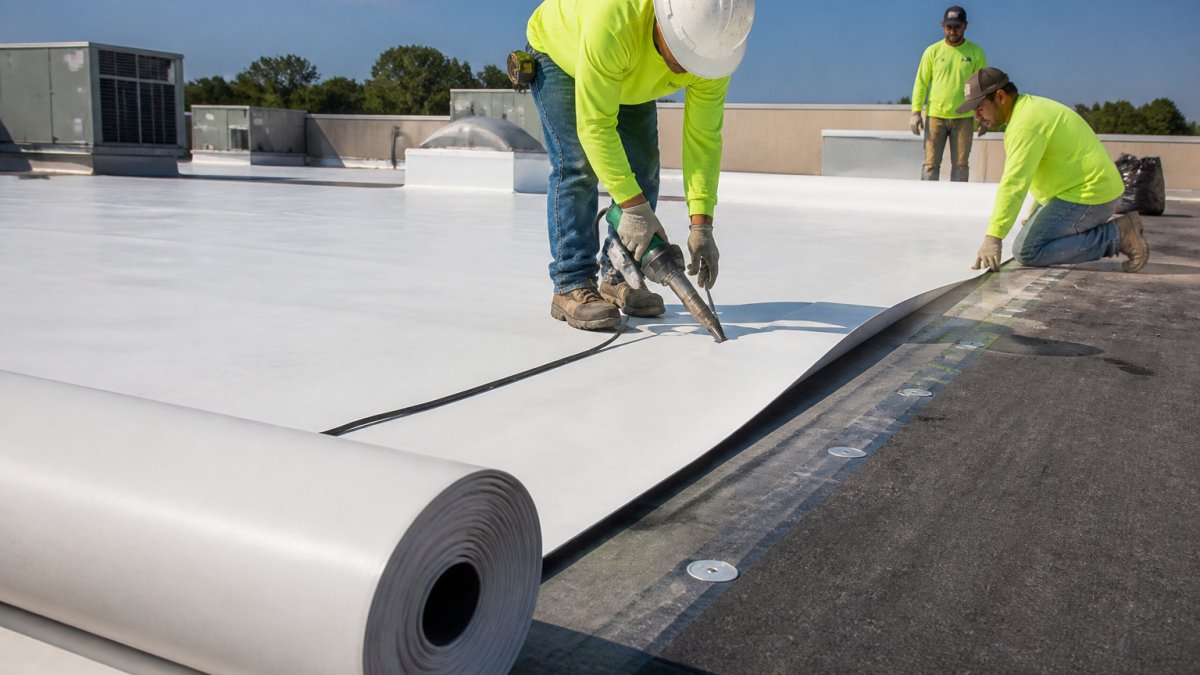
- TPO and PVC are thermoplastics. Their seams are heat-welded, which fuses the sheets into a continuous membrane. A properly welded seam is strong and watertight, and it can be tested.
- EPDM is a thermoset. It cures and cannot be re-melted, so seams are bonded with adhesive tape or contact adhesive. Adhesive seams are reliable when installed correctly but are more sensitive to surface contamination, temperature, and workmanship than a heat-welded seam.
Repairability follows the same logic. A thermoplastic membrane can be patched with a heat-welded patch, which is fast and permanent when done right. EPDM repairs use adhesive-backed patches or splice adhesive, which work but demand clean, dry surfaces and careful rolling.
Chemical and puncture resistance by membrane
Puncture resistance and chemical resistance are not category-wide traits. They vary by membrane, thickness, and reinforcement:
- PVC generally offers the broadest chemical resistance of the three and is often specified where grease, oils, or restaurant exhaust are present. It is also available in thicker reinforced grades for high-traffic roofs.
- TPO resists many common chemicals but is more vulnerable to certain oils and animal fats than PVC. Its puncture resistance improves with thickness and reinforcement.
- EPDM resists ozone, UV, and weathering very well and remains flexible in cold weather, but it has limited resistance to oils and grease and is generally less reflective.
The Main Cons and Limitations
The honest downside is that one membrane means one layer of defense.
Foot traffic is the other weak spot. Maintenance crews, HVAC technicians, and anyone walking the roof can scuff or tear a membrane over time.
Watch out: skipped or rushed seam welding is a common failure.
Also, not every membrane handles every chemical or exposure equally. Grease from kitchen exhaust, ponding water, and harsh UV all stress the sheet differently.
TPO Roofing Pros and Cons
TPO is the most common thermoplastic membrane on commercial roofs, and for good reason. For a direct comparison against EPDM before deciding on a membrane, see TPO vs EPDM Roofing for Commercial Buildings. It welds cleanly, reflects heat well, and costs less than PVC in most cases.
Pros:
- Heat-welded seams form strong, watertight bonds
- Good reflectivity supports energy efficiency
- Resists UV and ozone well
Cons:
- Seam quality depends entirely on the installer
- Long-term performance varies by manufacturer and thickness
- Can attract dirt, which dulls reflectivity over time
What Single-Ply Roofing Cost Really Includes
Single-ply roofing cost is not one number, and any quote that arrives without a roof inspection is a guess. The installed price bundles membrane material, thickness, attachment method, insulation and cover board, tear-off and disposal of the old roof, deck repairs, flashing and edge metal, and labor. Two roofs of the same square footage can land in very different price bands depending on those variables.
The cost drivers that move the number most
- Membrane type. PVC typically carries the highest material cost of the three common membranes, TPO sits in the middle, and EPDM is usually the lowest material cost. The gap narrows once installation and seam method are included.
- Thickness and reinforcement. A thicker or reinforced membrane costs more per square but resists foot traffic and punctures better, which can reduce repair spending over the roof's life.
- Attachment method. Mechanically attached systems are usually the least expensive to install on suitable decks. Fully adhered systems cost more in adhesive and labor but can be required for wind uplift or warranty reasons. Ballasted systems add the cost and weight of ballast.
Lifecycle cost and total cost of ownership
The more useful comparison is not installed price but total cost of ownership over the roof's service life. A lower-cost membrane that needs more seam repairs, loses reflectivity quickly, or fails early can cost more than a higher-priced membrane that performs. A practical way to compare bids is to line up:
- Installed cost
- Expected service life under your climate and traffic
- Estimated annual maintenance and inspection cost
- Likely repair frequency and typical repair cost
Most practitioners find that the membrane itself is a minority of the installed cost, which is why workmanship and detailing deserve as much attention as the material spec. A premium membrane installed badly is a worse investment than a mid-grade membrane installed correctly.
Pricing depends on roof size, access, deck condition, and how much prep the old surface needs. We quote after inspecting the deck, not over the phone, because hidden damage changes the scope.
Single-Ply Roofing Lifespan and What Shortens It
A well-installed single-ply membrane commonly serves 15 to 20 years, and thicker, well-maintained systems can push past that. The gap between a roof that lasts and one that fails early usually comes down to installation and upkeep, not the material label. For practical upkeep guidance, see How to Maintain Commercial TPO Roofing Systems.
What shortens service life:
- Poor seam welding or rushed adhesion
- Foot traffic and unaddressed punctures
- Ponding water that never drains
- Skipped inspections that let small tears grow
Single-Ply vs. Built-Up Roofing Compared
Built-up roofing, often called felt roofing, stacks multiple layers of asphalt and felt. It is heavy, slow to install, and proven over decades. Single-ply is lighter, faster, and easier to repair, but relies on one sheet.
| Factor | Single-Ply | Built-Up Roofing |
|---|---|---|
| Layers | One membrane | Multiple plies |
| Weight | Light | Heavy |
| Installation speed | Fast | Slow |
| Seams | Few, heat-welded or adhered | Many, layered |
| Repair | Patch the sheet | Rebuild plies |
| Best for | Weight-sensitive, fast-turnaround roofs | Budget-driven, proven assemblies |
The right call depends on your deck's load capacity, your timeline, and how much maintenance you will actually do.
Choosing the Right Membrane for Your Building
Climate and building use should drive the decision, not a generic ranking. Hot, sunny exposures favor reflective thermoplastic membranes. Buildings with chemical exposure, like restaurants, need a membrane rated for it.
Installation quality decides more than the spec sheet. A premium membrane welded badly fails faster than a mid-grade sheet installed correctly.
When you are ready to move, our commercial roofing installation service walks you through membrane selection and scheduling.
Frequently Asked Questions
How long does single-ply roofing last?
Single-ply roofing lifespan depends on the membrane and how well it is installed. EPDM commonly reaches 20 to 25 years, while TPO and PVC often land in the 15 to 25 year range. Heat-welded seams, proper attachment, and regular inspections extend service life. Ponding water, foot traffic, and skipped maintenance shorten it. Ask your contractor for the manufacturer's warranty terms and what maintenance the warranty requires, because coverage often depends on documented upkeep.
What is the difference between TPO, EPDM, and PVC roofing?
TPO is a thermoplastic membrane with heat-welded seams and strong reflectivity, popular on commercial low-slope roofs. PVC is also thermoplastic, offers excellent chemical and grease resistance, and is common on restaurants and buildings near industrial exhaust. EPDM is a thermoset rubber membrane with a long track record, good flexibility in cold weather, and lower reflectivity unless a coated version is used. Each has different seam methods, repair approaches, and cost profiles.
Is single-ply roofing suitable for a flat or low-slope roof?
Yes. Single-ply membranes are designed for flat and low-slope roofs, typically with a slope as low as a quarter inch per foot when the system is rated for it. They are lightweight, which suits buildings with limited structural capacity. Attachment method matters: mechanically attached, fully adhered, and ballasted systems perform differently depending on wind exposure and deck type. A contractor should confirm the deck condition and drainage before recommending a membrane.
How does single-ply roofing compare with built-up roofing?
Built-up roofing uses multiple layers of felt and bitumen, giving it heavy mass and proven water resistance, but installation is slower and the roof weighs considerably more. Single-ply goes down in fewer passes, weighs less, and is easier to repair in small sections. Built-up roofing can offer strong puncture resistance and long service life when maintained. The right choice depends on budget, structural load, drainage, and how much downtime the building can tolerate.
Choosing a roof membrane is a decision you live with for two decades, and the wrong installer can undo the best material. Certified Roofing Solutions Inc. brings an experienced team, services tailored to each building's needs, and a commitment to excellence on every project. Get started with Certified Roofing Solutions Inc. and put a roof over your building that holds up to the weather and the years.