 Comparison
Asphalt Shingles vs Metal: Wind Resistance Compared
Last Updated: October 23, 2026
Quick Summary
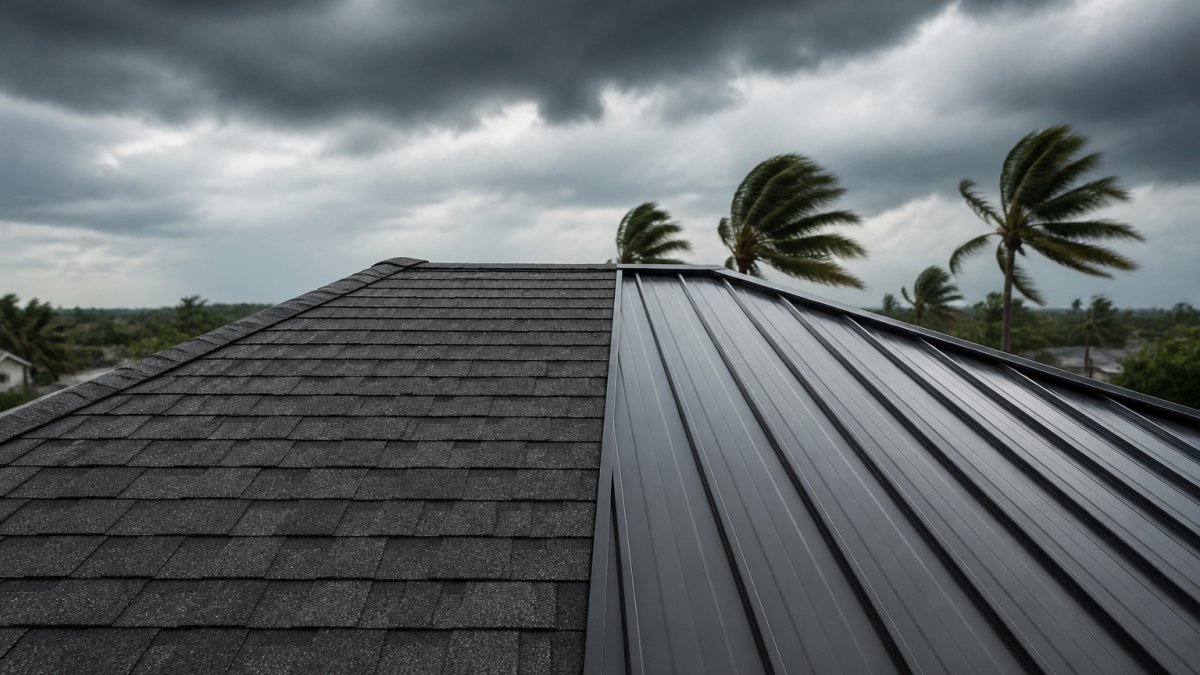
Metal roofing generally offers higher wind resistance than asphalt shingles, with typical ratings of 120-140+ mph versus 60-130 mph for shingles depending on grade. However, wind resistance is a system property, so fasteners, deck condition, and installation quality decide real-world performance for both materials.
- Wind uplift pulls roofs upward, starting at edges, corners, and ridges where pressure is highest.
- Standing-seam metal panels with concealed clips generally perform best among metal configurations.
- Three-tab shingles sit at the lower end of the wind-resistance scale and are often ruled out in high-wind zones.
- Nails driven above the nailing zone or too deep quickly reduce a shingle's effective rating.
- Manufacturer wind warranties typically require installation to specifications and often exclude labor and interior damage.
Table of Contents
- Asphalt Shingles vs Metal Roofing: The Wind Resistance Comparison
- How Wind Uplift Actually Fails a Roof
- Metal Roof Wind Rating: What the Numbers Really Mean
- Asphalt Shingle Wind Rating: Where Shingles Stand
- High-Wind Roof Installation: Fastening and System Details
- Roofing Wind Warranty: What Manufacturers Cover and What They Don't
- Durability, Hail, and Water Intrusion in Severe Weather
- Code, Insurance, and Choosing the Right Roof After a Storm
- Frequently Asked Questions
Asphalt Shingles vs Metal Roofing: The Wind Resistance Comparison
This guide from Certified Roofing Solutions Inc. breaks down comparing asphalt shingles vs metal for wind resistance, from the rating standards to the failure points most homeowners never hear about.
Wind resistance is not a single number you can pin on a material. It's a system property: the panel or shingle, the fasteners, the deck, and the installation quality all have to hold together. Below, we'll show you how each material actually fails in wind, what the ratings mean, and how to choose with your eyes open.
Quick Comparison Table
Here's the short version before we go deeper. The table below summarizes how the two materials compare across the factors that decide wind performance.
| Factor | Asphalt Shingles | Metal Roofing |
|---|---|---|
| Wind uplift mechanism | Shingle tabs lift, seal breaks, tabs peel | Panels lift at edges, clips or fasteners pull |
| Typical wind rating | 60-130 mph depending on grade | 120-140+ mph depending on system |
| Fastening system | Nails or staples through shingle | Screws, clips, or concealed fasteners |
| Lifespan | 15-30 years | 40-70 years |
| Hail resistance | Varies by shingle; Class 4 available | Varies by panel gauge and profile |
| Water intrusion risk | Higher once tabs lift | Lower if seams and penetrations are sealed |
| Fire resistance | Class A available | Class A available |
| Installation sensitivity | High, especially in heat and cold | High, especially at seams and clips |
The numbers above are general ranges, not promises. Your actual performance depends on the specific product, your roof geometry, and the crew doing the work.
How Wind Uplift Actually Fails a Roof
Wind doesn't push roofs down. It pulls them up.
As wind flows over a roof, it creates negative pressure above the surface. The faster the wind, the stronger the lift. This is wind uplift, and it's the force that peels shingles and lifts metal panels. The failure starts at the edges, corners, and ridges, where pressure is highest.
For asphalt shingles, uplift works on the sealant strip that bonds each tab to the one below. Once that seal breaks, the tab flaps, catches wind, and peels back. One lifted tab exposes the next. For metal, uplift attacks the panel edges and the fastening system. A single failed clip can let a panel lift, and a lifted panel becomes a sail.
Metal Roof Wind Rating: What the Numbers Really Mean
Metal roofing generally carries higher wind ratings than asphalt shingles, but the rating depends on the system, not the material alone.
A metal roof wind rating is typically expressed as a maximum design wind speed the assembly has been tested or engineered to withstand.
Here's what most guides miss: a wind rating is a test condition, not a guarantee. A panel rated for a high design wind speed in a lab doesn't account for a crew that spaced clips too far apart, skipped edge fasteners, or installed over a deck that flexes.
Standing seam vs. exposed-fastener panels vs. metal shingles
Not all metal roofs fail the same way, and the rating differences follow the attachment method:
- Standing-seam panels with concealed clips. The panel ribs are raised above the water plane and held by clips that allow thermal movement. Wind uplift is transferred through the clips to the deck. Performance depends on clip spacing at field, edge, and corner zones, panel gauge, and seam engagement. This is generally the highest-performing metal configuration when installed to the manufacturer's uplift tables.
- Exposed-fastener panels (screw-through). Screws with washers penetrate the panel face. Uplift pulls directly on each screw, and a single backed-out or over-driven screw becomes a leak and a lift point. Ratings are typically lower than concealed-clip standing seam and are highly sensitive to screw spacing and torque.
- Metal shingles and stamped panels. These mimic the look of shingles or shakes and often use clips or nails at interlock points. Wind performance varies widely by profile and interlock design, and edge and hip details matter as much as the field.
A common pattern in storm investigations is that the metal roof itself survives while the edge metal, ridge cap, or penetration flashing fails first, and once edge metal peels, the panels behind it are exposed. Metal system ratings should be read alongside the accessory and flashing details, not just the panel data sheet.
FEMA guidance on wind-resistant roofing stresses that roof cover performance depends heavily on attachment details, not just product ratings.
Asphalt Shingle Wind Rating: Where Shingles Stand
Asphalt shingle wind ratings range widely by product grade, and the label on the bundle tells you what you're getting, but only if you know how to read it.
The practical differences by shingle type:
- Three-tab shingles. The lightest and least expensive option. They typically sit at the lower end of the wind-resistance scale and rely heavily on the sealant strip and correct nailing. In high-wind zones they are often the first product to be ruled out.
- Architectural (laminate) shingles. Thicker and heavier, with a laminated profile. Many carry higher wind-resistance classifications than three-tab, but the gain comes from the product design plus installation details, not from thickness alone.
- High-wind-rated shingles. Some manufacturers offer shingles specifically classified for higher wind speeds, often with reinforced sealant or modified nailing requirements. These can perform well, but the classification assumes the full system: starter strips at eaves and rakes, sealed ridge caps, and the specified number of nails placed in the manufacturer's nailing zone.
The weak points are predictable: shingle tabs, the sealant strip, and the nails. Sealant strips need warm enough weather to bond; installation in cold conditions without proper sealing can leave tabs unsealed and vulnerable.
A common pattern after high-wind events is that roofs with correct nailing, intact starter strips, and sealed tabs perform far better than neighboring roofs with the same shingle installed casually.
If you're weighing whether damaged shingles can be patched, our guide to repairing wind damaged asphalt shingles yourself walks through what's realistic for a homeowner to handle.
High-Wind Roof Installation: Fastening and System Details
High-wind roof installation comes down to one principle: every layer has to resist uplift as a unit.
For shingles, that means the right number of nails per shingle, placed in the manufacturer's nailing zone, plus starter strips and sealed ridge caps.
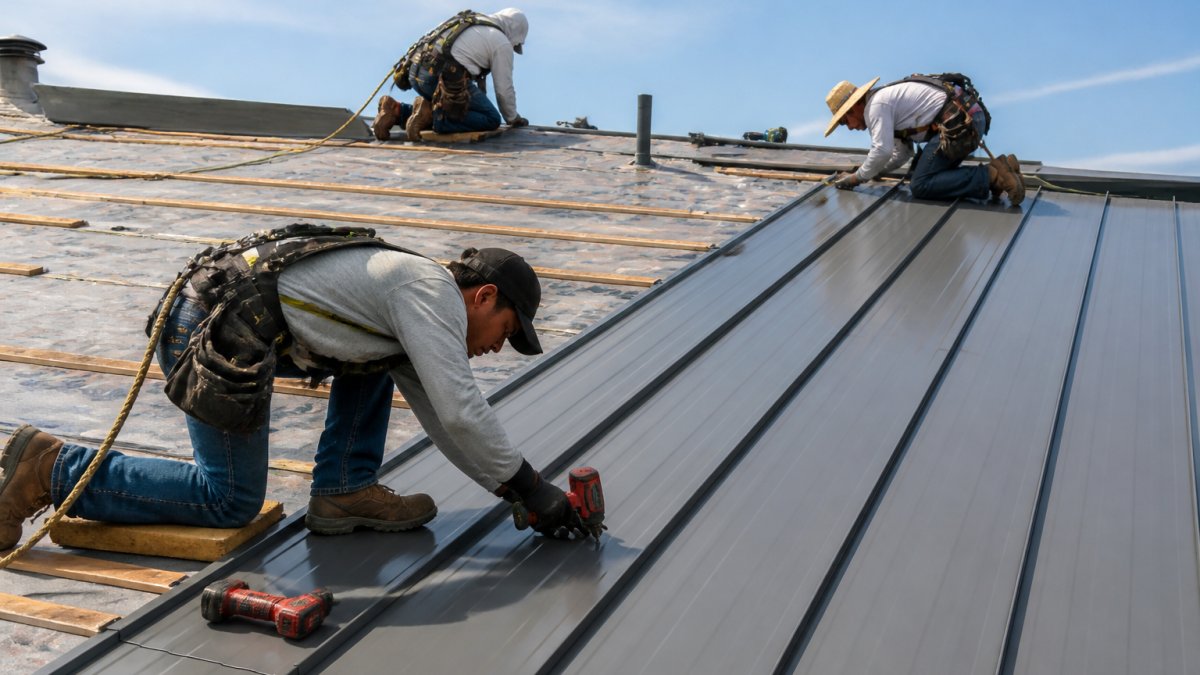
A common mistake is treating installation quality as a nice-to-have. In a high-wind event, it's the deciding factor. The same shingle installed two different ways performs like two different products.
Roofing Wind Warranty: What Manufacturers Cover and What They Don't
A roofing wind warranty is narrower than most homeowners expect, and the exclusions matter as much as the coverage.
Manufacturers typically cover wind damage up to a stated wind speed, but only if the roof was installed to their specifications by a qualified installer. Miss a nailing requirement or skip a required component, and the claim can be denied. Labor, removal, and interior damage are often excluded or capped. Many warranties also prorate coverage over time.
For a fuller breakdown of what these documents do and don't protect, see our guide to understanding roof warranties. Read the wind section before you sign, not after a storm.
Durability, Hail, and Water Intrusion in Severe Weather
Durability favors metal on lifespan, but the gap narrows once you factor in hail and water intrusion.
Metal roofing generally lasts longer than asphalt, and it resists wind-driven rain well when seams and penetrations are sealed. Hail resistance depends on panel gauge and profile, and some metal systems carry impact ratings. Asphalt shingles vary widely; impact-rated shingles exist, but standard shingles can bruise or crack in hail, and bruised shingles fail sooner.
Water penetration is the quiet risk. Once shingle tabs lift, wind-driven rain gets underneath. Metal sheds water better, but a failed seam or an unsealed penetration lets water in just the same. For a broader playbook, see the ultimate guide to storm proofing your roof.
Code, Insurance, and Choosing the Right Roof After a Storm
Building code and insurance shape your decision as much as material performance does.
Local building codes set minimum wind requirements for roof coverings, and in high-wind zones those requirements are stricter. Your insurer may also offer credits for impact-rated or wind-rated materials.
If you're facing a claim, our guide to navigating insurance claims for roof damage walks through the process step by step. And if you're still comparing materials for a high-wind roof, our roundup of the 5 best roofing materials for high wind resistance puts both options in a wider context.
When you're ready to talk through your roof, our team at Certified Roofing Solutions Inc. can assess the damage and recommend the right system for your home or commercial property.
Wind damage rarely announces itself. It shows up as a lifted tab, a loose panel, or a stain on the ceiling weeks later.
Frequently Asked Questions
Are metal roofs more wind-resistant than asphalt shingles?
In general, metal roofing systems carry higher wind ratings than asphalt shingles, but the gap depends on the specific product and installation. Standing-seam metal panels with concealed fasteners often hold up best in high winds because there are no exposed fasteners for wind to catch. That said, a properly installed architectural shingle roof with a high wind rating and a reinforced fastening pattern can perform well in most storms. The system matters as much as the material.
What wind speeds can asphalt shingles withstand?
Standard three-tab shingles are typically rated around 60 to 70 mph, while architectural shingles often carry ratings of 110 to 130 mph when installed to manufacturer specs. Some premium shingle lines reach higher ratings with a reinforced nailing pattern and enhanced starter strips. Real-world performance depends on installation quality, deck condition, and whether the shingles were fastened correctly. A shingle rated for 130 mph can still fail early if nails are misplaced or the underlayment is compromised.
Do metal roofs need special fasteners for high-wind areas?
Yes. High-wind roof installation for metal systems often calls for screws with washers rated for the specific panel, and concealed-clip systems that spread holding power across the panel. Exposed-fastener panels rely on screw placement at the recommended spacing and torque, and over-driving or under-driving screws weakens the hold. In areas with frequent hurricane winds, manufacturers may require a tighter fastener pattern or additional clips. Always follow the manufacturer's installation manual for the rated wind speed.
What should homeowners check on a roof after a windstorm?
Look for lifted or missing shingle tabs, granules collecting in gutters, dented or loosened metal panels, and exposed fasteners. Check the attic for daylight, water stains, or damp insulation, which can signal wind-driven rain intrusion. Also inspect flashing around chimneys and vents, since these are common leak points after high winds. If you see curling shingles or creased panels, call a roofing professional for an inspection before the next storm, because small failures often lead to bigger water damage.