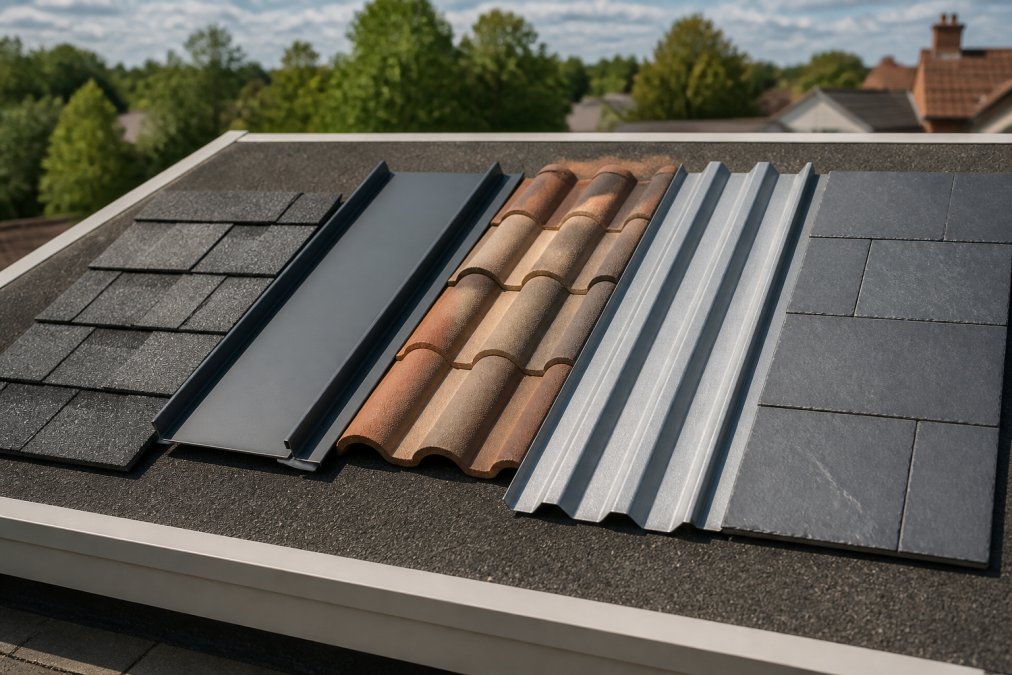
 listicle
5 Best Roofing Materials for High Wind Resistance
Table of Contents
- Why Wind Resistance Matters for Your Roof
- Quick Comparison: Top 5 Materials by Wind Rating
- 1. Metal Roofing: Superior Wind Uplift Protection
- 2. Wind-Rated Roofing Shingles: Class H and Beyond
- 3. Clay and Concrete Tiles: Weight and Durability
- 4. Slate Roofing: Premium Wind Resistance
- 5. TPO Roofing for Commercial Applications
- How to Reinforce Your Roof for High Winds
- Frequently Asked Questions
Why Wind Resistance Matters for Your Roof
When severe storms hit, the difference between a roof that holds and one that fails comes down to material selection and installation quality. Wind uplift, the pressure differential that tries to peel your roof away from the structure, is one of the most destructive forces a roof faces. The best roofing materials combine material strength, proper fastening, and structural design.
Quick Comparison: Top 5 Materials by Wind Rating
| Material | Wind Rating | Weight | Durability | Best For |
|---|---|---|---|---|
| Metal Roofing | 140+ mph | Light | 40-70 years | High-wind zones, commercial |
| Class H Shingles | 130-150 mph | Medium | 20-30 years | Residential, most climates |
| Concrete Tiles | 125-140 mph | Heavy | 50+ years | High-wind areas, premium homes |
| Clay Tiles | 120-130 mph | Heavy | 50+ years | Architectural, coastal areas |
| TPO Membrane | 100-120 mph | Light | 20-30 years | Commercial, flat roofs |
1. Metal Roofing: Superior Wind Uplift Protection
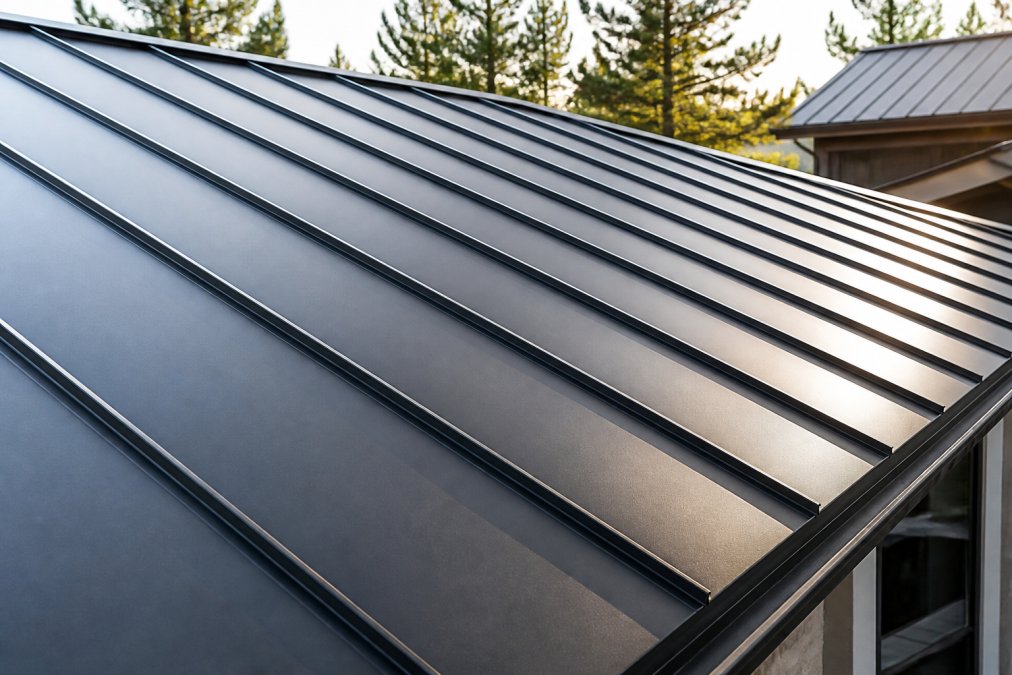
Metal roofing stands as the top choice for homeowners in high-wind zones. Standing seam metal panels lock together mechanically, creating a unified roof system that resists wind uplift better than any other residential material. The seams don't rely on sealant, they interlock, so wind can't find weak points where sheets meet.
Metal's lightweight design is counterintuitive but crucial. While heavier materials seem more stable, metal's aerodynamic profile actually reduces wind load on the structure. A metal roof weighs 1-3 pounds per square foot compared to 12-15 pounds for asphalt shingles, meaning less stress on fasteners and the underlying structure (nrca.net). Metal roofing achieves wind ratings of 140+ mph when properly installed.
Fasteners are concealed within the seam system, protected from direct wind exposure. Installation quality matters enormously, fasteners must be driven perpendicular to the panel surface and spaced according to manufacturer specifications, typically 12-24 inches apart depending on wind zone. Metal expands and contracts with temperature changes, which is why quality installations include expansion clips and floating fastener systems. This movement is normal and actually prevents the stress buildup that causes shingle failure.
2. Wind-Rated Roofing Shingles: Class H and Beyond
Not all asphalt shingles are created equal for wind resistance. Class H shingles, the highest impact-rated classification, are engineered to resist wind uplift and impact damage. These shingles are tested to withstand impacts equivalent to 2-inch steel balls dropped from 20 feet and maintain integrity under extreme wind conditions (astm.org).
Wind-rated shingles achieve their ratings through heavy-duty adhesive strips that bond shingles to the layer beneath, preventing lifting during high winds. The shingles themselves are thicker and contain more asphalt and aggregate than standard three-tab shingles.
Architectural (laminated) shingles offer better wind resistance than basic varieties because their layered construction increases tensile strength.
The wind rating system ranges from 60 mph for basic shingles to 130-150 mph for Class H products. Miami-Dade approval is a benchmark, shingles approved by Miami-Dade County have passed some of the most rigorous wind testing in the country and will handle wind in virtually any other region.
Fastener placement is critical. Proper installation requires four fasteners per shingle in standard wind zones, but six in high-wind areas. Each fastener must penetrate through the shingle, underlayment, and roof sheathing by at least 3/4 inch. Fasteners driven too shallow won't hold; fasteners driven too deep create punctures that allow water infiltration.
Adhesive quality degrades over time due to UV light and temperature cycles. Shingle roofs typically need replacement every 20-30 years in high-wind climates, even without failure, because the material can't maintain wind resistance indefinitely.
3. Clay and Concrete Tiles: Weight and Durability
Clay and concrete tiles provide exceptional wind resistance through weight and interlocking design. A clay tile roof weighs 12-15 pounds per square foot, three to five times heavier than asphalt shingles (nrca.net). This weight, combined with mechanical interlocking, creates a roof system that resists uplift through sheer mass and structural integrity.
Concrete tiles offer similar performance to clay at lower cost. Both materials achieve wind ratings of 120-140 mph when properly installed. Each tile hooks onto the tile below it, creating a chain-like structure that distributes wind loads across the entire roof rather than concentrating stress on individual fasteners.
The durability advantage is significant. Clay tiles last 50+ years, often 75-100 years with proper maintenance. Concrete tiles last 40-50 years. Unlike shingles, tiles don't experience adhesive degradation or UV-induced brittleness.
Installation complexity increases with tile roofing. The roof structure must support the weight, typically requiring engineered reinforcement. Fasteners must be stainless steel or hot-dipped galvanized to prevent corrosion. Underlayment must be high-quality, as tiles are porous and any water that gets past them needs a secondary barrier. Flashing around penetrations, vents, chimneys, and skylights must be installed carefully to prevent water intrusion.
Cost is the primary limitation. Tile roofing costs significantly more than shingles or metal in both material and labor, plus structural reinforcement adds expense. For homeowners in high-wind zones seeking a premium, long-lasting solution, tiles are worth considering.
4. Slate Roofing: Premium Wind Resistance
Slate represents the ultimate in roofing durability and wind resistance. Natural slate is quarried stone cut into thin sheets and installed with fasteners. A slate roof weighs 15-20 pounds per square foot and lasts 75-200 years depending on slate quality and climate. The material's density and hardness make it virtually impervious to wind damage, hail, and impact.
Wind resistance with slate is exceptional, with 140+ mph ratings standard. The material doesn't degrade and doesn't lose structural properties over time. A slate roof installed in 1950 will likely still perform well in 2050 if fasteners are maintained.
Slate must be fastened with copper or stainless steel fasteners, never galvanized. Each slate is typically fastened with two fasteners in pre-drilled holes to prevent splitting. Underlayment must be high-quality for moisture management.
Installation requires specialized expertise. Not all roofers are qualified to install slate properly. The material is brittle and must be handled carefully. This specialization means slate installation costs are considerably higher than other materials.
Maintenance is minimal but important. Fasteners should be inspected every 20-30 years and replaced if corroded. Broken slates can be replaced individually without affecting the rest of the roof. For homeowners planning long-term occupancy, slate's 100+ year lifespan makes it economically sensible despite high upfront costs.
5. TPO Roofing for Commercial Applications
TPO (thermoplastic polyolefin) is the dominant commercial flat roofing material and offers solid wind resistance when properly installed. TPO comes in rolls that are heat-welded together, creating a continuous membrane with no seams. Wind ratings typically range from 100-120 mph depending on thickness and fastening pattern.
The advantage of TPO is its flexibility and ease of repair. A TPO roof can be patched quickly if damaged. The material resists UV degradation better than older EPDM rubber membranes. For commercial properties with flat or low-slope roofs, TPO is often the most cost-effective choice.
Wind resistance depends entirely on the attachment system. TPO can be fully adhered to the substrate, mechanically fastened around the perimeter and seams, or ballasted with gravel or pavers. Fully adhered TPO offers the best wind performance. The seam is the critical point, heat-welded seams, when done properly, are stronger than the membrane itself. Poor seam welding is the primary failure point in TPO roofs.
TPO lifespan is typically 20-30 years, shorter than most residential materials. Commercial buildings often accept this as a maintenance cost. For residential applications, TPO is less common because homeowners prefer longer-lasting materials.
How to Reinforce Your Roof for High Winds
Choosing the right material is only part of the equation. Installation quality, fastener specifications, and underlayment selection determine whether your roof actually performs as designed. A premium material installed poorly will fail.
Fastener Specifications and Installation Quality
Fasteners are the most critical installation element, they're the only thing holding your roof to your home. Using the wrong fastener, installing it incorrectly, or spacing them improperly will cause failure regardless of material quality.
For shingles, fasteners must be hot-dipped galvanized or stainless steel, typically 1 1/4 inches long with a 5/16-inch diameter head. The larger head distributes load across a wider area, preventing pull-through. For metal roofing, fasteners are usually stainless steel or galvanized, installed with rubber washers that compress as the fastener is tightened, creating a weather seal.
Fastener spacing varies by wind zone. In standard wind zones, fasteners might be spaced 12-24 inches apart. In high-wind zones, spacing tightens to 6-12 inches. Some coastal areas require 4-inch spacing. Fasteners must penetrate the sheathing by at least 3/4 inch to develop full holding power. Proper installation requires consistent pressure and technique, which is why professional installation is worth the cost.
Roofing Underlayment for High Wind Areas
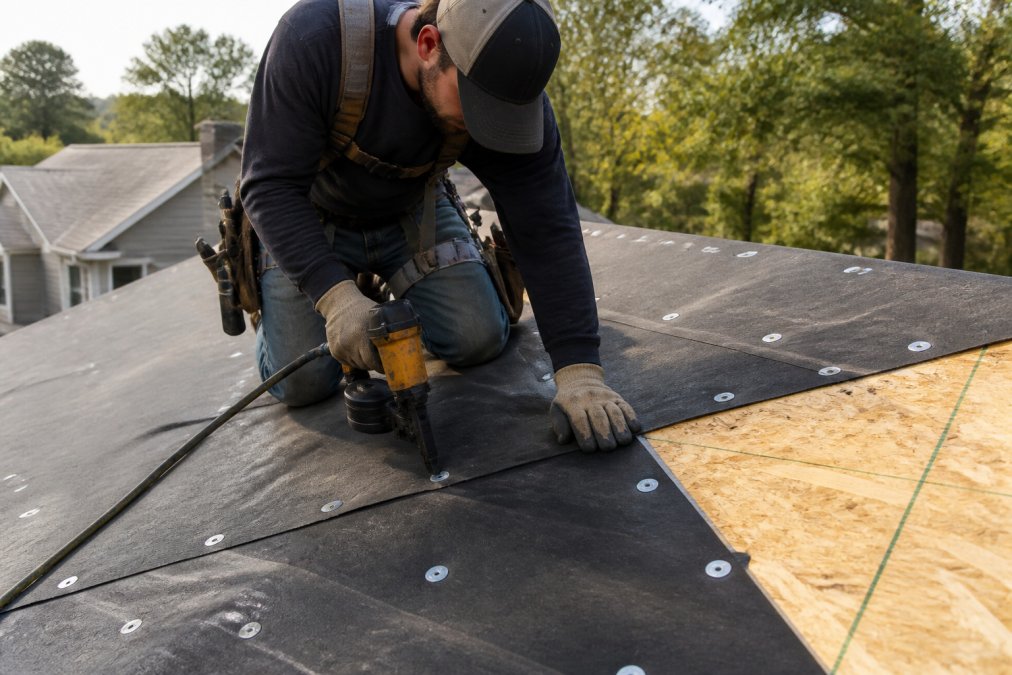
Underlayment serves two critical functions: it's a secondary water barrier if the primary material fails, and it provides mechanical holding power for fasteners. In high-wind areas, underlayment quality is essential.
Synthetic underlayment has largely replaced traditional felt in high-wind applications. It's more tear-resistant, doesn't absorb water, and maintains its strength longer. In high-wind zones, underlayment must be fastened, not just laid down. Fastening every 12-18 inches around the perimeter and every 24 inches in the field keeps the underlayment from billowing in wind. If wind gets under the underlayment, it can lift the entire roof system.
Ice and water shield is an additional layer used in some climates, installed along roof edges, valleys, and around penetrations. It provides extra protection where water backup is likely and helps hold the roofing material down by creating an additional adhesive layer.
For high-wind areas, premium underlayment is a worthwhile investment. Budget underlayments tear easily and degrade quickly.
Building Code Compliance and Regional Requirements
Building codes specify minimum wind resistance standards based on geographic location and risk category. The International Building Code (IBC) and International Residential Code (IRC) define wind zones and associated design wind speeds that roofs must withstand.
Wind zones are typically classified by basic wind speed in miles per hour. Building codes also account for exposure category, whether a building is in an open field, surrounded by trees, or in an urban area. Exposure affects wind speed calculations.
The ASTM D3161 standard defines how shingles are tested for wind resistance. Shingles are rated by the maximum wind speed they can withstand before lifting. ASTM standards also cover fastener pull-through testing.
Coastal areas and hurricane-prone regions have more stringent requirements than inland regions. Some jurisdictions require impact-resistant shingles (Class H or better) and specify fastener patterns more conservative than minimum code. Miami-Dade County has some of the most rigorous standards in the country, and products approved there exceed minimum code in most other locations.
Insurance companies sometimes impose requirements beyond code minimums. Meeting these requirements can reduce insurance premiums and ensure coverage in case of damage.
Building code compliance is verified through inspections. After installation, a building inspector will verify that the roofing material meets code, fasteners are properly spaced, and underlayment is correctly installed.
Choosing the right roofing material for high-wind resistance requires balancing performance, durability, cost, and local requirements. Metal roofing offers the best combination of wind resistance and longevity for most homeowners. Class H shingles provide solid performance at lower cost. Tiles and slate offer premium durability for those who can afford it. Whatever material you choose, proper installation with correct fasteners, quality underlayment, and compliance with local building codes determines whether your roof will actually perform as designed.
At Certified Roofing Solutions Inc., we help homeowners select materials that match their wind zone requirements and budget constraints. Our installation team follows all building codes and manufacturer specifications, ensuring your roof performs when it matters most. If you're considering a roof replacement or need to reinforce an existing roof for high-wind areas, contact us for a professional assessment and detailed estimate.
Frequently Asked Questions
What is the most wind resistant roofing material?
Metal roofing offers high wind resistance due to its seamless design, interlocking panels, and superior fastener pull-through resistance. Metal can withstand significant wind speeds when properly installed. However, clay and concrete tiles and slate also provide excellent wind resistance through sheer weight and durability. The best choice depends on your budget, roof pitch, and local building codes.
What wind-rated roofing shingles can handle 130 mph winds?
Class H wind-rated shingles are tested to withstand 130+ mph winds and meet ASTM D3161 standards. Look for shingles rated for Miami-Dade approval or equivalent high-wind certification. These shingles feature reinforced adhesive strips and enhanced fastener specifications. Proper installation with the correct fastener type and spacing is critical, improper installation can reduce wind ratings.
How important is roofing underlayment for high wind areas?
Roofing underlayment is essential in high-wind zones. It provides a secondary water barrier if shingles lift or fail and increases overall structural integrity by reinforcing the bond between shingles and roof sheathing. In high-wind areas, synthetic underlayment with high tensile strength is recommended over felt. Proper underlayment installation, combined with correct fastener specifications, can improve wind resistance.
How do I know if my roof is wind-rated?
Check your roof's original installation documentation or contact the manufacturer with your shingle model number. Wind ratings are typically labeled on the shingle packaging as 'Wind Resistance' with a speed rating (e.g., 130 mph). You can also hire a professional inspector to evaluate your roof's fastener type, installation quality, and structural condition to determine its actual wind resistance capacity.