 Listicle
Benefits of Commercial Roof Inspections for Property Owners
Last Updated: November 10, 2026
Quick Summary
Commercial roof inspections protect a building's value by catching small problems such as leaks, ponding water and seam failure before they cause costly water damage. Most properties benefit from inspections twice a year, plus checks after severe weather. Documented inspections also help preserve warranty coverage.
- Regular inspections turn costly roof replacements into targeted repairs when problems are caught early.
- Inspect twice a year, in spring and fall, and after major storms or rooftop work.
- Water standing longer than 48 hours on a low-slope roof signals ponding that accelerates membrane aging.
- Many roofing warranties require documented maintenance, so keep dated reports and photographs for every inspection.
- Rate each finding as monitor, repair soon or repair now to prioritize work and budget.
Table of Contents
- Why Commercial Roof Inspections Protect Your Bottom Line
- Early Detection: Catching Leaks, Ponding Water and Seam Failure
- How Often to Inspect a Commercial Roof
- Commercial Roof Inspection Checklist: What Gets Checked
- Commercial Roof Inspection Cost and ROI Framework
- Documentation, Reports and Warranty Compliance
- Scheduling Your Next Inspection With Certified Roofing Solutions Inc.
- Frequently Asked Questions
Commercial roof inspections can help protect a building's value. A roof that fails unexpectedly can cost a property owner tens of thousands of dollars in water damage, lost tenant revenue and emergency repairs. Certified Roofing Solutions Inc. works with commercial property managers across Marietta, Alpharetta, Dunwoody and Johns Creek. This guide explains the benefits of commercial roof inspections, how often to schedule them and what a thorough inspection should cover.
Why Commercial Roof Inspections Protect Your Bottom Line
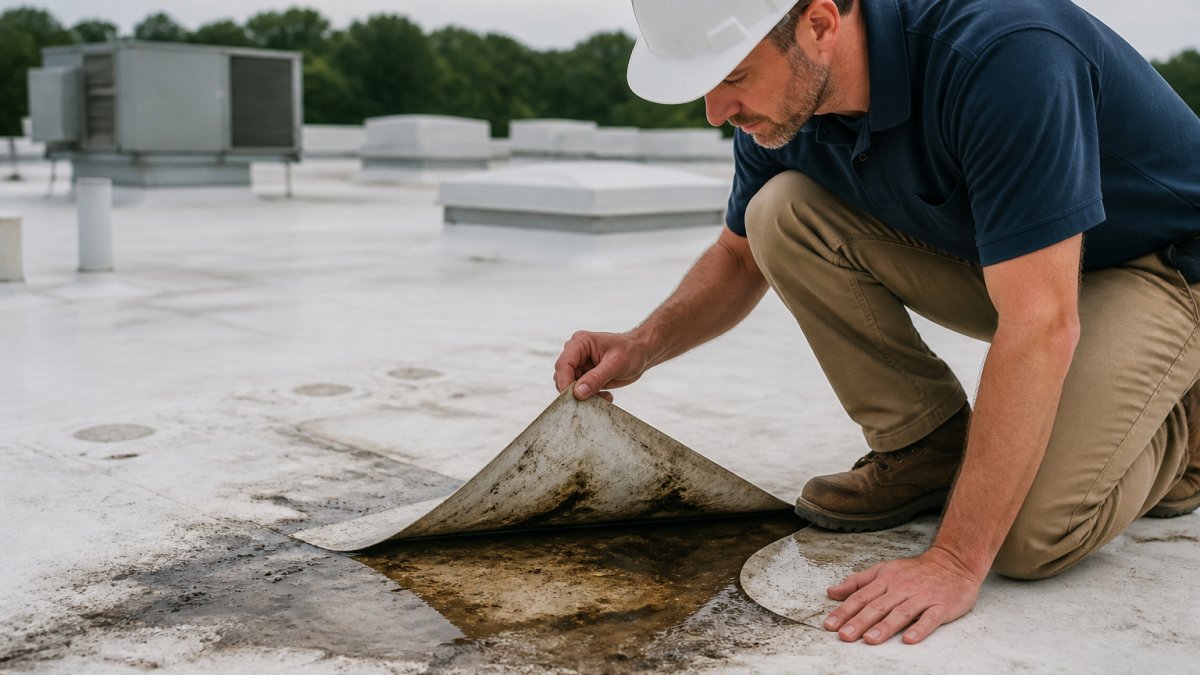
A commercial roof is a building envelope component, and a failure rarely stays confined to the roof. Water that enters through a damaged membrane can saturate insulation, rot decking, stain ceilings and damage tenant property.
Regular inspections shift the economics. Catching a failing flashing or a loose seam early usually means a targeted repair.
Inspections also support warranty coverage. Many roofing manufacturers and installers require documented maintenance to keep warranties valid.
For a broader look at how roof condition affects the whole building, see FEMA guidance on building envelope protection. Our guide on the wider case for regular roof inspections explains the value of inspections in more detail.
Early Detection: Catching Leaks, Ponding Water and Seam Failure
Most serious roof failures start small. Our guide on early water damage on roof decking describes what that damage looks like before it becomes costly.
Leaks are the most obvious warning sign, but they often appear far from their true source.
Ponding water is a particular concern on low-slope roofs. Water that stands for more than 48 hours accelerates membrane aging and can overload the structure.
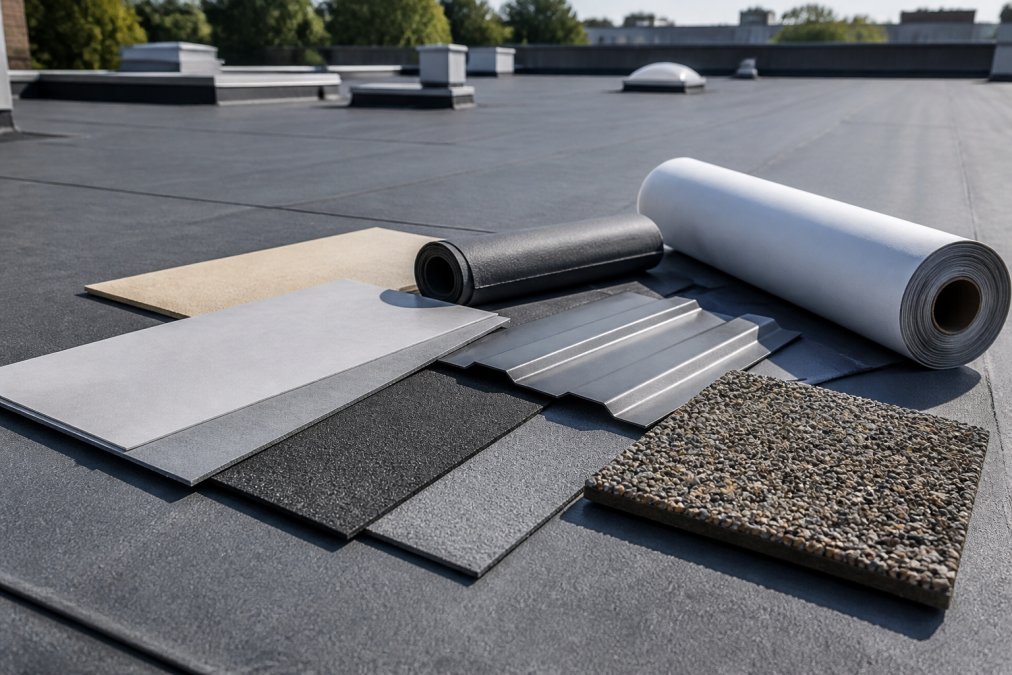
Seam failure is common on single-ply membranes such as TPO and PVC. Heat, wind uplift and thermal movement can open seams over time.
Metal roofs have their own failure points. Our guide on preventing leaks in standing seam metal roofs covers how to address seam and fastener problems on that roof type.
How Often to Inspect a Commercial Roof
Many property owners inspect a commercial roof at least twice a year, typically in spring and fall.
Additional inspections are wise after significant weather events. In the Atlanta metro area, that includes severe thunderstorms, high-wind events and hail.
Roof age and type also affect the schedule. Older roofs, roofs with heavy rooftop equipment and roofs with a history of leaks generally need more frequent attention.
A simple rule works for most properties: inspect twice a year, after major storms and after any work that disturbs the roof.
The article recommends a schedule based on season, weather and roof condition:
| Trigger | Recommended action | Frequency or timing |
|---|---|---|
| Routine check | Full roof inspection | Twice a year, spring and fall |
| Severe weather | Post-storm inspection | After thunderstorms, high winds or hail |
| Rooftop work | Inspection of new penetrations | After new equipment is installed |
| Older or problem roofs | More frequent inspection | Beyond the twice-yearly baseline |
Commercial Roof Inspection Checklist: What Gets Checked
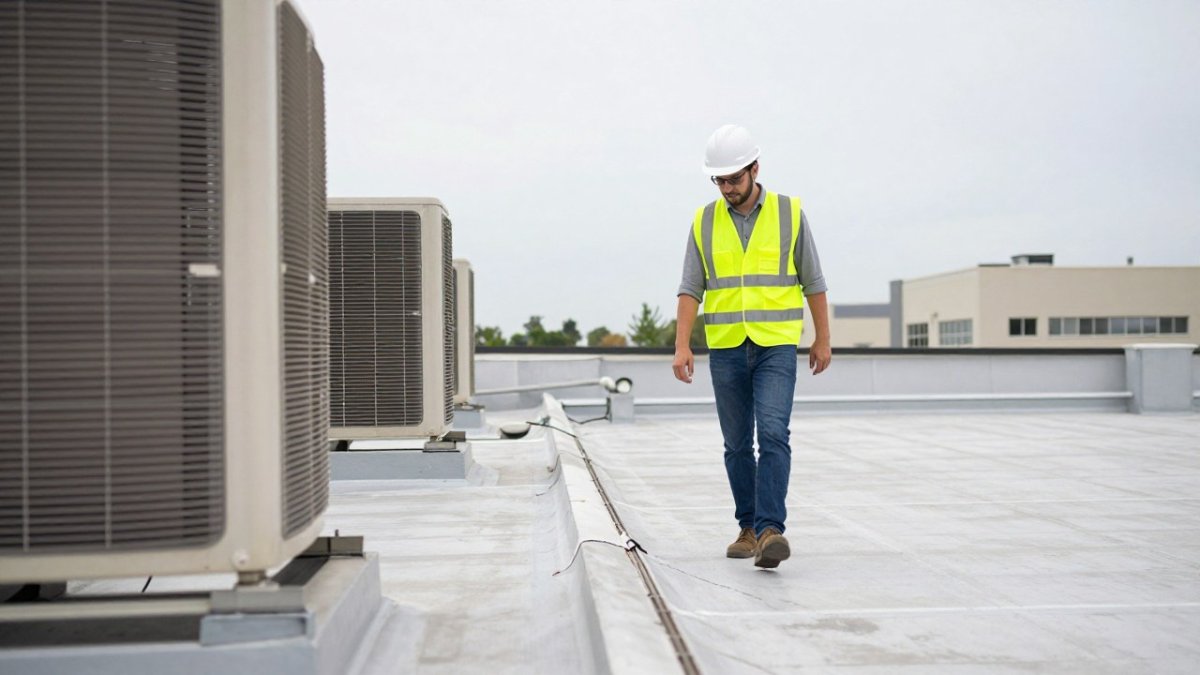
A thorough inspection follows a consistent checklist so nothing is skipped. The list below covers each area an inspector should examine, along with the signs that indicate a problem and the typical response. Use it as a reference when reviewing a report or preparing a site walk.
- Membrane condition: Look for cracks, blisters, splits, punctures and surface wear. Blisters that feel soft or spongy often indicate trapped moisture beneath the membrane. On modified bitumen, granule loss exposes the cap sheet to UV damage and should be noted by area.
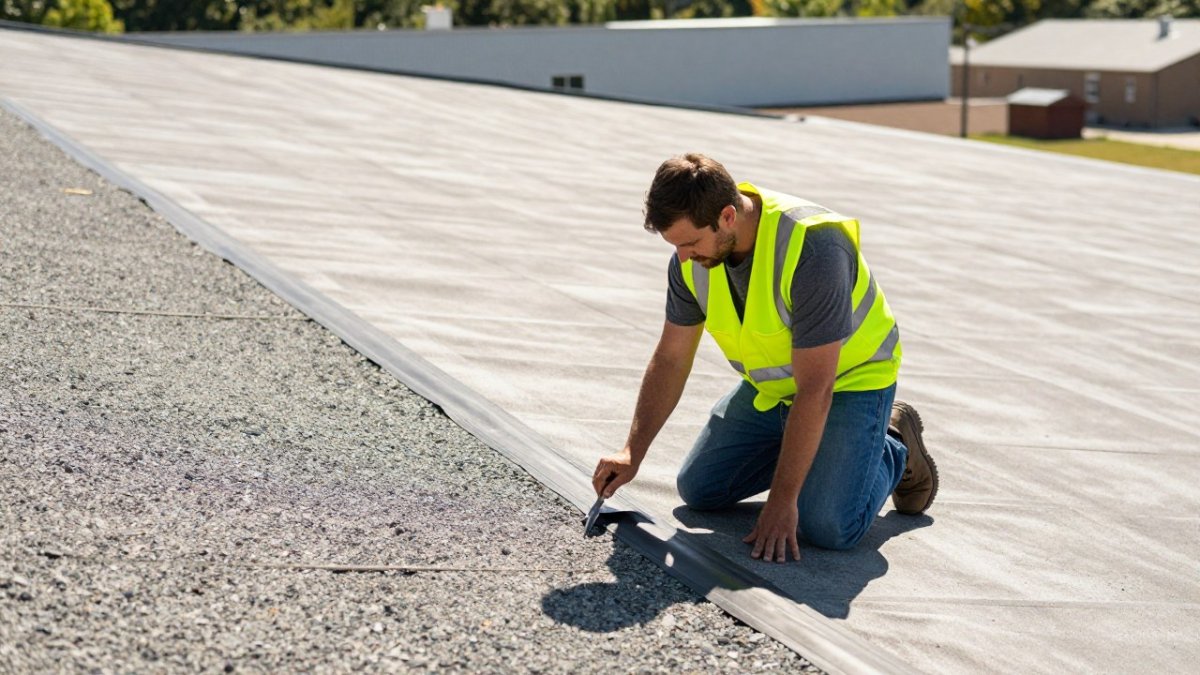
- Seams and laps: Check adhesion at every lap and any separation at edges or joints. Seams near penetrations and parapets are the most common failure points on single-ply systems.
- Flashings: Inspect wall, curb, parapet and penetration flashings. Look for sealant that has cracked, pulled away or hardened. Flashing that is lifted at the top edge allows water behind the assembly.
- Drainage: Confirm that drains, scuppers, gutters and downspouts are clear and sized for the drainage area. Debris accumulation is the most frequent cause of ponding.
- Ponding water: Identify areas that hold water for more than 48 hours after rain. Mark the boundary of each ponding area and record its depth where possible. Recurring ponding often signals a structural deflection or an undersized drain.
- Penetrations: Examine HVAC curbs, vent pipes and rooftop equipment supports. Confirm that seals are intact and that curbs are not separating from the membrane.
- Fasteners and attachments: On metal and single-ply systems, check for loose, backed-out or corroded fasteners. Corrosion at fastener heads is an early indicator of coating failure.
- Roof interior: Where access allows, check ceilings, walls and insulation for moisture staining or soft materials. Interior evidence often confirms a suspected leak location identified from above.
- Edge and coping details: Verify metal edge securement and the condition of cap flashing. Loose edge metal is a wind-uplift risk and should be prioritized.
How to Read the Findings
Each observation in a report should carry three pieces of information: its location on the roof plan, its severity and a recommended action. A practical severity scale uses three levels:
- Monitor: Cosmetic or early-stage conditions that do not currently allow water entry. Re-check at the next scheduled inspection.
- Repair soon: Conditions that will likely allow water entry within the next inspection cycle if left alone, such as a cracked sealant bead at a curb.
- Repair now: Active leaks, failed seams, ponding that threatens structure, or fastener failure on wind-exposed edges.
Infrared Thermography in Practice
Infrared scanning detects temperature differences caused by moisture trapped in insulation. Wet insulation holds heat differently from dry material, which shows up as a pattern on the thermal image.
Watch out: a thermal scan on a dry day, or on a roof that has been in full sun all afternoon, can produce false readings that hide wet areas or flag dry ones.
Use this checklist as a fixed template for every inspection so that findings can be compared from one cycle to the next. Consistent categories make it far easier to see whether a condition is stable, worsening or newly appearing.
Commercial Roof Inspection Cost and ROI Framework
Inspection pricing depends on roof size, roof type, access requirements, the level of detail requested and whether infrared scanning is included. Pricing depends on roof size, roof type, access requirements and the level of detail requested. Contact Certified Roofing Solutions Inc. for a quote tailored to your property.
What matters for budgeting is not the inspection price alone but how it compares with the cost of a failure that the inspection would have caught. The framework below is designed for facility managers and CFOs who need to justify a recurring expense with a clear risk argument.
Step 1: Gather the inputs
Before running any numbers, collect the following from your own records:
- The annual cost of your current roof maintenance contract, if one exists
- The replacement cost per square foot or per roof section, from your most recent bid or capital plan
- The tenant revenue or rent attached to the affected areas, and any lease clauses on roof-related interruptions
- Your insurance deductible for water damage and any sublimits that apply to interior property
- The dates and costs of past roof repairs, including any leak events in the last five years
These figures usually already exist in property management files. Pulling them together first keeps the analysis grounded in your building rather than in generic estimates.
Step 2: Model a single avoidable failure
Pick the most likely failure mode for your roof type. On a low-slope membrane roof, a seam or flashing leak that saturates insulation is a common example. Estimate:
- Emergency repair cost, including mobilization and any after-hours premium
- Interior damage cost for affected ceilings, flooring, finishes and contents
- Tenant disruption, including rent abatement, relocation or lost operating days
- Any warranty exposure if the failure is attributed to lack of documented maintenance
Add these together to get a single-event cost. Many facility managers find this number is larger than they expected once tenant and indirect costs are included.
Step 3: Compare against the inspection
A routine inspection does not prevent every failure, but it changes when problems are discovered. A worked comparison looks like this:
- Annual inspection cost: the quoted amount for twice-yearly inspections
- Expected avoided cost: the single-event cost from Step 2, multiplied by the reduction in failure probability you judge reasonable
- Net annual benefit: expected avoided cost minus inspection cost
The estimate of failure-probability reduction is a judgment call. Be conservative. Even if you assume an inspection only prevents a modest share of failures, the calculation often still favors inspection when the single-event cost is large.
Step 4: Account for timing
Early repairs are typically limited to a membrane section, a flashing detail or a drain clean-out. Delayed repairs can require removing wet insulation, replacing decking or in severe cases re-roofing sections. When you present the analysis, separate the cost of early repair from the cost of deferred repair, since the gap between them is often the strongest argument for budget approval.
Step 5: Consider insurance and warranty effects
Insurance premiums and claim outcomes vary by carrier and policy. Some insurers view documented roof maintenance favorably, and documented inspections can strengthen a claim if water damage occurs.
Watch out: a low inspection quote does not automatically mean lower total cost if the report lacks photographs, condition ratings or prioritized recommendations, because those gaps make it harder to act on findings and to defend a warranty or insurance claim later.
Run the comparison once a year and update the inputs as repair history and replacement estimates change. Over several cycles, the record itself becomes a useful planning tool for capital budgeting.
Documentation, Reports and Warranty Compliance
An inspection is only as useful as the record it creates. A strong inspection report includes the date, the inspector's name, the roof area covered, photographs of each finding, a condition rating and recommended actions with priority levels.
Digital records can make these reports easier to manage. This creates a maintenance history that supports warranty claims and simplifies future budget planning.
Warranty compliance depends on this documentation. Review your warranty terms to confirm the required inspection frequency, approved repair methods and any certified contractor requirements. Keep receipts and reports for all work performed.
Scheduling Your Next Inspection With Certified Roofing Solutions Inc.
Commercial roofs reward regular attention. Twice-yearly inspections, post-storm checks and a clear documentation process protect the building, the tenants and the budget. Certified Roofing Solutions Inc. serves property managers and owners in Dunwoody, Johns Creek and throughout our service area.
Ready to protect your commercial roof? Book an inspection with Certified Roofing Solutions Inc. today. Our team delivers detailed reports that help you plan maintenance, document warranty compliance and avoid costly surprises.
Frequently Asked Questions
Why are roof inspections important for commercial buildings?
Commercial roofs fail gradually. Small problems such as failed seams, clogged drains, or punctures around HVAC penetrations can allow moisture into the roof substrate and building interior long before a leak shows up inside. A regular commercial roof inspection finds these issues early, when repairs are smaller and less disruptive. Inspections also help protect warranty coverage, since many manufacturers require documented maintenance to keep a warranty valid.
How often should a commercial roof be inspected?
Most property managers schedule a professional commercial roof inspection at least twice a year, typically in spring and fall, and also after any severe storm, hail event, or heavy wind. Buildings with older roofs, ponding water issues, or heavy rooftop equipment may need more frequent checks. Keeping a dated inspection record also makes it easier to validate warranty claims and plan capital expenditures.
How much does a commercial roof inspection cost?
Pricing depends on roof size, roof type, access requirements, and whether thermal imaging or core sampling is included. Contact the team through the website for a quote.
Can regular roof inspections prevent leaks?
Regular inspections cannot stop every leak, but they catch the conditions that cause most of them, including open seams, damaged flashings, and standing water. Acting on findings promptly, through preventative maintenance, reduces the chance of water infiltration and the business disruption that follows. A good inspection report then guides which repairs to schedule first.