 listicle
Signs Your Commercial TPO Roof Needs Repair
Table of Contents
- Why TPO Roof Problems Demand Immediate Attention
- TPO Roof Leak Signs and What They Mean
- Ponding Water and Drainage Failures
- TPO Roof Seam Separation and Membrane Damage
- Blisters, Bubbles, and Trapped Moisture
- Commercial Roof Inspection Checklist for Building Owners
- TPO Roof Repair vs Replacement: How to Decide
- What to Do When You Spot a Problem
- Frequently Asked Questions
Last Updated: October 4, 2026
Why TPO Roof Problems Demand Immediate Attention
TPO roofing has become the standard choice for commercial properties across the country. Its affordability, durability, and energy efficiency make it an attractive option for building owners managing multiple properties or operating on tight budgets. But TPO roofs aren't immune to damage, and when problems develop, they escalate quickly.
The real issue is that most commercial property managers don't know what to look for. A small leak today becomes structural damage in weeks. A minor seam separation grows into a full membrane failure.
This guide covers the warning signs your commercial TPO roof needs repair, what each sign actually means, and how to decide whether you're looking at a repair or a full replacement. We'll walk you through a practical inspection checklist you can use today, and explain exactly what to do the moment you spot trouble.
TPO Roof Leak Signs and What They Mean
Water stains on interior ceilings are the most obvious indicator that your TPO roof needs repair. They appear as discolored patches, often brown or yellowish, and they mark the path water has traveled inside your building. The stain you see is rarely the leak's actual location, water travels along structural members before dripping through.
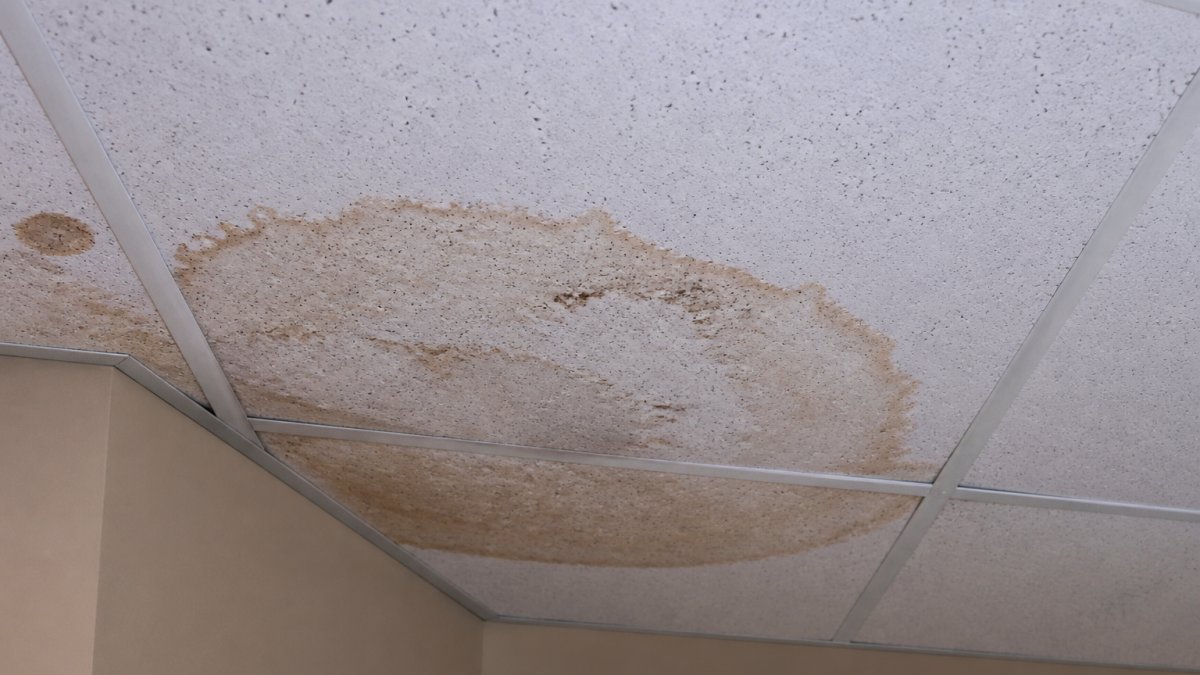
The moment you spot a stain, mark its location and check the roof directly above it during daylight. Bring a flashlight and look for pooled water, membrane damage, or debris accumulation. Don't wait for the next rain to confirm, water stains mean water has already entered your building.
Recurring leaks in the same area signal a deeper problem. If you've had the roof patched twice in the past year and the leak returns, the underlying cause hasn't been addressed. This often means the membrane has shifted, the flashing has failed, or structural settling has created a low point where water collects.
Interior wall stains near roof edges or corners indicate perimeter problems. TPO membranes extend to the roof's edge and connect to flashing. When this junction fails, water runs down the exterior wall before entering the building. This type of leak is particularly damaging because it can compromise wall insulation and create mold conditions inside the wall cavity.
Ponding Water and Drainage Failures
Ponding water is standing water that remains on your roof 48 hours after rain stops. On flat commercial roofs, some water naturally collects in low spots, that's normal. But if water sits for days, your drainage system isn't working properly. This is one of the most common reasons a TPO roof needs repair.
Ponding creates two problems. First, the weight of standing water stresses the membrane and structural supports. Second, stagnant water deteriorates TPO faster than normal weathering. The membrane becomes brittle, and UV exposure compounds the damage. Building owners often don't realize pooled water is there because it's on the roof, out of sight. Regular inspections catch it before it becomes critical.
Debris accumulation around drains and gutters blocks water flow. Leaves, dirt, gravel, and roofing material pile up and create dams. Water backs up behind these obstacles and pools. Cleaning gutters and drains twice yearly prevents most ponding problems. If you see debris, clear it immediately, don't wait for the next inspection cycle.
Sagging or dipped areas on the roof surface indicate structural issues beneath the membrane. These low spots collect water and stress the TPO material. Sagging can result from poor initial installation, structural settling, or water damage to the insulation layer below the membrane. It's a sign your commercial TPO roof needs repair before the problem worsens.
TPO Roof Seam Separation and Membrane Damage
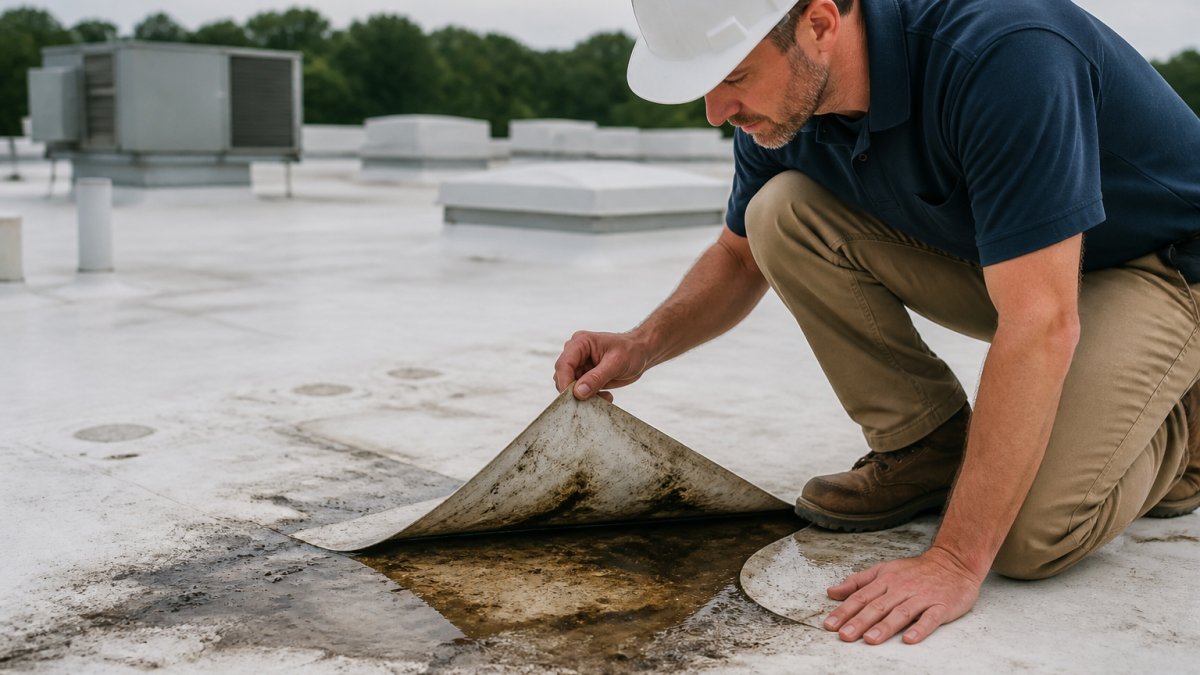
TPO seams are the joints where two sheets of membrane are welded together. These seams are pressure-sensitive adhesive or heat-welded, depending on the installation method. Seam separation occurs when the bond fails, creating a gap where water enters. This is one of the most serious defects on a TPO roof.
Walk the roof and look for visible gaps or lifted edges along seams. Run your hand along seams to feel for separation, you shouldn't feel any movement or lifting. Seam separation often starts at corners or edges where the membrane experiences the most stress from wind, temperature changes, and foot traffic.
Punctures and tears in the membrane are obvious damage but easy to miss if they're small. A single puncture can leak for months before anyone notices the stain inside. Sharp objects on the roof, exposed fasteners, debris, or equipment feet, create these holes. Even a 1-inch tear will eventually compromise the entire roof if left unrepaired.
Cracks in the TPO material develop as the membrane ages and becomes brittle. UV exposure, temperature cycling, and weathering all contribute to cracking. Hairline cracks may seem minor, but they expand with seasonal movement and eventually become leak points. If you see visible cracks, your TPO roof needs repair soon.
Blisters, Bubbles, and Trapped Moisture
Blisters appear as raised bumps on the TPO surface, ranging from golf-ball to basketball size. They form when moisture becomes trapped between the membrane and the insulation layer below. As heat builds up, the trapped air expands and pushes the membrane upward. Blisters are a sign of installation problems or water infiltration in the insulation.
A single blister isn't necessarily an emergency, but multiple blisters indicate systemic moisture problems. If you see more than a few blisters during inspection, moisture has penetrated the membrane layer. This typically requires professional assessment to determine whether the insulation can be dried or needs replacement.
Bubbles differ from blisters, they're smaller, often dime to quarter-sized, and they may appear and disappear with temperature changes. Small bubbles are usually air pockets trapped during installation and pose minimal risk. Larger bubbles or ones that grow over time suggest moisture issues. Document bubble locations and monitor them during future inspections.
Membrane lifting or loose areas occur when the adhesive bond between the TPO and insulation fails. You'll see the membrane separating from the substrate, sometimes with visible gaps. Wind can catch these loose areas and accelerate damage. Membrane lifting requires immediate attention because wind can tear the loose section completely.
Commercial Roof Inspection Checklist for Building Owners
A thorough inspection takes 30 to 45 minutes and requires basic safety precautions. Never access a roof alone, and use proper fall protection if you're climbing. If you're uncomfortable on the roof, hire a professional, it's worth the cost for safety and accuracy.
Pre-Inspection Setup:
- Schedule inspection after rain when water damage is most visible
- Bring binoculars, flashlight, and a camera or smartphone
- Document weather conditions and any recent storms
- Note the roof's age and last maintenance date
- Have a colleague with you for safety
Exterior Membrane Inspection:
- Look for visible cracks, tears, or punctures in the membrane
- Check for blisters, bubbles, or lifted areas
- Scan for debris buildup, leaves, or standing water
- Inspect seams for separation, gaps, or lifting edges
- Check for color fading or surface wear indicating age
Drainage System Check:
- Clear gutters and downspouts of debris
- Verify water flows freely without pooling
- Look for clogged or damaged drain pipes
- Check for water stains around drains indicating backup
- Ensure gutters are securely attached and sloped correctly
Flashing and Perimeter Inspection:
- Examine all roof penetrations (vents, pipes, HVAC units)
- Check flashing around edges and corners for gaps or separation
- Look for rust, corrosion, or deterioration on metal flashing
- Verify sealant around penetrations is intact and flexible
- Check where the membrane meets the roof edge
Interior Assessment:
- Inspect ceilings and walls for water stains
- Look for discoloration, peeling paint, or mold growth
- Check HVAC and electrical systems for water damage
- Document stain locations and photograph them
- Note any musty odors indicating hidden moisture
Documentation:
- Photograph all problem areas from multiple angles
- Record measurements of damaged sections
- Note the date, time, and weather conditions
- Create a simple map showing stain and damage locations
- Keep records from previous inspections for comparison
TPO Roof Repair vs Replacement: How to Decide
The decision between repair and replacement depends on the extent of damage, the roof's age, and the cost comparison. A single leak or small tear is clearly a repair situation. But if you're finding multiple problems during inspection, replacement might be more economical.
Repair is the right choice when:
- Damage is isolated to one or two specific areas
- The roof is less than 15 years old
- Total repair costs are less than 30% of replacement cost
- Underlying structure and insulation are sound
- The membrane has years of remaining life
Replacement is the right choice when:
- Multiple seam failures exist across the roof
- Widespread blistering or membrane deterioration is visible
- The roof is 20+ years old and showing age
- Recurring leaks suggest systemic problems
- Total repair costs exceed 50% of replacement cost
The math is straightforward: if repairs cost $15,000 but replacement costs $40,000, repair wins. But if you're facing $25,000 in repairs on a 22-year-old roof, replacement is the smarter investment. You'll get a new warranty, eliminate recurring problems, and avoid emergency repairs during storms.
Consider operational impact too. Emergency repairs disrupt your business. A planned replacement allows you to schedule work during slower periods and minimize downtime. If your roof is aging and you're seeing problems, budgeting for replacement now prevents crisis repairs later.
What to Do When You Spot a Problem
The moment you discover a potential roof problem, document it and create a timeline. Take photos from multiple angles, note the date and weather conditions, and mark the location on a simple roof map.
For active leaks, locate the source and contain the damage immediately. Place buckets or tarps under drips to protect equipment and inventory. If water is entering electrical systems or creating a safety hazard, evacuate the area and call an emergency service.
Contact a qualified commercial roofing contractor within 24 hours. Don't wait to see if the problem gets worse, it will. A professional inspection provides expert assessment of what needs repair versus replacement.
Temporary fixes like roof tape or sealant are not solutions, they're emergency measures only. They may slow a leak temporarily but won't prevent water damage from continuing. Professional repair is the only lasting fix.
If your roof is under warranty, contact the original installer before hiring someone else. Warranty coverage may apply to the problem, and unauthorized repairs could void coverage. Review your warranty terms to understand what's covered and what requires professional service.
Your commercial TPO roof is a critical asset protecting your building and operations. Catching problems early through regular inspection and prompt repair keeps costs manageable and prevents emergency situations. At Certified Roofing Solutions Inc., we help building owners throughout the region identify roof problems before they become expensive failures.
Frequently Asked Questions
What are the most obvious signs your commercial TPO roof needs repair?
Water stains on ceilings or walls, visible membrane damage, ponding water that doesn't drain within 48 hours, seam separation, blisters or bubbles, and debris buildup are the clearest warning signs. A single water stain often signals a larger problem developing inside the membrane layers. Act quickly, water intrusion can cause structural damage and mold growth if ignored.
How can you tell if a TPO roof is leaking versus just showing surface wear?
Surface wear appears as minor discoloration or small cracks that don't penetrate the membrane. A leak causes water stains on interior surfaces, damp insulation, or musty odors inside the building. The 48-hour test helps: if water pools on the roof after rain and doesn't drain naturally, it's creating conditions for leaks. Have a professional inspect the interior for moisture before assuming the roof is simply aging.
When should you repair a TPO roof instead of replacing it?
Repair is cost-effective for isolated damage: single punctures, small tears, localized seam separation, or minor flashing problems. If damage is widespread, the membrane shows significant shrinkage, seams are failing across multiple areas, or the roof is over 15 years old with recurring leaks, replacement is usually the better choice. A professional inspection determines whether the defect is repairable or replacement-level.
How often should a commercial TPO roof be inspected?
Inspect at least twice yearly: spring and fall. After severe weather, inspect immediately. Keep written records of findings and repairs. Regular inspection catches small problems before they become expensive water intrusion events. Documentation also protects you during insurance claims and helps contractors understand the roof's repair history.