 Ultimate guide
How to Use Roof Heat Cables to Stop Ice Dams
Last Updated: October 29, 2026
Quick Summary
Roof heat cables keep meltwater flowing through eaves, gutters, and downspouts so it cannot refreeze into ice dams. They protect the drainage path rather than melting snow off the roof, and they can be added to an existing roof without a tear-off. They are a targeted defense, not a fix for the attic heat that causes ice dams.
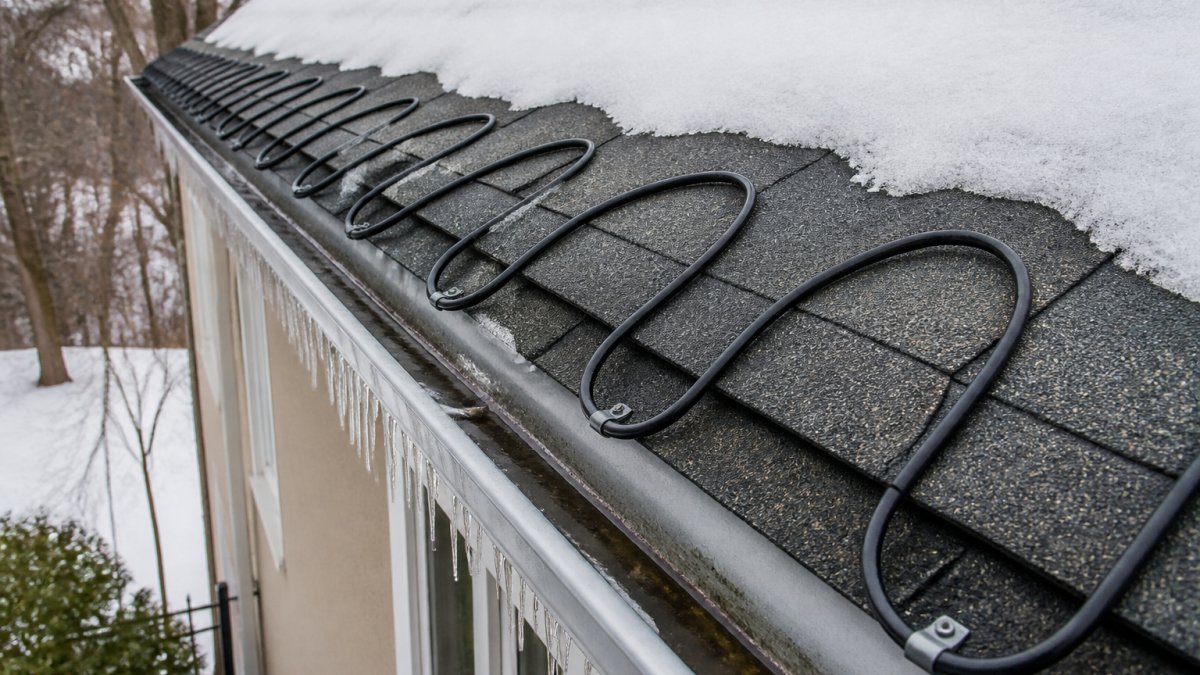
- Run cable in a zigzag along eaves and inside the gutter channel, not draped over the lip.
- Self-regulating cables can overlap without overheating; constant-wattage cables cannot overlap and need a thermostat.
- Turn the system on before a forecast snow or ice event, then shut it off once the roof edge and gutters are clear.
- A 100-foot run at 6 watts per foot draws about 5 amps at 120 volts.
- Cables do nothing for the attic heat that causes ice dams; insulation and ventilation address the root cause.
Table of Contents
- What Roof Heat Cables Do and How They Work
- Ice Dam Prevention With Heat Cables: Where to Place Them
- Roof Heating Cables Pros and Cons
- Roof Heat Cable Installation Cost and What Drives It
- How Long to Run Roof Heat Cables Each Season
- Safety, Electrical Requirements, and Roof Suitability
- Schedule a Roof Assessment Before You Install Heat Cables
- Frequently Asked Questions
What Roof Heat Cables Do and How They Work
Roof heat cables are electrically heated wires installed along roof edges, gutters, and downspouts to keep meltwater flowing instead of refreezing. They can be described as a drainage tool, not a snow-melting system: the cable creates a continuous path for water to escape before it backs up under the shingles.
Here is the mechanism in plain terms. Snow on the upper roof melts from attic heat, runs down to the cold eave, and refreezes there. That refrozen band is an ice dam, and every gallon of meltwater behind it has nowhere to go but up and under the roof covering. A heat cable warms the eave and the gutter just enough to keep that last stretch open, so water reaches the downspout and leaves the roof.
The distinction matters because it shapes expectations. A cable does not clear the roof. For safe methods to clear snow from the roof itself, see our guide on how to safely remove snow from your roof. It protects the drainage path.
Self-Regulating vs. Constant-Wattage Cables
Two cable types dominate residential work, and they behave very differently.
Self-regulating cables change their heat output as the surrounding temperature shifts. Warm sections draw less power, cold sections draw more. They can overlap themselves without overheating, which makes them forgiving on valleys and tight turns.
Constant-wattage cables put out a fixed amount of heat per foot regardless of conditions. They cost less per foot up front, but they cannot overlap, and they need a thermostat or controller to avoid running when they are not needed.
For most homes with varied roof geometry, self-regulating is the smarter buy. For a simple, straight run over a short eave, constant-wattage works fine.
The two cable types behave differently, so match the choice to the roof.
| Cable type | Heat output | Key difference |
|---|---|---|
| Self-regulating | Changes with surrounding temperature | Can overlap without overheating |
| Constant-wattage | Fixed heat per foot | Cannot overlap; needs thermostat or controller |
Ice Dam Prevention With Heat Cables: Where to Place Them
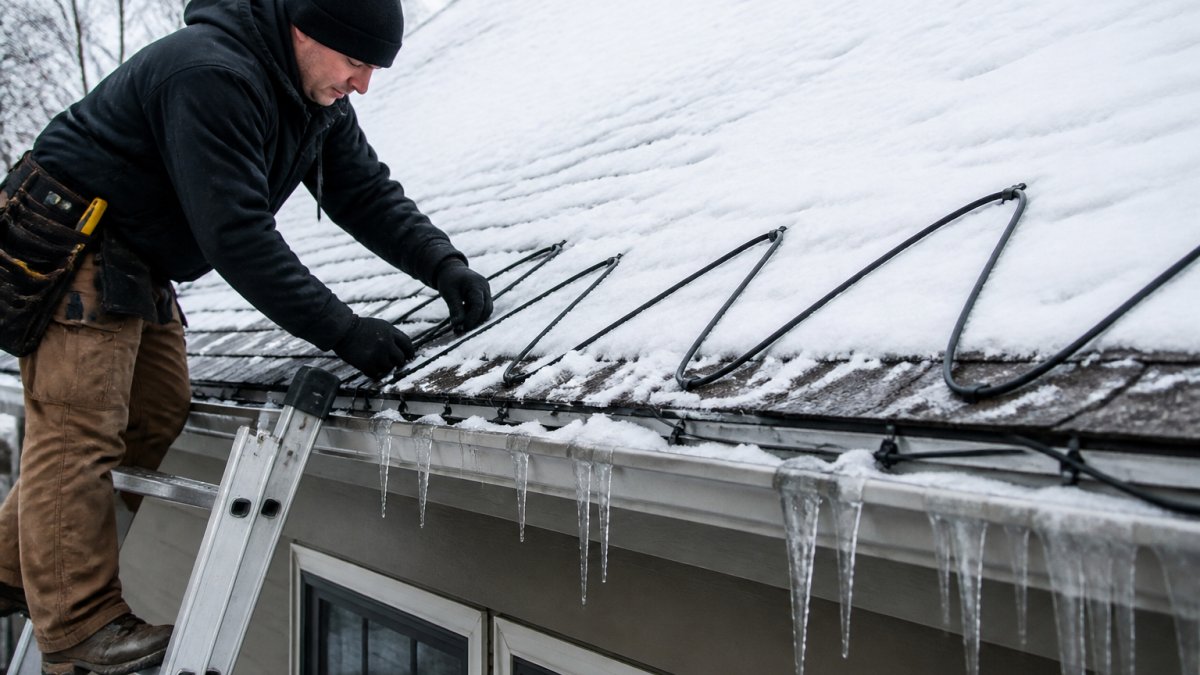
A common mistake is running cable up the middle of the roof field. That melts snow in a place that was never the problem and leaves the actual dam untouched at the edge.
Eaves, Valleys, Gutters, and Downspouts
- Eaves: run the cable in a zigzag pattern along the overhang, the coldest part of the roof.
- Valleys: these collect water from two roof planes, so they refreeze first. Cable here needs to follow the valley centerline.
- Gutters: lay the cable inside the gutter channel, not draped over the lip, so meltwater stays liquid as it travels.
- Downspouts: a downspout full of ice is a blocked drain. Run cable to the bottom, or as far as the frost line allows.
Gutters and roof health are a package deal. If you want the wider picture on keeping that drainage system clear, our guide to gutter maintenance and roof health covers how the two systems depend on each other.
Roof Heating Cables Pros and Cons
Roof heating cables have potential trade-offs to consider before you buy.
Pros:
- Keeps meltwater moving through the exact zones where ice dams form
- Reduces icicle growth over walkways, doors, and driveways
- Protects gutters and downspouts from freeze damage
- Can be added to an existing roof without a tear-off
Cons:
- Ongoing electricity cost every season
- Does nothing for the attic heat that causes the problem
- Visible cable on the roof edge, which some homeowners dislike
- Requires an electrical connection and a controller to run efficiently
The honest framing: heat cables are a targeted defense, not a whole-home fix. Insulation and attic ventilation address the root cause. Cables manage the symptom at the edge.
Roof Heat Cable Installation Cost and What Drives It
Roof heat cable installation cost depends on cable length, roof access, and the electrical work required.
How Long to Run Roof Heat Cables Each Season
- Turn the system on before a forecast snow or ice event, not after the dam forms.
- Keep it running through the melt, then shut it off once the roof edge and gutters are clear.
- Use a thermostat or a moisture-and-temperature controller so the system cycles itself.
- Check the downspout outlets after each event to confirm water is actually leaving.
Estimating Seasonal Electricity Cost
Seasonal cost = (watts per foot × total feet ÷ 1,000) × hours of operation × price per kWh
Matching Run Time to Weather, Not the Calendar
For the broader winter prep checklist that pairs with seasonal cable use, see our guide on preparing your home for winter.
Safety, Electrical Requirements, and Roof Suitability
Heat cable safety depends on the product and installation. Follow the manufacturer's instructions and applicable electrical requirements, and consult a qualified professional.
Electrical Requirements in Plain Terms
The circuit needs enough capacity for the full connected load. A 100-foot run at 6 watts per foot draws 0.6 kW, or about 5 amps at 120 volts; a 200-foot run at the same rating draws about 10 amps. Add the controller and any receptacle load, and a dedicated 15- or 20-amp circuit is usually the practical minimum for a residential eave system. Long runs or multiple roof zones may need their own circuit.
Roof-Type Suitability
Roof suitability matters as much as the electrical work. Asphalt shingle roofs are the most common application, and cable clips made for shingles keep the run in place without abrading the jacket. Metal roofs need clips designed for the panel profile so the cable does not rub through the finish or the insulation. Flat and low-slope roofs handle cable differently than steep pitches, the drainage path is shorter, and ponding water can submerge connections that were not rated for it. Older roofs with brittle shingles or failing flashing should be assessed before cable is added, because the cable will not fix an underlying leak.
Common Failure Modes
- Cable run over sharp edges without protection, which abrades the jacket and creates a shock hazard
- Overlapping constant-wattage cable, which overheats and can fail or ignite debris
- No controller, so the system runs constantly and wears out early
- Cables buried under debris or leaves, trapping heat and shortening life
- Splices or connections that are not rated for wet locations, which corrode and fail
Schedule a Roof Assessment Before You Install Heat Cables
Hiring the right crew matters as much as the assessment. To understand what a professional roof inspection delivers, see our article on the benefits of professional roof inspection. Our guide on choosing a reputable roofing contractor covers the questions worth asking before anyone climbs a ladder.
At Certified Roofing Solutions Inc., we serve homeowners and property managers across Marietta, Alpharetta, Dunwoody, and Johns Creek. Our team provides residential and commercial roofing services tailored to each project.
If you need residential or commercial roofing services, contact Certified Roofing Solutions Inc. to book an appointment.
Frequently Asked Questions
Are roof heating cables worth it?
They can be, if your roof forms ice dams every winter. Heat cables keep a melt path open along the eaves and through gutters and downspouts so melted snow can drain instead of backing up under shingles. The catch is that they treat the symptom, not the cause. Pair them with attic insulation and ventilation to reduce the warm-air leaks that create ice dams in the first place. For a roof with chronic ice buildup, the combination is usually worth the spend.
Do roof heat cables use a lot of electricity?
Self-regulating roof heat cables draw roughly 5 to 8 watts per foot when running, and constant-wattage models run higher. A 100-foot run at 6 watts per foot uses about 0.6 kWh per hour. At typical residential rates that is cents per hour, but running it all winter adds up. Use a thermostat or controller that switches the cable on only near freezing, and you cut both electricity use and wear on the cable.
Can you install roof heat cables yourself?
It is possible on a simple single-story roof, but most homeowners should not. The work involves climbing a snow-covered roof, routing cable so it does not block drainage, and connecting to a GFCI-protected outdoor circuit. Mistakes can damage shingles or create a shock and fire hazard. A licensed roofer or electrician handles the layout, the electrical connection, and the warranty, which matters if the cable fails or the roof leaks later.
Do roof heat cables damage shingles?
Not when they are installed correctly. Cable clips and clips that attach under shingle tabs keep the cable off the surface so it does not abrade the granules. The bigger risks are poor routing that traps water, or cable run over a roof that already has cracked or lifted shingles. Have the roof inspected first. If shingles are curling or missing, fix the roof before adding heat cables, or the cable will just hide a leak that is already forming.