 How-to
Emergency Roof Repair Services in Alpharetta: What to Do
Table of Contents
- What Counts as an Emergency Roof Repair Service in Alpharetta
- What to Do After Storm Roof Damage: A Homeowner Checklist
- Emergency Roof Tarping: What It Stops and What It Doesn't
- Emergency Roof Repair Cost: What Drives the Number
- How to Choose an Emergency Roofing Contractor
- Repair or Replace? How Inspections and Insurance Shape the Decision
- Conclusion
- Frequently Asked Questions
Last Updated: October 17, 2026
What Counts as an Emergency Roof Repair Service in Alpharetta
Emergency roof repair services in Alpharetta handle problems that cannot wait until Monday: an active leak pouring into a living room, wind-torn shingles exposing the deck, or a fallen limb that has opened the roof to the sky.
Not every roof problem is an emergency. A missing shingle on a calm, dry day is a repair. Water actively entering your home is an emergency, and the response should be measured in hours, not days.
An active roof leak is water currently entering the structure through a failed roof component, causing or threatening interior damage. That definition is the line most homeowners should draw.
Signs You Have an Active Leak, Not Just a Stained Ceiling
Water stains can linger for years without an active leak behind them. Timing and moisture separate old damage from a live problem.
Watch for these signals:
- Water dripping, pooling, or running down a wall during or after rain
- A brown ring that grows after each storm
- Sagging drywall or bubbling paint, which suggests trapped water
- A musty smell in the attic or upstairs rooms
If you see any of these, call a roofer. Water intrusion compounds quickly, and interior damage almost always costs more than the roof repair itself.
What to Do After Storm Roof Damage: A Homeowner Checklist
Storm damage rewards fast, calm action, but the sequence matters as much as the speed. The homeowners who fare best secure the interior, document conditions methodically, and hand a roofer a clear picture on arrival.
- Make sure everyone is safe. Check for downed power lines, the smell of gas, and visible structural sagging. If anything looks unsafe, leave the house and call 911 first. Do not re-enter until emergency personnel clear the structure.
- Stop the water from spreading inside. Place buckets under active drips, lay towels or plastic sheeting on floors, and pull furniture, electronics, and rugs clear of wet zones. If water is pooling near light fixtures, outlets, or a ceiling fan, shut off power to that circuit at the breaker panel before you touch anything.
- Photograph and video everything before you move it. Take wide shots of the roof from the ground, close-ups of missing or lifted shingles, and photos of every interior stain, sag, or drip. In the attic, photograph any daylight, wet decking, or darkened sheathing. Timestamped photos support insurance claims far better than memory.
- Document the conditions in writing. Note the date and time of the storm, the rooms affected, and any visible damage. Keep a running list of items that may need replacement, with photos and receipts.
- Call for emergency roof repair and describe the damage precisely. Tell the dispatcher what you see, whether water is actively entering, and whether anyone is injured. Ask for an estimated arrival window and a direct callback number.
- Log every call. Write down who you spoke with, what they promised, the time, and the arrival window. If a crew does not show, that log is your record.
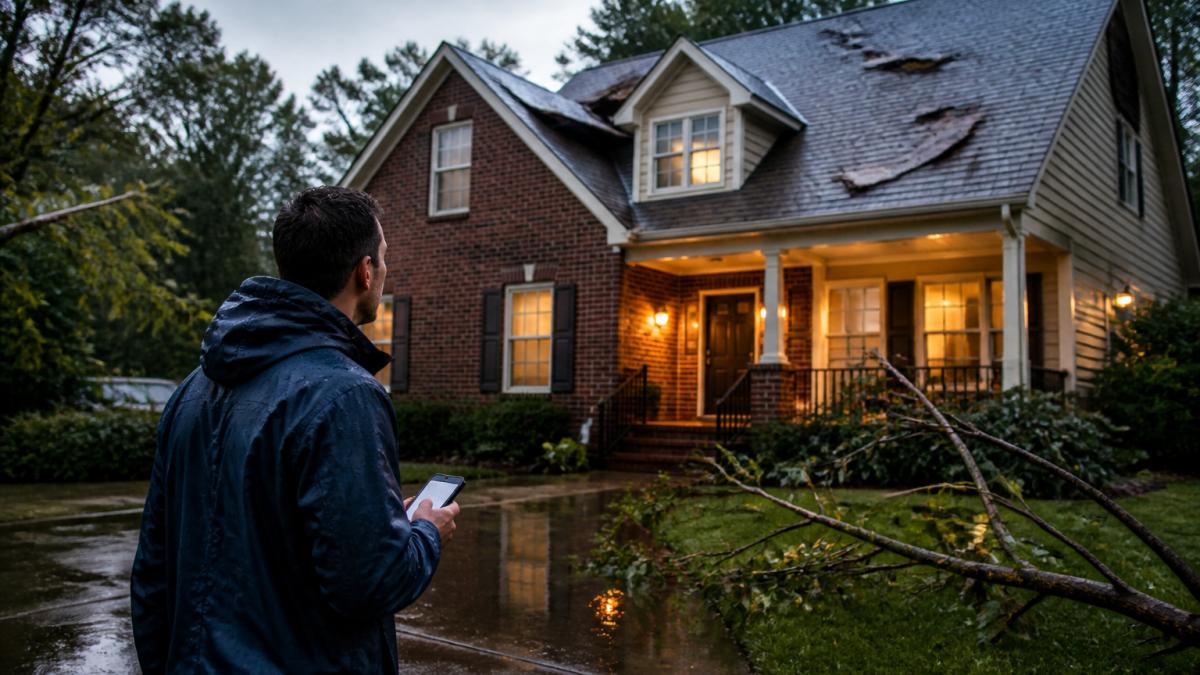
What to Do Before the Roofer Arrives
The hours between your call and the crew's arrival are when most preventable interior damage happens. Small, safe actions limit the loss and speed the repair.
- Clear vehicles, patio furniture, grills, and playsets away from the work area so the crew can stage ladders and materials safely.
- Keep children and pets indoors and away from windows under the damaged area.
- Do not attempt temporary patches on a wet, steep roof. A fall or a misstep can turn a repairable leak into a hospital bill.
- If water is pooling near electrical fixtures, shut off power to that area at the breaker and do not use those fixtures until a professional inspects them.
A roofer who can see your documentation on arrival starts the damage assessment immediately, and an adjuster who receives organized photos and a written scope moves faster on approval.
Documenting Damage for an Insurance Claim
Most homeowners' policies cover sudden storm damage, but the claim is only as strong as its documentation. Build the file before the adjuster arrives.
- Photograph before you clean up. Take wide and close-up shots of the roof, gutters, siding, windows, and interior water damage. Include a photo of a ruler or tape measure next to any hole or missing section for scale.
- Keep receipts for anything you buy to protect the home, tarps, buckets, fans, dehumidifiers, and temporary repairs. Many policies reimburse reasonable mitigation costs.
- Request a written damage report from your roofer. A clear scope with photos gives the adjuster something concrete to evaluate and reduces back-and-forth.
- Attend the adjuster inspection if you can. Walk the property with the adjuster and your roofer, and ask questions on the spot.
Ask any contractor upfront how they handle adjuster coordination and supplements, and get that answer in writing.
Emergency Roof Tarping: What It Stops and What It Doesn't
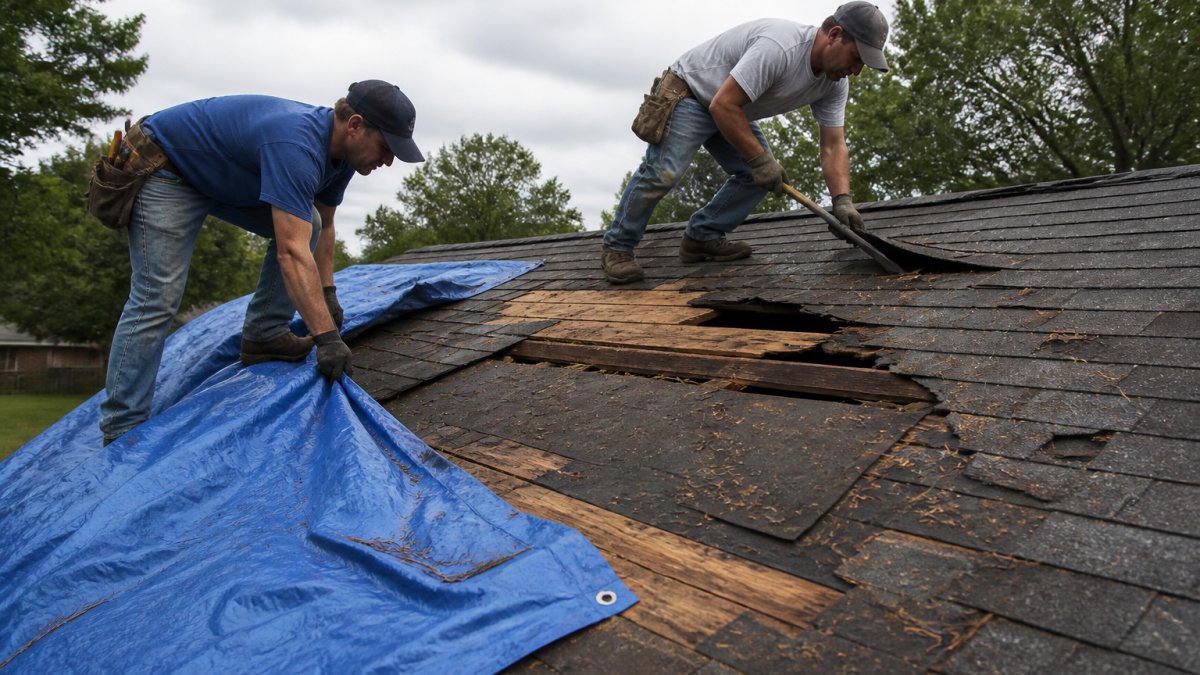
Emergency roof tarping is a temporary waterproof cover secured over damaged roofing to stop water intrusion until a permanent repair can be made. It buys time. It does not fix the roof.
What a properly installed tarp stops:
- Rain entering through missing shingles or a hole
- Further saturation of decking and insulation
- Interior damage spreading during the wait for materials or insurance approval
What it does not do:
- Restore structural strength
- Address damage hidden under intact shingles
- Last indefinitely. Tarps degrade in sun and wind and need re-checking after major weather.
Think of tarping as a tourniquet, not a cure. It protects your home while the real work gets scheduled and gives your adjuster a stable situation to inspect.
Emergency Roof Repair Cost: What Drives the Number
Pricing for emergency roof repair depends on the damage, not a flat rate. Anyone who quotes a firm price over the phone before seeing your roof is guessing.
The main cost drivers:
- Extent of damage. A few missing shingles costs far less than a section of failed decking.
- Roof pitch and height. Steep or tall roofs take longer and require more safety equipment.
- Materials. Matching existing shingles can be harder and costlier than it sounds, especially on older roofs.
- Emergency timing. After-hours and storm-surge calls typically carry a premium.
We recommend asking for a written estimate that separates the emergency stabilization from the permanent repair. That way you know what the tarp or patch costs and what the full fix runs before you commit.
How to Choose an Emergency Roofing Contractor
Choosing the right contractor under pressure is where homeowners get burned. Storm season attracts out-of-town crews who collect deposits and disappear, and an active leak makes it easy to skip the checks you would normally run. Slow down long enough to verify four things: licensing, insurance, a written scope, and a local track record.
Verify Licensing and Insurance Before Work Starts
Ask for the contractor's license number and the authority that issued it, then confirm it independently. Ask for a certificate of insurance showing general liability and workers' compensation coverage, and call the insurer to confirm the policy is active.
A legitimate contractor provides these documents without hesitation. A crew that cannot, or that asks you to sign a waiver instead, is a risk you do not need during an emergency.
What a Written Scope Should Contain
A written estimate is not a napkin number. It should separate the emergency stabilization from the permanent repair so you know what each phase costs and what triggers the next one.
- Emergency stabilization: tarping, temporary patching, water extraction, and any board-up, with a line-item price.
- Permanent repair: the materials, quantities, and labor to restore the roof, with the shingle or membrane product named.
- Hidden damage clause: how the contractor handles rot, compromised decking, or mold found once work begins, and the approval process before adding cost.
- Warranty terms: what is covered, for how long, and whether the warranty is from the manufacturer, the contractor, or both.
Get the scope in writing before work begins, and do not pay a large deposit upfront. A modest deposit for materials, with the balance due after inspection and acceptance, is standard.
Warning Signs of a Storm-Chasing Crew
- Door-to-door solicitation immediately after a storm, especially from a crew with out-of-state plates.
- Pressure to sign a contract on the spot or a demand for a large cash deposit.
- No verifiable local address, phone number, or reviews you can check independently.
- A promise to "handle your insurance" in exchange for signing over your claim rights.
Questions to Ask Before You Sign Anything
Run through these before committing, and get the answers in writing:
- How soon can you be on site, and what is your after-hours response time?
- What exactly does the emergency response include, and what costs extra?
- Will you provide a written estimate that separates stabilization from permanent repair?
- How do you handle insurance documentation, adjuster communication, and supplements for hidden damage?
- What happens if you find hidden damage mid-job, and who approves the added cost?
A contractor who hesitates on any of these is telling you something. Certified Roofing Solutions Inc. serves homeowners across Alpharetta, Marietta, Dunwoody, and Johns Creek, and we build our reputation on showing up, explaining the work, and standing behind it.
Repair or Replace? How Inspections and Insurance Shape the Decision
The repair-versus-replace question rarely has a clean answer, and it should be settled by an inspection, not a sales pitch.
Insurance claims assistance changes the math. Most policies cover sudden storm damage, but documentation, adjuster meetings, and scope approval all move faster when your roofer provides clear photos and a written damage assessment.
Age is the other factor. A roof with years of life left often justifies a targeted repair.
Conclusion
Storm damage never comes at a convenient time, and the decisions you make in the first few hours shape the cost and stress of the ordeal. Protect the interior, document everything, and call a contractor who answers, explains, and shows up.
Certified Roofing Solutions Inc. provides emergency roof repair and full residential and commercial roofing services across Alpharetta, Marietta, Dunwoody, and Johns Creek.
Frequently Asked Questions
What qualifies as an emergency roof repair?
An emergency roof repair is any damage that lets water into the home or leaves the structure exposed: active leaks, missing shingles after high wind, holes from fallen limbs, or a sagging deck. If water is dripping into living space or soaking insulation and drywall, call for emergency roof repair the same day. A cracked flashing or a few lifted shingles with no water intrusion can usually wait for a scheduled visit.
What should I do while waiting for an emergency roofer?
Move furniture and electronics away from the leak, place buckets under drips, and if the ceiling is bulging, poke a small hole to drain it into a bucket rather than letting it collapse. Do not climb onto a wet roof. Photograph everything for your insurance file, and keep receipts for any temporary measures. A crew can typically tarp the area to stop further water intrusion until permanent repairs are scheduled.
Will homeowners insurance cover emergency roof repairs?
Most policies cover sudden damage from wind, hail, or fallen limbs, plus reasonable temporary measures like tarping to prevent further damage. Normal wear and aging are usually excluded. Document the damage with dated photos before and after tarping, keep every receipt, and ask your contractor for a written damage report you can hand to the insurance adjuster. Coverage and deductibles vary by policy, so confirm the specifics with your insurer.
How do I choose a reliable emergency roofing contractor?
Look for a local company with a verifiable address, active state licensing, and liability and workers' compensation insurance you can confirm. Ask for the written scope and a repair estimate before work begins, and get the process for hidden damage in writing so you are not surprised by added costs. A contractor who helps with insurance documentation, answers calls after hours, and puts terms in writing is the one to hire.