 Comparison
DIY Roof Shingle Repair vs Professional Services
Table of Contents
- DIY Roof Shingle Repair vs Professional Roofing Services: An Overview
- DIY vs Professional Roof Shingle Repair: Cost and Quality Comparison
- How to Replace a Missing Roof Shingle
- Professional Roof Repair Cost: What to Expect
- Roof Repair Safety Risks: DIY vs Professional
- Roof Inspection After a Storm: Why It Matters
- Making the Right Choice for Your Roof
- Frequently Asked Questions
Last Updated: October 14, 2026
DIY Roof Shingle Repair vs Professional Roofing Services: An Overview
Roof shingle repair is one of those jobs where the gap between "looks easy" and "actually safe and lasting" is wider than most homeowners expect. According to the National Roofing Contractors Association, roofing remains one of the most dangerous trades in the country, and the work itself is only half the challenge.
Most homeowners can handle a single missing shingle on a low, easily accessible roof. Very few can safely handle anything beyond that. The difference comes down to access, hidden damage, and whether the repair must hold up to a warranty or insurance claim.
DIY vs Professional Roof Shingle Repair: Cost and Quality Comparison
DIY shingle repair saves money only when the damage is minor and your roof is genuinely safe to walk. The moment either condition changes, the savings evaporate.
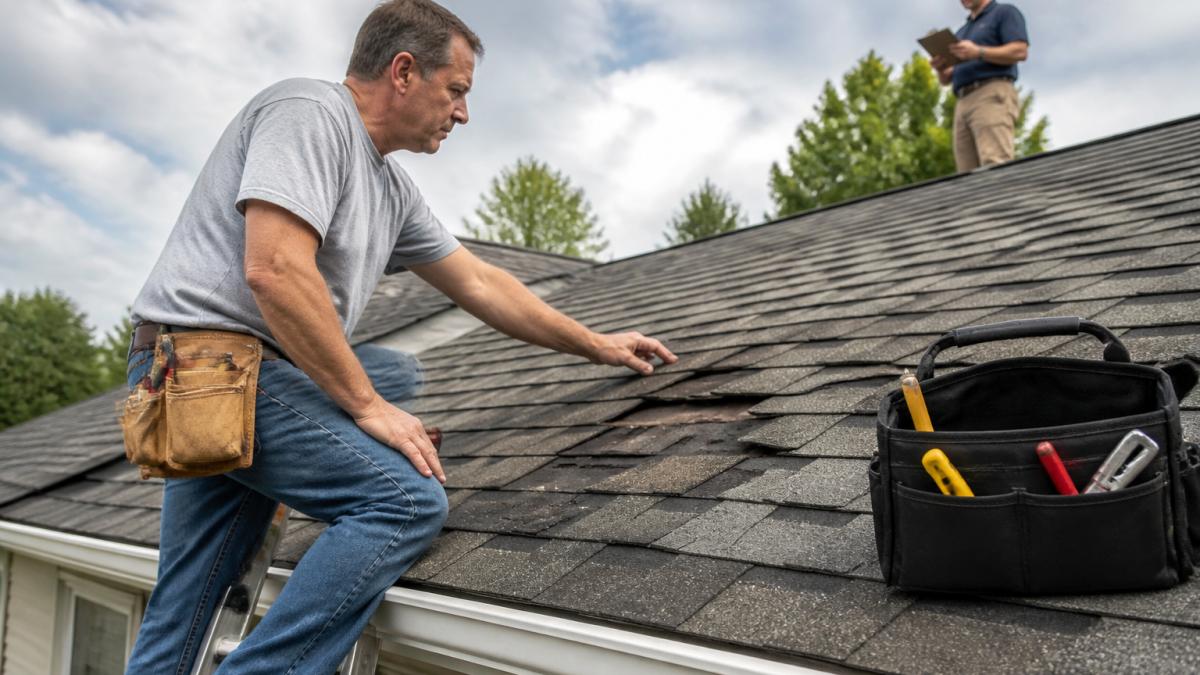
The Real DIY Cost Stack
A single-shingle patch looks cheap on a receipt. Here is what actually goes into it:
- Replacement shingles. Sold by the bundle, not the piece, and a bundle covers about 33 square feet, you will likely buy a full bundle to match one or two shingles.
- Fasteners and sealant. Roofing nails and roofing cement are inexpensive individually but rarely sold in single-use quantities.
- Underlayment. If the felt or synthetic underlayment under the damaged shingle is torn, you need a small roll, not a square foot.
The Real Professional Cost Stack
A professional repair bundles materials, labor, equipment, liability coverage, and disposal into one figure. Pricing depends on roof pitch, square footage, accessibility, and hidden damage, but any reputable contractor should give you a written estimate before work starts. If a contractor will not put the number in writing, walk away.
What separates a fair quote from a lowball is what it includes. A complete written scope should spell out:
- The number of shingles or squares being replaced
- Whether underlayment and flashing are included
- How debris will be removed and disposed of
Total Cost Comparison, Not Sticker Price
The mistake is comparing the DIY material receipt to the professional invoice. The fair comparison is total cost of ownership over the life of the repair.
| Factor | DIY Repair | Professional Repair |
|---|---|---|
| Upfront cost | Materials, plus tools and safety gear you may not own | Materials, labor, equipment, disposal, liability coverage |
| Disposal | You haul and pay any transfer-station fees | Included in the written scope |
| Hidden damage found mid-job | You absorb the surprise and the second supplier trip | Contractor documents and prices it upfront |
| Warranty on workmanship | None | Typically included in writing |
| Insurance claim support | You handle it alone | Contractor documents for the claim |
| Cost if the repair fails | You pay twice, plus any interior water damage | Covered by the workmanship warranty |
| Safety risk | High on any roof above single story | Managed with fall protection |
Quality and Durability
Workmanship decides whether a repair lasts five months or fifteen years. A shingle nailed too high, or one not properly sealed at the tab, will lift on the next windy day, the seal matters more than the shingle itself. A professional crew knows how many nails a shingle needs, where they go, and how to seat them without crushing the mat.
The Cost Nobody Budgets For: The Failed Repair
The most expensive outcome is not hiring a professional. It is paying for a DIY repair, watching it fail, and then paying a professional to remove your work and start over. A lifted shingle lets water in for months before you notice the stain on your ceiling, and by then the decking is compromised, the sequence that turns a small repair into a major one.
How to Replace a Missing Roof Shingle
Not all shingle damage is the same job, and treating it that way is how homeowners get in over their heads. Below, damage is separated by type, with a concise repair sequence, clear stopping points, and the warranty, insurance, and code consequences most DIY guides skip.
Shingle Damage by Type: What Is Reasonable DIY and What Is Not
| Damage Type | What It Usually Means | Reasonable DIY? |
|---|---|---|
| Loose shingle (lifted but intact) | Adhesive tab failed, often after wind | Yes, if roof is low, dry, and easily reached |
| Cracked shingle | Mat is compromised; may be isolated or a sign of age | Sometimes, if isolated and underlayment is intact |
| Missing shingle | Underlayment is now exposed and weathering | Yes for a single piece on an accessible roof |
| Curled or cupping shingles | Often age or ventilation-related, rarely isolated | No, usually signals widespread end-of-life |
| Hail-bruised shingles | Mat is damaged under an intact surface; leak appears later | No, needs professional assessment and often a claim |
A single loose or missing shingle on a low, dry, easily reached roof is the classic DIY case. Curled, cupped, or hail-bruised shingles are not, because the visible damage is a symptom of a larger problem. Three cracked shingles in the same area usually means the underlayment or decking underneath has already failed.
Step-by-Step Repair Scope and Stopping Points
If your damage falls in the DIY column, here is the sequence that works, and the conditions that mean you stop.
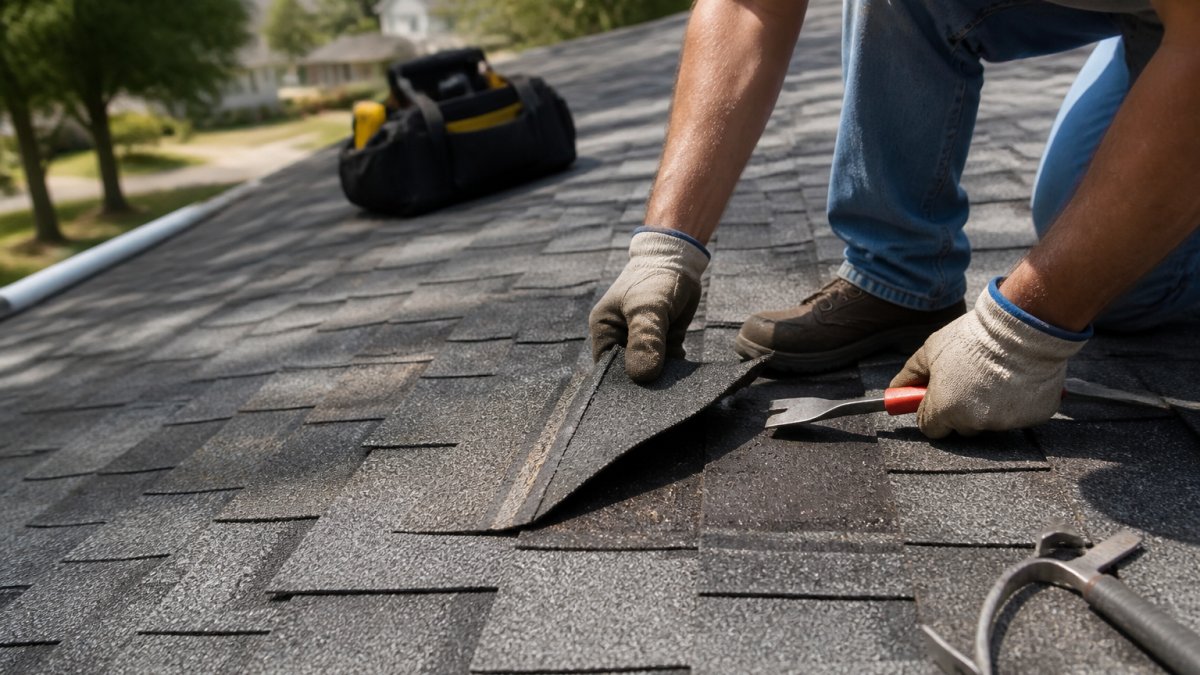
- Match the shingle. Take the damaged piece to a supplier and match color, profile, and manufacturer if you can. Asphalt shingles vary enough that a mismatched patch is visible from the street.
- Remove the damaged shingle. Slide a flat pry bar under the shingle above the damaged one and gently lift the nails. Work slowly; cracked shingles around the repair mean more work.
- Check the underlayment. If the underlayment is torn or saturated, replace that section before installing anything on top. Skipping this step is why patched roofs leak again.
- Slide the new shingle into place. Tuck it under the shingle above and over the one below, aligning the tabs.
- Nail correctly. Use roofing nails long enough to penetrate the decking, positioned where the next course will cover the heads.
- Seal the tab. Apply a small bead of roofing cement under the tab to bond it down.
- Press and check. Walk the edge gently to confirm the shingle sits flat with no lift.
Stop and call a roofer if any of these appear:
- Cracked or missing flashing around a chimney, vent, or valley
- Soft, spongy, or delaminated decking under the repair area
- Widespread granule loss or shingles that crumble when handled
Warranty, Insurance, and Code Considerations
This is the part most DIY guides leave out, and it is often the deciding factor.
Workmanship warranties. A contractor's workmanship warranty typically covers labor and any damage caused by a bad installation.
Insurance claims. If you are filing a claim for storm damage, most insurers want documentation of the damage before repairs are made.
Permits and local requirements. Many jurisdictions require a permit for roof replacement, and some for repairs above a certain scope.
Long-Term Consequences and Repair Verification
A patch that looks fine from the ladder can still be leaking. After any repair, DIY or professional, verify it:
- Check from inside. Look at the attic or ceiling below the repair area after the next significant rain. Stains, damp sheathing, or a musty smell mean water is still getting in.
- Look for hidden damage. Surface-level patches fail when the real problem is under the shingle, if the decking was soft or the underlayment compromised, the patch is cosmetic, not a repair.
- Re-inspect after the first storm. Wind and thermal cycling expose a bad seal. A repair that survives one storm season is usually sound; one that lifts is not.
Professional Roof Repair Cost: What to Expect
Professional roof repair cost depends on three variables: the size of the repair area, the pitch and accessibility of your roof, and whether the damage extends into the underlayment or decking.
What drives the number up most often is hidden damage. Water intrusion rarely stops at the shingle. Once moisture reaches the roof decking, the repair scope changes, and so does the price.
Roof Repair Safety Risks: DIY vs Professional
Roof repair safety risks are the single strongest argument for hiring out anything beyond a ground-level patch. According to the Occupational Safety and Health Administration, falls remain the leading cause of fatalities in the construction industry, and roofing work is one of the highest-risk categories within it.
The risks aren't only falls. Ladder safety on uneven ground, working near power lines, and handling hot roofing cement all add up. Professional roofers use fall protection, anchor points, and staging that most homeowners don't own and shouldn't improvise.
If your roof is steeper than a moderate pitch, higher than one story, or wet from recent rain, the DIY option is off the table. No patch is worth a hospital visit.
Roof Inspection After a Storm: Why It Matters
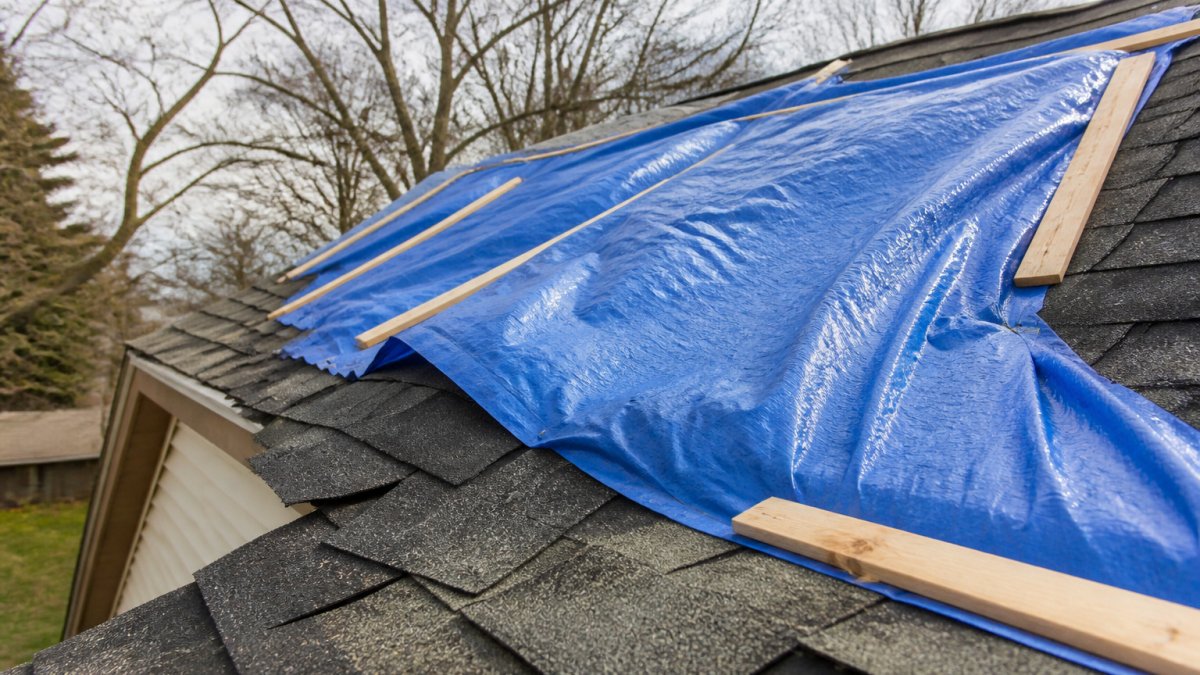
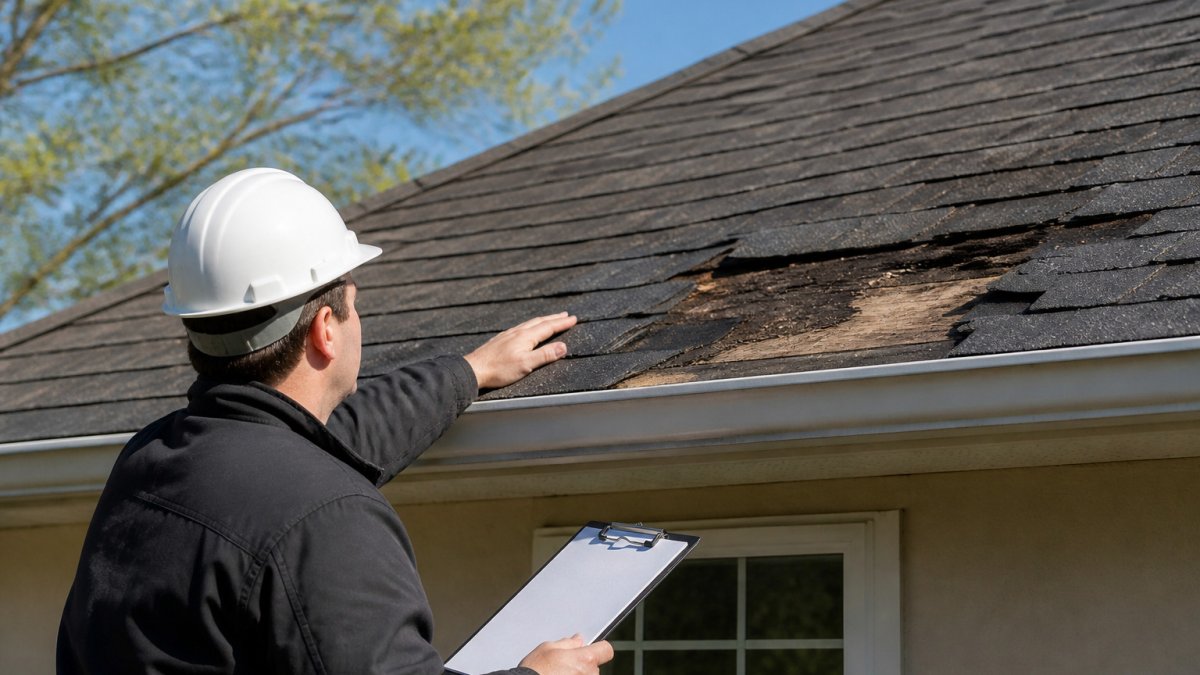
A roof inspection after a storm catches damage that isn't visible from the ground and prevents small problems from becoming water intrusion inside your home. Storm damage often hides: lifted shingles that haven't torn yet, cracked flashing, and granule loss that leaves the mat exposed.
What most homeowners miss is that the visible damage is rarely the whole story. Hail can bruise a shingle's mat without breaking the surface, and that bruise becomes a leak months later; wind can lift shingles at roof edges where you'd never think to look.
If you're filing an insurance claim, a documented inspection matters even more. Insurance coverage decisions depend on evidence of storm damage, and a professional inspection gives you that evidence in writing.
Making the Right Choice for Your Roof
The decision comes down to a simple test. If the damage is one or two shingles, on a low and easily accessible roof, and the underlayment beneath is intact, a DIY repair is reasonable.
The reason isn't that homeowners can't learn the technique. It's that the consequences of a bad repair are expensive and slow to appear. A lifted shingle lets in water for months before you notice the stain on your ceiling, and by then the decking is compromised.
Storm damage rarely announces itself clearly, and the difference between a small patch and a serious repair often hides under the shingles you can see. Certified Roofing Solutions Inc. provides residential and commercial roofing services across Marietta, Alpharetta, Dunwoody, and Johns Creek, with an experienced team that documents what it finds, handles insurance claim support, and tailors each repair to the actual condition of your roof.
Frequently Asked Questions
What is the cheapest way to repair a roof?
The cheapest option is often a DIY repair for minor damage, such as replacing a few missing shingles. However, DIY can lead to costly mistakes if you lack experience. Professional repairs cost more upfront but ensure proper installation and may save money by preventing future damage. For small issues, DIY might involve material costs, while professional repairs vary based on damage extent. Always get a professional inspection to determine the best approach.
Can I replace a few roof shingles myself?
Yes, you can replace a few shingles yourself if you have basic tools, roofing materials, and confidence on a roof. The process involves removing damaged shingles, installing new ones, and sealing them properly. However, safety is critical: use a stable ladder, wear protective gear, and avoid working in wet or windy conditions. If you're unsure, hire a professional to avoid leaks or further damage.
When should I hire a professional roofer for shingle damage?
Hire a professional when damage is extensive, such as multiple missing shingles, cracked flashing, or signs of water intrusion. Also, if your roof is steep or high, or if you lack experience, professional help is safer. A pro can assess underlying issues, ensure code compliance, and provide warranties. For minor damage, DIY may suffice, but when in doubt, call a roofer.
Is roof leak repair covered by insurance?
Homeowners insurance typically covers sudden damage from storms, hail, or fallen trees, which may include roof leaks. However, damage from neglect or normal wear and tear is usually not covered. Review your policy and document damage with photos. A professional roofer can help assess damage and assist with your claim. Contact your insurer promptly to start the process.