 blog
Best Materials for Emergency Roof Patching
Table of Contents
- Assessing Your Roof Leak and Damage
- Temporary Roof Repair Materials That Stop Leaks Fast
- Roof Repair Tarps and Plastic Sheeting for Immediate Protection
- Roofing Cement for Leaks and Sealant Options
- Self-Adhesive Tape, Rubber Patches, and Peel-and-Stick Membranes
- How to Stop a Roof Leak Temporarily: Application and Safety
- Material Comparison: Durability, Removal, and Roof Type Compatibility
- Interior Leak Control and Damage Mitigation
- Frequently Asked Questions
Last Updated: October 18, 2026
Assessing Your Roof Leak and Damage
When a roof starts leaking, the first instinct is often to panic. But the real key to effective emergency roof patching lies in understanding what you're dealing with before you grab materials. Homeowners who take 15 minutes to assess their situation often make better decisions about which materials to use, and whether they need professional help.
Locating the leak source
Finding where water is actually entering your roof is harder than it seems. Water travels along rafters, insulation, and structural members before it shows up on your ceiling. The spot where you see damage inside is rarely where the leak originates.
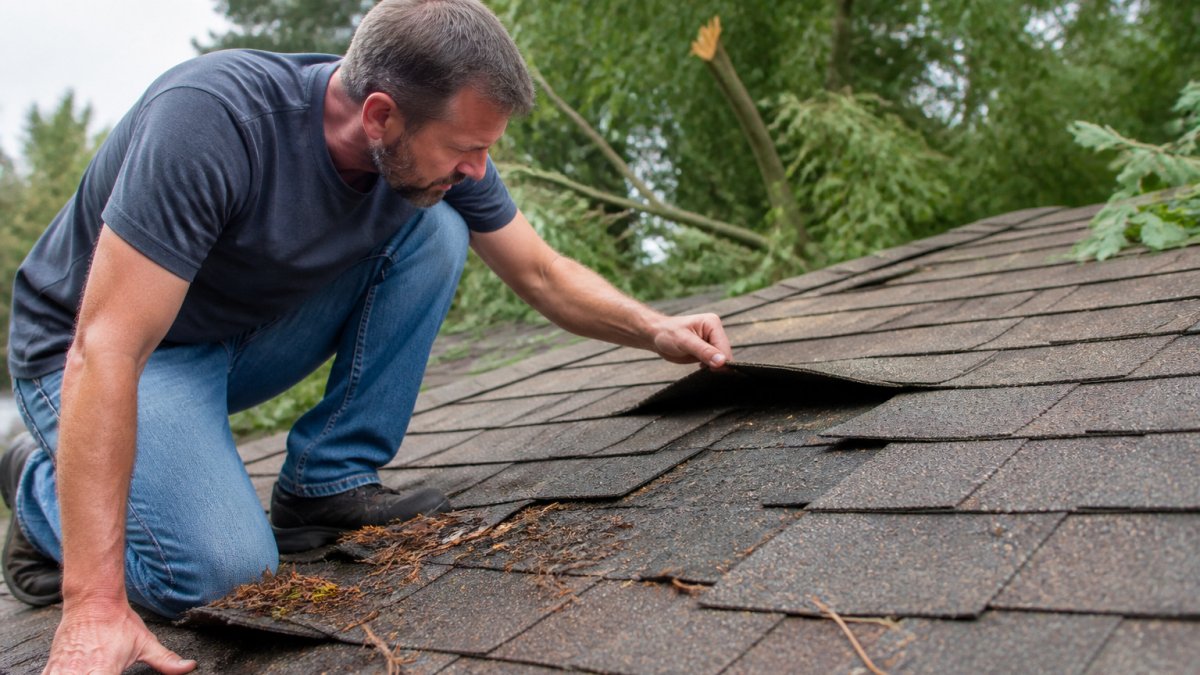
Start in your attic on a rainy day if possible. Look for wet rafters, staining, or active dripping. Trace the water upward. Mark the highest point where you see moisture. Outside, that's your search zone. Look for missing shingles, cracked shingles, gaps around vents or flashing, and any areas where the roof surface is compromised. Binoculars help, don't risk climbing in wet conditions. If you can't access your attic safely or the leak isn't obvious, this is the moment to call a professional roofer rather than guess.
Identifying your roof type
The material your roof is made from determines which emergency roof patching materials will actually work. A flat roof behaves completely differently from a pitched roof. Metal roofs have different requirements than asphalt shingles.
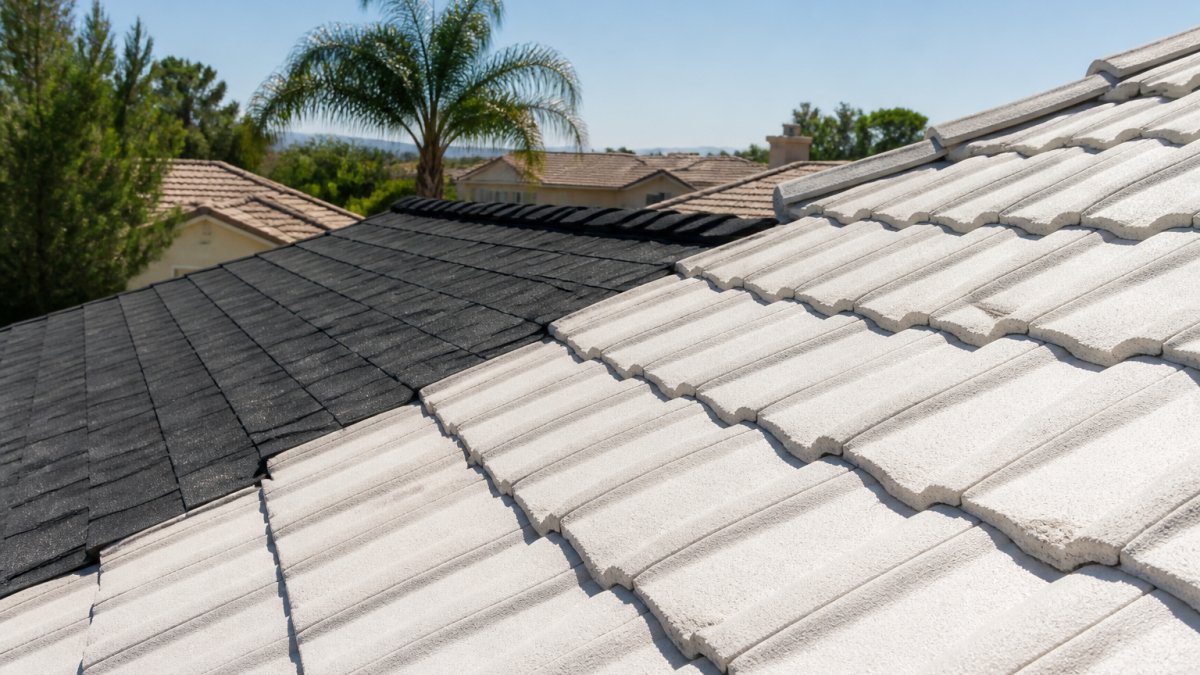
Pitched roofs with asphalt shingles are most common in residential areas. Metal roofs, standing seam or corrugated, need specific approaches. Flat roofs, whether TPO membrane, EPDM rubber, or built-up tar and gravel, require entirely different solutions. Look at your roof from a distance. If it slopes steeply, you have a pitched roof. If it's nearly level, you have a flat roof. The material is visible from the ground or from your attic. This distinction matters because some temporary materials won't stick to certain surfaces, and others might damage your roof further if applied incorrectly.
Temporary Roof Repair Materials That Stop Leaks Fast
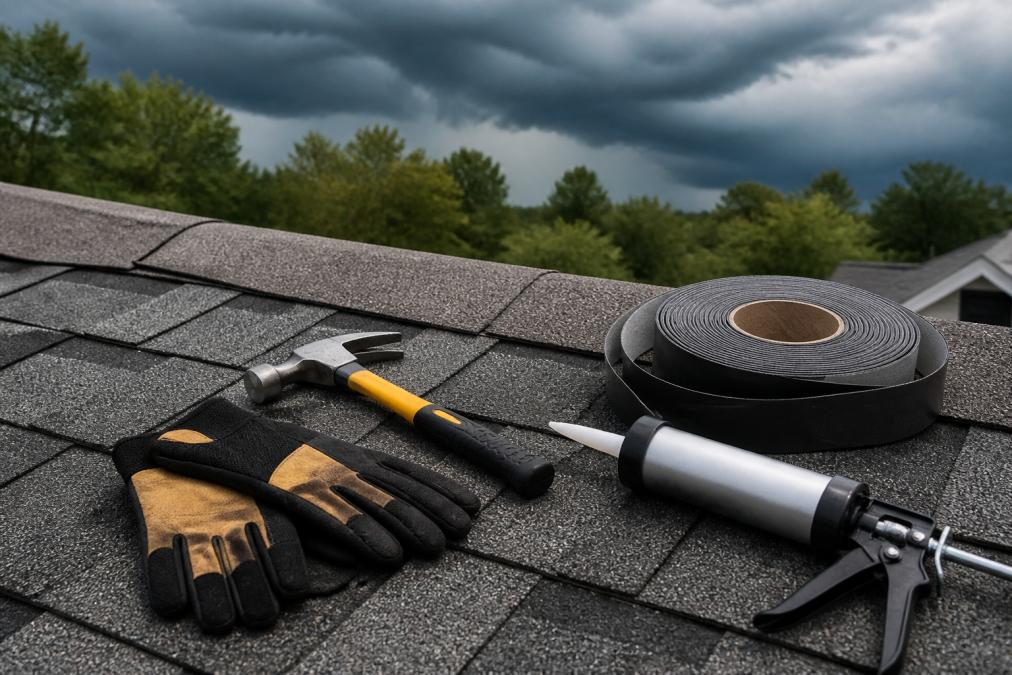
Emergency roof patching means stopping water from entering your home right now. Temporary materials buy you time to arrange professional repairs. The goal is protection, not perfection.
When temporary fixes are enough
Temporary fixes make sense when damage is localized and weather is clearing. A single missing shingle, a small tear in membrane, or a compromised flashing joint can often be handled with materials you can apply today. These patches hold for weeks or months if conditions remain dry.
The problem comes when you assume temporary is permanent. Roofing cement hardens and cracks. Tape loses adhesion over time. Tarps degrade in sunlight. Rubber patches shrink and lift. What stops a leak today may fail next month. If your roof is near the end of its life, if damage is widespread, or if weather is forecast to worsen, temporary materials are a stopgap only. Budget for professional replacement soon.
When to call a professional roofer
Call immediately if you see structural damage, sagging roof lines, cracked rafters, or water damage that extends across multiple rooms. Call if water is actively pooling inside your home or if you're uncomfortable working at height. Call if damage is extensive, more than a few shingles, large membrane tears, or multiple leak points.
Also call if you've attempted a temporary repair and it's failing faster than expected. Sometimes DIY attempts make problems worse. Water can get trapped behind patches, accelerating rot. Improper sealant application can trap moisture. Professional roofers have tools to assess hidden damage and apply solutions that last.
Roof Repair Tarps and Plastic Sheeting for Immediate Protection
Tarps and plastic sheeting are the fastest way to stop water from entering your home. They don't fix the underlying problem, but they prevent additional damage while you arrange repairs.
Heavy-duty tarps designed for roofing (typically 6-mil thickness or heavier) work better than general-purpose tarps. They're more puncture-resistant and hold up longer to UV exposure.
Secure tarps with rope, not nails. Nailing through your roof creates new leak points. Run rope over the tarp and under the eaves, or use sandbags to hold edges down. Make sure the tarp extends well past the damaged area on all sides, water will find any gap.
Tarps work on pitched roofs, flat roofs, and around obstacles. They're the most versatile temporary solution. The downside is visibility, a blue tarp signals to neighbors and passersby that you have roof damage.
Roofing Cement for Leaks and Sealant Options
Roofing cement is a thick, tar-based sealant that fills gaps and adheres to most roof surfaces. It's useful for small leaks around flashing, vents, and seams. It's not waterproof on its own, it's a gap-filler and adhesive.
Apply roofing cement only in dry conditions. Wet surfaces won't accept sealant properly, and rain will wash it away before it sets. Roofing cement typically requires 24-48 hours to cure fully. During that time, even light rain can compromise the seal.
The material hardens over time and becomes brittle. In freeze-thaw cycles common in winter, hardened cement cracks and loses adhesion. It's a temporary solution, typically effective for a few months to a year depending on weather exposure and UV damage.
Roof coating products are different from roofing cement. They're thinner, more flexible, and designed to be applied over large areas. Some coatings can be applied in light rain or humid conditions, making them more practical for emergency situations.
Self-Adhesive Tape, Rubber Patches, and Peel-and-Stick Membranes
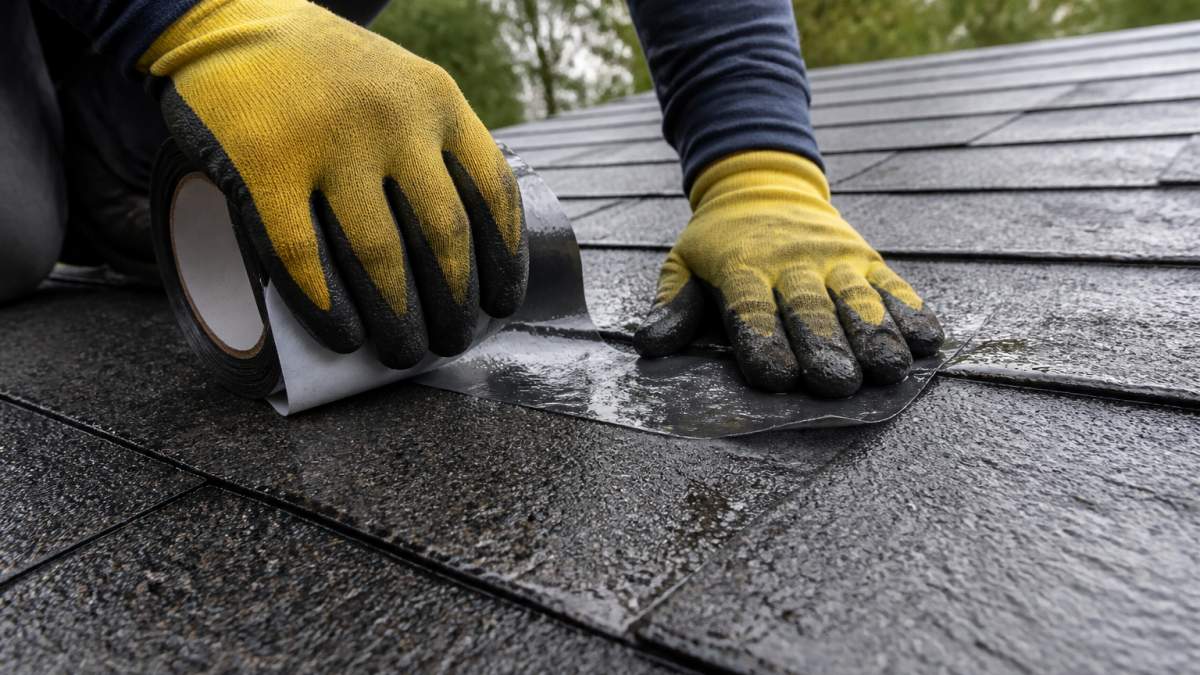
Self-adhesive roofing tape is convenient and requires no tools. Peel off the backing and press it onto a clean, dry surface. It bonds immediately and doesn't require curing time. This makes it ideal when weather is threatening and you need protection fast.
The catch is surface preparation. Tape won't stick to dirty, wet, or dusty surfaces. If you can't clean the area thoroughly, tape won't hold. Even on clean surfaces, tape adhesion degrades over time.
Rubber patches work similarly, they're pre-cut pieces of rubber membrane with adhesive backing. They're thicker than tape, making them more durable and better for larger damaged areas. Peel-and-stick membranes are essentially rubber patches scaled up for bigger repairs.
All of these work best on flat or nearly-flat surfaces. On steep pitched roofs, gravity works against adhesion. Tape and patches may slide down or peel away from the edges.
How to Stop a Roof Leak Temporarily: Application and Safety
Stopping a roof leak temporarily requires more than just slapping material on the problem. Preparation determines whether your patch holds for days or fails in hours.
Surface preparation and wet-weather limits
Clean the damaged area thoroughly. Remove loose debris, dirt, algae, and old sealant. Use a stiff brush or wire brush if the surface is heavily soiled. For tape and patches, the surface must be dry. If it's raining, wait for a break in weather or plan to apply materials when conditions clear.
Wet surfaces are the enemy of adhesive materials. Water underneath tape or patches prevents bonding. In wet conditions, roofing cement is your only option, it can be applied to damp surfaces more reliably than adhesive products. Even cement performs better on surfaces that are at least dry to the touch.
Temperature matters too. Most adhesive products have minimum application temperatures, typically 50°F or higher. Cold weather reduces adhesion. Extremely hot weather (above 85°F) can make adhesive too soft, causing patches to slip. Apply materials in moderate temperatures when possible.
Safety considerations and when to stop work
Working on a roof is inherently dangerous. Wet roofs are slippery. Steep pitches increase fall risk. Wind makes balance difficult. If you're uncomfortable working at height or the roof is steeply pitched, don't attempt repairs yourself.
Use proper fall protection. A safety harness rated for roof work, secured to a solid anchor point, is non-negotiable on pitched roofs. Wear shoes with good grip. Have someone spotting you from below. Never work alone.
Stop work immediately if weather deteriorates. A sudden wind gust, unexpected rain, or lightning risk isn't worth the injury. Stop if you feel unstable or fatigued. Fatigue causes falls. Stop if materials aren't adhering, forcing a patch that won't stick wastes time and materials.
Material Comparison: Durability, Removal, and Roof Type Compatibility
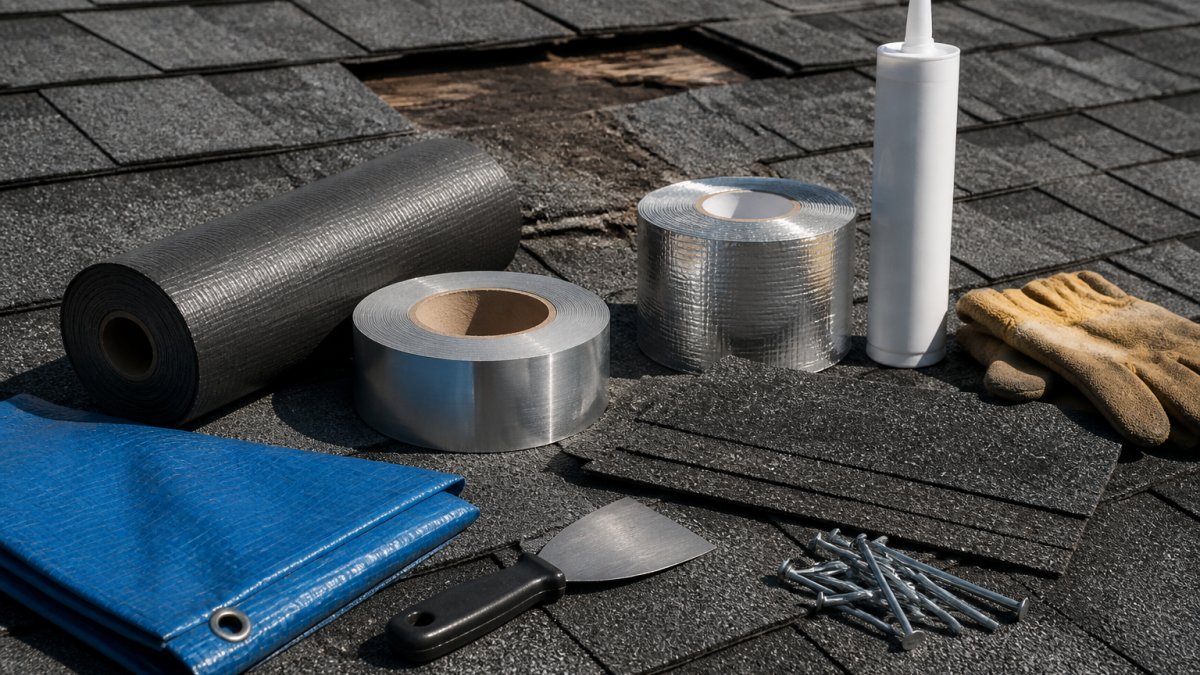
Choosing the right emergency roof patching material depends on your roof type, damage extent, and how long you need the repair to hold.
| Material | Best For | Durability | Removal Difficulty | Pitched Roof | Flat Roof |
|---|---|---|---|---|---|
| Roofing Tarp | Fast protection, any damage | Weeks to months | Easy | Good | Good |
| Roofing Cement | Small gaps, flashing leaks | Months | Moderate | Fair | Good |
| Self-Adhesive Tape | Small cracks, seams | Weeks | Easy | Fair | Good |
| Rubber Patches | Medium tears, punctures | Months | Moderate | Fair | Good |
| Peel-and-Stick Membrane | Large damaged areas | Months to a year | Moderate | Fair | Excellent |
Tarps are fastest and easiest to remove, no residue left behind. Adhesive materials leave backing or residue that requires scraping. Roofing cement hardens permanently and must be chipped off, potentially damaging the underlying roof. This matters if you're planning permanent repairs soon. A tarp doesn't compromise the roof surface. Adhesive patches and cement do.
On pitched roofs, gravity is the enemy. Tarps held with rope work well. Adhesive patches work less reliably unless mechanically fastened. Roofing cement works but can slide down in heat. On flat roofs, all materials perform better because water isn't running downhill.
Flat roofs with TPO or EPDM membrane are best served by peel-and-stick membranes specifically designed for those materials. Metal roofs accept most materials but adhesion can be poor on smooth surfaces, mechanical fastening or roofing cement works better.
Interior Leak Control and Damage Mitigation
While you're addressing the roof leak, water is likely still entering your home. Managing that water prevents secondary damage.
Move valuables away from the leak area. Place buckets, tarps, or towels under dripping water to catch it before it spreads across ceilings and walls. Wet drywall and insulation invite mold growth (the CDC).
Use fans and dehumidifiers to dry the space. Open windows if weather permits. Remove wet insulation if it's saturated, it won't dry in place and will support mold.
Document damage with photos for insurance purposes. Many policies cover water damage from sudden roof leaks. Your documentation helps when filing claims.
If you notice musty odors, visible mold, or signs of widespread water damage, contact a professional water damage restoration company. DIY drying works for minor leaks.
Emergency roof patching buys you time, but it's not a permanent solution. The materials we've covered, tarps, cement, tape, patches, and membranes, all have limits.
Frequently Asked Questions
What is the best material for a temporary roof patch?
The best material depends on your roof type and damage. For pitched roofs with shingle damage, self-adhesive roofing tape or rubber patches work quickly. For flat roofs or larger areas, a roof tarp provides fast waterproof protection. Roofing cement works well for small cracks and seams. All three materials are readily available and can be applied in under an hour, making them ideal for emergency roof patching when permanent repairs must wait.
Can roofing cement stop a roof leak temporarily?
Yes. Roofing cement creates a waterproof seal over cracks, gaps, and damaged flashing. It works best on flat or low-slope roofs and around penetrations like vents and chimneys. Apply it on dry surfaces for best adhesion. Roofing cement typically lasts 3-6 months before weathering begins, making it suitable for temporary fixes while you arrange professional repairs. Do not use it as a permanent solution on high-traffic areas or steep slopes.
How long will a temporary roof patch last?
Durability varies by material and weather exposure. Roof tarps last 1-3 months if properly secured. Self-adhesive tape and rubber patches last 2-6 months depending on UV exposure and temperature cycling. Roofing cement typically holds 3-6 months before degradation. All temporary materials degrade faster in direct sunlight, heavy rain, and freeze-thaw cycles. Plan to schedule permanent repairs within this window to prevent water damage from worsening.
Can you apply a roof patch on a wet surface?
Most patching materials require dry surfaces for proper adhesion. Roofing cement, self-adhesive tape, and rubber patches all bond better when applied to clean, dry roof surfaces. If rain is actively falling or the roof is soaked, use a roof tarp first to stop water entry, then allow the surface to dry before applying permanent patches. If you cannot wait for drying, a tarp remains your most reliable emergency option for wet-weather protection.