 how-to
Signs of Hidden Roof Leaks After a Storm
Table of Contents
- Why Storm Damage Often Hides From Plain Sight
- 7 Clear Signs of Hidden Roof Leaks to Check Today
- How to Inspect Roof After Storm: A Step-by-Step Safety Guide
- Spotting Early Signs of Roof Deck Rot Before It Spreads
- Documenting Damage for the Homeowners Insurance Roof Claim Process
- When to Call a Professional for a Hidden Leak Assessment
- Conclusion: Protect Your Home From the Next Storm
- Frequently Asked Questions
Last Updated: September 5, 2026
Why Storm Damage Often Hides From Plain Sight
A storm can batter your roof for hours, yet the most destructive damage often remains invisible from the street. High winds lift shingles just enough for water to seep underneath, and hail can bruise roofing material without an obvious break. The water travels down decking, along rafters, and into your attic, where it can sit for weeks before becoming visible.
Hidden roof leaks are the primary reason storm damage costs far more than the initial repair. By the time you notice a ceiling stain or musty odor, moisture may have compromised structural integrity, displaced insulation, and begun rotting wood framing. This guide from Certified Roofing Solutions Inc. walks through warning signs, how to inspect roof after storm safely, and what to document for the homeowners insurance roof claim process.
7 Clear Signs of Hidden Roof Leaks to Check Today
Hidden roof leaks rarely announce themselves with a dramatic drip. Instead, they leave subtle clues across your attic, living space, and roofline. Working through these seven signs systematically gives you the best chance of catching water damage early.
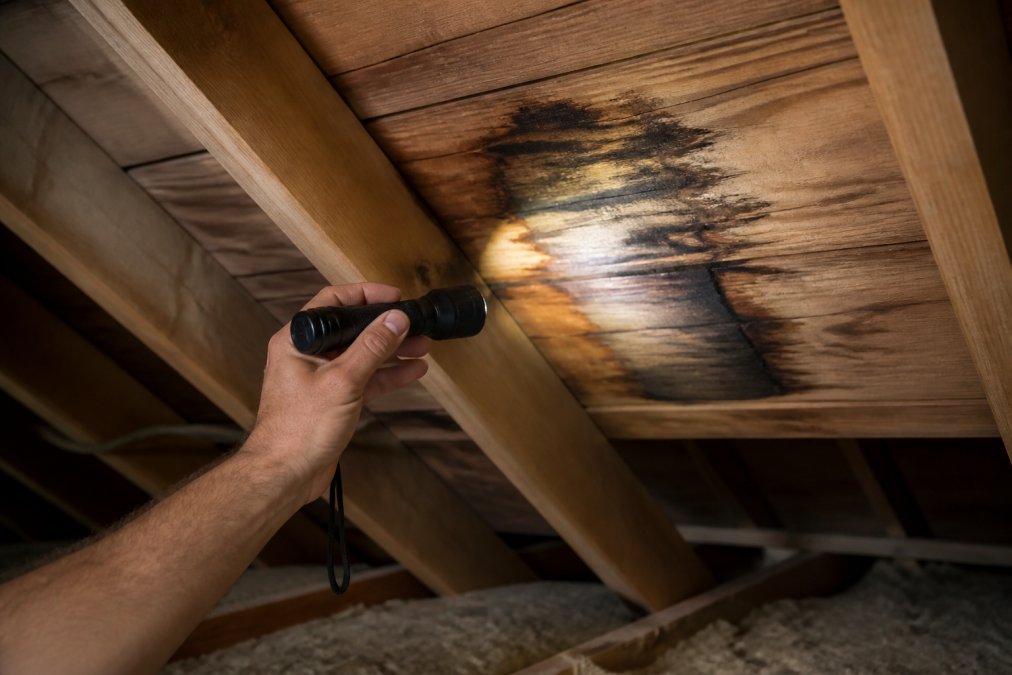
Inside Your Attic: Where Hidden Roof Leaks Start
Your attic is ground zero for detecting water intrusion early.
- Water stains on rafters and decking: Look for dark brown streaks or yellowed discoloration on the wood. These marks trace the path water has taken since entering.
- Musty or moldy odors: A persistent earthy smell means moisture is accumulating, even if you cannot see standing water.
- Damp or sagging insulation: Wet insulation clumps together and loses its loft. It also stops doing its job, which raises your energy bills while the problem worsens.
- Light visible through roof boards: On a sunny day, close the attic door and look up. Any pinpoints of daylight mean the roof covering has gaps that water can exploit.
- Water pooling in attic spaces: Check flat surfaces and valleys for puddles or dark, damp patches that never fully dry.
Inside Your Living Space: Ceilings, Walls, and Odors
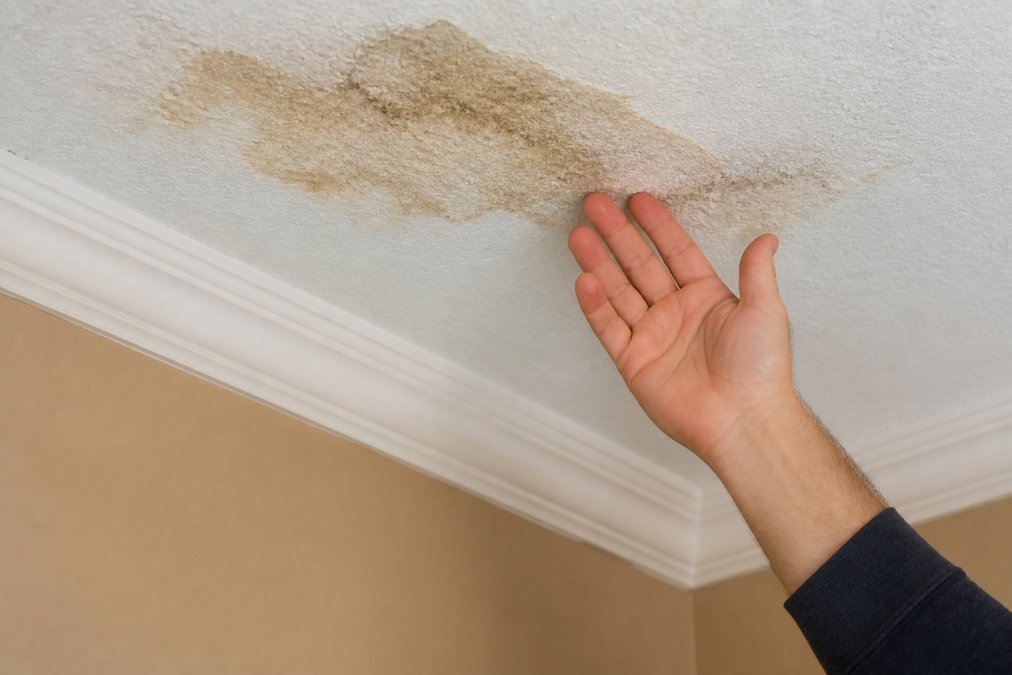
- Ceiling water stains and discoloration: Yellowish or brown rings on drywall indicate active or past leaks. If the stain feels soft or spongy, the drywall is saturated and needs attention.
- Bubbling or peeling paint and wallpaper: Moisture pushes paint away from the wall surface, creating bubbles, cracks, or peeling sections. This happens because water is seeping through the wall from behind.
A slow drip behind your walls can go unnoticed for months, fueling mildew growth that affects indoor air quality. If you catch dampness in a room but cannot find the source, suspect a hidden leak above you.
On Your Roofline: Exterior Evidence of Water Intrusion
The exterior of your roof holds its own clues, though they require a careful look from the ground or a safe vantage point.
- Cracked or missing shingles: Storm winds often tear shingles loose or crack them at the base. Each damaged shingle is an entry point for water.
- Shingle granules in gutters: Excessive granule loss means the roofing material is aging or was bruised by hail, leaving it less protective.
- Curling or buckling shingles: When shingle edges lift, wind-driven rain can force water underneath the protective layer.
- Flashing damage: Check around chimneys, vents, and skylights. Damaged or lifted flashing is one of the most common hidden leak sources.
- Sagging rooflines or decking: A dip in the roofline suggests the decking underneath has absorbed moisture and weakened.
How to Inspect Roof After Storm: A Step-by-Step Safety Guide
A methodical approach keeps you safe and ensures you do not miss evidence of hidden roof leaks. The steps below move from the safest vantage point to the most involved.
Step 1: Assess from the ground first. Walk a full perimeter of your home on level ground. Look for missing shingles, dented gutters, or debris impacts. Use binoculars to inspect the roof surface without climbing. Pay special attention to valleys, chimneys, and skylights, the most common failure points after high winds. Check the ground for shingle granules and asphalt pieces; heavy granule loss is a sign of hail bruising.
Step 2: Check the attic thoroughly. This is the safest and most revealing part of the inspection. Bring a bright flashlight, a headlamp plus a handheld light works best, and look for stains, odors, damp insulation, and visible light. Move systematically from one side of the attic to the other, checking each rafter bay. If you see daylight through the roof boards, mark the spot with tape for later reference.
Step 3: Document everything you find. Take photos and videos of any damage, including wide shots showing location and close-ups showing detail. Note the storm date and the date you discovered each issue. Use your phone's location tagging so metadata confirms the photos were taken at your property. Timestamped evidence is far more persuasive than a verbal description.
Step 4: Test for moisture. If you have a moisture meter, use it on stained wood and drywall. A reading above 15% moisture content on wood decking indicates active saturation (extension.org). If you do not own a meter, press plastic wrap tightly against a suspected stain and tape the edges down. Leave it for 24 hours; if condensation forms on the underside, moisture is actively migrating through the material.
Step 5: Know when to stop and call a professional. If you find evidence of water intrusion, or if you cannot safely access your attic or roof, a licensed roofing contractor should perform a full assessment. Do not walk on a roof with a steep pitch, wet surfaces, or visible sagging. Do not pull back shingles or lift flashing yourself, you can turn a minor issue into a major leak. A professional inspection can help you understand the scope of any damage, and many contractors may apply the inspection fee towards subsequent repair work.
Perform this inspection within 48 hours of the storm passing, if conditions are safe. The longer water sits, the more damage it does to wood framing, insulation, and drywall. Early detection stops the clock on secondary damage that your insurance policy may not cover.
Spotting Early Signs of Roof Deck Rot Before It Spreads
Roof deck rot is one of the most serious consequences of an undetected leak, and catching the early signs saves you from structural repairs. The decking, typically plywood or oriented strand board, sits directly under your roofing material. Once water penetrates that barrier, the wood begins to deteriorate.
Early signs include dark discoloration, a soft or spongy feel when pressed, and visible mold growth along the decking edges. Over time, the wood loses load-bearing capacity, leading to sagging rooflines or, in severe cases, collapse. The rot also spreads to adjacent rafters and structural members if moisture continues to accumulate.
Attic ventilation plays a direct role here. Poor ventilation traps warm, moist air against the underside of the decking, which can cause attic condensation that mimics a leak. If your decking shows signs of moisture but you cannot trace an active leak, check whether your ridge vents and soffit vents are clear and functioning.
Documenting Damage for the Homeowners Insurance Roof Claim Process
The homeowners insurance roof claim process goes more smoothly with thorough documentation. Insurance adjusters assess visible damage, but hidden roof leaks are harder to prove without evidence. Your documentation bridges that gap.
Start by photographing exterior damage from multiple angles, then move inside to capture attic stains, wet insulation, and interior water marks. Record the storm date and keep copies of weather reports confirming the event. If you had a professional inspection, request a written report describing the findings.
Most homeowners policies cover storm damage, but they typically exclude damage caused by long-term neglect or lack of maintenance. This distinction makes early detection critical. If a leak goes unnoticed for months, an adjuster may argue the damage resulted from ongoing wear rather than the storm itself. FEMA guidance on documenting disaster damage for insurance claims recommends keeping a home inventory and documenting damage promptly to support your claim.
| Documentation Step | What to Capture | Why It Matters |
|---|---|---|
| Exterior photos | Missing shingles, dented flashing, granule loss | Proves storm impact |
| Interior photos | Ceiling stains, wet insulation, attic water marks | Shows hidden leak evidence |
| Written records | Storm date, inspection notes, repair estimates | Establishes timeline |
| Professional report | Contractor findings, moisture readings | Provides expert validation |
When to Call a Professional for a Hidden Leak Assessment
Some situations clearly call for professional help. If you see multiple signs of water intrusion, if the damage spans a large area, or if you cannot safely access your attic, a licensed roofing contractor should perform the assessment. The same applies when you suspect damage to structural elements like rafters or decking.
Beyond those clear cases, use the following thresholds to decide whether a professional assessment is worth the cost:
You should call a professional if any of these apply:
- You see water stains on both the attic decking and the ceiling drywall below, this means water has traveled through multiple layers and the path may be complex.
- The stain is larger than a dinner plate or has grown since you first noticed it. Active growth means the leak is ongoing, not a remnant of an old, resolved issue.
- You smell a persistent musty odor even after ventilating the attic for several days. This indicates trapped moisture that a visual inspection cannot locate.
- Your roof is older than 15 years. Asphalt shingle roofs near the end of their lifespan are more prone to storm damage that is not visually obvious from the ground.
- You have a complex roofline with multiple valleys, dormers, or skylights. Each transition point is a potential failure zone, and diagnosing which one is leaking requires experience.
What a professional assessment actually includes:
A thorough inspection goes far beyond walking the roofline. A qualified contractor will:
- Inspect the attic from underneath, tracing water paths along rafters and decking.
- Check flashing around chimneys, vents, and skylights, the most common leak sources that DIY inspections miss.
- Use a moisture meter to distinguish active leaks from old, dried stains.
- Use thermal imaging to detect temperature differentials that reveal hidden moisture behind finished surfaces.
- Document findings with photos and a written report you can submit to your insurance adjuster.
How to vet a roofing contractor before hiring:
- Verify they are licensed and insured in your state. Ask for their license number and proof of workers' compensation coverage.
- Check their standing with the Better Business Bureau and look for reviews that mention post-storm work specifically.
- Ask whether they provide a written inspection report, if they only give verbal findings, they may not be thorough enough for your insurance claim.
- Request references from recent storm-repair jobs in your area.
What a professional assessment costs and what it saves you:
A professional inspection can help you understand the scope of any damage, and many contractors may apply the inspection fee towards subsequent repair work. Compared to ignoring a hidden leak: replacing rotted decking runs $1,500 to $3,000, structural rafter repair can exceed $5,000, and interior water damage often adds another $1,000 to $4,000. An inspection is a fraction of those costs and gives you documentation to file a claim.
Professional assessments also catch what DIY inspections miss. Trained inspectors know where water pools, how flashing failures develop, and which discolorations indicate active leaks versus old stains. They use moisture meters, thermal imaging, and other tools to trace water to its entry point.
For homeowners in Marietta, Alpharetta, Dunwoody, and Johns Creek, Certified Roofing Solutions Inc. provides experienced residential and commercial roofing services, including thorough post-storm assessments. Their team documents findings clearly, which supports both your repair decisions and your insurance claim. When you need to know how to inspect roof after storm properly or you suspect hidden roof leaks, professional evaluation gives you certainty about your roof's condition. Insurance Institute for Business and Home Safety guidance on roof maintenance and storm readiness emphasizes that regular professional inspections are a core part of preventative maintenance.
Conclusion: Protect Your Home From the Next Storm
The signs of hidden roof leaks after a storm are often subtle, but catching them early protects your home's structural integrity and your wallet. Check your attic for stains and odors, examine ceilings and walls for water marks, and look at your roofline for damaged shingles and flashing. Document what you find, address roof deck rot promptly, and understand what your insurance policy covers before you need it.
When you find evidence of water intrusion or want peace of mind after severe weather, a professional assessment is the smartest investment you can make. Certified Roofing Solutions Inc. offers top-quality roofing services tailored to your home's specific needs, with a commitment to excellence in every project across the metro Atlanta area. Book an appointment today and get your roof inspected by a team that treats your home like their own.
Frequently Asked Questions
Can you have a roof leak and not know it?
Yes. Hidden roof leaks can go unnoticed for weeks or months. Water often travels along rafters and beams before it drips, so the first visible sign might be a distant ceiling stain. Slow drips and seepage can saturate insulation and rot roof decking without ever pooling visibly. After a storm, a professional inspection using thermal imaging can detect moisture accumulation that the naked eye misses, preventing costly structural repairs down the line.
What should I look for in my attic after a heavy storm?
Start by looking for any light coming through the roof boards, which signals a direct gap. Then check for damp or sagging insulation, which indicates water ingress. Look closely at the roof rafters and decking for dark streaks, soft spots, or a musty odor. Water stains on the wood and displaced insulation are strong indicators of a leak. Use a flashlight to examine the underside of the roof sheathing for any signs of moisture or rot.
Does homeowners insurance cover roof leaks due to rain?
Coverage depends on the cause. Standard homeowners insurance policies typically cover sudden, accidental storm damage, such as a tree falling or hail creating a hole. However, damage from long-term wear and tear, poor maintenance, or a slow leak that developed over time is usually excluded. For the homeowners insurance roof claim process, document the damage immediately, take photos, and prevent further water damage. Your policy's dwelling coverage may help pay for repairs and water damage mitigation if the cause is a covered peril.
What are the signs of roof deck rot after a storm?
Signs of roof deck rot include a spongy or soft feeling when you push on the roof boards from the attic. You might also notice dark brown or black discoloration, visible mold or mildew growth, and a distinct musty odor. Over time, the wood may crack or sag, threatening your roof's structural integrity. If you see any of these signs of roof deck rot, contact a professional immediately, as this damage can compromise your entire roofing system and needs prompt repair.
Certified Roofing Solutions Inc. serves homeowners and businesses across Marietta, Alpharetta, Dunwoody, and Johns Creek with reliable, high-standard roofing services.
Frequently Asked Questions
Q: Can you have a roof leak and not know it?
A: Yes. Hidden roof leaks can go unnoticed for weeks or months. Water often travels along rafters and beams before it drips, so the first visible sign might be a distant ceiling stain. Slow drips and seepage can saturate insulation and rot roof decking without ever pooling visibly. After a storm, a professional inspection using thermal imaging can detect moisture accumulation that the naked eye misses, preventing costly structural repairs down the line.
Q: What should I look for in my attic after a heavy storm?
A: Start by looking for any light coming through the roof boards, which signals a direct gap. Then check for damp or sagging insulation, which indicates water ingress. Look closely at the roof rafters and decking for dark streaks, soft spots, or a musty odor. Water stains on the wood and displaced insulation are strong indicators of a leak. Use a flashlight to examine the underside of the roof sheathing for any signs of moisture or rot.
Q: Does homeowners insurance cover roof leaks due to rain?
A: Coverage depends on the cause. Standard homeowners insurance policies typically cover sudden, accidental storm damage, such as a tree falling or hail creating a hole. However, damage from long-term wear and tear, poor maintenance, or a slow leak that developed over time is usually excluded. For the homeowners insurance roof claim process, document the damage immediately, take photos, and prevent further water damage. Your policy's dwelling coverage may help pay for repairs and water damage mitigation if the cause is a covered peril.
Q: What are the signs of roof deck rot after a storm?
A: Signs of roof deck rot include a spongy or soft feeling when you push on the roof boards from the attic. You might also notice dark brown or black discoloration, visible mold or mildew growth, and a distinct musty odor. Over time, the wood may crack or sag, threatening your roof's structural integrity. If you see any of these signs of roof deck rot, contact a professional immediately, as this damage can compromise your entire roofing system and needs prompt repair.