 ultimate-guide
What Is Roof Underlayment and Why It Matters in 2026
Table of Contents
- What Is Roof Underlayment and Why It Matters
- Why Roof Underlayment Matters for Your Home's Protection
- Types of Roof Underlayment: Asphalt Felt, Synthetic, and Self-Adhered
- Synthetic vs Felt Underlayment: Which Should You Choose?
- Roof Underlayment Installation Cost: What Affects Your Investment
- When to Replace Roof Underlayment (and Signs It's Failing)
- Climate-Specific Underlayment Choices and DIY vs. Professional Installation
- Frequently Asked Questions
Last Updated: September 22, 2026
What Is Roof Underlayment and Why It Matters
Roof underlayment is the water-resistant layer between your roof deck and the shingles, acting as a secondary defense against moisture intrusion when shingles fail or wind-driven rain forces water sideways. At Certified Roofing Solutions Inc., we've inspected enough storm-damaged attics to know this hidden layer often decides whether a roof survives a storm or leaks.
Why Roof Underlayment Matters for Your Home's Protection
The core function of underlayment is leak prevention when your primary roofing material can't keep up. Shingles crack, blow off, or lift during high winds. Without a moisture barrier beneath them, water reaches the roof deck directly.
Types of Roof Underlayment: Asphalt Felt, Synthetic, and Self-Adhered
Three materials dominate residential roofing: asphalt-saturated felt, synthetic polymer sheets, and rubberized asphalt membranes. Each trades cost against durability, and the right pick depends on roof pitch, climate, and budget.
Asphalt-Saturated Felt
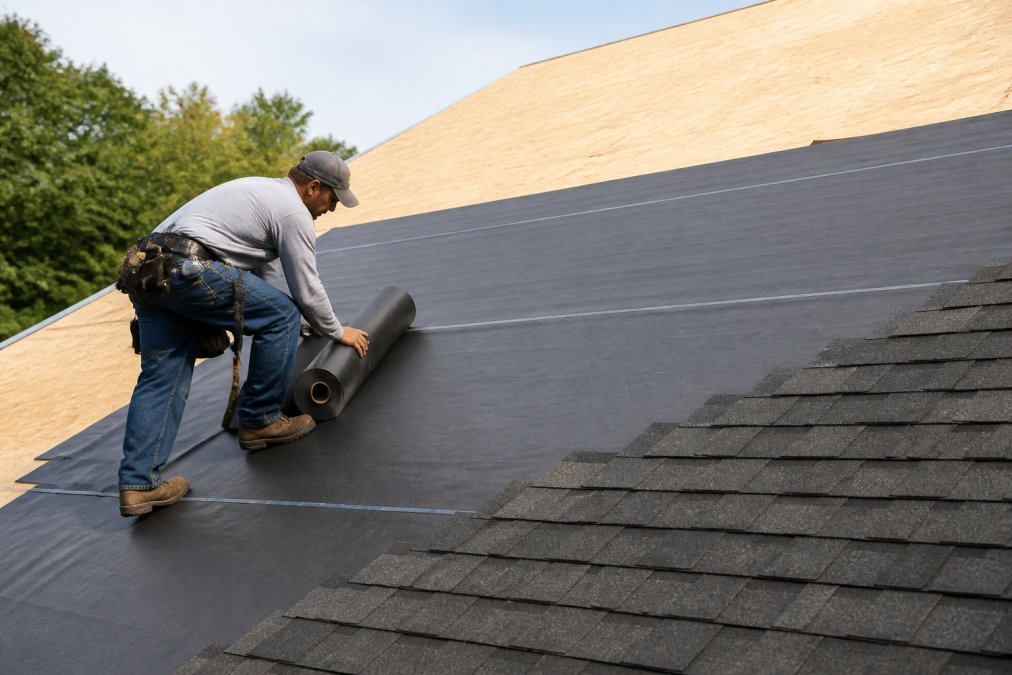
Asphalt-saturated felt, commonly called roofing felt, is a paper or fiberglass mat saturated with asphalt and has been the standard for decades. The two common weights are 15-pound and 30-pound felt, the heavier offering better tear resistance.
Synthetic Underlayment
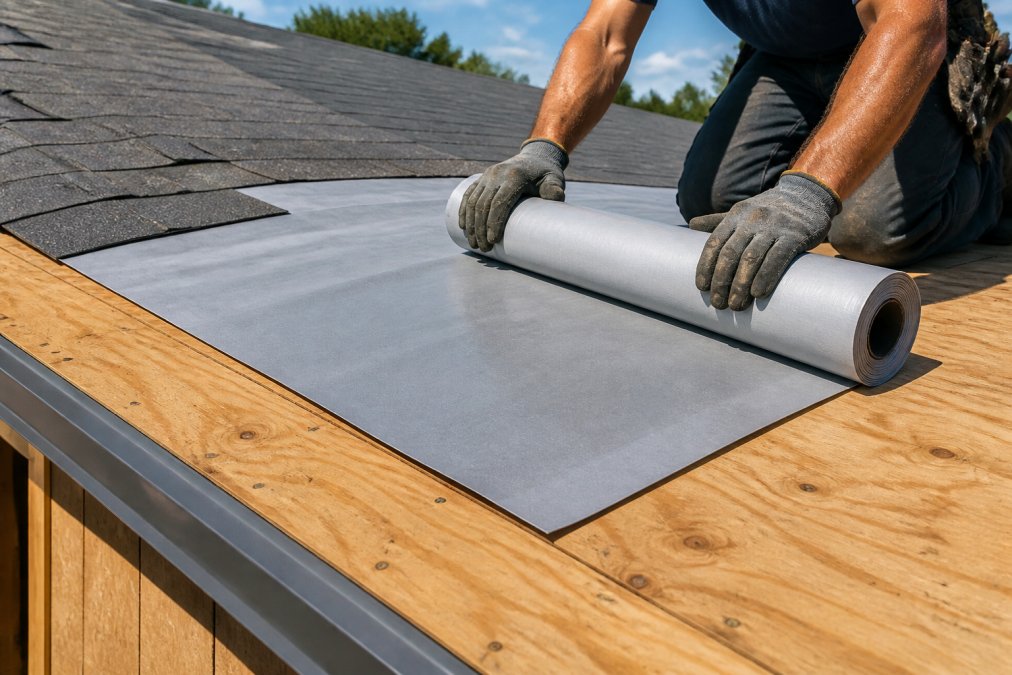
Synthetic underlayment is a woven or non-woven polymer sheet engineered to outperform felt. It resists tearing, holds up to foot traffic, won't absorb water like felt, carries a longer manufacturer warranty, and is often rated for temporary UV exposure if your project stalls.
Rubberized Asphalt (Self-Adhered Membrane)
Self-adhered membrane, often called ice and water shield, is a rubberized asphalt sheet with a peel-and-stick backing. It bonds directly to the roof deck and seals around nails and fasteners, which is why it's required in valleys, around flashing, and along eaves in cold climates.
Synthetic vs Felt Underlayment: Which Should You Choose?
For most homeowners replacing a roof today, synthetic underlayment is the better choice: it lasts longer, resists installation damage, and holds up better under the shingles. Felt still makes sense on tight budgets or older roofs where vapor permeability is a priority.
| Feature | Asphalt Felt | Synthetic | Self-Adhered |
|---|---|---|---|
| Relative cost | Lowest | Mid-range | Highest |
| Tear resistance | Low | High | High |
| UV exposure tolerance | Poor | Good | Good |
| Vapor permeability | High | Varies | Low |
| Best for | Budget roofs, older decks | Most residential roofs | Valleys, eaves, flashing |
Roof Underlayment Installation Cost: What Affects Your Investment
Underlayment is rarely a standalone line item, it's bundled into the per-square price of a full roof replacement, so most homeowners never see what the upgrade from felt to synthetic actually costs. Understand that before comparing bids.
How the Three Materials Compare on Cost
Rather than quote a single national number (which varies by region, supplier, and season), understand the cost relationship between the three materials:
- Asphalt-saturated felt (15-pound): the lowest material cost per square. It is the budget baseline against which everything else is measured.
- Asphalt-saturated felt (30-pound): roughly a modest step up from 15-pound felt, still well below synthetic. The heavier mat buys tear resistance but not UV tolerance.
- Synthetic polymer sheet: typically priced between felt and self-adhered membrane. The premium over felt is real, but it is a small fraction of the total roof replacement cost, often the difference between a mid-grade and premium shingle, not a separate budget line.
- Rubberized asphalt (self-adhered membrane): the highest material cost per square. It is usually installed only in valleys, along eaves, and around penetrations rather than across the whole roof, which keeps the total add-on manageable.
The Cost-Benefit Case for Synthetic Over Felt
This is where the real decision lives. Felt is cheaper up front but has a shorter service life, tears more easily during installation, and degrades under UV exposure if the project stalls. Synthetic costs more per roll but resists foot traffic, holds up to temporary exposure, and typically carries a longer manufacturer warranty.
What Actually Drives the Price
- Material type. Self-adhered membrane costs the most per square; felt costs the least.
- Roof complexity. Valleys, dormers, chimneys, and skylights require more cutting, flashing, and membrane coverage. A simple gable roof and a cut-up roof of the same square footage can differ significantly in labor.
- Roof pitch. Steep roofs need more safety equipment, slower labor, and sometimes staging.
- Deck condition. Rotted or delaminated decking must be replaced before new underlayment goes down. This is the most common source of surprise cost.
- Tear-off. Removing old layers adds disposal and labor. Multiple existing layers cost more to strip.
- Code requirements. Some jurisdictions require ice and water shield along eaves and in valleys. That requirement adds material and labor that a bid without it will omit.
How to Read a Bid
A common mistake is comparing quotes on price alone. A lower bid often means thinner felt, skipped ice and water shield in valleys, or reused flashing. Those shortcuts surface as leaks within a few seasons, long after the contractor has been paid.
Ask each bidder to specify, in writing:
- The exact underlayment product and brand (not just "synthetic").
- Where self-adhered membrane will be used (eaves, valleys, penetrations).
- Whether old underlayment and flashing are being replaced or reused.
- The manufacturer warranty length on the underlayment itself.
When to Replace Roof Underlayment (and Signs It's Failing)
Underlayment is replaced whenever the shingles come off. There's no practical way to inspect or repair it under an intact roof. If your shingles are being replaced, the underlayment goes with them.
Signs that failing underlayment is already causing problems:
- Water stains on attic sheathing or ceiling drywall
- Curling, cracking, or missing shingles exposing the layer beneath
- Visible wrinkles or tears at roof edges and valleys
- Musty odors in the attic after rain
- Ice damming along the eaves in winter
Climate-Specific Underlayment Choices and DIY vs. Professional Installation
Most underlayment guides give the same generic advice regardless of where you live. That's a mistake: the right underlayment depends heavily on the climate the roof must survive, and installation matters as much as material.
Choosing Underlayment by Climate
Cold climates with freeze-thaw cycles. Ice damming is the dominant risk: snow melts on the warm upper roof, refreezes at the cold eaves, and backs water up under the shingles. Self-adhered rubberized asphalt membrane along the eaves and in valleys is the standard defense, and many jurisdictions with significant snow loads require it by code. It bonds directly to the deck and seals around fasteners, so backed-up water has nowhere to travel.
Why Installation Quality Matters as Much as Material
Underlayment is only as good as its installation. The failure modes are almost always installation-related, not material-related:
- Incorrect overlap. Horizontal and vertical laps must follow the manufacturer's specification. Too little overlap lets water migrate between courses.
- Wrong fastener placement. Fasteners must be driven through the overlap zone, not the field, and must not over-drive and tear the membrane.
- Poor integration with flashing and drip edge. Underlayment must lap over the drip edge at the eaves and integrate correctly with valley flashing and pipe boots. A gap here is a direct path to the deck.
- Exposed edges. Underlayment left exposed at rake edges or valleys degrades under UV and wind before shingles cover it.
DIY vs. Professional Installation
Underlayment installation is not a beginner project. It requires correct overlap, fastener placement, and integration with flashing and drip edge, and errors don't show up for months, by which time the deck may already be damaged.
What to Verify Before Hiring
- The contractor's license and insurance, in writing.
- The exact underlayment product and brand being installed.
- Whether the manufacturer warranty covers labor and materials, and what voids it.
- Whether the work will be permitted and inspected.
- Whether existing flashing and drip edge will be replaced or reused.
For homeowners in Marietta, Alpharetta, Dunwoody, and Johns Creek, Certified Roofing Solutions Inc. handles both residential and commercial underlayment installation, including TPO and metal roofing systems. Our team documents existing damage before work begins, so you know upfront what the job involves.
Frequently Asked Questions
What is the purpose of roof underlayment?
Roof underlayment serves as a secondary defense against moisture intrusion. It sits between the roof deck and shingles, creating a water-resistant barrier that protects against wind-driven rain, ice dams, and condensation. Even when shingles fail or blow off during storms, underlayment helps prevent leaks from reaching your attic and interior. It also provides a smoother surface for shingle installation and can improve thermal stability.
Does every roof require underlayment?
Most roofing manufacturers require underlayment to maintain warranty coverage, and building codes in many jurisdictions mandate it. While some older roofs or specific materials like certain metal panels may have alternative moisture barriers, asphalt shingle roofs almost always need underlayment. Skipping it can void your warranty and leave your home vulnerable to leaks that may not show up until significant damage occurs.
What is the difference between felt and synthetic underlayment?
Asphalt-saturated felt is the traditional option, made from paper or fiberglass saturated with asphalt. It's affordable but tears more easily and has lower UV resistance. Synthetic underlayment uses polymer-based materials that offer superior tear resistance, lighter weight, and better UV exposure tolerance. Synthetic also provides a non-slip surface for installers. The choice between synthetic vs felt underlayment often comes down to budget versus long-term durability.
How long does roof underlayment typically last?
Asphalt-saturated felt typically lasts 10 to 20 years, while synthetic underlayment can last 25 to 50 years depending on the product and exposure conditions. Self-adhered membranes often carry similar lifespans to synthetic options. However, underlayment lifespan depends heavily on installation quality, ventilation, and whether it's exposed to UV radiation for extended periods during construction delays.
Can you install a new roof without replacing the underlayment?
It's possible in some cases, but not recommended if the existing underlayment shows signs of damage, wrinkling, or age. When installing new shingles, most roofing professionals inspect the underlayment and replace any compromised sections. If the underlayment is more than 15 to 20 years old or has visible tears, full replacement is the safer choice to protect your investment and maintain warranty compliance.
When should roof underlayment be replaced?
Replace roof underlayment when you notice curling shingles, visible tears, or water stains in your attic after storms. If your roof is 15 years or older and you're already planning shingle replacement, replacing underlayment at the same time is cost-effective. Any time the roof deck is exposed during repairs is also an opportunity to upgrade failing underlayment before it leads to moisture intrusion.