 how-to
Is TPO Roofing Energy Efficient for Warehouses?
Table of Contents
- How TPO Roofing Works and Why Reflectivity Matters
- TPO Roof Pros and Cons for Warehouse Energy Performance
- Energy Savings: Cooling Costs and Heat Reduction
- Commercial Roof Insulation and R-Value Impact
- TPO vs. EPDM Roofing: Energy Efficiency Comparison
- 60-Mil vs. 80-Mil TPO: Durability and Efficiency Trade-Offs
- Calculating Payback and Lifecycle Cost for Warehouse Roofs
- Frequently Asked Questions
Last Updated: October 9, 2026
How TPO Roofing Works and Why Reflectivity Matters
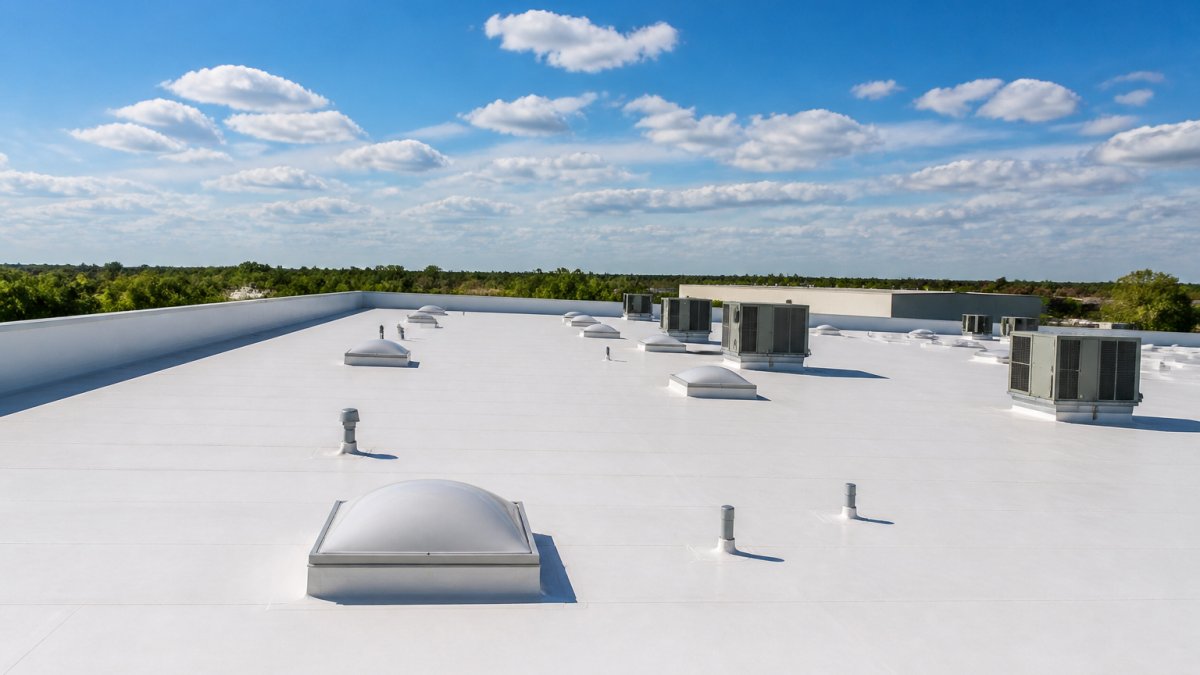
TPO roofing, or thermoplastic polyolefin, is a single-ply membrane used on flat and low-slope commercial roofs, and TPO roofing energy efficient performance comes from its reflective surface.
The reflective surface works like a mirror for solar energy. When sunlight hits a white TPO roofing membrane, much of that energy bounces back instead of converting to heat inside your building.
The key measurement is solar reflectance, which rates how much sunlight a material bounces back on a scale from 0 to 1.
Heat-welded seams create a watertight barrier that prevents moisture infiltration and protects your roof's insulation value over time. A compromised seal allows water and air leakage, degrading both durability and thermal performance.
TPO Roof Pros and Cons for Warehouse Energy Performance
Pros:
- High solar reflectance reduces cooling load - White TPO membranes reflect 65-85% of sunlight, lowering the amount of heat that enters your building
- Durable single-ply installation - TPO resists UV damage and weathering better than older roofing materials
- Lower roof surface temperatures - The reflective surface stays significantly cooler than dark roofing, reducing thermal stress on the membrane
- Cost-effective compared to metal roofing - TPO typically costs less to install than standing-seam metal while delivering comparable energy benefits
- Easy repairs and maintenance - Heat-welded seams can be re-sealed if damage occurs, extending roof life
- Suitable for flat warehouse roofs - TPO works well on the low-slope designs common in warehouse construction
Cons:
- Climate-dependent efficiency - TPO energy savings are most significant in hot climates; benefits diminish in cooler regions
- Reflectance degrades over time - The white membrane can accumulate dust and dirt, reducing reflectivity by 10-20% after several years
- Requires regular cleaning - Maintaining energy performance means periodic roof cleaning, which adds ongoing maintenance costs
- Thermal emittance matters too - TPO's ability to release absorbed heat (thermal emittance) is lower than some cool roof alternatives
- Installation quality affects performance - Poorly installed seams or improper insulation underneath reduces actual energy savings
- Not ideal for extremely cold climates - In northern regions, the reflectivity that helps in summer can slightly increase winter heating demand
The trade-off is real: TPO roofing delivers genuine energy efficiency benefits in warm climates with clear payback periods. In cooler regions, the advantage shrinks considerably.
Energy Savings: Cooling Costs and Heat Reduction
The energy savings from TPO roofing come from reduced roof surface temperature. A white TPO membrane can run 20-30°F cooler than a dark roof under the same sun, meaning less heat transfers through the roof assembly into your warehouse.
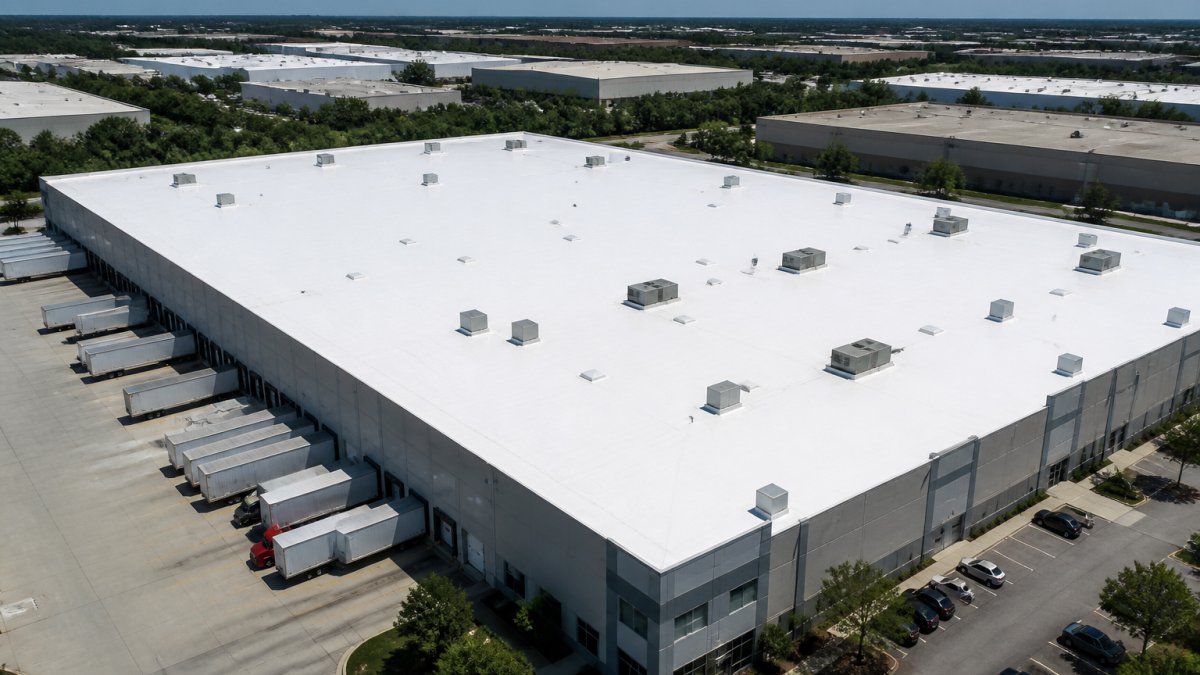
That temperature difference is the mechanism, not a dollar savings figure. Most warehouse operators are shown a modeled estimate, not a measured result, and the two can diverge widely. Here is how to tell them apart.
Modeled estimates vs. measured results
A modeled estimate comes from energy simulation software that inputs building geometry, insulation R-value, climate zone, HVAC efficiency, and operating schedule, then predicts cooling-load reduction. These tools compare scenarios well, but assume ideal conditions: clean membrane, sealed seams, no duct leakage, no unentered internal heat sources.
A measured result comes from your utility data. The most reliable approach is a before-and-after comparison using cooling degree days (CDD) to normalize for weather. Pull 12 months of electricity bills before replacement, divide total kWh by CDD, then repeat after a full cooling season. The difference in kWh per CDD is your real savings rate, not a projection.
The variables that actually move the number
Five factors determine whether a warehouse sees large or marginal savings:
- Climate (cooling degree days). Savings scale with cooling demand. A high-CDD market has far more hours where reflectivity pays off than a mild coastal climate.
- Roof area relative to conditioned volume. Warehouses have a high roof-to-floor ratio, so roof heat gain is a larger share of total cooling load than in a multistory office.
- Insulation level. The lower the existing R-value, the more the reflective surface matters. Once insulation is upgraded to current code, the marginal benefit of reflectivity shrinks.
- HVAC use and operating hours. A 24/7 distribution center with high internal gains from forklifts, lighting, and racking sees a different profile than a single-shift storage building; internal gains can dominate the load.
- Rooftop equipment and penetrations. Every RTU, exhaust fan, and skylight interrupts the reflective field and adds a thermal bridge. A roof 30% covered by equipment behaves very differently from a clear membrane.
A simple estimation framework
You do not need simulation software for a rough number. Use this sequence:
- Estimate annual cooling kWh from your utility bills (or submeter data).
- Estimate the share of cooling load from roof heat gain: 15-25% for a low-insulation warehouse, 5-10% for a well-insulated one.
- Apply the expected reduction in roof heat gain from a reflective membrane, typically 20-40% of that roof-attributable load, depending on climate and membrane condition.
- Multiply by your blended electricity rate for annual dollar savings.
Seasonal trade-offs
Summer cooling savings are the headline, but winter matters too. In heating-dominated climates, a reflective roof can slightly increase heating demand by reducing passive solar gain. In most warehouses this penalty is small, since internal gains from equipment and lighting offset much of the heating need and warehouse setpoints are often lower than office space. The net effect is usually still positive in mixed climates, but the margin narrows as you move north.
The honest answer is that TPO savings are real but building-specific. A modeled estimate is a starting point; a normalized utility comparison is the proof.
Commercial Roof Insulation and R-Value Impact
Roof insulation and TPO roofing work together to control heat transfer. R-value measures thermal resistance; higher R-values mean better insulation.
TPO roofing itself has minimal insulating value; the real insulation is the layer beneath the membrane.
A common mistake is assuming TPO roofing alone delivers energy efficiency. It doesn't. TPO reduces the heat load the insulation must handle; together they create the actual energy performance.
When upgrading to TPO roofing, evaluate your insulation. If it is degraded or below-code, replacing both the membrane and the insulation underneath maximizes energy savings and extends your roof's service life.
TPO vs. EPDM Roofing: Energy Efficiency Comparison
EPDM is a synthetic rubber membrane commonly used on commercial roofs. The key energy-efficiency difference is color and reflectance.
Standard EPDM is black, absorbing rather than reflecting solar radiation.
White EPDM exists but is less common and often costs more than white TPO.
The practical difference: TPO is the default white option in most markets, while EPDM is typically specified in black, making it the less efficient choice for warehouse cooling.
EPDM has other advantages unrelated to energy, it's slightly more flexible in cold climates and handles puncture damage differently, but for warehouse energy efficiency, white TPO roofing outperforms standard black EPDM.
60-Mil vs. 80-Mil TPO: Durability and Efficiency Trade-Offs
TPO membrane thickness is measured in mils (thousandths of an inch). The two most common warehouse specifications are 60-mil and 80-mil TPO.
60-mil TPO:
- Lighter weight, easier to install
- Lower material cost
- Adequate reflectance for energy efficiency
- More susceptible to puncture damage during installation and maintenance
- Shorter expected service life (15-20 years typical)
80-mil TPO:
- Thicker, more durable membrane
- Better puncture resistance
- Same reflectance as 60-mil (thickness doesn't change reflectivity)
- Higher material cost
- Longer service life (20-25 years typical)
For energy efficiency, both perform equally, reflectance doesn't change with thickness. The difference is durability and long-term performance.
A punctured membrane loses energy efficiency quickly: water infiltration degrades insulation and air leakage increases. The thicker 80-mil membrane protects your energy investment by lasting longer and resisting damage better.
The choice comes down to budget versus long-term value: 60-mil works if you expect to replace the roof in 15-20 years anyway, while 80-mil makes sense for maximum durability over a 25+ year ownership horizon.
Calculating Payback and Lifecycle Cost for Warehouse Roofs
Energy savings from TPO roofing are real, but payback depends on your situation. A transparent framework beats a rule-of-thumb range, which hides the assumptions that drive the answer.
Build the calculation in four lines
Line 1: Incremental first cost. Compare the installed cost of the TPO assembly against the alternative you would otherwise choose (typically a dark membrane or like-for-like replacement).
Line 2: Annual energy savings. Use the estimation framework in the previous section. Express it as a dollar figure per year, and note the assumption behind it.
Line 4: Service life and replacement timing. A 60-mil membrane and an 80-mil membrane have different expected service lives, which changes how many replacement cycles fall inside your ownership horizon.
Simple payback is Line 1 divided by (Line 2 minus Line 3).
What the numbers typically look like
A warehouse in a high-cooling-degree-day market with low existing insulation and above-average electricity rates tends to see the shortest payback, often several years. The same building in a mild climate with good insulation and low rates can push payback past a decade, at which point durability becomes the deciding factor.
Incentives and programs worth checking
Several programs can shorten payback, verify them before signing a contract:
- Utility rebates. Many utilities offer prescriptive rebates for cool roofs or code-exceeding insulation upgrades. Amounts and eligibility vary by utility and state, so confirm with your account representative.
- Federal tax provisions. Commercial energy-efficiency deductions and accelerated depreciation rules change with legislation. Confirm current eligibility with a tax professional.
- ENERGY STAR and code pathways. Products meeting ENERGY STAR reflective criteria or code-compliant insulation levels may unlock additional program eligibility.
Lifecycle cost beyond energy
The energy line is only one input. Two others often dominate over a 25-year horizon:
- Maintenance and repair frequency. Heat-welded seams can be re-sealed, and localized repairs are less disruptive than full replacement. Fewer emergency repairs means lower lifecycle cost even if the membrane costs more upfront.
- Insulation replacement timing. If existing insulation is at end of life, replacing it during the same project avoids a second tear-off later; bundling usually costs less than two phases.
The most useful output is not a single payback number but a side-by-side comparison of two or three roof assemblies over the same holding period and assumptions, so you can see which wins on total cost of ownership.
Frequently Asked Questions
Does a white TPO roof reduce cooling costs for warehouses?
Yes. White TPO membranes reflect sunlight rather than absorbing it, which lowers roof surface temperature and reduces the heat transfer into the building. This directly decreases HVAC cooling demand. The magnitude of savings depends on climate, existing insulation levels, and how much of the roof is exposed to direct sunlight. Warehouses in hot climates typically see the most significant reductions in cooling costs.
What is the difference between 60-mil and 80-mil TPO roofing?
Thickness affects durability and puncture resistance. 60-mil TPO is lighter, more flexible, and less expensive; it handles standard warehouse traffic well. 80-mil TPO is thicker, more resistant to foot traffic and weathering, and typically lasts longer. Both offer similar reflectivity and energy efficiency, so the choice depends on expected maintenance activity and budget. Thicker membranes are often preferred for high-traffic commercial roofs.
Is TPO or EPDM better for warehouse energy efficiency?
TPO is generally more energy-efficient for warehouses. White TPO membranes reflect 60-85% of solar radiation, while EPDM (black rubber) absorbs most sunlight, making it significantly hotter. This reflectivity difference translates directly to lower cooling costs in TPO systems. EPDM has other advantages like durability and chemical resistance, but TPO wins on energy performance in warm climates.
How does roof insulation affect warehouse energy efficiency?
Roof insulation (measured in R-value) slows heat transfer through the roof deck into the building. A white TPO membrane reflects heat away before it enters the insulation layer, while insulation prevents any heat that does penetrate from reaching the interior. The combination of high-reflectance TPO plus adequate insulation delivers the best energy performance. Warehouses with poor insulation benefit most from upgrading to reflective TPO.