 How-to
7 Steps to Extend Your TPO Roof's Lifespan
Last Updated: November 4, 2026
Quick Summary
The tpo roof lifespan is extended mainly by consistent maintenance: scheduling professional inspections at least twice a year, keeping drains clear and debris off the membrane, and repairing small punctures or seam gaps before water reaches the insulation. Using cleaners approved for TPO and avoiding harsh solvents and high-pressure washing also protects the membrane.
- Schedule professional TPO roof inspections at least twice a year and after major storms.
- Check for ponding 48 hours after rain, since lingering puddles signal a drainage problem.
- Repair small punctures and seam gaps promptly so water cannot reach the insulation and deck.
- Use mild soap or manufacturer-approved TPO cleaners, and avoid petroleum solvents and high-pressure washing.
- Keep a written log of inspections, repairs and cleaning products to support warranty claims.
Table of Contents
- How Long a TPO Roof Lasts and What Shortens It
- Step 1: Schedule a Professional TPO Roof Inspection
- Step 2: Clean the Membrane and Keep Drains Clear
- Step 3: Check Seams, Flashing and Fasteners
- Step 4: Repair Small Problems Before They Spread
- Step 5: Use Reflective Coatings to Limit UV and Heat Damage
- Step 6: Match Cleaning Agents and Tools to Your Membrane
- Booking Your Next TPO Roof Check with Certified Roofing Solutions
- Frequently Asked Questions
Most flat commercial roofs don't fail suddenly. They wear down over years of sun, rain, foot traffic and standing water, and the damage often stays hidden until a leak shows up inside. If you manage a commercial building in Dunwoody or own a home in Johns Creek with a low-slope TPO system, the good news is that your tpo roof lifespan is largely in your hands. A few consistent habits can help add years to a membrane. This guide walks through seven practical steps to extend your TPO roof lifespan, from scheduling inspections to choosing the right cleaning products.
How Long a TPO Roof Lasts and What Shortens It
TPO, or thermoplastic polyolefin, is a single-ply membrane widely used on flat and low-slope roofs. To see how this system fits into the broader picture, read The Benefits Of Flat Roofing: A Modern Solution For Commercial And Residential Properties. Its lifespan depends on the membrane thickness, the quality of installation, and the climate it sits in. Many TPO systems are designed to last well over a decade, but actual service life varies a lot from building to building.
Several factors tend to shorten that life:
- UV degradation from constant sun exposure
- Ponding water that sits on the surface after rain
- Thermal expansion that stresses seams and fasteners
- Foot traffic and dropped tools on the membrane
- Debris buildup that traps moisture and blocks drains
- Chemical exposure from the wrong cleaners or oils
Heat and humidity can put extra stress on roof surfaces, so regular attention matters in hot, humid climates. The steps below target each of these problems directly.
Step 1: Schedule a Professional TPO Roof Inspection
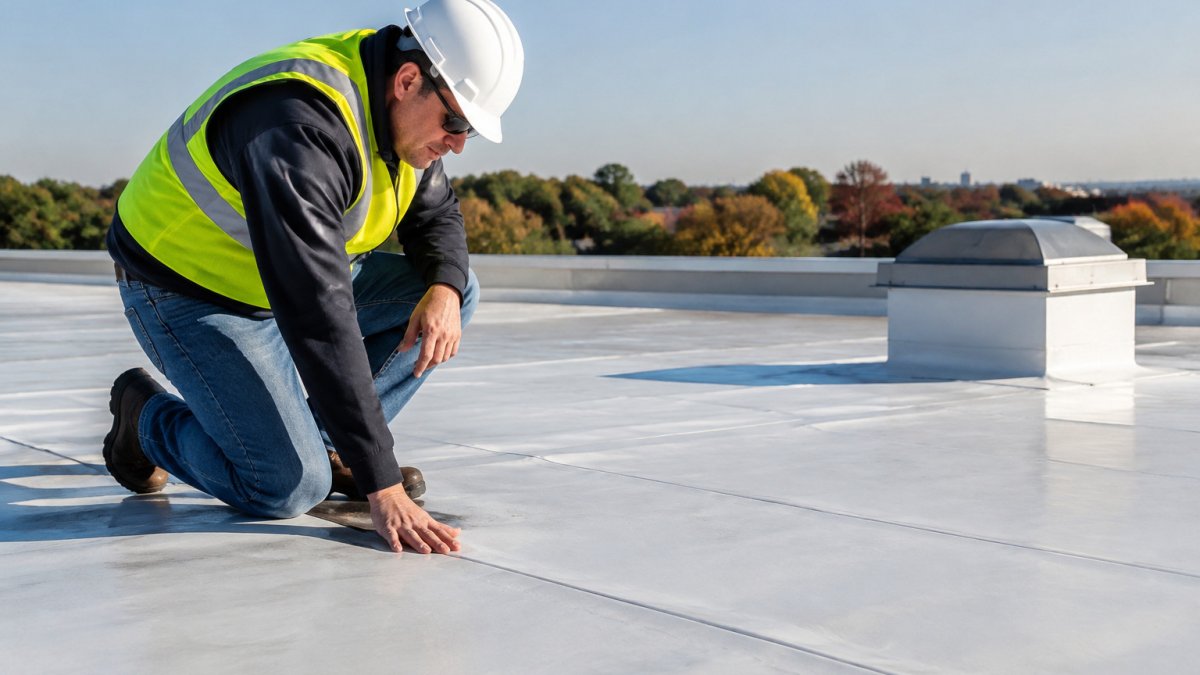
A professional inspection is the foundation of any lifespan plan. An inspector can spot seam separation, punctures, and early membrane wear that are hard to see from the ground, and can document conditions in a way that supports warranty claims later.
Most owners should schedule an inspection at least twice a year, typically in spring and fall, and after any major storm. A good inspection checks:
- Seams and laps for lifting, gaps, or failed welds
- Flashing around penetrations, curbs, edges, and termination bars
- Fastener and plate condition, including backed-out or rusted screws
- Drains, scuppers, and overflow paths
- Surface wear, blistering, cracking, and crazing
- Ponding evidence such as staining, silt rings, or debris lines
Keep a written record of each inspection. Over time, those records show trends, like a seam that keeps reopening, and help you plan repairs before they become expensive. A practical record includes the date, inspector name, weather conditions, photos of each deficiency, and a repair priority (monitor, repair this season, repair now).
DIY vs. Professional: Where the Line Sits
Owners can often handle visual checks from a stable ladder or roof hatch, photo documentation, debris removal, and drain clearing. Work that involves walking the field of the membrane, testing seam integrity, climbing around penetrations, or making a repair that must stay warranty-compliant is best left to a licensed roofing professional.
A simple rule: if the task requires a tool other than a broom, a leaf blower, or a camera, and you are not trained on TPO systems, call a professional.
Watch out: an inspection that only looks at the surface misses the most expensive failures. Seam probing, fastener back-out, and wet insulation under the membrane are the conditions that drive replacement cost, and they require hands-on evaluation by someone trained to read them.
For a detailed walkthrough of what a TPO-specific inspection covers, see our Commercial Roof Inspection Checklist for TPO: Step-by-Step Guide.
Step 2: Clean the Membrane and Keep Drains Clear
Standing water and debris are among the fastest ways to wear out a flat roof. Leaves, grit, and dirt hold moisture against the membrane and can clog drains, which causes ponding.
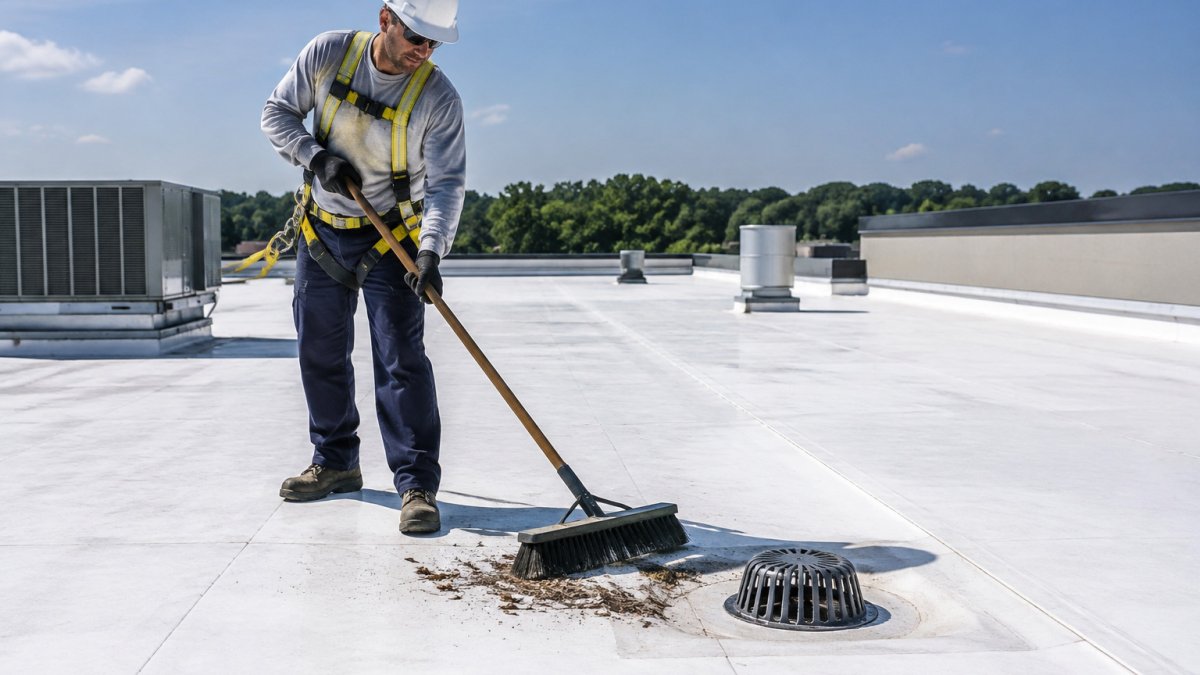
Set up a simple routine:
- Sweep debris off the surface at least monthly, and after storms
- Clear drains, scuppers, and gutters so water moves off the roof
- Check for ponding 48 hours after rain, since puddles that linger point to a drainage problem
- Remove tree limbs and branches that drop debris or scrape the surface
Do not walk the membrane in heavy boots or drag equipment across it. Foot traffic can mark and puncture the surface over time.
Step 3: Check Seams, Flashing and Fasteners
Seams, flashing, and fasteners are where most TPO problems start. Heat-welded seams can separate as the membrane expands and contracts, and flashing around vents, pipes, and rooftop units can pull loose.
During your checks, look for:
- Seams that look lifted, wrinkled, or slightly open
- Flashing that has pulled away from walls or curbs
- Fasteners that have backed out or show rust
- Cracks or splits near termination bars
Small gaps are much easier to fix than failed seams. If you spot a problem, note its location and size so it can be addressed quickly.
Step 4: Repair Small Problems Before They Spread
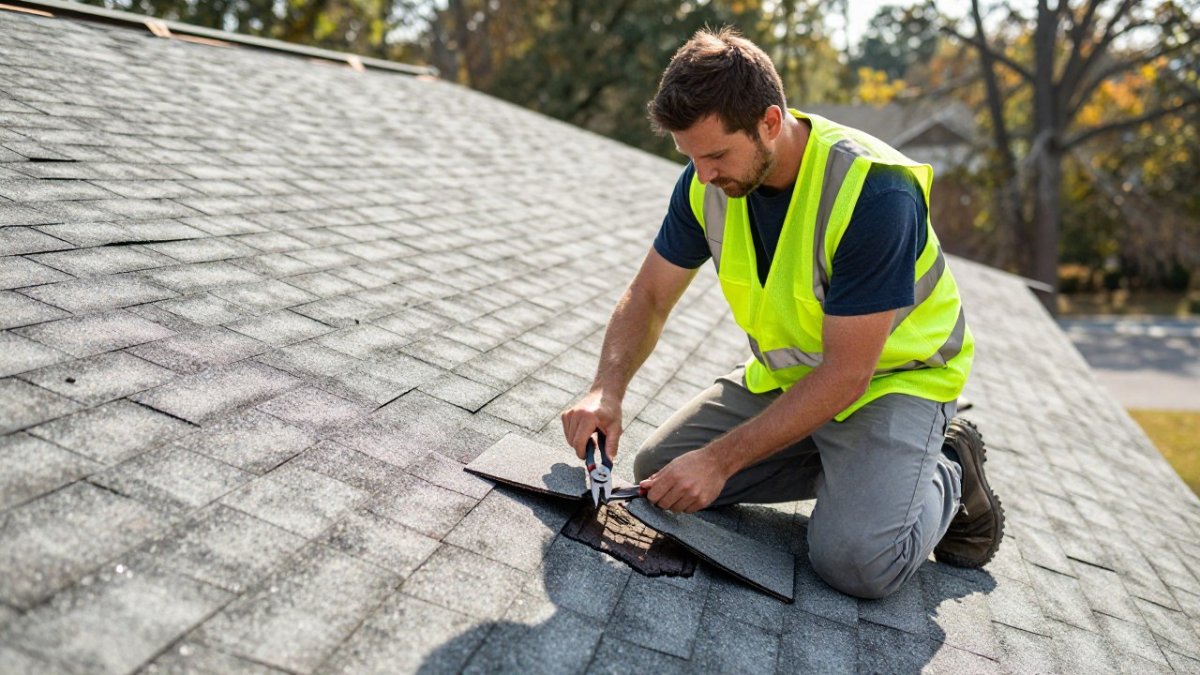
A small puncture or seam gap that goes unrepaired can let water reach the insulation and deck, which costs far more to fix. Prompt repairs are one of the most cost-effective ways to extend roof life.
Common TPO repair methods include:
- Patching small punctures with compatible membrane and heat-welded or adhesive seals
- Resealing seams that have lifted at the edges
- Replacing flashing sections that have pulled away
- Re-securing fasteners and plates that have backed out
Use materials that match the existing membrane. Mismatched patches can fail to bond properly. For most commercial jobs, a licensed contractor with TPO experience should handle the work to protect your warranty.
Step 5: Use Reflective Coatings to Limit UV and Heat Damage
UV exposure and heat cause the membrane to age, harden, and crack. A reflective coating can reduce surface temperatures and slow that breakdown. Silicone-based and elastomeric coatings are common choices for TPO roofs because they reflect sunlight and stay flexible.
Reflective coatings can also help with energy costs by lowering heat transfer into the building. For a closer look at how these membranes compare on performance and savings, read our guide to Reflective TPO Roofing Membranes: Benefits & Energy Savings.
Before applying any coating, confirm that it is compatible with your specific TPO membrane. Some coatings can cause adhesion problems if applied to the wrong surface, and the surface must be clean and dry first.
Step 6: Match Cleaning Agents and Tools to Your Membrane
The wrong cleaner can do more harm than good. Harsh solvents, oil-based products, and abrasive scrubbers can break down the membrane's surface and void warranties. TPO is a thermoplastic polyolefin, and its chemistry is sensitive to petroleum distillates, aromatic solvents, and some surfactants that leave a residue behind. That residue can interfere with seam welding and coating adhesion later, which is why chemical compatibility matters as much as cleaning power.
Cleaning Agents by Category
- Mild dish soap and water is the default for routine dirt, pollen, and light biological growth on most TPO membranes. Dilute it, scrub with a soft-bristle brush, and rinse thoroughly.
- Manufacturer-approved TPO cleaners are the safest choice when you need more than soap. These are formulated to be compatible with the membrane and are typically listed in the membrane manufacturer's maintenance guide.
- Oxygen-bleach (sodium percarbonate) solutions are commonly used for biological staining and mildew on TPO, but concentration and dwell time matter. Follow the manufacturer's dilution, and never let the solution dry on the membrane.
- Petroleum-based solvents, degreasers, and aromatic cleaners should be avoided unless the membrane manufacturer explicitly approves them. They can soften, swell, or discolor the membrane and may compromise seam strength.
- High-pressure washing is generally not recommended. It can drive water under seams and flashing, damage the membrane surface, and force water into the insulation.
Tools and Technique
Use soft-bristle brushes, low-pressure rinsing, and clean water. Rinse thoroughly after cleaning to remove residue, and work in sections so the cleaner does not dry on the surface. Test any new cleaner on a small, hidden area first and watch for discoloration, softening, or surface changes over the next few days.
Watch out: cleaning residue left on the membrane is a common cause of coating and seam-welding failures. If a coating or repair is scheduled, the surface must be clean, dry, and free of soap film, or the new material will not bond.
Check the manufacturer's maintenance guidelines before using any new product, and keep a log of what was applied, at what dilution, and on what date. That log is useful if a warranty question ever comes up.
The article groups cleaning options by how safe they are for a TPO membrane, so here is a quick reference.
| Cleaning option | Use on TPO? | Key note |
|---|---|---|
| Mild dish soap and water | Yes, routine dirt | Dilute, soft brush, rinse thoroughly |
| Manufacturer-approved TPO cleaner | Yes, when more is needed | Listed in the manufacturer's maintenance guide |
| Oxygen-bleach (sodium percarbonate) | Yes, for biological staining | Follow dilution; never let it dry on the membrane |
| Petroleum solvents, degreasers, aromatic cleaners | Avoid | Can soften, swell or discolor; may weaken seams |
| High-pressure washing | Generally not recommended | Can force water under seams and into insulation |
Booking Your Next TPO Roof Check with Certified Roofing Solutions
Following these seven steps will help protect your TPO roof, but some tasks, like detailed seam testing and warranty-compliant repairs, are best left to trained professionals. You can review our commercial TPO roofing services to see what a professional check covers. Certified Roofing Solutions Inc. provides commercial roofing services for property managers and business owners across Marietta, Alpharetta, Dunwoody, and Johns Creek, GA. Our team can inspect your roof, identify early problems, and recommend a maintenance plan that fits your building.
Frequently Asked Questions
How often should a TPO roof be inspected? Most owners should have a TPO roof inspected at least twice a year, usually in spring and fall, and after any major storm.
Can I clean a TPO roof with a pressure washer? It is generally safer to use low pressure and soft-bristle tools. High-pressure washing can damage the membrane's surface, so check the manufacturer's guidelines first.
What causes most TPO roof failures? Common causes include seam separation, ponding water, UV degradation, and punctures from foot traffic or dropped tools. Regular inspection and maintenance catch most of these early.
Frequently Asked Questions
How long should a TPO roof last?
A well-maintained TPO roof commonly lasts about 15 to 25 years, depending on membrane thickness, climate, installation quality and how well it is maintained. Thicker membranes, such as 60 mil, generally resist punctures and UV exposure better than thinner ones. Regular inspections, prompt seam and flashing repairs and reflective coatings can help a roof reach the upper end of that range. Roofs with ponding water, foot traffic or neglected drains usually fall short of it.
Can a TPO roof realistically last 30 years?
Some TPO roofs reach 30 years, but this is the exception rather than the norm and depends heavily on conditions. Thicker membranes, careful installation, consistent TPO roof maintenance and early TPO roof repair methods all improve the odds. Manufacturer warranties are often shorter than the roof's actual service life. Ask a licensed contractor for a documented maintenance history and a realistic lifespan estimate for your specific building.
How often should professional TPO roof inspections occur?
Most commercial property managers schedule a professional inspection at least twice a year, typically in spring and fall, and after any major storm. A thorough TPO roof inspection checklist covers seams, flashing, fasteners, drains and punctures. Between professional visits, property staff can perform quick visual walkthroughs to spot ponding water, debris or visible damage and report it promptly.