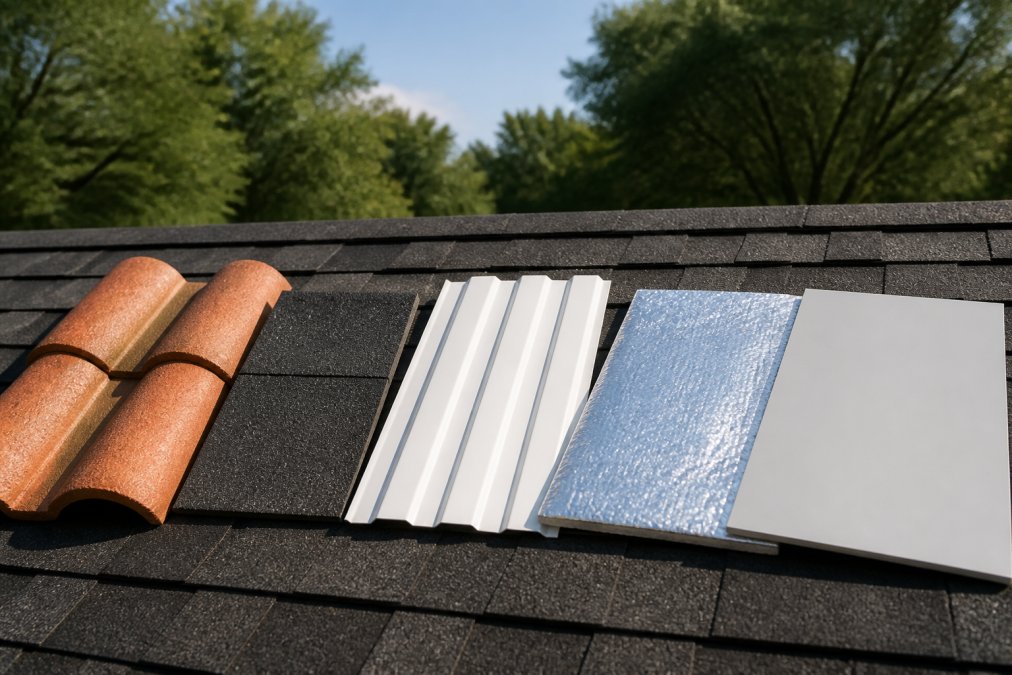
 blog
blog
Top 5 Energy Efficient Roofing Materials for 2026
Table of Contents
- Energy Efficient Roofing Materials Comparison at a Glance
- 1. Metal Roofing: Standing Seam and Reflective Finishes
- 2. Solar Shingles: Integrated Photovoltaic Systems
- 3. Cool Roof Coatings and Reflective Asphalt Shingles
- 4. Tile Roofing: Clay and Concrete Performance
- 5. Synthetic Slate and Composite Shingles
- Energy Efficient Roofing Cost Comparison: Installation and Long-Term Value
- Cool Roof Tax Credits 2026: What Homeowners Should Know
- Frequently Asked Questions
Last Updated: September 22, 2026
Energy Efficient Roofing Materials Comparison at a Glance
The top 5 energy efficient roofing materials 2026 all share one job: keep heat out of your attic before it ever reaches your air conditioner. This guide from Certified Roofing Solutions Inc. ranks them by how well they perform that job, what they cost to install, and how fast they pay you back.
Energy efficient roofing is the practice of choosing roof materials and finishes that reflect solar radiation, resist heat transfer, and reduce the cooling load on a home. It combines surface reflectivity, insulation value, and ventilation into one system.
| Material | Reflectivity | Lifespan | Best For | Relative Cost |
|---|---|---|---|---|
| Metal (standing seam) | High | Very long | Long-term ROI, extreme weather | Higher upfront |
| Solar shingles | N/A (generates power) | Long | Homes wanting solar without panels | Highest upfront |
| Cool roof coatings / reflective asphalt | Moderate to high | Short to moderate | Budget retrofits | Lowest upfront |
| Clay and concrete tile | Moderate | Very long | Hot, sunny climates | Moderate to high |
| Synthetic slate / composite | Moderate | Long | Historic looks with modern performance | Moderate |
Below, we break down each option, explain how solar reflectance and thermal emittance actually work, and show where the real savings come from. Most guides stop at the material list. The bigger gains come from pairing the right roof with attic insulation and ventilation.
1. Metal Roofing: Standing Seam and Reflective Finishes
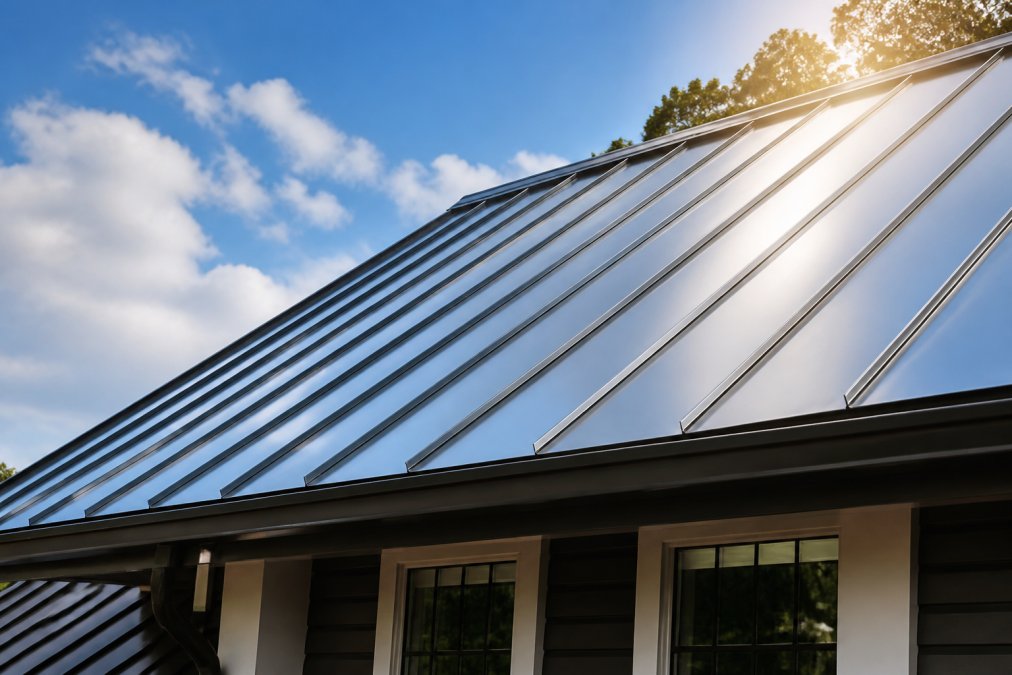
Metal roofing is the strongest long-term performer on this list, and standing seam panels with reflective finishes lead the category. The panels shed heat quickly, resist impact, and hold up in hail and high wind better than most alternatives.
Standing seam panels have no exposed fasteners, so there are fewer leak points. Many metal products carry a Class 4 rating for impact resistance, the highest rating available. That matters in storm-prone areas where hail damage drives insurance claims.
Metal also lets you add a radiant barrier or reflective coating at the factory, which pushes solar reflectance higher than a standard painted finish.
Solar Reflectance and Thermal Emittance Explained
Solar reflectance measures how much sunlight a roof reflects instead of absorbing. Thermal emittance measures how quickly a roof releases the heat it does absorb.
A material can score high on one and low on the other. The best performers do both well, which is why the Cool Roof Rating Council product directory rates every product on both values. The U.S. Department of Energy's Energy Saver guide to cool roofs recommends looking at both numbers together, not just reflectance.
2. Solar Shingles: Integrated Photovoltaic Systems
Solar shingles are roofing material and photovoltaic panels in one product. They generate electricity while serving as the roof surface, so you get power production without rack-mounted panels sitting on top of your shingles.
The trade-off is cost. Solar shingles run at the top of the price range, and installation requires a contractor who handles both roofing and electrical work. Where a home already needs a roof replacement, though, the math changes: you avoid paying twice for a roof and a separate solar array.
One honest limitation: repairs are trickier than with standard roofing. If one shingle fails, you need a technician who knows the system, not just a roofer.
3. Cool Roof Coatings and Reflective Asphalt Shingles
Cool roof coatings and reflective asphalt shingles are the cheapest way to cut heat absorption on a roof that still has life left. A reflective coating applied over an existing roof can lower surface temperatures, and reflective granules in new asphalt shingles do the same job at the factory.
This is the option most homeowners should look at first.
How Roof Color Affects Cooling Costs
Darker roofs absorb more heat and radiate it into the attic, which raises your cooling load. Lighter colors and reflective pigments bounce more of that energy away.
4. Tile Roofing: Clay and Concrete Performance
Clay and concrete tile perform well in hot, sunny climates because of thermal mass. The material absorbs heat slowly during the day and releases it after sunset, which flattens out the temperature swings inside the attic.
5. Synthetic Slate and Composite Shingles
Synthetic slate and composite shingles deliver the look of natural slate without the weight or the cost. Modern composites are built with reflective surfaces and often carry a Class 4 impact rating.
Energy Efficient Roofing Cost Comparison: Installation and Long-Term Value
An energy efficient roofing cost comparison comes down to three numbers: what you pay upfront, how long the roof lasts, and what it saves on cooling each year. The material with the lowest sticker price is rarely the cheapest over 30 years. Most guides stop at the material list. This section gives you the framework to actually run the numbers for your home.
How to Calculate Payback Period
Payback period = (Upgraded roof cost − Standard roof cost) ÷ Annual cooling savings
The Insulation and Ventilation Synergy
Here is the technical link most articles skip: a reflective roof only reduces the heat that reaches your attic. If your attic is under-insulated or poorly ventilated, that heat still builds up and radiates down into living space. The roof and the attic are one system.
Three mechanisms work together:
- Solar reflectance bounces incoming radiation away before it becomes heat.
- Thermal emittance releases the heat the roof does absorb back to the sky.
- Attic ventilation (ridge vents, soffit vents, or powered vents) flushes hot air out of the attic before it conducts through the ceiling.
- Attic insulation (measured by R-value) slows heat transfer from the attic into conditioned space.
What Drives the Price
Pricing depends on roof size, pitch, material, and local labor, so there is no single number that fits every home. The variables that move the quote most are square footage, roof complexity (valleys, dormers, chimneys), removal and disposal of the old roof, and whether structural reinforcement is needed for heavy materials like tile. Certified Roofing Solutions Inc. provides tailored quotes based on your specific roof and goals.
Cool Roof Tax Credits 2026: What Homeowners Should Know
Federal and state incentives for cool roofs and energy-efficient roofing can change year to year, and eligibility rules vary by product and location. Rather than quote a figure that may already be outdated, this section explains how the programs actually work so you can verify your own eligibility.
The Federal Energy Efficient Home Improvement Credit
The primary federal incentive is the Energy Efficient Home Improvement Credit, administered through the IRS. It covers a percentage of the cost of qualifying energy-efficient home improvements, including certain roofing products that meet ENERGY STAR requirements. Key mechanics to understand:
- It is a credit, not a deduction. A credit reduces your tax bill dollar-for-dollar; a deduction reduces taxable income.
- There are annual caps. The credit has a yearly limit, so spreading improvements across tax years can matter.
- The product must qualify. Not every reflective shingle or coating qualifies. The manufacturer must certify the product meets the applicable ENERGY STAR or IRS criteria.
- You need documentation. Keep the manufacturer's certification statement, the receipt, and the product spec sheet.
State, Local, and Utility Rebates
Beyond the federal credit, many states, municipalities, and utility companies offer their own rebates or property tax incentives for cool roofs and energy-efficient upgrades. These vary widely:
- Utility rebates are often tied to verified energy savings and may require a post-installation energy audit.
- State tax incentives may take the form of credits, deductions, or property tax abatements.
- Local programs sometimes target specific neighborhoods or heat-island reduction goals.
How to Verify a Product Qualifies
Before you sign a contract, ask your installer for three things: the product's rated solar reflectance and thermal emittance values, the manufacturer's certification that it meets ENERGY STAR or IRS criteria, and the exact model number that appears on the certification. A "cool" color on the label means little if the actual rated numbers are mediocre or the specific model is not on the qualifying list.
Frequently Asked Questions
What is the most energy-efficient roofing material available in 2026?
Metal roofing with a cool roof rating often leads for energy efficiency, reflecting solar radiation and reducing cooling load. Solar shingles generate electricity, offsetting energy consumption. Both can qualify for federal tax credits. Your best choice depends on climate, roof pitch, and budget. A professional assessment helps determine which material delivers the highest return for your home.
Do energy-efficient roofs qualify for federal tax credits?
Yes, certain energy-efficient roofing products may qualify for federal tax credits, such as the Residential Clean Energy Credit for solar shingles. Cool roof tax credits 2026 may also be available depending on the product's ENERGY STAR rating and Cool Roof Rating Council certification. Consult a tax professional and check current IRS guidelines for eligibility and documentation requirements.
Are metal roofs more energy-efficient than asphalt shingles?
Metal roofs with reflective coatings typically outperform standard asphalt shingles in energy efficiency. They reflect more solar radiation, reducing heat absorption and cooling costs. However, reflective asphalt shingles with cool roof granules offer improved performance at a lower upfront cost. The best choice depends on your budget, climate, and long-term energy savings goals.
How long do energy-efficient roofing materials typically last?
Metal roofing can last 40-70 years, while clay and concrete tile often exceed 50 years. Synthetic slate and composite shingles generally last 30-50 years. Solar shingles have a lifespan of about 25-30 years. Longer lifespan improves ROI and payback period, especially when paired with proper attic ventilation and insulation.