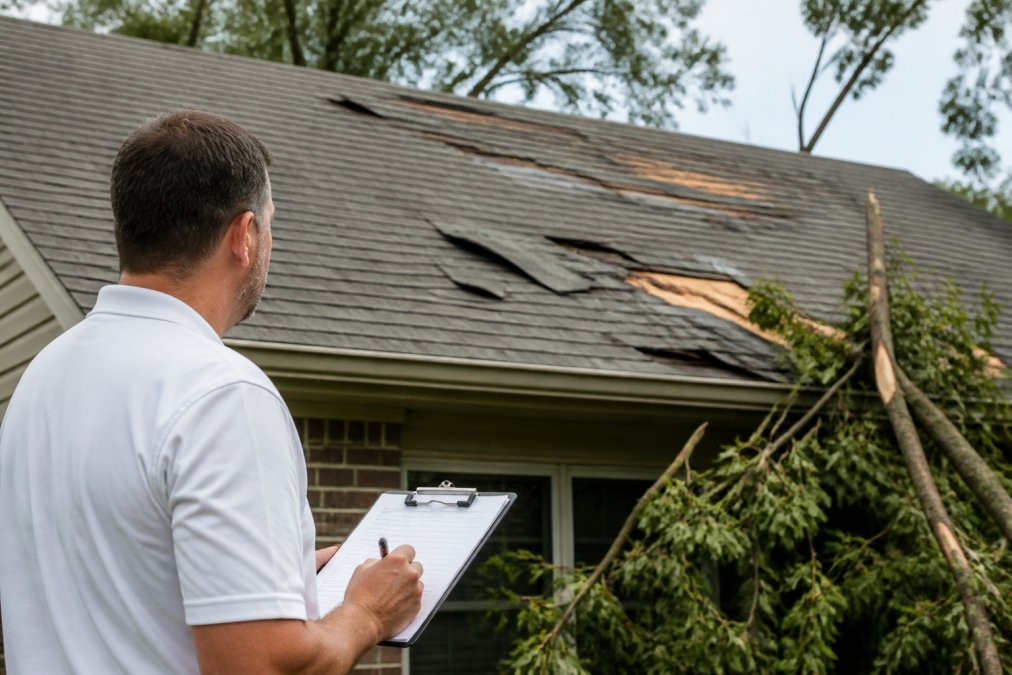
 how-to
Storm Damage Roof Insurance: What's Covered
Table of Contents
- What Constitutes a Covered Peril Under Storm Damage Roof Insurance
- Common Types of Storm Damage Your Policy Covers
- Signs of Storm Damage on Roof to Document for Your Claim
- How to File a Roof Insurance Claim After Storm Damage
- Understanding Actual Cash Value vs. Replacement Cost Value
- Roof Insurance Claim Denial Reasons and How to Avoid Them
- Storm Damage vs. Wear and Tear: What Insurers Won't Cover
- Frequently Asked Questions
Last Updated: August 23, 2026
What Constitutes a Covered Peril Under Storm Damage Roof Insurance
Acovered peril is a specific event explicitly listed in your homeowners insurance policy that triggers coverage for roof damage. Most homeowners policies cover sudden, accidental damage from natural weather events like wind, hail, lightning, and storm-related fire. The key word is "sudden", damage must occur unexpectedly, not gradually. Damage from wear and tear, poor maintenance, or gradual deterioration is excluded.
Insurance companies define perils narrowly to manage risk. Some policies use broad "all-risk coverage" language covering any peril except those explicitly excluded, while named-peril policies cover only specific listed events. Your deductible applies per occurrence, each separate storm triggers a new deductible responsibility.
Review your policy carefully or consult a professional like Certified Roofing Solutions Inc. to understand your coverage before filing a claim.
Common Types of Storm Damage Your Policy Covers
Wind Damage
Wind damage is one of the most frequently covered perils. When wind speeds exceed 40-60 mph (depending on your policy), roofing damage becomes a covered loss, manifesting as missing or torn shingles, curled or buckled edges, and in severe cases, entire roof sections stripped away (iii.org).
Insurance adjusters must determine whether damage resulted from the storm or pre-existing conditions. Photograph your roof before storm season and maintain detailed maintenance records to strengthen your claim. Wind-driven rain, where wind forces rain sideways into gaps and seams, creates coverage complications. Some policies distinguish between wind damage (covered) and water damage from wind-driven rain (sometimes excluded). Understand this distinction in your policy.
Hail Damage
Hail damage claims are significant in severe thunderstorm areas. Hail impact creates visible damage patterns adjusters can readily assess: dents, missing granules, or punctures through roofing material. Most policies cover hail larger than one inch in diameter (iii.org).
Document hail damage with photographs showing damage patterns, size comparisons (coins, golf balls), and storm date. Weather reports confirming hail in your area support your claim. Professional inspection by Certified Roofing Solutions Inc. provides third-party verification strengthening your position.
Fire and Lightning Damage
Fire damage from lightning strikes typically receives full coverage without depreciation. Lightning can ignite roofing materials directly or cause electrical fires within the structure, creating distinctive damage patterns, direct strikes burn through roofing material, while indirect strikes cause internal damage that may not be immediately visible.
Signs of Storm Damage on Roof to Document for Your Claim
Identifying storm damage requires knowing what to look for. Document visible damage with detailed photographs before contacting your insurance company.
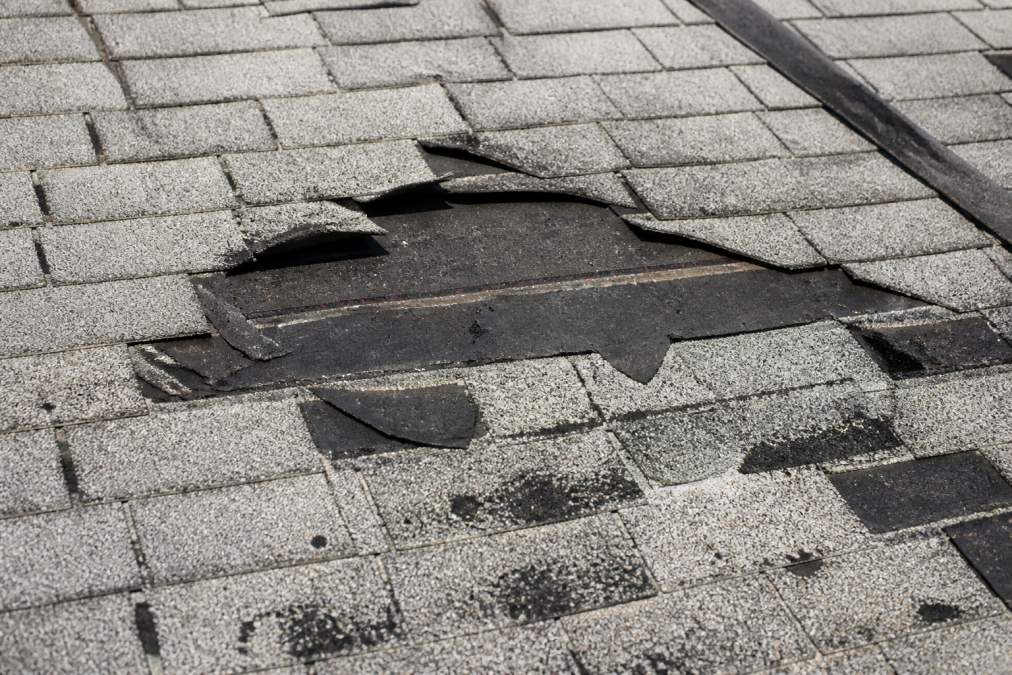
Missing or partially missing shingles represent obvious wind damage. Photograph areas where shingles are completely torn away, exposing the roof deck, and partial losses showing torn edges with reference objects for scale.
Granule loss indicates hail impact or advanced aging. Shingles appear lighter where granules have been knocked off, exposing darker asphalt beneath.
Curled or buckled shingles suggest wind damage or moisture exposure, with edges lifting away from the roof surface and creating gaps where water penetrates.
Dents or bruising on shingles from hail appear as small indentations. Run your hand across the surface to feel damage even if not immediately visible.
Exposed or damaged flashing around chimneys, vents, and skylights indicates storm damage to vulnerable areas, creating direct water intrusion pathways.
Water stains on ceilings or walls signal water has penetrated the roof. Document these with photographs and note when they first appeared.
Start damage assessment from ground level using binoculars. Never climb a damaged roof, structural integrity may be compromised. Professional inspection by Certified Roofing Solutions Inc. provides safe, thorough documentation that adjusters respect.
How to File a Roof Insurance Claim After Storm Damage
Filing a roof insurance claim requires systematic documentation and careful communication with your insurance company.
Step 1: Document Damage Before the Adjuster Arrives
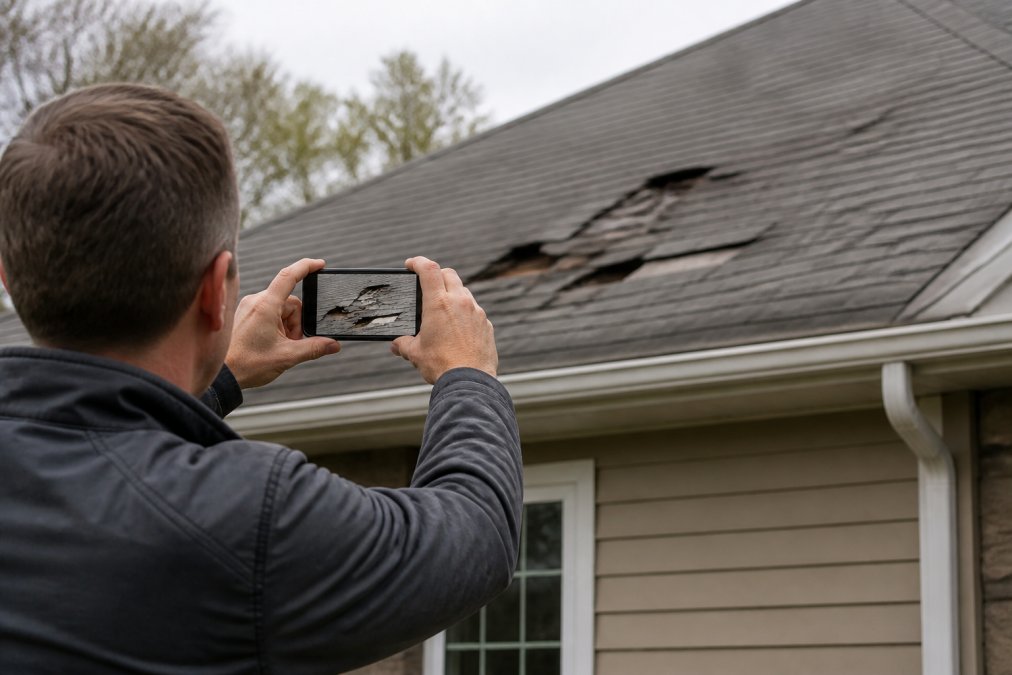
Photograph everything before the adjuster visits, including wide shots of overall roof condition and close-ups of specific damage with reference objects like coins or tape measures for scale. Document interior damage as well, water stains on ceilings, walls, and attics provide evidence of water intrusion.
Create a written inventory of damaged items if the storm caused interior damage, listing appliances, furniture, and personal property affected by water intrusion with purchase dates and estimated values. Collect weather documentation confirming the storm event from the National Weather Service, local news coverage, or utility outage reports.
Preserve physical evidence by collecting fallen shingles and storing them safely. Don't clean up or make repairs until the adjuster has assessed the damage.
Step 2: Contact Your Insurance Company
Call your insurance company's claims line immediately after the storm, providing your policy number, loss date, and damage description. Many policies require prompt notice; delaying can jeopardize coverage.
Ask specific questions: What is your deductible? What documentation is needed? When can an adjuster inspect? When should you expect a settlement estimate? Get the adjuster's name and contact information.
File your claim in writing in addition to the phone call by emailing or mailing a formal claim notice documenting the filing date, loss date, and damage description. Keep copies of all correspondence.
Step 3: Work with the Insurance Adjuster
The insurance adjuster inspects your roof and prepares the damage assessment. Prepare for the visit by having your policy documents, photographs, and damage inventory ready. Walk the adjuster through the damage, pointing out specific areas and providing professional inspection reports from Certified Roofing Solutions Inc. if available.
Ask the adjuster to explain their assessment process, how they're determining storm-related versus pre-existing damage, how they're calculating repair costs, and what depreciation they're applying. Request a written damage assessment before the adjuster leaves.
If you disagree with the assessment, document your concerns in writing and submit them within the timeframe specified in your policy. Most policies allow 30-60 days for dispute resolution before formal appeals.
Step 4: Review the Damage Assessment and Settlement
Once the insurance company completes their assessment, you'll receive a settlement offer showing the total claim amount, your deductible, and your payment. The settlement typically includes two components: the insurance company's payment and your deductible responsibility.
Some settlements include depreciation or Actual Cash Value (ACV) calculations that reduce the payout below full replacement cost. If the settlement seems too low, request a detailed breakdown of calculations. Obtain a second estimate from a licensed roofing contractor; if significantly higher than the insurance estimate, submit it for reconsideration. Many policies allow independent appraisals if you and the insurance company can't agree on damage amount.
Understanding Actual Cash Value vs. Replacement Cost Value
The difference between Actual Cash Value (ACV) and Replacement Cost Value (RCV) dramatically affects your settlement.
Actual Cash Value (ACV) represents what your roof was worth before damage, accounting for depreciation. If your roof was 10 years old with a 20-year lifespan, the insurance company reduces the replacement cost by 50%. You receive depreciated payment, then pay the difference between ACV payment and actual repair costs out of pocket.
Replacement Cost Value (RCV) covers the full cost to replace your roof with new materials of similar type and quality, without depreciation. You receive full replacement cost, then pay only your deductible. This coverage is significantly more valuable but typically costs more in premiums.
Most homeowners policies offer either ACV or RCV coverage. Check your policy documents to determine which you have. The Matching Law in some states requires insurance companies to pay for matching materials when upgrading. If your roof has discontinued shingles and you're replacing damaged sections, the insurance company must pay to match existing shingles.
Roof Insurance Claim Denial Reasons and How to Avoid Them
Insurance companies deny roof damage claims for specific reasons outlined in policy language.
Pre-existing damage is the most common denial reason. Combat this by maintaining detailed maintenance records and having your roof professionally inspected annually. Lack of maintenance is cited when adjusters find evidence of neglect: clogged gutters, missing shingles from previous storms, or visible moss and algae growth. Document maintenance efforts with receipts, photographs, and professional inspection reports.
Failure to mitigate damage occurs when you don't take reasonable steps to prevent additional damage after the initial loss. Take temporary protective measures immediately: tarping the roof, removing water, and preventing mold growth. Exclusions in your policy may eliminate coverage for specific damage types. Review your policy's exclusion section carefully.
Misrepresentation on your application can lead to claim denial. Always provide accurate information when applying. Failure to report damage promptly violates most policies' notice requirements. Report damage immediately after discovery.
To avoid denials, maintain detailed documentation of your property's condition, keep all maintenance and repair receipts, report damage promptly, take mitigation steps immediately, and review your policy annually.
Storm Damage vs. Wear and Tear: What Insurers Won't Cover
Insurance companies distinguish sharply between sudden storm damage and gradual wear and tear.
Wear and tear encompasses normal aging that all roofing materials experience. Shingles gradually lose granules, become brittle, and lose waterproofing effectiveness. This deterioration is inevitable and not an insurable loss. Curling shingles illustrate this distinction: if shingles curl due to age and sun exposure, this is wear and tear; if a wind storm rips away curled shingles, the wind damage is covered, though the insurance company may argue curled shingles indicate an aging roof not properly maintained.
Granule loss from normal aging isn't covered, but granule loss from hail impact is covered. Professional inspection by Certified Roofing Solutions Inc. can document whether granule loss patterns indicate hail impact versus normal aging. Leaks from poor installation aren't covered by homeowners insurance, they're the contractor's responsibility. However, leaks caused by storm damage are covered.
Insurance companies use roof age as a proxy for wear and tear. Roofs older than 15-20 years receive depreciation reductions even when storm damage is clear. Some insurers refuse to insure roofs older than 25-30 years.
Filing a roof insurance claim after storm damage involves understanding your coverage, documenting damage comprehensively, and navigating the claims process strategically. At Certified Roofing Solutions Inc., we provide expert residential and commercial roofing services to clients in Marietta, Alpharetta, Dunwoody, and Johns Creek, GA. Our team of experienced professionals is dedicated to delivering top-quality installations, repairs, and specialized roofing solutions tailored to meet the unique needs of every project. We are committed to excellence and ensuring exceptional results for all our customers in the region.
The key to successful claims is preparation. Know your coverage before a storm occurs. Maintain your roof properly and document that maintenance. Photograph damage immediately and report it promptly. Work cooperatively with your adjuster while understanding your rights.
Book an Appointment Today with Certified Roofing Solutions Inc. to have your roof professionally inspected, understand your coverage for storm damage, and ensure your roof is properly maintained to prevent claim denials. Our experienced team can review your insurance policy, document your roof's condition, and provide professional assessments that strengthen your claims. Contact us for a comprehensive roof evaluation and claims consultation.
| Damage Type | Coverage Status | Documentation Needed | Settlement Timing |
|---|---|---|---|
| Wind damage (missing/torn shingles) | Covered | Photos, weather reports, adjuster assessment | 2-4 weeks |
| Hail damage (dents, granule loss) | Covered | Photos with scale reference, weather confirmation | 2-4 weeks |
| Lightning/fire damage | Covered | Photos, fire department report, electrical inspection | 2-4 weeks |
| Water intrusion from storm | Covered | Interior photos, maintenance records, adjuster report | 3-6 weeks |
| Wear and tear (gradual shingle aging) | Not covered | Maintenance history may help dispute denial | N/A |
| Pre-existing damage | Covered if storm-caused | Prior inspection records, adjuster determination | 2-4 weeks |
| Lack of maintenance | Covered if not severe | Maintenance receipts, professional inspections | 2-4 weeks |
Frequently Asked Questions
What qualifies as roof damage covered under homeowners insurance?
Covered roof damage typically includes losses from wind, hail, lightning, and fallen trees caused by storms. Most homeowners insurance policies cover damage from sudden, accidental events. However, damage from wear and tear, poor maintenance, or gradual deterioration is not covered. Your specific policy defines which perils are covered, so review your homeowners insurance policy or contact your agent to confirm your coverage limits and what damage qualifies under your plan.
How do I file a roof insurance claim after storm damage?
Start by documenting all visible damage with photographs and video before the adjuster arrives. Contact your insurance company within the timeframe specified in your policy (usually 30-90 days). Provide your policy number, the date of the storm, and a description of the damage. Schedule an inspection with the insurance adjuster, who will assess the damage and determine coverage. Once approved, you'll receive a claim settlement based on your policy's terms, whether actual cash value or replacement cost value.
Why do insurance companies deny roof damage claims?
Common reasons for claim denial include damage from wear and tear rather than a covered peril, failure to maintain the roof, damage from excluded events (like poor installation or settling), exceeding policy limits, or missing the claim deadline. Roof age can also affect approval if your roof is beyond its expected lifespan. Maintaining detailed maintenance records and filing promptly after a storm significantly improves approval odds. If your claim is denied, you can request a detailed explanation and appeal the decision.
What is the difference between actual cash value and replacement cost value?
Actual Cash Value (ACV) pays for repairs minus depreciation based on your roof's age. Replacement Cost Value (RCV) covers the full cost of repairs or replacement without depreciation deduction. RCV typically costs more in premiums but provides better coverage for newer roofs. ACV is more affordable but may not fully cover repair costs on older roofs. Check your policy to see which option you have, as this significantly impacts your claim settlement amount and out-of-pocket costs.