 ultimate-guide
Signs of Curling Roof Shingles: What to Look For
Table of Contents
- What Are Curling Roof Shingles?
- 6 Common Causes of Shingle Curling
- Clawing vs. Curling: Know the Difference
- How to Identify Storm Roof Damage
- When to Replace Asphalt Shingles vs. Repair
- Understanding the Cost of Roof Shingle Repair
- DIY vs. Professional Roof Inspection
- The Bottom Line on Curling Shingles
- Frequently Asked Questions
Last Updated: September 7, 2026
Curling roof shingles are one of the most visible signs that an asphalt roof is approaching the end of its service life. When the edges or tabs of your shingles lift and turn upward, they expose the roof deck to moisture and compromise the entire roofing system. Curling is a common issue flagged during storm damage assessments.
Not all curling is equal: some forms indicate cosmetic aging that can wait, while others signal active water infiltration demanding immediate attention.
What Are Curling Roof Shingles?
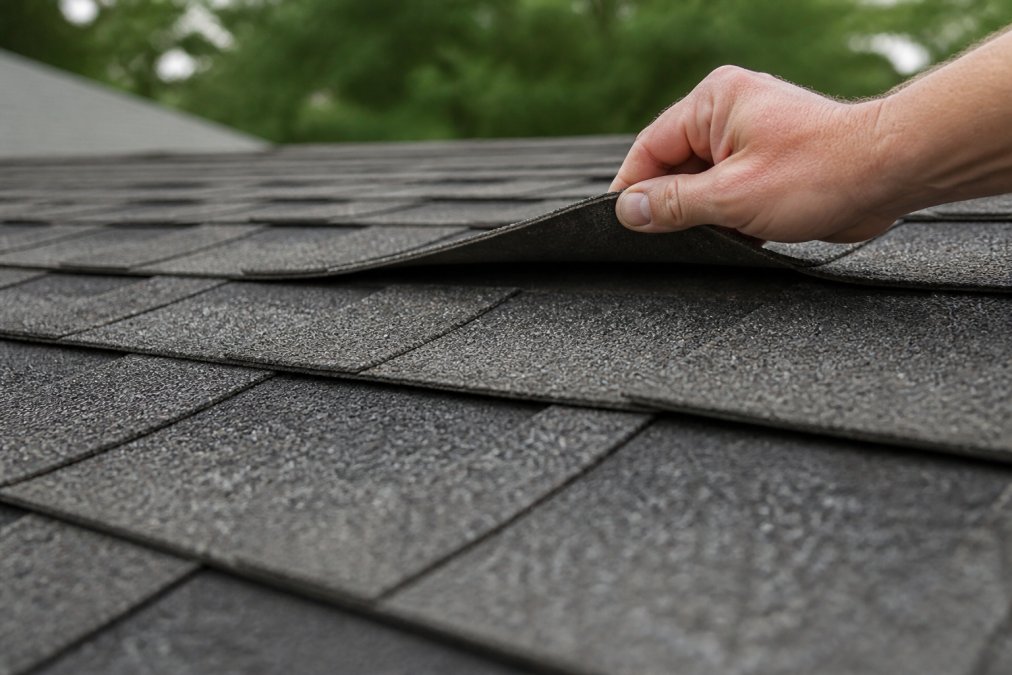
Curling roof shingles are asphalt shingles whose edges or tabs have lifted away from the roof surface, creating a concave or convex distortion. This typically appears as edges that turn upward like a cupped hand or downward in a claw-like grip on the roof deck. The condition develops when shingles lose their flexibility and the sealing strip fails to hold the tab flat against the roof.
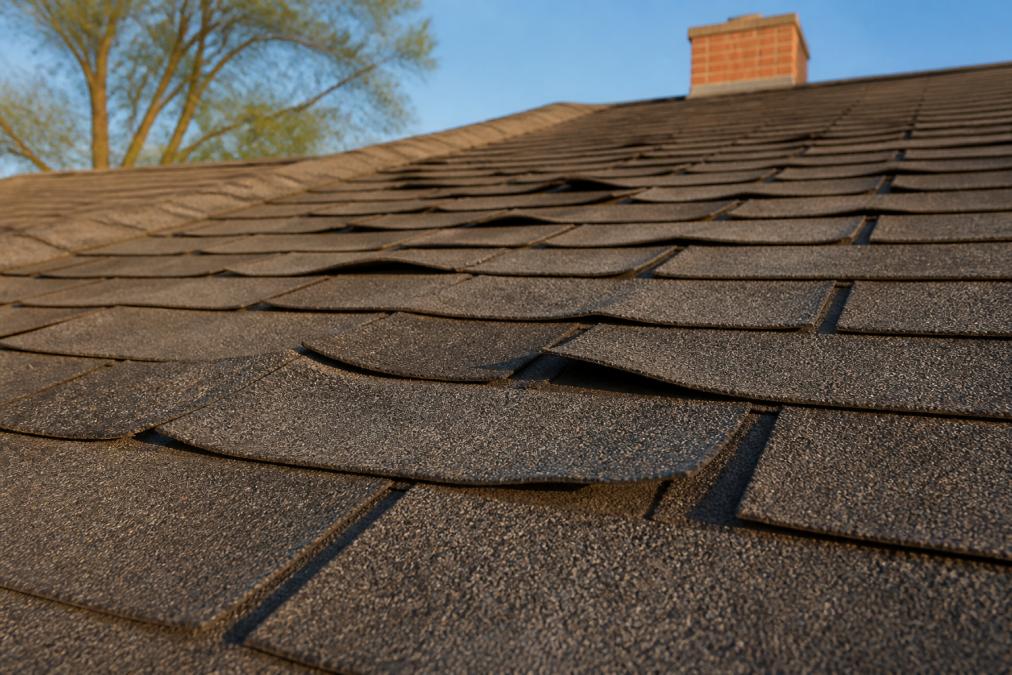
A curled shingle no longer sheds water as designed. Wind can catch the lifted edge and tear the shingle away, while rain drives under the exposed tab and reaches the underlayment, leading to moisture buildup and eventual leaks.
6 Common Causes of Shingle Curling
Identifying the root cause determines whether you need a simple fix or a full roof replacement.
- Heat absorption and UV degradation. Prolonged sun exposure breaks down the asphalt and causes the matting to shrink, pulling the edges upward over time.
- Poor attic ventilation. Trapped heat and moisture in the attic cook the shingles from below, accelerating thermal shock and premature aging.
- Manufacturer defects. Some shingle batches have inadequate sealing strips or faulty matting that causes curling within the first few years.
- Improper installation. Nails driven too high, too low, or at the wrong angle can prevent the shingle from lying flat and sealing correctly.
- Moisture buildup. Excess humidity trapped under the shingle tabs prevents the sealant from bonding, allowing edges to lift.
- Natural age. Asphalt shingles have a finite roof lifespan, typically 20-30 years, and curling is a normal end-of-life indicator (energystar.gov).
Clawing vs. Curling: Know the Difference
Curling refers to edges that turn upward, away from the roof surface, creating a concave shape that catches wind and directs water sideways. Clawing is the opposite: edges curl downward, gripping the deck in a convex shape, indicating the shingle has lost pliability and is shrinking.
Clawing is generally more serious than upward curling. When shingles claw, the matting has typically shrunk significantly, pulling granules away from the edges and making the shingle brittle. Both conditions expose the deck to water infiltration, but clawing usually signals that replacement is imminent.
| Condition | Shape | Typical Cause | Urgency |
|---|---|---|---|
| Curling | Edges lift upward, concave | Heat, poor ventilation, aging | Monitor, plan replacement |
| Clawing | Edges grip downward, convex | Matting shrinkage, severe aging | Replace soon |
| Cupping | Center lifts, edges stay flat | Moisture imbalance | Inspect attic ventilation |
How to Identify Storm Roof Damage
Storm damage appears suddenly, while curling develops gradually over years. After a severe storm, walk your property and look for these indicators:
- Shingle tabs that are lifted, cracked, or completely missing
- Granule loss visible in gutters or on the ground, which appears as sand-like debris
- Dents or bruising on shingles where hail struck
- Exposed underlayment or roof deck where shingles have blown away
- Blistering or bubbles on the shingle surface
Distinguishing pre-existing curling from storm-caused damage is key, since insurance adjusters will ask exactly that question. Documentation is your best tool: take dated photos and note when you first observed the curling.
When to Replace Asphalt Shingles vs. Repair
Isolated curling on a roof under 15 years old may respond to targeted repair, where affected shingles are removed and replaced. Widespread curling across multiple slopes, or curling on a roof over 20 years old, points to full replacement.
Signs that replacement is right include shingles that are brittle and crack when touched, significant granule loss, curling across more than a third of the roof surface, or curling accompanied by leaks inside the home. Repairing individual shingles on a failing roof is like patching one hole in a tire with multiple leaks.
The structural integrity of the roof deck matters too. If curling has allowed water infiltration for an extended period, the decking beneath may be rotted and require replacement alongside the shingles. A professional inspection should always include an assessment of the roof deck, not just the visible shingle surface.
Understanding the Cost of Roof Shingle Repair
The cost question is really three separate questions: What will a repair cost? Will my insurance pay for it? Will the manufacturer's warranty cover it? Most guides stop at the first question, the other two are where homeowners actually lose money.
What a Repair or Replacement Actually Costs
Roofing pricing is local and depends on various factors such as the extent of the damage, the type of materials, and labor. For current pricing, please contact us for a quote.
The Insurance Question: What Is Covered and What Is Not
Here is the practical reality under a standard HO-3 homeowners insurance policy.
Age-related curling is not covered. Insurance covers sudden and accidental damage, hail, windstorms, falling trees. Gradual deterioration from heat, poor ventilation, or aging is a maintenance issue excluded by every standard policy.
Storm-damage curling may be covered. If a hail storm or high wind event caused or significantly worsened the curling, you may have a claim. The adjuster will look for fresh impact marks, granule loss concentrated in one area, or lifted tabs that line up with wind direction. Documentation is everything: dated photos taken within days of the storm, and ideally a contractor's report attributing the damage to the weather event.
The depreciation trap. If your roof is over 10 years old and your policy has Actual Cash Value (ACV) coverage rather than Replacement Cost Value (RCV), your payout will be reduced by depreciation. A 15-year-old roof on a 25-year shingle may only pay out 40% of replacement cost.
The Warranty Question: Why Most Claims Fail
Manufacturer warranties on asphalt shingles typically run 25 to 50 years, but they are riddled with conditions that void coverage. The three most common reasons a curling claim gets denied:
- Age of the roof. Most warranties prorate coverage after year 10 or 12. A 20-year-old roof with curling will yield almost nothing.
- Ventilation requirements. Manufacturers require a balanced ventilation system, typically 1 square foot of net free vent area per 300 square feet of attic floor (hud.gov). If your attic lacks intake vents at the eaves or exhaust at the ridge, the manufacturer will blame your ventilation and deny the claim.
- Installation certification. Many warranties require the shingles to be installed by a factory-certified contractor. If a handyman or non-certified roofer installed them, the warranty is void.
The Decision Framework: Repair, Claim, or Replace
Use this sequence when you discover curling:
- If the roof is under 10 years old and curling appears: This points to a manufacturer defect or installation error. Document it, contact the shingle manufacturer, and request an inspection. Do not repair first, repairing can void the warranty.
- If curling appears after a storm: Photograph everything within 48 hours. Call a licensed contractor for a damage assessment before you call your insurance company. The contractor's report strengthens your claim.
- If the roof is over 15 years old with widespread curling: Replacement is the economically rational choice. A repair on a roof that is already failing is money spent twice.
- If curling is isolated on a newer roof: A targeted repair of $350 to $1,100 is reasonable, but only if the underlying cause (ventilation, moisture) is fixed first. Otherwise, the curling will return.
DIY vs. Professional Roof Inspection
The safest and most effective DIY inspection never requires leaving the ground, and there is a clear line where DIY stops and a professional becomes necessary.
The Ground-Level Inspection Checklist (No Ladder Required)
You can assess most curling damage from the ground with binoculars (10x magnification or higher), a smartphone with a zoom camera, and a notepad. Walk a full perimeter of your home, then repeat from each corner at a 45-degree angle. Work through this checklist:
- Scan the roofline for shadows. Curled shingles cast small crescent-shaped shadows in late afternoon light. If you see a repeating shadow pattern along a roof slope, that is curling, not random debris.
- Check the gutters and downspouts. Granules that have shed from curling shingles accumulate in gutters and at downspout outlets. A handful of granules after a storm is normal. A consistent layer of sand-like grit means the shingles are degrading.
- Look at the drip edge. The shingles at the eaves and rake edges curl first because they receive the most sun exposure and have the least support. If the bottom row is flat but the second or third row is lifting, you have a ventilation or heat issue.
- Inspect around penetrations. Curling is often worse around chimneys, plumbing vents, and skylights because these areas run hotter and have more complex flashing. If curling is concentrated there, suspect inadequate flashing or heat buildup.
- Check the attic from inside. This is the one part of the DIY inspection that is both safe and highly informative. Look for daylight coming through the roof deck, dark spots indicating moisture, or compressed insulation. Also check that soffit vents are not blocked by insulation, blocked intake vents are a leading cause of the heat buildup that curls shingles.
- Photograph everything with a date stamp. If you later file an insurance claim, dated photos from before the storm prove the curling was not pre-existing.
When DIY Stops and a Professional Becomes Mandatory
A ground-level inspection cannot tell you why a problem exists or how deep it goes. Call a professional when any of the following are true:
- You see curling on more than one roof slope. Widespread curling indicates a systemic issue (ventilation, age, or defective shingles), not a localized repair.
- You see any sign of interior moisture. Stains on ceilings, peeling paint near the roofline, or a musty attic smell mean water has already breached the underlayment. The deck may be compromised.
- Your roof is over 15 years old and you are considering a repair. A professional can tell you whether the repair is worth the money or whether you are throwing good money after bad.
- You are preparing an insurance claim. Insurance adjusters respect a contractor's written assessment far more than a homeowner's photos. A professional inspection report that attributes damage to a specific storm event is the difference between a paid claim and a denial.
The Safety Reality of Roof Access
What a Professional Inspection Actually Covers
A qualified inspector will:
- Measure attic temperature and humidity to diagnose ventilation deficiencies
- Use a moisture meter to detect trapped water beneath the shingle surface
- Check nail placement on exposed shingle edges to identify installation errors
- Assess the condition of the underlayment and roof deck from the attic side
- Document findings with photos and a written report you can use for insurance or warranty claims
A professional inspection may involve a fee, which can vary depending on the market and roof size.
The Bottom Line on Curling Shingles
Curling roof shingles are a clear signal that your roof needs attention, but the urgency depends on the cause and extent. Upward curling from age on a roof past its expected lifespan points toward replacement. Clawing, widespread curling, or curling combined with storm damage warrants immediate professional assessment.
The key is to act before water infiltration compromises your roof deck and insulation. A small investment in a professional inspection today can prevent a costly emergency replacement tomorrow. At Certified Roofing Solutions Inc., we provide thorough inspections and honest assessments for homeowners in Marietta, Alpharetta, Dunwoody, and Johns Creek, handling residential and commercial roofing, including architectural shingles, metal roofing, and TPO systems, with a commitment to quality workmanship and clear communication.
Frequently Asked Questions
Can curled shingles be repaired, or is a full replacement necessary?
It depends on the extent of the damage. If only a few shingles are curling due to age or heat, a roofer can often replace just those tabs. However, if curling is widespread across the roof, it signals that the entire roof is nearing the end of its lifespan. In that case, replacing the full roof is more practical than repeated spot repairs. A professional inspection will help you determine which approach makes sense for your situation.
Are curling roof shingles covered under standard homeowners insurance policies?
Typically, no. Standard homeowners insurance covers damage from sudden events like storms, hail, or fallen trees. Curling that develops gradually from age, heat exposure, or poor ventilation is considered normal wear and tear, which policies exclude. However, if a storm caused the curling, such as from high winds lifting the shingles, you may have a valid claim. Document the damage with photos and contact your insurance provider to discuss your specific policy.
What do curled shingles look like?
Curled shingles have edges that are lifted upward or turned under. When the edges lift up like a shallow bowl, it is called cupping. When the edges stay flat but the middle of the shingle rises, it is called clawing. You might also notice a wavy appearance along the roofline. Curling often accompanies other signs of aging, such as granule loss in the gutters or visible cracks in the shingle surface.
Recognizing the signs of curling roof shingles early is the difference between a manageable repair and a major structural issue. Whether your roof needs a few shingles replaced or a full new installation, working with a contractor who inspects thoroughly and explains your options plainly protects both your home and your budget. Book an appointment with Certified Roofing Solutions Inc. today and get a clear, professional assessment of your roof's condition.