 ultimate-guide
Metal Roofing Installation Cost 2026: Pricing Guide
Table of Contents
- Metal Roofing Installation Cost Overview
- Metal vs Shingle Roof Cost Comparison
- Metal Roofing Cost Per Square Foot 2026
- Factors Affecting Roofing Installation Estimates
- Standing Seam vs. Exposed Fastener Pricing
- Hidden Costs and Long-Term Ownership
- Professional Installation vs. DIY: Cost and Risk
- Frequently Asked Questions
Last Updated: August 18, 2026
Metal Roofing Installation Cost Overview
Metal roofing installation cost has become a critical consideration for homeowners weighing durability against upfront investment. Unlike traditional asphalt shingles, metal roofing systems demand higher initial capital but deliver measurable long-term value through extended lifespan and reduced maintenance. Understanding what drives these costs, from material selection to labor complexity, helps you make an informed decision about whether metal is right for your property.
The price of metal roofing installation varies significantly based on roof geometry, material grade, and regional labor rates. A straightforward residential installation might cost considerably less than a complex commercial project with multiple roof planes, skylights, and specialized flashing requirements. At Certified Roofing Solutions Inc., we've helped homeowners across the region evaluate these variables to arrive at realistic budgets before work begins.
Several factors influence the final bill: the gauge thickness of the metal, the panel profile you select, whether you choose standing seam or exposed fastener construction, and the condition of your existing roof structure. Some projects require tear-off and disposal costs; others involve underlayment upgrades or structural repairs discovered during installation. This guide breaks down each cost component so you understand where your investment goes.
Metal vs Shingle Roof Cost Comparison
Metal roofing typically carries a higher upfront price than asphalt shingles, but the comparison extends far beyond installation day. Asphalt shingles generally cost less to install but require replacement every 15-20 years. Metal roofing, by contrast, can last 40-70 years depending on material and climate exposure, fundamentally changing the total cost of ownership over a home's lifespan.
When comparing metal vs shingle roof cost, consider the replacement cycle. A homeowner who installs asphalt shingles at age 35 will likely face multiple re-roofing projects before retirement. Someone choosing metal at the same age may never need another roof. Insurance companies increasingly recognize this durability advantage, and some offer modest premium reductions for metal roofs due to their fire resistance and wind uplift performance.
The energy efficiency gap also matters. Metal roofing reflects solar heat more effectively than dark asphalt, reducing cooling costs in warm climates. Some metal systems qualify for federal energy tax incentives, offsetting a portion of the installation expense. Combined with lower maintenance requirements and extended warranty coverage, the long-term economics often favor metal despite higher initial outlay.
Labor costs for metal installation typically exceed shingle installation because the work demands specialized skills. Metal panels require precise alignment, proper flashing techniques, and understanding of thermal expansion characteristics. Contractors experienced in metal work command higher rates than those who primarily install conventional shingles.
Metal Roofing Cost Per Square Foot 2026
Metal roofing cost per square foot varies by material type, panel profile, and regional market conditions. Material costs alone, excluding labor, underlayment, and removal, typically range across a spectrum determined by metal choice and gauge thickness. Standing seam systems, which offer superior weather protection through their interlocking seams, command premium pricing compared to exposed fastener alternatives.
The gauge thickness of your metal panels directly impacts durability and cost. Thinner gauges cost less but may dent more easily and offer shorter warranties. Thicker gauges provide greater impact resistance and longevity, justifying the higher material expense for homeowners planning to occupy the property long-term.
Regional variation in metal roofing cost per square foot 2026 reflects local labor availability, transportation distances, and competition among contractors. Areas with established metal roofing markets typically offer better pricing than regions where the technology remains less common. Your location within the service area influences what you'll pay; contractors familiar with local building codes and climate challenges can often work more efficiently.
Material waste also factors into per-square-foot calculations. Complex roof geometries with multiple valleys, dormers, and skylights generate more scrap material than simple rectangular roofs. Experienced installers minimize waste through careful layout planning, but some projects inherently require more material than the roof's actual square footage suggests.
Factors Affecting Roofing Installation Estimates
Several concrete variables determine your final roofing installation estimate. Understanding these factors helps you evaluate quotes from different contractors and identify where costs might shift.
Roof Pitch and Complexity
Roof pitch, the steepness of your roof slope, significantly affects installation difficulty and safety requirements. Steeper pitches demand more fall protection equipment, slower work pace, and higher labor costs. A shallow-pitch commercial roof allows faster installation than a steep residential roof with multiple gables and valleys.
Roof complexity encompasses more than pitch alone. A simple rectangular roof costs far less to install than one featuring multiple roof planes, skylights, dormers, and intersecting sections. Each transition point requires careful flashing installation to prevent water infiltration. Complex roof geometry also increases material waste and extends the timeline, raising labor costs proportionally.
Existing roof condition matters too. If your current roof requires tear-off before metal installation, that adds significant cost and disposal fees. Some projects benefit from installing metal directly over existing asphalt shingles if structural integrity permits, reducing labor time and waste management expenses. However, this approach may void certain warranties or conflict with local building codes.
Material Grade and Panel Profile
Metal roofing materials come in different alloys and coating systems, each with distinct performance and price characteristics. Galvalume, an aluminum-zinc alloy, offers excellent corrosion resistance at moderate cost. Copper and zinc command premium pricing but deliver unmatched longevity and distinctive aesthetics. Steel options provide affordability but require more frequent maintenance in corrosive environments.
Panel profile refers to the shape and pattern of the metal panels. Simple trapezoidal profiles cost less than complex architectural profiles that mimic traditional shingles or standing seam patterns. The profile you choose affects both material cost and installation labor, since some profiles require specialized tools or more careful alignment.
Coating quality directly influences long-term performance and warranty coverage. Premium paint systems resist fading and chalk better than basic coatings, justifying higher material costs for homeowners seeking 30-year color retention. The coating thickness and resin type determine how well your metal roof withstands UV exposure and environmental pollutants.
Labor Rates and Installation Difficulty
Labor rates vary by contractor experience, local market conditions, and project complexity. A crew experienced in metal roofing typically charges more than crews primarily trained on asphalt shingles, but the quality difference justifies the premium. Inexperienced installers may create problems, improper fastening, inadequate flashing, thermal expansion issues, that cost far more to repair later than paying for skilled labor upfront.
Installation difficulty increases with roof complexity, height, and access constraints. A two-story home with a simple roof shape costs less to install than a three-story colonial with dormers and valleys. Accessibility matters too; if crews must position lifts or scaffolding around landscaping or tight spaces, labor time increases substantially.
Seasonal timing affects labor availability and rates. Peak roofing season, spring and early fall, often brings higher contractor costs due to demand. Off-season projects may qualify for modest discounts, though weather delays risk extending the timeline.
Standing Seam vs. Exposed Fastener Pricing
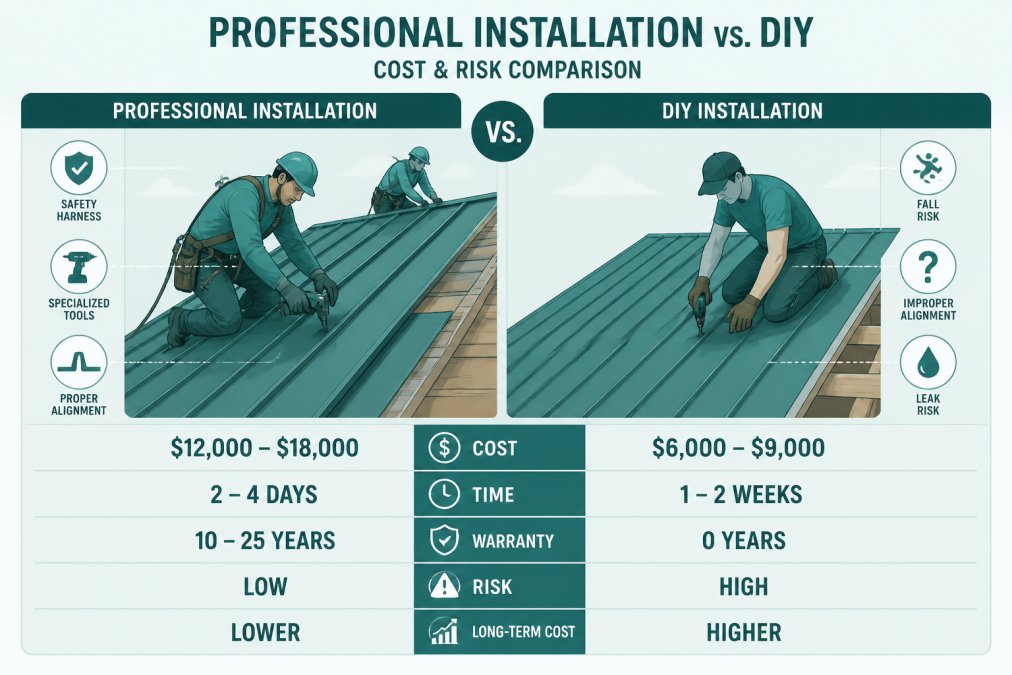
Standing seam metal roofing features raised seams that interlock, with fasteners hidden beneath the raised portion. This design provides superior weather protection since water cannot penetrate fastener holes. The standing seam profile also accommodates thermal expansion without visible fastener movement, reducing the risk of fastener loosening over time.
Exposed fastener metal roofing uses fasteners driven directly through the panel face, with rubber washers to seal the holes. This simpler construction costs less to manufacture and install. However, exposed fasteners represent potential leak points as rubber washers degrade over decades, and fastener heads may back out as the metal expands and contracts seasonally.
The pricing gap between standing seam and exposed fastener typically reflects both material cost and installation labor. Standing seam panels cost more to produce due to their interlocking design. Installation also demands greater precision; panels must align perfectly to ensure seams engage properly. Exposed fastener systems allow slightly more installation tolerance, reducing labor time.
Long-term cost analysis often favors standing seam despite higher upfront expense. Fewer leak points mean lower maintenance risk and reduced potential for water damage repairs. Many standing seam systems carry 30-50 year warranties, while exposed fastener warranties typically max out at 20-30 years. For homeowners planning extended ownership, standing seam's durability premium justifies the initial cost difference.
| Roofing Type | Installation Complexity | Weather Protection | Maintenance Needs | Typical Warranty |
|---|---|---|---|---|
| Standing Seam | High precision required | Superior | Minimal | 30-50 years |
| Exposed Fastener | Moderate tolerance | Good | Regular fastener checks | 20-30 years |
| Galvalume Standing Seam | High precision | Superior | Minimal | 30+ years |
| Steel Exposed Fastener | Moderate | Good | Frequent maintenance | 15-25 years |
Hidden Costs and Long-Term Ownership
Beyond the visible line items on an installation estimate, several hidden costs emerge during and after metal roofing installation. Understanding these prevents budget surprises and helps you plan for true total cost of ownership.
Underlayment and Flashing
Underlayment, the protective layer beneath metal panels, represents a necessary expense often overlooked in casual estimates. Quality underlayment prevents moisture from reaching the roof deck if water somehow penetrates the metal surface. Premium underlayment options cost more but offer superior protection and longer lifespan.
Flashing installation is where many budget surprises occur. Flashing seals transitions where the roof meets walls, chimneys, skylights, and valleys. Complex roof geometries require extensive custom flashing fabrication. Improper flashing causes water damage far exceeding the flashing material cost, making this a critical area where cutting corners creates expensive future problems.
Tear-off and disposal costs accumulate quickly if your existing roof requires removal. Asphalt shingles weigh roughly 2-3 pounds per square foot, and disposal fees vary by local landfill rates and contractor disposal practices. A 2,000 square-foot roof removal might generate 4,000-6,000 pounds of waste, creating disposal costs that surprise homeowners unfamiliar with roofing economics.
Insurance Impact and Energy Efficiency Savings
Metal roofing's fire resistance rating often qualifies homeowners for insurance premium reductions. Some insurers offer 5-15% discounts for metal roofs due to their Class A fire rating and superior wind resistance. These savings accumulate over decades, offsetting a meaningful portion of installation cost.
Energy efficiency gains from metal roofing's solar reflectivity reduce cooling costs in warm climates. Light-colored metal roofs reflect 70% or more of solar radiation, compared to 20-30% for dark asphalt shingles. In regions with significant cooling season demand, this translates to measurable utility bill reduction.
Federal energy tax credits have periodically applied to metal roofing installations meeting specific efficiency standards. These credits reduce your federal tax liability, effectively subsidizing a portion of the installation cost. Tax incentive availability changes with legislation, so verify current eligibility before finalizing your project budget.
Maintenance cost avoidance represents another long-term savings advantage. Metal roofing requires minimal maintenance, occasional gutter cleaning and inspection, compared to asphalt shingles, which demand periodic repairs, nail replacement, and eventual full replacement. Over 50 years, this maintenance cost differential accumulates substantially.
Professional Installation vs. DIY: Cost and Risk
The temptation to reduce metal roofing installation cost through DIY work is understandable, but the risks often outweigh savings. Metal roofing installation demands specialized knowledge about fastening patterns, thermal expansion accommodation, flashing design, and building code compliance.
Professional installers understand how metal panels move with temperature changes. Fastening patterns that work for asphalt shingles create problems with metal, too-tight fastening prevents thermal expansion, causing fastener holes to enlarge and fasteners to back out. Too-loose fastening allows excessive panel movement. Experienced contractors know the precise fastening approach for each panel type and climate.
Flashing installation represents the most critical area where DIY mistakes create expensive water damage. Improper flashing design allows water to infiltrate behind panels, causing rot in roof decking and structural framing. Repairs for water damage often cost 10-20 times the original flashing installation cost, making this false economy particularly dangerous.
Building code compliance is another professional installation advantage. Metal roofing installations must meet local wind uplift requirements, fire rating standards, and ventilation specifications. Professional contractors understand these requirements and design installations accordingly. DIY installations that violate code may void homeowner's insurance coverage for weather damage.
Safety considerations shouldn't be minimized. Roofing work involves fall hazards, heavy materials, and specialized tools. Professional crews carry insurance protecting both themselves and the homeowner if accidents occur. DIY work creates liability exposure for injuries or property damage during installation.
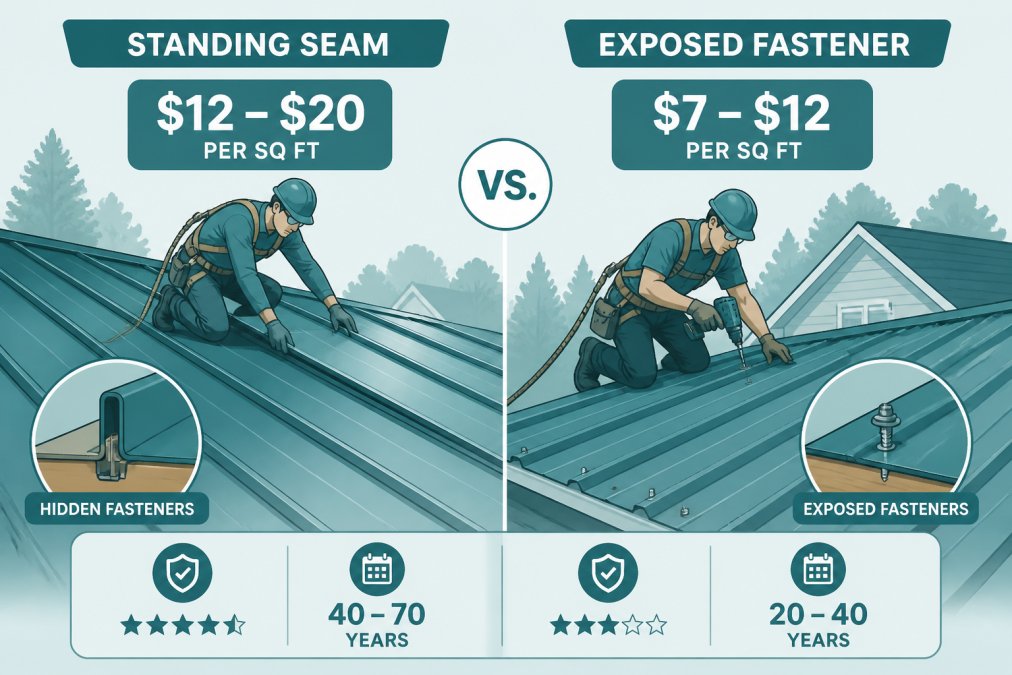
The cost savings from DIY installation rarely exceed 15-20% of total project cost, while the risk of expensive mistakes is substantial. For most homeowners, professional installation provides far better value despite higher upfront labor expense.
Metal roofing installation cost represents a significant investment, but the durability, energy efficiency, and minimal maintenance requirements deliver genuine long-term value. At Certified Roofing Solutions Inc., our team helps homeowners understand every cost component, from material selection through installation complexity, so you can make confident decisions about your roofing project. We provide detailed estimates that account for your roof's specific geometry, material choices, and local conditions. Contact Certified Roofing Solutions Inc. today to book an appointment and receive a comprehensive evaluation of your roofing needs.
Frequently Asked Questions
What is the average metal roofing installation cost for a typical home?
Metal roofing installation cost depends on roof size, pitch, material grade, and local labor rates. Costs vary significantly based on whether you choose standing seam or exposed fastener panels, the gauge thickness of the metal, and your roof's complexity. Contact Certified Roofing Solutions Inc. for a detailed estimate tailored to your specific roof dimensions and material preferences.
Is metal roofing cheaper than asphalt shingles?
Metal roofing typically costs more upfront than asphalt shingles, but offers superior longevity, wind resistance, and energy efficiency. When calculating total cost of ownership over 40+ years, metal roofing often provides better value. Additionally, metal roofing may qualify for energy tax incentives and can reduce insurance premiums due to fire resistance and wind uplift performance.
What factors most affect my metal roofing installation estimate?
Key factors include roof pitch and slope geometry, square footage, material grade and panel profile, labor rates in your area, tear-off costs if replacing an existing roof, underlayment and flashing requirements, and installation complexity. Steeper roofs, multiple valleys, and skylights increase costs. Material waste and structural integrity repairs discovered during installation can also impact the final price.
Will a metal roof increase my home's resale value?
Metal roofing can enhance curb appeal and increase home equity due to its durability, low maintenance, and aesthetic appeal. Homes with metal roofs often attract buyers who value longevity and energy efficiency. Additionally, the fire resistance rating and wind uplift performance provide insurance and safety benefits that appeal to buyers, though resale value depends on local market preferences.