 ultimate-guide
How to Maintain Asphalt Shingles Properly: 2026 Guide
Table of Contents
- What You'll Need Before You Start
- How to Identify Storm Roof Damage After a Weather Event
- Signs of Roof Shingle Deterioration to Watch For
- Your Seasonal Roof Inspection Checklist
- Step-by-Step: How to Maintain Asphalt Shingles Properly
- How to Maintain Asphalt Shingles Without Voiding Your Warranty
- DIY vs. Professional Roof Maintenance: Cost and Safety Trade-Offs
- Conclusion
- Frequently Asked Questions
Last Updated: September 25, 2026
What You'll Need Before You Start
The right tools turn a risky climb into a manageable routine. Before you learn how to maintain asphalt shingles properly, gather everything you need so you make one trip up the ladder, not three.
Here's your kit:
- Soft-bristled brush with an extendable handle
- Garden hose with a spray nozzle (never a pressure washer)
- Roofing sealant rated for asphalt shingles
- Binoculars for ground-level inspections
- Work gloves and non-slip shoes
- Safety harness and roof anchors
- Bucket for debris
- Zinc or copper strips for moss prevention
How to Identify Storm Roof Damage After a Weather Event
Storm damage rarely announces itself. After a major weather event, most homeowners find the obvious problems, like missing shingles, and miss the subtle ones that cause water damage months later.
Signs of Roof Shingle Deterioration to Watch For
Catching deterioration early is the difference between a repair and a replacement. Most asphalt shingle problems fall into two categories: surface wear you can see from the ground, and hidden damage in the flashing and attic.
Granule Loss and Curling Shingles
Granule loss is the clearest early warning sign. Those sand-like particles on your shingles are what protect the asphalt underneath from UV damage. When granules wash into gutters or collect at the base of downspouts, the shingle is already aging faster than it should.
Flashing, Ventilation, and Attic Warning Signs
Flashing failures cause more leaks than shingle damage does. Check the metal around chimneys, vents, and valleys for rust, gaps, or lifted edges. Poor roof ventilation compounds this: without proper airflow, heat and moisture build up in the attic, cooking shingles from underneath and shortening their life.
Your Seasonal Roof Inspection Checklist
A roof inspection checklist keeps you consistent. Inspect twice a year, in spring and fall, plus after any major storm.
| Season | What to Check | Frequency |
|---|---|---|
| Spring | Winter damage, debris, gutter flow | Once |
| Summer | Ventilation, attic heat, algae growth | Once |
| Fall | Debris buildup, tree branches, flashing | Once |
| Winter | Ice dams, snow load, interior leaks | Monthly |
| After storms | Missing shingles, hail dents, granule loss | Every event |
Step-by-Step: How to Maintain Asphalt Shingles Properly
Maintaining asphalt shingles is a repeatable process: clean gently, clear debris, and address small problems before they spread. Follow these steps in order.
Cleaning Shingles and Removing Moss and Algae
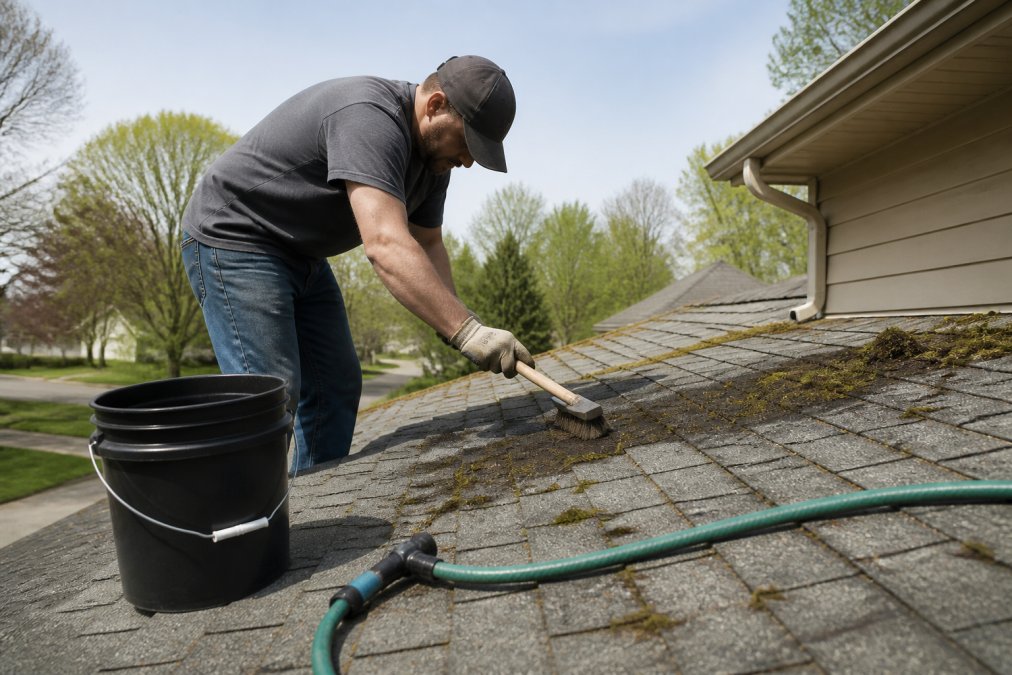
- Rinse loose debris with a garden hose using low pressure. Never use a power washer on asphalt shingles.
- Brush off moss gently with a soft-bristled brush, working from the top down.
- Treat algae streaks with a diluted cleaning solution, then rinse thoroughly.
- Install zinc or copper strips near the ridge to stop moss and algae from returning.
The zinc strip is the step most homeowners skip, and it's the one that saves the most work long term. As rainwater runs over the metal, it carries trace amounts down the roof and creates an environment where moss and algae struggle to grow. One strip can keep a roof clear for years.
Gutter Cleaning, Tree Trimming, and Debris Removal
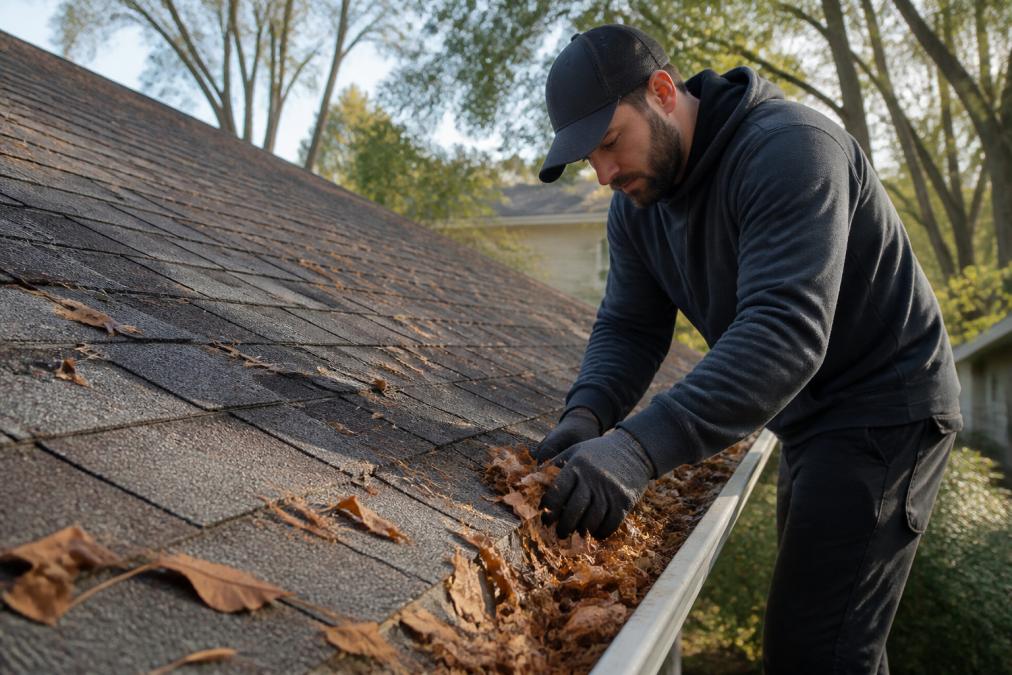
- Clear gutters and downspouts of leaves, granules, and debris each spring and fall.
- Trim overhanging branches back at least a few feet from the roofline.
- Remove debris from valleys where leaves and twigs trap moisture against the shingles.
Debris buildup is the quiet killer of roof lifespan. Leaves hold moisture against shingles, tree branches scrape granules off during wind, and clogged gutters cause water to back up under the edges. None of it is dramatic, but all of it accelerates wear.
How to Maintain Asphalt Shingles Without Voiding Your Warranty
Most asphalt shingle warranties are written to cover manufacturing defects, not the wear and tear of a roof that was cleaned or maintained incorrectly. That distinction is where homeowners get surprised. The manufacturer is not obligated to replace shingles that failed because of how they were treated, and improper maintenance is one of the most common reasons a claim gets denied.
- Pressure washing. The high-pressure stream strips the protective granules that shield the asphalt from UV light. Once the granules are gone, the shingle ages years ahead of schedule, and manufacturers treat that as owner-caused damage rather than a defect.
- Harsh chemical treatments. Undiluted bleach, strong acids, and abrasive cleaners can degrade the asphalt and the mat underneath. Many manufacturers specify only mild, shingle-safe cleaning solutions.
- Walking on shingles in extreme heat. Foot traffic on a hot roof can mar the surface and loosen the seal between shingle courses. If you must be on the roof, early morning or a cool day is safer for the shingles themselves.
- Improper repairs. Patching with the wrong sealant, nailing in the wrong location, or mixing shingle types can void coverage on the affected area.
- Neglected ventilation or flashing. A warranty may exclude damage that traces back to a maintenance issue the homeowner could have addressed, like blocked attic vents or a flashing leak that went unrepaired.
What Actually Preserves Your Coverage
Build that record with a few simple habits:
- Keep receipts. Save invoices for professional inspections, gutter cleanings, and any repair work.
- Log the dates. Note when you cleaned gutters, removed debris, or had the roof inspected.
- Photograph the roof. Take dated photos from the ground after each inspection and after every major storm.
- Save the warranty document. Know the coverage period, the exclusions, and any maintenance requirements the manufacturer specifies.
- Use qualified professionals. Documented work by a licensed roofer is your strongest defense if a claim is ever questioned.
One more point worth knowing: many warranties also require that the roof be installed to the manufacturer's specifications in the first place. If you bought the home with the roof already on it, request the installation paperwork from the seller or the original roofer. Without it, a claim can stall before it ever gets evaluated on the merits.
DIY vs. Professional Roof Maintenance: Cost and Safety Trade-Offs
Not every maintenance task belongs to a roofer, and not every task belongs to the homeowner. The useful question is not "can I do this?" but "what does it cost me if I get it wrong?" That framing separates the tasks that are genuinely DIY-friendly from the ones that carry a liability or warranty penalty when they go badly.
Tasks That Are Reasonable to Do Yourself
These are low-risk, ground-level or ladder-adjacent jobs where a mistake is inconvenient rather than dangerous or expensive:
- Ground-level inspections with binoculars. No roof access required, and you can repeat them as often as you like.
- Gutter cleaning from a stable ladder. Clear leaves and granules each spring and fall. Stay off the roof itself.
- Trimming branches you can reach safely from the ground. Keep limbs a few feet back from the roofline.
- Photographing the roof after storms. A dated photo log supports insurance claims and helps a professional spot changes over time.
- Removing debris from the yard and downspout outlets. Simple, safe, and it protects drainage.
Tasks Where the Risk Outweighs the Savings
These are the jobs where a homeowner's mistake can void a warranty, cause a leak, or put someone on the ground:
- Walking a steep or multi-story roof. Pitch and height are the two variables that turn a routine task into a fall hazard. If either is significant, the job belongs to a professional.
- Any work in extreme heat or after rain. Wet shingles and hot shingles are both more dangerous and more easily damaged.
- Flashing repair around chimneys, vents, and valleys. Flashing failures cause more leaks than shingle damage does, and a bad repair can hide the problem until water is already inside.
- Attic ventilation diagnosis. Reading airflow, condensation, and heat patterns requires training and access most homeowners do not have.
- Anything that requires removing or lifting shingles. Once you disturb the shingle field, you own the consequences if the repair fails.
The Cost-Benefit Math
Professional inspections also catch things a homeowner cannot. Attic ventilation problems, early flashing failures, and hidden water damage require both training and access to the attic and roof deck. For homeowners in Marietta, Alpharetta, Dunwoody, and Johns Creek, seasonal storms make that professional eye especially valuable.
Conclusion
Maintaining asphalt shingles properly comes down to consistency: gentle cleaning, cleared gutters, trimmed branches, and inspections that catch small problems before they become expensive ones.
Frequently Asked Questions
How often should you inspect your asphalt shingles?
Inspect your roof at least twice a year, in spring and fall, plus after any major storm. Regular roof inspection catches small issues like loose flashing or minor granule loss before they become expensive repairs. Homeowners in storm-prone areas should check after every significant weather event. A professional inspection once a year adds another layer of protection and can document conditions for warranty or insurance purposes.
Can you clean asphalt shingles without damaging them?
Yes, when you use the right method. A soft-bristled brush and a garden hose on low pressure remove moss, algae, and debris safely. Avoid power washing, which strips granules and shortens roof lifespan. For stubborn algae growth, apply a diluted cleaning solution approved for asphalt shingles, let it sit, then rinse gently. Never scrub aggressively or use metal tools, as both can tear shingle surfaces and create entry points for water.
What are the signs that asphalt shingles need to be replaced?
Watch for curled shingles, missing shingles, widespread granule loss, and bald spots where the underlying mat shows through. Other signs of roof shingle deterioration include cracked or brittle shingles, rusted or loose flashing, and granules collecting in gutters. If shingles are curling across large sections or your roof is past 15 to 20 years old, a roofing professional can assess whether repairs will hold or replacement is the better investment.
How does moss and algae growth affect asphalt shingles?
Moss and algae growth trap moisture against the shingle surface, which accelerates granule loss and can lead to rot underneath. Algae streaks are mostly cosmetic, but thick moss lifts shingle edges, allowing water to seep in during rain. Left unchecked, this shortens roof lifespan and may lead to leaks. Installing zinc strips or copper strips near the ridge helps prevent regrowth, and gentle moss removal with a soft-bristled brush keeps shingles intact.