 how-to
How to Clean Moss Off Roof Safely
Table of Contents
- Why Moss Grows on Roofs and Why It Matters
- Roof Cleaning Safety Precautions You Must Follow
- Tools and Materials You'll Need
- Is Pressure Washing Safe for Roof Shingles
- Step-by-Step Process to Clean Moss Off Your Roof Safely
- Best Moss Killer for Roof Applications
- How to Prevent Moss on Roof Long Term
- When to Hire a Professional for Roof Moss Removal
- Frequently Asked Questions
Last Updated: September 23, 2026
Why Moss Grows on Roofs and Why It Matters
Moss thrives on roofs in shade, moisture, and organic debris, especially on north-facing roofs or beneath trees. It traps moisture against shingles, accelerating deterioration and potentially voiding your warranty.
The danger is delay: moisture trapped under moss causes rot, granule loss, and premature aging, reducing a 20-25 year roof to 15 years.
Catching moss early and using the right removal method prevents thousands in damage. This guide shows you how to clean moss off roof safely without damaging shingles or voiding warranties.
Roof Cleaning Safety Precautions You Must Follow
Safety comes first. Roof work causes falls, slips on wet surfaces, electrical hazards, and chemical exposure. Understand these risks before starting.
Essential safety gear:
- Slip-resistant boots with good ankle support
- Safety harness rated for your weight, attached to a secure anchor point
- Hard hat to protect against falls and debris
- Eye protection and chemical-resistant gloves
- Respirator if using chemical solutions
- Long sleeves and pants to protect skin
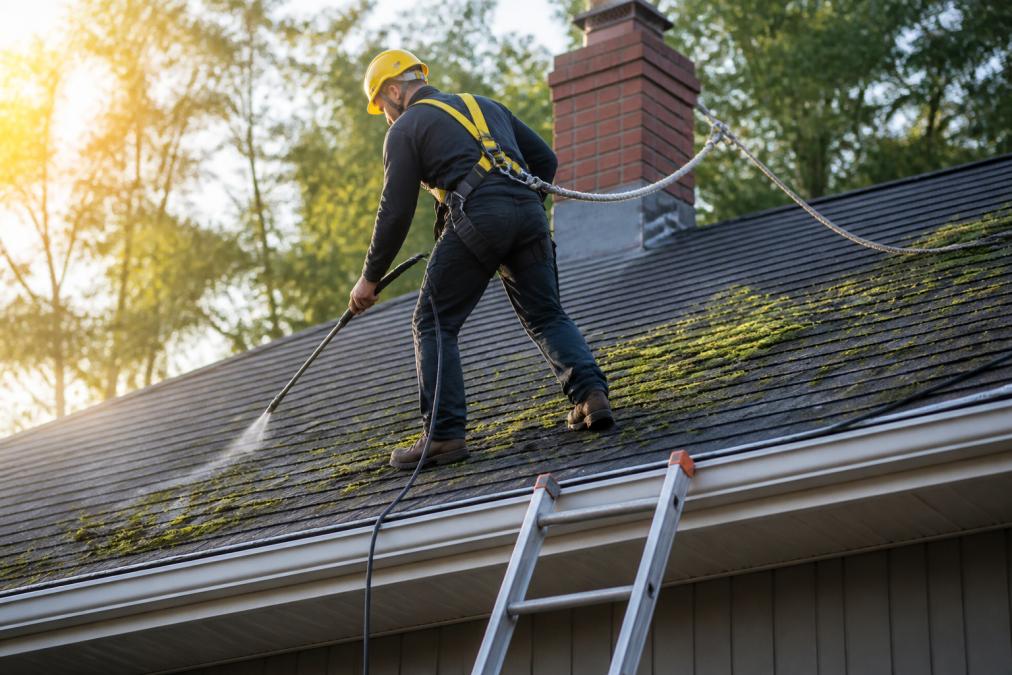
Ladder safety is non-negotiable. Place your ladder on level ground, extend it 3 feet above the roofline, and never lean sideways. Have someone hold the base. Check weather before starting, avoid rain, high wind, and wet conditions. Early morning is ideal: dew helps solutions work and conditions are calmer.
Tools and Materials You'll Need
Choosing the right tools and solutions directly affects warranty validity and environmental impact.
Basic tools:
- Soft-bristle brush or broom (never pressure wash initially, see next section)
- Spray pump or garden sprayer
- Buckets for mixing solutions
- Squeegee or soft scraper for gentle removal
- Garden hose with gentle spray nozzle
- Plastic sheeting and tarps to contain runoff
Cleaning solution options and warranty implications:
Your solution choice determines warranty validity. Most manufacturers prohibit pressure washing and aggressive chemicals but permit gentle chemical cleaning with proper rinsing.
Bleach-based solutions (1:3 ratio) work quickly and cost little, but can discolor shingles and harm plants. You must contain runoff with plastic sheeting. Apply, soak 15 minutes, and rinse thoroughly. Check your warranty first.
Vinegar and dish soap mixtures (1 gallon water, 1 cup vinegar, 1 tablespoon soap) are gentler on shingles and plants, work best on light-to-moderate growth, and require 30-minute soak time. Most manufacturers approve them.
Zinc or copper-based products prevent future moss by leaching metal ions ($150-300 per application). Check your warranty first, some manufacturers restrict them due to color effects.
Sodium hypochlorite solutions (commercial cleaners) work on stubborn growth but risk shingle damage and environmental harm. Most warranties don't approve them. Reserve for severe infestations only.
Protective supplies:
- Plastic sheeting to protect landscaping below (essential, not optional)
- Drop cloths or tarps to contain chemical runoff
- Gloves rated for chemical exposure
- Safety glasses
- Respirator if using bleach or commercial products
Runoff management is critical. Lay plastic sheeting at least 10 feet from the roof edge before spraying. Direct runoff into a bucket or storm drain (check local regulations). Never let runoff flow onto gardens or lawns. Bleach kills septic bacteria.
Asphalt shingles tolerate gentle vinegar or diluted bleach. Metal and tile roofs require different approaches, consult your roof's documentation or hire a professional.
Is Pressure Washing Safe for Roof Shingles
Avoid pressure washing your roof. Even low-pressure settings damage shingles by forcing water under edges and blasting away granules. Use soft wash instead: apply solution with a pump sprayer, let it sit, then rinse gently with a garden hose.
Step-by-Step Process to Clean Moss Off Your Roof Safely
Step 1: Prepare Your Roof and Safety Setup
Lay plastic sheeting below your work area to protect plants. Inspect your roof for damage, cracked shingles, missing granules, or soft spots mean you should hire a professional. Set up your ladder at a 75-degree angle on level ground, have someone hold the base, and wear a safety harness attached to a secure anchor.
Step 2: Apply Your Cleaning Solution
Fill your pump sprayer and start at the top, working downward. Spray evenly to wet all moss-covered areas without oversaturating. Heavy growth areas need longer soak time.
Step 3: Allow Proper Soak Time
Most solutions need 15-30 minutes soak time (check instructions for commercial products). Don't rinse early, the chemical must kill the moss root structure or it will regrow within months.
Step 4: Gentle Removal and Rinse Cycle
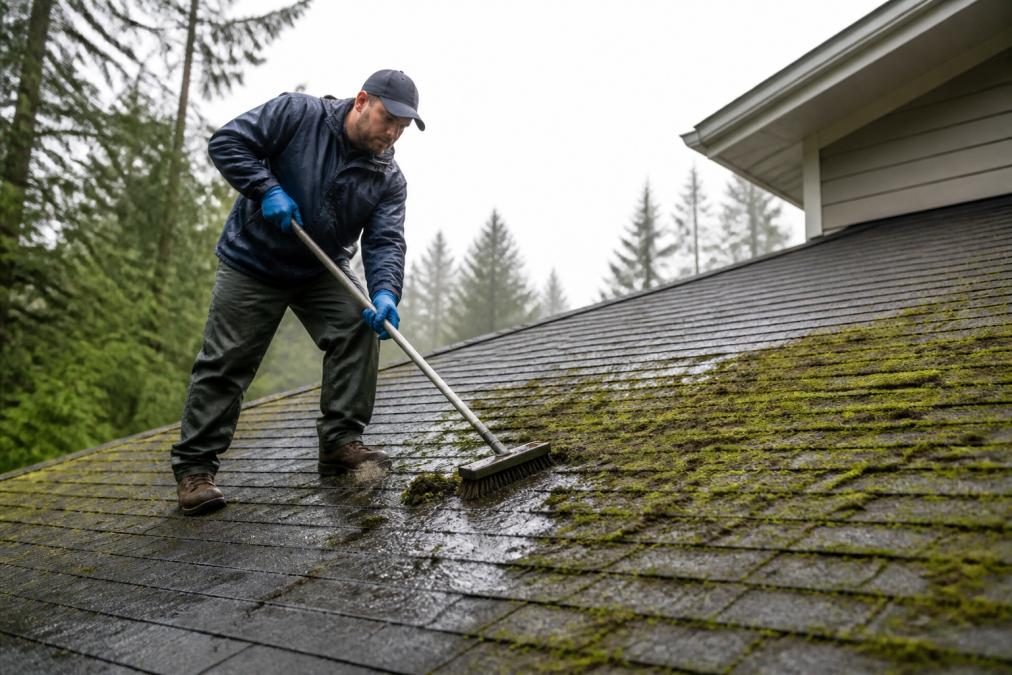
Use a soft-bristle brush to gently loosen dead moss, brushing downward. If moss clings tightly, soak longer, forcing removal damages shingles. Rinse thoroughly with a garden hose on low flow from top to bottom. Let the roof dry completely (4-8 hours) before leaving.
Best Moss Killer for Roof Applications
Bleach-based solutions (1:3 ratio) work quickly and cost little but can discolor shingles and harm plants, use plastic sheeting. Vinegar and dish soap (1 gallon water, 1 cup vinegar, 1 tablespoon soap) are gentler, work best on light-to-moderate growth, and require 30-minute soak. Zinc or copper products prevent future growth but are expensive. Sodium hypochlorite (commercial cleaners) handle stubborn growth. For most homeowners, diluted bleach or vinegar is safest and most affordable.
How to Prevent Moss on Roof Long Term
Preventing moss from returning is better than repeated cleaning. Long-term prevention requires addressing shade, moisture, and debris, and timing matters.
Seasonal timing: The key to breaking moss regrowth cycles
Moss grows fastest in spring and fall (cool, moist conditions). Clean in late spring (May-June) or early fall (August-September) when moss is vulnerable but conditions are drying. Follow spring cleaning with prevention measures (zinc strips, gutter cleaning) in late summer to block fall growth. Follow fall cleaning with prevention in spring. A single cleaning without follow-up prevention results in moss returning within 12-18 months. Avoid winter cleaning when solutions don't work well and ice hazards exist.
Trim tree branches overhanging your roof. More sunlight means less moss. This is the single most effective prevention step. Sunlight dries your roof and creates an environment hostile to moss growth. Aim for at least 6-8 hours of direct sunlight on your roof daily. If trees block this, moss will return regardless of how thoroughly you clean. Schedule trimming in late winter (February-March) before spring growth begins.
Keep gutters clean. Debris in gutters traps moisture and creates perfect moss habitat. Clean gutters twice yearly: once in late spring (May) after trees finish shedding pollen and seeds, and again in fall (October-November) after leaves drop. Clogged gutters also cause water damage to fascia and soffit.
When to Hire a Professional for Roof Moss Removal
Some situations demand professional help. Knowing when to call prevents injuries and costly mistakes.
Call a professional if:
- Your roof pitch is steeper than 6:12 (rises 6 inches for every 12 inches horizontally)
- You're uncomfortable working at heights
- Moss covers more than 30% of your roof
- Your roof is older or shows signs of damage
- You have a metal or tile roof (different cleaning requirements)
- Chemical sensitivity concerns you
- Your roof warranty specifies professional cleaning only
Frequently Asked Questions
How do you clean moss off a roof without damaging shingles?
Use a soft wash approach with a biodegradable cleaning solution applied at low pressure or via soaking. Avoid high-pressure washers that strip shingle granules and void warranties. Apply solution, let it soak for 15-20 minutes, then gently brush or rinse downward along the roof pitch. Never use abrasive scrubbing or pressure exceeding 50 PSI. For asphalt shingles, this method preserves integrity while effectively removing moss spores and organic matter.
What is the best time of year to remove moss from a roof?
Spring and early fall are ideal for moss removal. Spring allows you to address winter growth before spores spread, while fall prevents moisture retention that leads to winter damage. Avoid summer heat, which can damage shingles during cleaning, and late fall when wet leaves complicate the process. Dry conditions with temperatures between 50-70°F provide the safest working environment and allow cleaning solutions proper soak time.
Does moss cause permanent damage to asphalt shingles?
Moss itself doesn't permanently damage shingles, but prolonged moisture retention beneath moss growth accelerates deterioration. Moss holds water against the roof surface, promoting granule loss, wood rot in the underlying structure, and reduced roof lifespan. Early removal prevents this cumulative damage. However, aggressive cleaning can cause permanent damage by stripping granules and compromising the protective layer, which is why gentle, professional methods matter for long-term roof integrity.
Should I hire a professional to remove roof moss?
Professional removal is recommended if your roof pitch is steep, you lack ladder safety experience, or your roof shows signs of damage or warranty concerns. Professionals have proper equipment, insurance, and knowledge of your specific roof material. DIY cleaning is viable on low-pitch roofs with proper safety precautions, but mistakes can void warranties or cause shingle damage costing thousands more. If uncertain about your roof's condition or your ability to work safely at height, professional inspection and removal is the safer investment.