 ultimate-guide
How to Choose a Commercial Roofing Contractor
Table of Contents
- Verify Licensing, Insurance, and Bonding
- Questions to Ask Commercial Roofing Contractors
- Review Written Contracts and Scope of Work
- Red Flags in Roofing Estimates
- Commercial Roofing Contractor Vetting Checklist
- Post-Installation Maintenance and Warranty Protection
- Conclusion
- Frequently Asked Questions
Last Updated: August 30, 2026
Verify Licensing, Insurance, and Bonding
Before hiring a commercial roofing contractor, confirm they hold proper credentials. A licensed contractor has passed exams, maintained continuing education, and demonstrated competency. This is your first defense against unqualified operators.
General liability insurance is non-negotiable, it protects your property if the contractor damages your building or adjacent structures. Workers compensation insurance covers crew injuries. Request current certificates of insurance naming your business as an additional insured. Don't accept verbal assurances; get written proof directly from their insurance broker.
Bonding protects your business from financial exposure. A performance bond guarantees the contractor will complete work as specified. A payment bond ensures subcontractors and suppliers get paid, preventing liens against your property. For commercial projects, bonding is essential if the contractor abandons the job or fails to pay suppliers.
Call the licensing board to verify the contractor's status and check for complaints, disciplinary actions, or license suspensions. Many states require roofing licenses with separate endorsements for specific systems like TPO or metal. A clean record doesn't guarantee quality, but hidden complaints or lapsed licenses are major red flags.
Don't skip this step to save time. Hiring an uninsured or unlicensed contractor often costs ten times more in liability exposure, incomplete work, or uncovered property damage claims.
Questions to Ask Commercial Roofing Contractors
The right questions separate contractors who understand your specific roofing system from those who treat every project the same. Your commercial roof is likely flat, low-slope, TPO membrane, metal panels, or built-up tar and gravel. A competent contractor should speak fluently about YOUR roof type.
Experience and System-Specific Knowledge
Ask: "What commercial roofing systems have you installed in the last three years?" Listen for specific answers. TPO, EPDM, PVC, metal standing seam, and built-up systems each require different installation techniques and maintenance protocols. A contractor experienced only with residential asphalt shingles may not understand commercial membrane systems.
Request names of manufacturers whose products they're certified to install. Roofing manufacturers like GAF, Firestone, Carlisle, and Duro-Last offer installer certification programs. Certified installers have completed training, maintain quality standards, and their work qualifies for manufacturer warranties.
Ask about their experience with roof inspections and condition assessments. Before recommending replacement versus repair, a qualified contractor should evaluate remaining useful life, identify moisture intrusion, check flashing integrity, and assess structural capacity. This diagnostic work separates contractors who upsell unnecessary work from those who give honest assessments.
Financial Stability and Continuity
A contractor's financial health directly impacts your project. If a contractor becomes insolvent mid-project, you face work stoppages, unpaid suppliers placing liens on your property, and potential loss of warranty coverage.
Years in business and ownership structure. Ask: "How long has your company been operating, and who are the current owners?" Contractors in business 10+ years have survived economic cycles. Request the founding date and ask about ownership changes in the past five years.
Bonding capacity and surety relationships. Ask: "What is your bonding capacity, and who is your surety company?" A contractor's ability to obtain performance and payment bonds signals that a third-party underwriter has vetted their financial health. If a contractor cannot obtain bonds or their bonding capacity is significantly lower than your project cost, that's a red flag.
Bank references and credit standing. Ask: "Can you provide a bank reference, and are you willing to authorize a credit check?" Reputable contractors understand this request and comply. Some property managers request a Dun & Bradstreet (D&B) report, which provides a credit score and payment history. A D&B score below 50 indicates payment problems or financial stress.
Subcontractor and supplier relationships. Ask: "How do you manage payments to subcontractors and material suppliers?" Contact their primary material suppliers and a few subcontractors to ask about payment reliability. Suppliers who have stopped working with a contractor or demand cash-on-delivery are warning signs.
Insurance and workers' compensation history. Ask: "Have you had any lapses in workers' compensation or liability insurance coverage?" Insurance lapses suggest cash flow problems. Request certificates of insurance for the past three years.

References and Track Record
Ask for at least five references from commercial projects completed in the last two years. Call them and ask specific questions: "Did the contractor stay on schedule? Were there hidden costs? How is the roof performing now? Would you hire them again?"
Request photos of completed commercial projects. Look for clean workmanship, proper flashing details, and neat material staging. Ask about the size and scope of projects they've completed. A contractor who's built five 50,000-square-foot roofs has relevant experience.
Find out how long they've been in business. A contractor who's operated for 10+ years has weathered economic downturns, managed warranty claims, and built a reputation worth protecting.
Review Written Contracts and Scope of Work
A written contract protects both parties. It specifies what work will be performed, materials used, timeline, payment schedule, and warranty terms. Never start work based on a verbal agreement.
The scope of work should detail every component: removal of existing roofing, roof deck inspection and repair, new membrane installation, flashing details, penetration seals, gutters, and cleanup. Vague language like "install new roof" leaves room for corner-cutting.
Payment terms matter. Most reputable contractors require a deposit (typically 25-50% of total cost) to purchase materials and schedule labor (nrca.net). The remainder is due upon completion. Avoid contractors who demand full payment upfront or cash only.
The contract should specify the project timeline and include provisions for weather delays. A typical commercial roof replacement takes 2-4 weeks depending on size and complexity (nrca.net). The contract should state penalties for unreasonable delays and clarify who bears the cost of weather-related stoppages.
Building permits and inspections should be addressed in writing. Your local jurisdiction likely requires permits for roof work. The contractor should handle permit applications, schedule inspections, and pay permit fees.
Red Flags in Roofing Estimates
Estimates significantly lower than competitors deserve skepticism. A drastically underpriced bid often means the contractor is cutting material quality, skipping critical steps, or underestimating labor.
Vague estimates that lump all work into a single line item are a warning sign. A detailed estimate breaks down materials, labor, removal, permits, and contingencies separately.
Estimates that don't account for roof deck inspection and repair are incomplete. Commercial roofs often have hidden moisture, rotted decking, or structural issues that only surface once you remove the old membrane.
Avoid contractors who pressure you to decide immediately. Legitimate contractors understand you need time to compare bids and plan the project.
Estimates missing warranty details are incomplete. Clarify what's covered, materials, workmanship, labor, water intrusion, and for how long. Get warranty terms in writing.
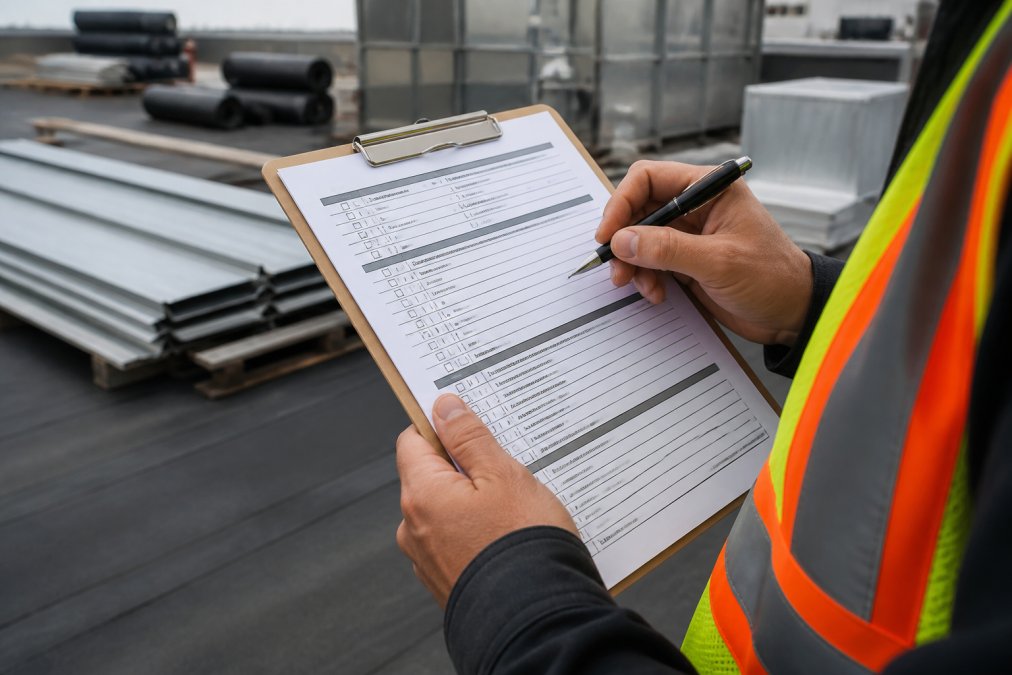
Commercial Roofing Contractor Vetting Checklist
Use this checklist to evaluate and compare contractors systematically.
| Evaluation Item | Contractor A | Contractor B | Contractor C |
|---|---|---|---|
| Valid roofing license | [ ] | [ ] | [ ] |
| General liability insurance (proof provided) | [ ] | [ ] | [ ] |
| Workers compensation insurance | [ ] | [ ] | [ ] |
| Performance bond available | [ ] | [ ] | [ ] |
| Payment bond available | [ ] | [ ] | [ ] |
| Manufacturer certifications for your roof type | [ ] | [ ] | [ ] |
| 5+ commercial references provided | [ ] | [ ] | [ ] |
| References checked and positive | [ ] | [ ] | [ ] |
| Written scope of work detailed | [ ] | [ ] | [ ] |
| Written warranty terms included | [ ] | [ ] | [ ] |
| Permit and inspection responsibility clarified | [ ] | [ ] | [ ] |
| Payment schedule defined in contract | [ ] | [ ] | [ ] |
| Timeline and weather provisions specified | [ ] | [ ] | [ ] |
| No pressure to decide immediately | [ ] | [ ] | [ ] |
| Estimate competitive but not suspiciously low | [ ] | [ ] | [ ] |
| Local business with established presence | [ ] | [ ] | [ ] |
Contractors who check all boxes are rare, but those who check most boxes and can explain any gaps are worth serious consideration.
Post-Installation Maintenance and Warranty Protection
Commercial roofs require regular maintenance to reach their full service life. A maintenance plan protects your investment and preserves warranty coverage. Before hiring a contractor, vet their post-installation support capabilities.
Evaluating Maintenance Plans and Service Capabilities
Ask the contractor: "What maintenance services do you offer after installation, and what are the costs?" Reputable commercial roofing contractors offer tiered maintenance options:
Annual inspection plans typically cost $300-$800 per visit depending on roof size. During inspections, the contractor checks for membrane damage, debris accumulation, flashing integrity, and drainage issues. Ask what's included: Do they provide a written inspection report? Do they photograph problem areas? Do they provide a prioritized list of recommended repairs?
Preventive maintenance contracts include two or more inspections per year plus seasonal tasks like gutter cleaning and debris removal. These typically run $1,200-$3,000 annually for a 10,000-20,000-square-foot roof. Ask if the contract includes emergency response and what the response time is.
Emergency repair response times matter significantly. Ask: "If a leak occurs on a weekend or holiday, what is your emergency response time, and what are the charges?" Clarify this in writing before signing a contract.
Warranty Terms and Claim Process
Manufacturer warranties are only valuable if the contractor's workmanship warranty backs them up.
Workmanship warranty duration and coverage. Ask: "What is your workmanship warranty, and what does it cover?" A reputable contractor offers 5-10 years on workmanship (nrca.net). Clarify what's covered: labor defects, installation errors, flashing failures, and water intrusion caused by improper installation. Get warranty terms in writing, including exclusions.
Warranty claim process and timeline. Ask: "If a warranty claim arises, what is your process for responding, and how quickly do you address it?" A contractor should respond to warranty claims within 48 hours of notification.
Transferability of warranty. Ask: "If my company sells this property, can the new owner transfer the warranty?" A transferable warranty is more valuable and shows the contractor stands behind their work long-term.
Coordination with manufacturer warranty. Ask: "How do you coordinate with the manufacturer if a warranty claim involves both workmanship and material defects?" An experienced contractor manages the claim on your behalf.
Documentation and Record-Keeping
Establish a documentation protocol with your contractor before the project ends. Ask them to provide:
- As-built drawings showing the installed roof system, including membrane type, thickness, flashing details, and penetration locations.
- Material certifications for all products installed, including manufacturer name, product type, and batch/lot numbers.
- Maintenance schedule and guidelines in writing, specifying inspection frequency and recommended repair procedures.
- Warranty documentation including the manufacturer's warranty certificate, the contractor's workmanship warranty, and a summary of coverage, duration, and claim procedures.
Keep these records in a dedicated file and provide copies to your insurance carrier. Insurance companies value maintenance records when assessing property risk.
Long-Term Contractor Relationship
The best commercial roofing contractors view maintenance as an ongoing partnership. During initial interviews, ask: "Will you be available for maintenance and repairs five years from now?" A contractor who commits to long-term support and tracks your roof's history is a better choice.
Ask if they maintain a customer portal or digital system where you can access inspection reports, maintenance history, and warranty documents. Modern contractors use software to track roof condition over time, helping identify patterns and plan major repairs proactively.
Document everything in writing. Verbal promises about maintenance support or warranty coverage are unenforceable.
Conclusion
Choosing the right commercial roofing contractor requires due diligence, but the effort pays dividends in quality workmanship, reliable performance, and avoided headaches. Verify licensing and insurance, ask detailed questions about experience and references, review written contracts thoroughly, and watch for red flags in estimates. Use the vetting checklist to compare candidates systematically. A contractor who is licensed, insured, bonded, certified for your roofing system, with strong references and a detailed written contract, gives your business the best chance of a successful project.
At Certified Roofing Solutions Inc., we understand the pressure of managing commercial properties and the critical importance of reliable roofing. Our experienced team is fully licensed, insured, and bonded, with certifications in TPO, metal, and commercial membrane systems. We provide detailed written contracts, comprehensive warranties, and ongoing maintenance support to keep your roof performing. Book an appointment today and let us show you the difference that expert commercial roofing service makes for your property.
Frequently Asked Questions
Q: What credentials should I look for in a commercial roofing contractor?
A: Look for a valid roofing license issued by your state, general liability insurance, and workers' compensation coverage. Ask for proof of manufacturer certifications for the specific roofing system you need, whether TPO, metal, or flat roof materials. The contractor should also be able to provide references from commercial projects completed in the past three years. A well-established contractor will have these credentials readily available.
Q: How do I verify a commercial roofer's insurance and licensing?
A: Request a copy of the contractor's roofing license and verify it with your state's licensing board. Ask for proof of current general liability and workers' compensation insurance, and contact the insurance carrier directly to confirm the policy is active. Never rely on verbal assurances. Have the contractor add your company as an additional insured on their liability policy. This protects you if someone is injured during the project. Always check that insurance amounts meet your building's requirements.
Q: What are the biggest red flags to avoid when hiring a commercial roofer?
A: Watch for contractors who quote significantly lower than others without explanation, refuse to provide references or insurance documentation, offer only verbal agreements instead of written contracts, or pressure you to pay large deposits upfront. Be cautious of contractors who cannot explain the scope of work clearly or avoid discussing warranty terms. Avoid anyone who cannot provide a detailed project timeline or who seems unfamiliar with your specific roof system type. Legitimate contractors welcome thorough vetting.
Q: How does the commercial roofing bidding process typically work?
A: Request detailed bids from at least three qualified contractors. Each bid should include a written scope of work, material specifications, labor costs broken out separately, project timeline, warranty details, and payment schedule. Compare bids carefully, the lowest price often indicates lower-quality materials or inexperienced labor. Meet with each contractor to discuss their approach, ask why their pricing differs from others, and verify they understand your roof's unique requirements. A thorough bidding process prevents surprises and ensures fair pricing.