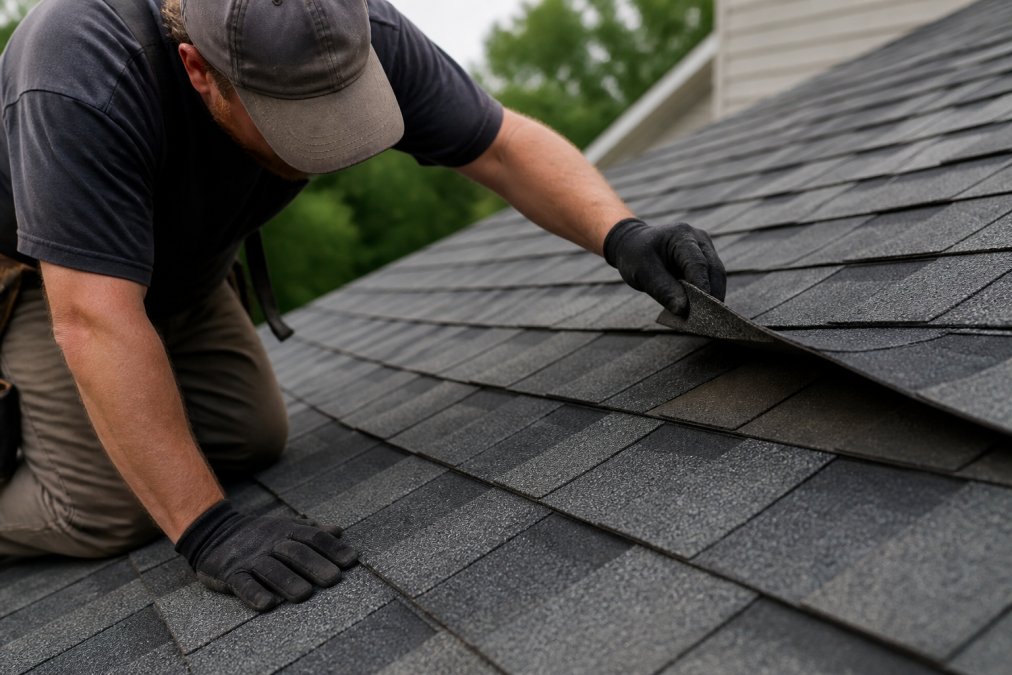
 ultimate-guide
Curling Shingles: Repair or Replace in 2026
Table of Contents
- What Causes Shingles to Curl
- How to Identify Storm Roof Damage and Curling
- DIY Roof Repair Safety Tips and Limitations
- Repair vs. Replacement: Decision Framework
- Roof Shingle Replacement Cost and Budget Planning
- Step-by-Step Professional Repair Process
- Preventing Future Shingle Damage and Roof Aging
- When to Call a Professional Roofer
- Frequently Asked Questions
Last Updated: September 3, 2026
What Causes Shingles to Curl
Thermal shock is the primary cause of shingle curling. As shingles expand during hot days and contract at night, repeated cycles over years cause material fatigue and edges to lift away from the roof deck.
Moisture buildup in inadequately ventilated attics accelerates curling significantly. Trapped warm, humid air causes underlayment and shingles to absorb moisture, weakening the adhesive bond and causing shingles to cup or claw upward at the corners and edges.
Age is another major factor. Most asphalt shingles have a design life of 20 to 25 years (astm.org). As they age, the asphalt binder hardens and becomes brittle, while granules erode away, leaving the underlying material exposed and vulnerable to curling.
Improper installation and manufacturer defects can also trigger early curling. Nails driven too high or too low, or shingles not properly seated during installation, are more susceptible to lifting.
How to Identify Storm Roof Damage and Curling
Identifying curling shingles requires systematic visual inspection. Start from the ground with binoculars if uncomfortable climbing. Look for shingles where edges or corners lift upward, creating a concave or convex appearance, often appearing darker or weathered compared to surrounding surfaces.
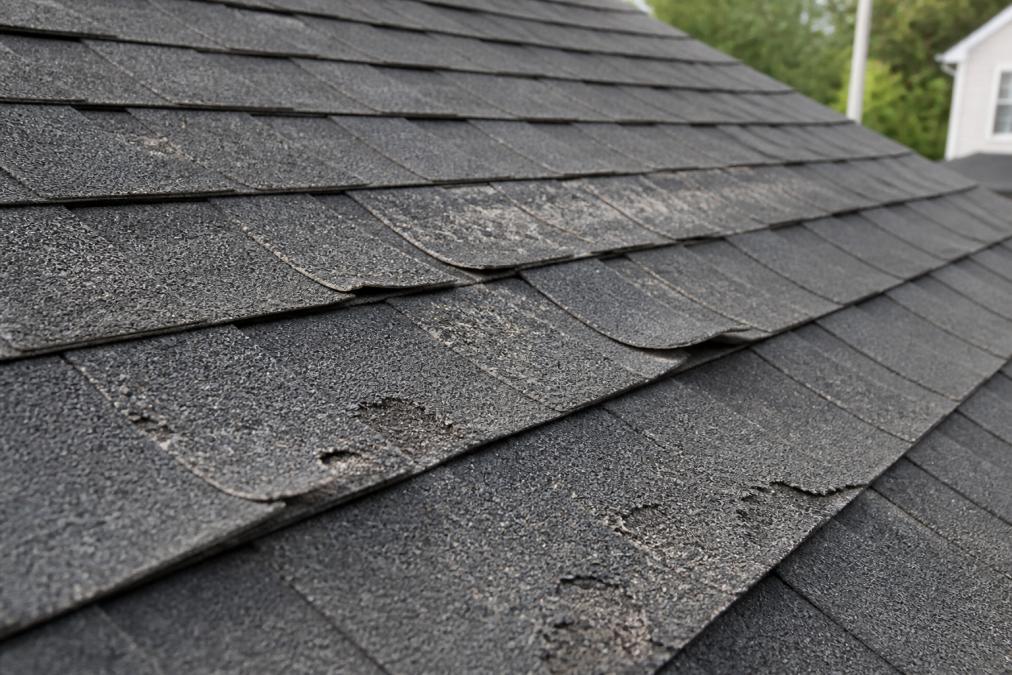
Clawing occurs when the shingle center stays flat while edges curl upward. Cupping is the opposite, with edges staying down while the center bulges upward. Both indicate moisture problems or material fatigue.
Granule loss is easy to spot. Look for smoother or lighter-colored areas, or check gutters for accumulated small, dark granules. This loss exposes asphalt to UV damage and accelerates deterioration.
Storm damage creates distinct patterns. High winds tear or completely lift shingles off the roof. Hail leaves round, dark indentations in the shingle surface. These localized damages are often easier to repair than widespread curling from age or ventilation issues.
Signs of Roof Aging vs. Localized Damage
Age-related curling typically affects multiple shingles across large areas in patterns related to sun exposure or ventilation zones, developing gradually over years. Storm damage is sudden and localized, with clearly defined areas of destruction surrounded by undamaged material.
If your roof is less than 15 years old and curling appears in only one area, storm damage is more likely. If your entire roof shows curling and granule loss, age is the primary factor.
Examine shingle tabs, the lower portion of each shingle. On aging roofs, tabs lose their adhesive seal and separate systematically. On storm-damaged roofs, tabs may be torn or missing, but separation is random.
Visual Diagnostic Checklist
Use this checklist to assess your roof condition:
- Shingle edges curl upward or downward across multiple rows
- Granules visible in gutters or missing from shingle surface
- Shingle tabs separated from underlying layer
- Flashing around vents, chimneys, or skylights shows gaps or deterioration
- Visible mold, algae, or dark streaking on roof surface
- Sagging or uneven roof line visible from ground
- Interior ceiling stains or water marks indicating active leaks
- Attic shows signs of moisture, mold, or inadequate ventilation
- Localized areas of torn, missing, or heavily damaged shingles
- Roofing cement or sealant visible on shingles (sign of previous repairs)
If you check more than three items, professional inspection is warranted.
DIY Roof Repair Safety Tips and Limitations
Falls from roofs cause thousands of injuries annually (the CDC). If you're not comfortable working at height or your roof pitch is steep, hire a professional.
If you proceed, use proper fall protection. A full-body harness anchored to a secure point is non-negotiable. Wear shoes with good grip, work during dry conditions, and never work alone.
Basic tools needed are a pry bar, roofing nails, roofing cement, a caulking gun, and a utility knife. The process is straightforward: lift the curled shingle edge carefully, apply roofing cement underneath using a caulking gun, press the shingle down firmly, drive roofing nails through the shingle tab, and seal nail heads with roofing cement.
However, DIY repair has real limitations. If curling is widespread, you're patching symptoms while the underlying problem, poor ventilation or age, continues. A repair addressing only visible damage often fails within months. If your roof has structural damage, active leaks, or extensive granule loss, DIY work won't solve the problem.
Certified Roofing Solutions Inc. recommends professional assessment before attempting repairs. A contractor can identify whether your roof needs targeted fixes or full replacement, saving you time and preventing costly mistakes.
Repair vs. Replacement: Decision Framework
The choice between repair and replacement depends on three factors: the extent of damage, the age of your roof, and the condition of the underlying structure.
When Localized Repair Makes Sense
If curling affects less than 10% of your roof and your roof is under 15 years old, repair is usually the right choice (nrca.net). Localized repairs are most effective when damage is caused by a single storm event or isolated areas of poor ventilation that can be corrected.
Repair also makes sense if you're planning to sell your home within a few years and need to address visible damage without major capital investment. The cost of localized repair is typically one-fifth to one-third the cost of full replacement.
When Full Roof Replacement Is Necessary
Replacement becomes necessary when curling affects more than 25% of the roof surface, when your roof exceeds 20 years in age, or when there's evidence of structural damage to the roof deck. If multiple repair attempts have failed or if you're seeing active leaks inside your home, replacement is the only lasting solution.
Roof Shingle Replacement Cost and Budget Planning
Roof replacement costs vary based on roof size, slope, materials chosen, and location. A professional contractor will provide a detailed estimate after measuring your roof and assessing any structural issues.
Factors That Affect Replacement Pricing
Roof size is the primary cost driver. Roof pitch matters because steeper roofs are more difficult and dangerous to work on, increasing labor costs. Complex roof designs with multiple valleys, dormers, or skylights cost more due to additional cutting, fitting, and flashing work.
Material selection significantly impacts cost. Asphalt shingles are the most affordable and common choice. Architectural shingles cost more but last longer. Metal roofing, tile, and slate are premium options with higher upfront costs but extended lifespans.
Removal and disposal of old roofing material adds cost. If the roof deck shows rot or damage, it must be replaced, increasing costs.
Insurance Coverage and Claim Viability
Many homeowners insurance policies cover roof damage from storms, hail, or wind, but typically not from age-related wear or poor maintenance. If your curling shingles resulted from a documented storm event, you may be eligible for coverage.
Filing a claim requires documentation. Take photos of the damage from multiple angles and document the date of the storm. Contact your insurance company promptly, as most policies have time limits for filing claims.
An insurance adjuster will inspect your roof and determine whether the damage is covered. If approved, the insurance company typically pays the cost of replacement minus your deductible.
Certified Roofing Solutions Inc. has experience working with insurance claims and can help document damage and communicate with adjusters. Professional assessment strengthens your claim by providing detailed evidence of the damage and its cause.
Step-by-Step Professional Repair Process
Understanding what a professional roofer does during repair helps you evaluate the work and ensures quality.
Initial Inspection and Damage Assessment
A professional inspection begins with visual assessment from the ground and, if needed, from the roof itself. The contractor documents the extent of curling, looks for signs of water intrusion, and assesses flashing, ventilation, and roof deck condition. The contractor checks your attic for moisture, mold, and ventilation adequacy, as poor ventilation often causes curling.
Removing and Replacing Damaged Shingles
For localized repair, the contractor carefully lifts the damaged shingle and any shingles above it. Roofing nails are removed using a pry bar, the damaged shingle is pulled away, and old roofing cement is scraped clean. A new shingle is positioned and secured with roofing nails driven through the shingle tab into the roof deck, then sealed with roofing cement.
For full replacement, all existing shingles are removed down to the roof deck. The deck is inspected and repaired as needed. New underlayment is installed to provide a moisture barrier. New shingles are then installed row by row, with each row overlapping the one below. Flashing around vents, chimneys, and skylights is inspected and replaced if necessary.
Sealing and Securing the Repair
Proper sealing is critical to repair longevity. Roofing cement should be applied under lifted shingles and over nail heads to create a waterproof seal. For full replacements, the underlayment serves as the primary moisture barrier, with roofing cement used at flashing transitions and roof penetrations.
Preventing Future Shingle Damage and Roof Aging
Extending your roof's life requires addressing the conditions that cause curling and deterioration.
Roof Ventilation and Attic Moisture Control
Proper ventilation is the single most important factor in roof longevity. Your attic should have intake vents (typically soffit vents under the eaves) and exhaust vents (ridge vents or gable vents at the top) that work together to create airflow removing heat and moisture.
Inadequate ventilation traps warm, humid air beneath your roof, weakening shingle adhesive, promoting granule loss, and leading to mold growth. Check that vents are clear and insulation is properly installed so it never covers soffit vents.
Gutters and downspouts also play a role. Clogged gutters allow water to back up under the roof edge, promoting rot and moisture problems. Clean gutters regularly, especially after storms and in fall.
Preventative Maintenance Schedule
Inspect your roof twice yearly, in spring and fall, looking for signs of damage or deterioration. After storms, check for new damage immediately. Keep trees trimmed back from your roof to prevent moisture trapping and debris accumulation in gutters.
Have your roof professionally inspected every five years, or annually if your roof is over 15 years old. Address flashing problems immediately, as flashing around vents, chimneys, and skylights is a common source of leaks.
When to Call a Professional Roofer
If your roof is over 20 years old and showing signs of wear, get a professional assessment before attempting repairs. Call a professional if you see signs of active leaks inside your home, as water stains indicate the problem extends beyond shingles to the underlayment or roof deck.
If curling is widespread, affecting more than 10% of your roof, professional repair is more cost-effective and reliable than DIY patching. After storms, professional inspection is worthwhile even if you don't see obvious damage, as hidden damage won't be apparent until water intrusion occurs.
If you're uncomfortable working at height or your roof pitch is steep, hire a professional. Safety is non-negotiable.
Certified Roofing Solutions Inc. offers professional roof inspection and repair services. Our team can assess your roof's condition, identify the root causes of curling or damage, and recommend the most cost-effective solution. Whether you need localized repair or full replacement, we handle the work professionally and provide clear communication throughout the process.
Curling shingles don't have to compromise your home's protection. Whether your roof needs targeted repair to address storm damage or full replacement to extend your home's life, the key is addressing the problem before water intrusion causes structural damage. Professional assessment provides clarity on the best path forward, and proper maintenance prevents future issues. Contact Certified Roofing Solutions Inc. today to book an appointment and get expert guidance on your roof's condition and repair options.
Frequently Asked Questions
Can curled shingles be repaired, or do I need a full roof replacement?
Curled shingles can often be repaired if damage is localized to a few areas and the roof is relatively young. However, if curling is widespread, affects more than 25% of the roof, or the roof is nearing the end of its lifespan, full replacement is typically more cost-effective. A professional inspection determines whether your specific situation warrants repair or replacement.
How do I identify storm roof damage on my roof?
Look for missing or cracked shingles, exposed underlayment, granule loss (dark spots in gutters), lifted shingle tabs, and dents in metal flashing. Check for water stains on interior ceilings and attic moisture. After severe weather, inspect from the ground with binoculars or hire a professional to assess damage safely. Document any visible damage with photos for insurance claims.
Does homeowners insurance cover curling shingles?
Insurance typically covers curling shingles only if caused by a covered peril like wind or hail damage. Curling from age, poor ventilation, or manufacturing defects is usually not covered. Document the damage with photos and contact your insurer promptly to report the claim. An adjuster will inspect your roof to determine coverage eligibility and approve repairs or replacement.
What safety precautions should I take if attempting DIY roof repair?
Use a secure ladder placed on level ground, wear non-slip footwear, and consider a safety harness. Never work on a wet roof or in high winds. Avoid leaning over edges, and have a helper spot you. For steep roofs or extensive damage, hire a professional, falls are a leading cause of serious injuries. Most homeowners benefit from professional assessment rather than DIY attempts.
What factors affect roof shingle replacement cost?
Replacement pricing depends on roof size, pitch, material quality (asphalt vs. architectural shingles), labor in your area, and accessibility. Additional costs arise from removing old materials, repairing structural damage, replacing underlayment, and installing new flashing. Contact us for a detailed quote based on your specific roof specifications and local conditions.
How long do asphalt shingles typically last before curling begins?
Standard asphalt shingles typically last 15-20 years, while architectural shingles may reach 20-25 years. Curling often appears in the final 5-10 years of a roof's life as UV exposure and thermal stress degrade the materials. Climate, ventilation quality, and installation method significantly affect lifespan. Proper attic ventilation and maintenance can extend shingle life.
What is the 25% rule for roof replacement decisions?
The 25% rule suggests that if damage affects more than 25% of your roof's total area, replacement is typically more economical than repair. Repairing scattered damage across a large portion of an aging roof often leads to additional problems and repeated repairs. A professional assessment determines your roof's coverage percentage and recommends the most cost-effective solution.
Can I install new shingles over old ones instead of removing them first?
Building codes and most manufacturers do not recommend installing shingles over existing ones. This practice voids warranties, hides underlying damage, adds excessive weight to the roof structure, and shortens shingle lifespan. Proper installation requires removing old materials, inspecting the roof deck, and ensuring correct underlayment before installing new shingles.