 ultimate-guide
Commercial TPO Roofing Installation Services Guide
Table of Contents
- What Is TPO Roofing and Why Commercial Properties Use It
- Benefits of Commercial TPO Roofing Installation Services
- TPO Roofing Installation: The Step-by-Step Process
- TPO Roofing Cost per Square Foot: What Drives Pricing
- TPO Roof Installation Timeline: What to Expect on Your Project
- TPO Roof Repair, Maintenance, and Warranty Protection
- How to Choose a Commercial Roofing Contractor You Can Trust
- Frequently Asked Questions
Last Updated: August 14, 2026
What Is TPO Roofing and Why Commercial Properties Use It
Thermoplastic polyolefin roofing is a single-ply membrane system engineered for flat and low-slope commercial roofs. The material combines polypropylene and ethylene-propylene rubber into a flexible, heat-weldable sheet that handles thermal cycling, UV exposure, and foot traffic. At Certified Roofing Solutions Inc., we install TPO systems regularly as property managers seek energy-efficient alternatives to older built-up roofing.
TPO delivers reflective roofing performance, strong puncture resistance, and a welded seam system that outlasts adhesive-bonded alternatives when installed correctly.
Thermoplastic Polyolefin: How the Material Works
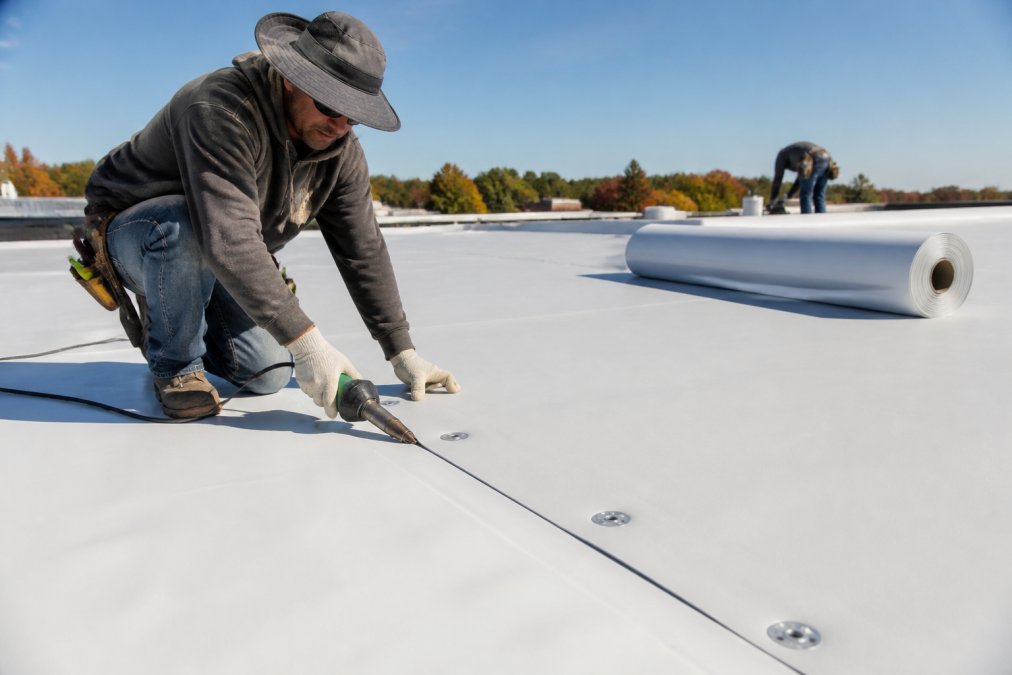
TPO membranes are manufactured in rolls, typically 10, 12, or 20 feet wide, ranging from 45 to 80 mil in thickness. Thicker membranes offer better puncture resistance and longer service life. During installation, overlapping sheets are joined using a hot-air welding gun that fuses the material into a continuous, watertight bond. The white or light-gray surface reflects solar radiation rather than absorbing it, providing the foundation for TPO's energy efficiency. The material also resists algae, mold, and chemical exposure better than many older single-ply options.
TPO vs. EPDM vs. PVC: Which Single-Ply Membrane Fits Your Roof?
The choice between TPO, EPDM, and PVC depends on budget, climate, and chemical exposure:
| Membrane | Seam Method | Reflectivity | Best For | Relative Cost |
|---|---|---|---|---|
| TPO | Heat-welded | High (white surface) | Energy efficiency, general commercial | Mid-range |
| EPDM | Adhesive/tape | Low (black surface) | Cold climates, budget installs | Lower |
| PVC | Heat-welded | High (white surface) | Chemical exposure, restaurants | Higher |
EPDM performs well in cold climates but its black surface absorbs heat, raising cooling costs. PVC handles grease and chemical runoff better than TPO, making it ideal for food-service facilities. TPO sits in the middle: better energy performance than EPDM, lower cost than PVC, and suitable for most commercial roofing applications.
Benefits of Commercial TPO Roofing Installation Services
Property managers who choose TPO make a long-term decision about energy costs, maintenance burden, and warranty protection.
Energy Efficiency, UV Resistance, and Reflective Roofing Performance
The reflective roofing surface is TPO's most marketable feature. A white TPO membrane reflects a significant portion of solar radiation back into the atmosphere rather than transferring it into the building. For commercial properties with large roof footprints, this translates to measurable reductions in cooling load during summer months. According to the ENERGY STAR program guidelines on cool roofs, reflective roofing products meeting specific solar reflectance and thermal emittance thresholds can qualify for energy-efficient building designations.
UV resistance is built into the formulation. Quality TPO membranes maintain flexibility and surface integrity across many years of direct sun exposure without cracking or chalking.
Environmental Impact and LEED Certification Considerations
TPO's environmental profile is favorable compared to older roofing systems. The material is recyclable at end of service life, and its reflective surface reduces urban heat island effect. For commercial projects pursuing LEED certification, TPO can contribute to credits under the Sustainable Sites and Energy and Atmosphere categories.
As documented in the U.S. Green Building Council's LEED rating system, cool roofing materials meeting defined solar reflectance index thresholds earn points in the Heat Island Reduction credit. Property owners should confirm membrane specifications with their roofing contractor to ensure the product meets required performance thresholds.
TPO Roofing Installation: The Step-by-Step Process
A properly executed commercial TPO roofing installation follows a defined sequence. Skipping or rushing any phase is where failures originate.
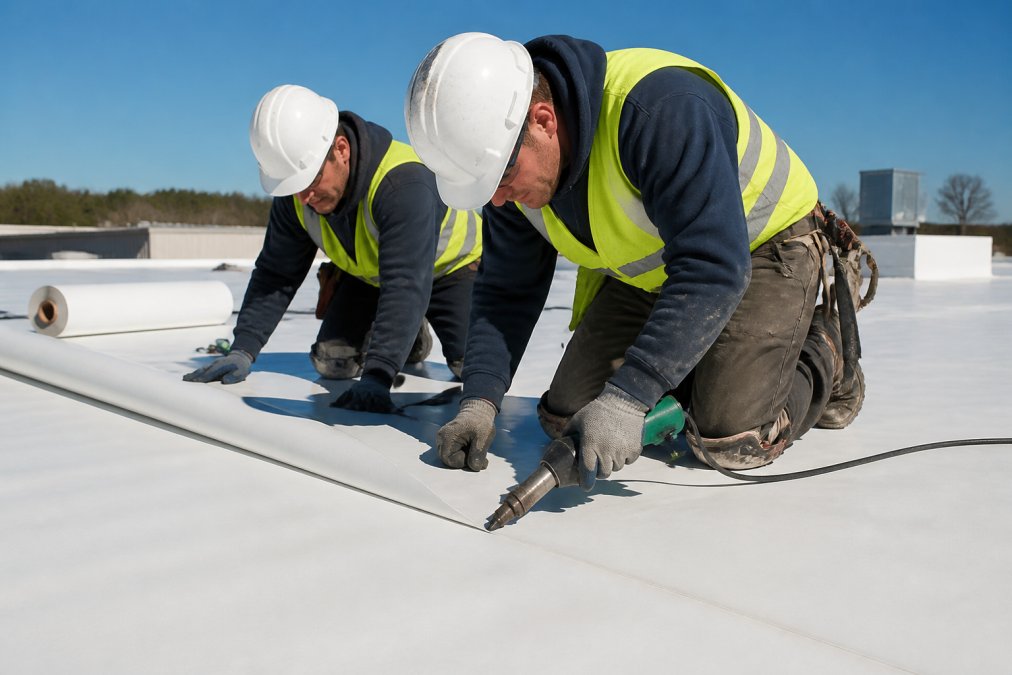
Step 1: Roof Deck Assessment and Preparation The existing roof deck is inspected for structural integrity, moisture infiltration, and surface irregularities. Any deteriorated insulation or decking is replaced before new material goes down.
Step 2: Insulation Installation Rigid roof insulation boards are fastened to the deck. Polyisocyanurate (polyiso) is the standard choice for commercial roofing because it delivers the highest R-value per inch of any commercially available rigid board insulation.
Step 3: Membrane Attachment TPO membrane is attached using one of three methods: fully adhered, mechanically attached, or ballasted. The choice depends on the building's structural load capacity, local wind uplift requirements, and budget.
Step 4: Heat-Welded Seam Bonding Overlapping membrane edges are fused using a hot-air welding gun at controlled temperatures. A properly welded seam is stronger than the membrane itself.
Step 5: Flashing and Penetration Detailing All roof penetrations, drains, HVAC curbs, and perimeter edges receive TPO flashing. These transition points are where water infiltration most commonly begins.
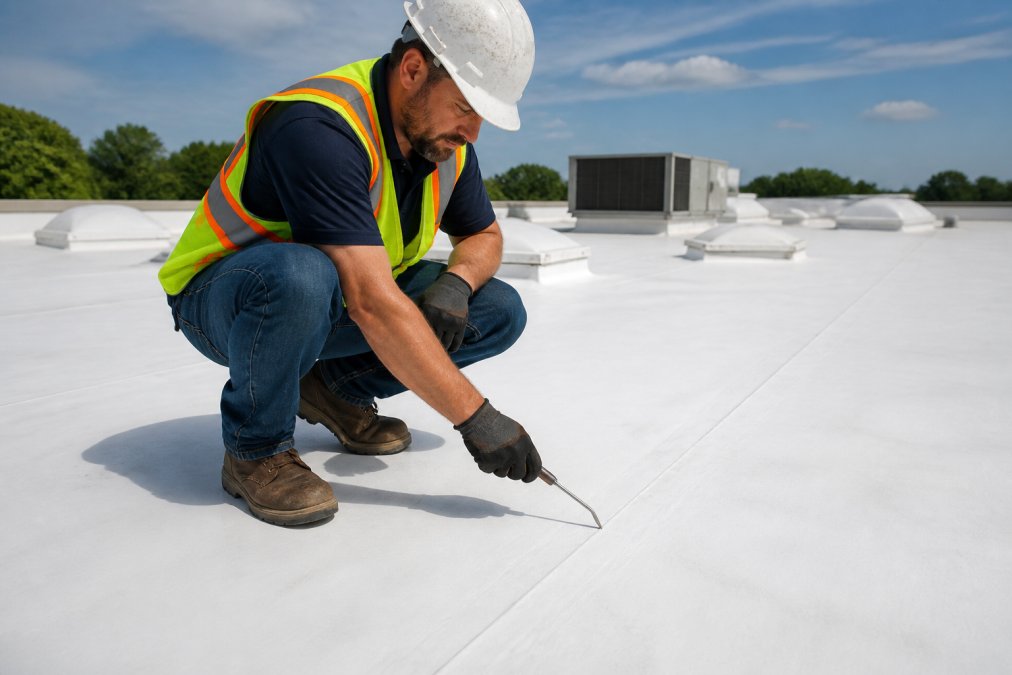
Step 6: Final Inspection Seams are probed and inspected. Drainage patterns are verified. The completed roofing system is documented for warranty registration.
Adhered, Mechanically Attached, and Ballasted Systems Explained
Fully adhered systems bond the membrane directly to the insulation using bonding adhesive. This produces the most wind-resistant installation and cleanest aesthetic, but costs more.
Mechanically attached systems use fasteners and stress plates driven through the membrane and insulation into the deck. Installation is faster and less expensive, though fastener rows can telegraph through the membrane over time.
Ballasted systems lay the membrane loose and hold it down with river stone or pavers. These are rarely specified for new commercial construction because they add significant dead load.
Common Installation Failure Modes and How Professionals Prevent Them
Most TPO failures trace back to avoidable mistakes:
- Inadequate seam welding: Too-cool or too-fast welding leaves a cold weld that separates under thermal cycling. Professionals use automated welders with temperature controls and probe every seam after installation.
- Improper flashing at penetrations: Hand-welded TPO flashing around pipes and drains requires more skill than field seams.
- Moisture trapped under insulation: Installing over wet decking or in high-humidity conditions traps moisture that degrades insulation and causes blistering.
- Insufficient fastener density: Under-fastened mechanically attached systems fail during high-wind events.
TPO Roofing Cost per Square Foot: What Drives Pricing
TPO roofing cost per square foot varies based on membrane thickness, attachment method, roof complexity, existing deck condition, and local labor rates. Thicker membranes cost more but typically carry longer warranties and better puncture resistance. Fully adhered systems cost more than mechanically attached systems due to additional labor and adhesive material. Roofs with numerous penetrations, drains, and irregular geometry take longer to flash correctly.
Tear-off and disposal of existing roofing adds cost that a straight re-cover does not. However, re-covering over a deteriorated system can void the new membrane warranty and mask ongoing moisture problems.
For accurate TPO roofing cost per square foot on a specific project, a professional roofing inspection is the only reliable starting point. Certified Roofing Solutions Inc. provides detailed roofing estimates based on actual field measurements and deck assessment. Contact us for a project-specific quote.
TPO Roof Installation Timeline: What to Expect on Your Project
The TPO roof installation timeline for a typical commercial project runs from pre-installation assessment through final inspection:
| Phase | Duration | Key Variables |
|---|---|---|
| Initial inspection and roofing estimate | 1-3 days | Roof access, existing system complexity |
| Material procurement | 1-2 weeks | Product availability, order size |
| Deck preparation and tear-off | 1-3 days | Roof size, existing system condition |
| Insulation installation | 1-2 days | Square footage, attachment method |
| Membrane installation and welding | 2-5 days | Roof size, penetration count, weather |
| Flashing and detailing | 1-2 days | Number of penetrations and transitions |
| Final inspection and warranty registration | 1 day | Contractor documentation process |
Weather is the variable that most commonly extends a TPO roof installation timeline. Membrane adhesives require minimum temperature thresholds, and wet conditions prevent proper welding. A reputable roofing contractor will build weather contingency into the project schedule rather than rushing installation in marginal conditions.
TPO Roof Repair, Maintenance, and Warranty Protection
TPO roofing systems typically carry manufacturer warranties ranging from 10 to 30 years depending on membrane thickness, installation method, and whether installation was performed by a certified contractor. Most warranties require periodic inspections and documented maintenance to remain valid.
Roof repair needs on TPO systems most commonly involve seam separation, punctures from foot traffic or falling debris, and flashing failures at penetrations. All three are repairable when caught early.
Facility Manager Maintenance Checklist
Use this checklist for semi-annual TPO roof inspections. The National Roofing Contractors Association's maintenance guidelines recommends inspections in spring and fall as a minimum standard.
Twice-Yearly Inspection Tasks:
- Inspect all seams for separation, bubbling, or discoloration
- Check all flashing at penetrations, drains, and perimeter edges for lifting or gaps
- Clear all drains and scuppers of debris to prevent ponding water
- Inspect the membrane surface for punctures, cuts, or abrasion damage
- Check HVAC curb flashings for separation at the base
- Document any areas of standing water 48 hours after rainfall
- Verify roof access hatch seals are intact
After Any Severe Weather Event:
- Inspect membrane for wind-driven debris punctures
- Check perimeter edge metal for lifted or displaced sections
- Confirm all drains are functioning and unobstructed
- Document and photograph any visible damage for insurance purposes
How to Choose a Commercial Roofing Contractor You Can Trust
The roofing contractor you hire matters more than the membrane brand you specify. A quality TPO membrane installed poorly will fail faster than an economy membrane installed correctly.
Verify actual TPO experience. Ask specifically how many commercial TPO roofing installations the contractor has completed. Residential shingle experience does not transfer to single-ply membrane work.
Check manufacturer certification. Most major TPO membrane manufacturers offer contractor certification programs. Certified installers receive training on correct installation procedures and are authorized to offer extended manufacturer warranties.
Ask about the inspection and documentation process. A professional roofing contractor documents seam probe tests, photographs the completed installation, and provides warranty registration support.
Get a written roofing estimate with line-item detail. Transparent estimates break out materials, labor, tear-off, and disposal before work starts.
Confirm they handle commercial roofing specifically. Commercial property managers need contractors who understand the operational realities of occupied buildings: phased installation, working around tenant schedules, and coordinating with building management.
Certified Roofing Solutions Inc. specializes in commercial TPO roofing installation services, serving commercial property managers who need a contractor that understands both the technical demands of single-ply membrane systems and the operational realities of managing occupied buildings. Our team provides detailed roofing inspections, transparent estimates, and documented installation processes on every project.
Frequently Asked Questions
How much does commercial TPO roofing installation cost per square foot?
TPO roofing installation costs vary based on roof size, substrate condition, attachment method (adhered, mechanically attached, or ballasted), insulation thickness, and local labor rates. Larger square footage projects typically lower the per-square-foot cost. Because every commercial roofing project has unique variables, the most reliable way to get an accurate figure is to request a detailed roofing estimate from a qualified contractor who inspects the building envelope in person before quoting.
How many days does it typically take to install a TPO roof on a commercial building?
A straightforward TPO roof installation on a mid-size commercial building generally takes three to seven business days. The TPO roof installation timeline depends on total square footage, the number of penetrations and drains, weather conditions, and whether the existing roofing materials must be torn off first. A roofing contractor should provide a written schedule before work begins so property managers can plan around any operational disruptions.
What are the primary benefits of choosing TPO over EPDM or PVC roofing?
TPO's heat-welded seams create a stronger bond than EPDM's adhesive or tape joints, reducing leak risk over time. Compared to PVC, TPO is generally more cost-effective while still offering strong UV resistance and puncture resistance. TPO's white reflective surface also performs well for energy efficiency on flat and low-slope roofing. For most commercial roofing applications, TPO balances durability, energy performance, and installation cost better than either alternative.
Can I install TPO roofing myself?
DIY TPO installation is not advisable for commercial roofing projects. Proper heat-welding of seams requires calibrated hot-air welding equipment and trained operators. Incorrect weld temperatures cause seam failures, voiding the roofing warranty and creating leak paths. Commercial roofing also involves fall protection requirements under OSHA standards. A licensed roofing contractor with documented TPO experience protects both the building envelope and the project's warranty coverage.
What should I look for when vetting commercial TPO roofing contractors?
Verify the contractor holds a valid state license and carries general liability plus workers' compensation insurance. Ask for manufacturer certification specific to TPO systems, since certified installers can offer longer roofing warranty terms. Request references from similar commercial roofing projects and ask to see completed work. Confirm the contractor provides a written scope of work, a clear timeline, and a process for handling any hidden damage discovered once installation begins, so there are no surprise costs.
Does TPO roofing require specific maintenance to keep its warranty valid?
Most TPO roofing warranties require documented periodic inspections, typically twice per year, plus prompt repair of any punctures, membrane separations, or flashing failures. Facility managers should keep drains and scuppers clear of debris, check seams after severe weather, and schedule a professional roofing inspection annually. Maintaining records of all inspections and repairs is essential; warranty claims are often denied when maintenance documentation is missing.
Commercial TPO roofing is a long-term investment, and the quality of the installation determines whether that investment pays off or becomes a recurring liability. Certified Roofing Solutions Inc. brings experienced professionals, documented installation processes, and a commitment to transparent communication to every commercial roofing project. Book an appointment today to get a detailed roofing inspection and estimate for your property.