 how-to
Commercial Roof Maintenance: A Complete Guide
Table of Contents
- Why Commercial Roof Maintenance Matters for Your Business
- Creating a Commercial Roof Inspection Checklist
- Developing a Preventative Roof Maintenance Plan
- Understanding Commercial Roof Repair Cost and ROI
- Roofing Materials and System Types
- Emergency Repair and Storm Damage Response
- Working with a Licensed Contractor and Insurance Claims
- Conclusion
- Frequently Asked Questions
Last Updated: August 26, 2026
Why Commercial Roof Maintenance Matters for Your Business
Commercial roof maintenance is the systematic inspection, cleaning, and repair of commercial roofing systems to extend their lifespan and prevent costly failures. For property managers and business owners, this isn't optional, it's the difference between a functioning building envelope and a catastrophic leak that shuts down operations.
A well-maintained commercial roof can last 20-30 years depending on materials and climate conditions (nrca.net). Neglect that same roof, and you're looking at premature replacement costs, water damage to interiors, business interruption, and potential liability issues. The math is straightforward: preventative maintenance costs far less than emergency repairs or full replacement.
At Certified Roofing Solutions Inc., we've seen firsthand what happens when businesses treat their roofs as an afterthought. The ones that schedule regular inspections and address small issues early avoid the panic calls at 2 AM when a storm tears through their TPO membrane. Below, we'll show you exactly how to build a maintenance plan that protects your asset and your bottom line.
Creating a Commercial Roof Inspection Checklist
A structured inspection checklist is your first line of defense. Without one, you're relying on luck to catch problems before they become expensive.
What to Look For During Inspections
During a roof inspection, focus on the building envelope's critical components. Check for standing water on flat roofs, this indicates drainage problems that will eventually lead to leaks. Examine all flashing around penetrations (HVAC units, vents, skylights) where water commonly enters. Look for punctures, tears, or blistering in the membrane, and inspect seams for separation or deterioration.
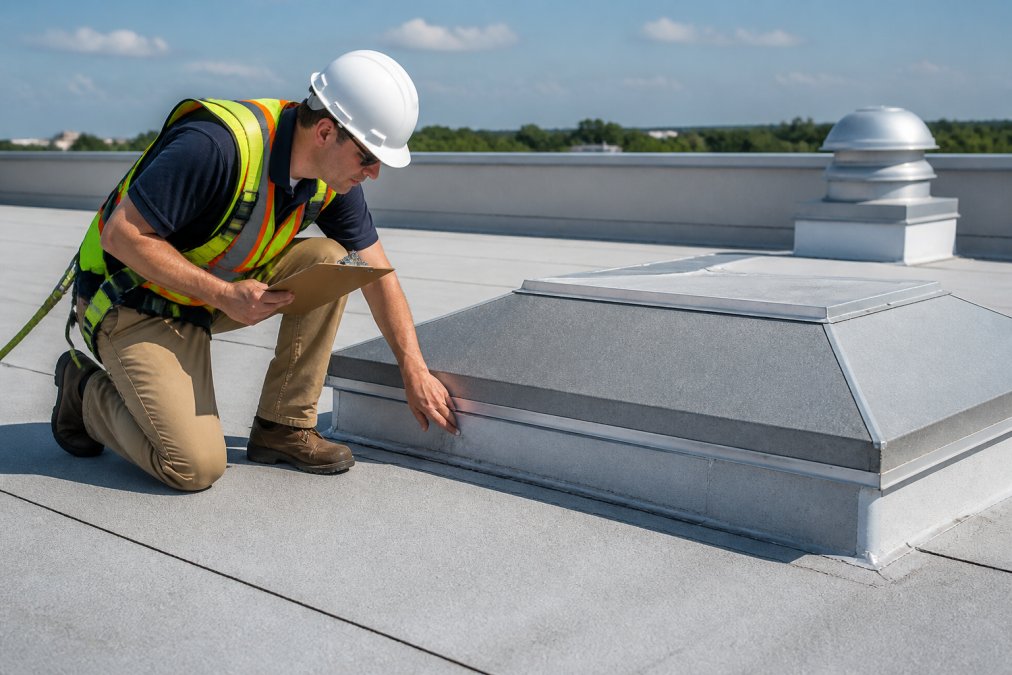
The most common mistake is missing early warning signs. A small blister in EPDM roofing or a minor seam separation in TPO roofing can expand rapidly under UV exposure and temperature cycling. What costs $500 to repair today becomes a $5,000 problem in six months. Document everything with photos and notes, this creates a maintenance record that proves due diligence if an insurance claim becomes necessary.
Check the condition of roof coatings if your system uses them. Coatings protect the underlying membrane from UV damage and extend system life significantly. If the coating is cracking, chalking, or peeling, reapplication should be prioritized in your maintenance budget.
Seasonal Inspection Priorities
Spring inspections should focus on winter damage. Check for ice dam debris, missing or damaged shingles, and compromised flashing from freeze-thaw cycles. Summer inspections prioritize membrane integrity and drainage function, heat stress can accelerate existing damage.
Fall is critical for clearing debris that clogs roof drains and gutters. Leaves, twigs, and sediment create standing water conditions that compromise the roof's structural integrity over time. Winter inspections check for ice accumulation and ensure that roof-mounted equipment hasn't shifted under snow load.
Schedule inspections at least twice yearly, spring and fall, with additional inspections after major storms (fema.gov). This frequency catches problems in their early stages when repairs are minimal and your roofing contractor can address them without disrupting operations.
Developing a Preventative Roof Maintenance Plan
A preventative roof maintenance plan is your strategic roadmap. It outlines what gets done, when it gets done, and who's responsible. Without a plan, maintenance becomes reactive, you fix things only after they fail.
Annual Maintenance Tasks
Your annual preventative roof maintenance schedule should include membrane cleaning to remove algae, mold, and debris that trap moisture. For TPO and EPDM roofing, this cleaning extends the membrane's life and prevents degradation. Metal roofing systems benefit from inspection of fastener integrity and sealant condition around seams.
Inspect and clean all roof drains, gutters, and downspouts. Standing water is the enemy of any commercial roofing system. Ensure water flows freely away from the building. For flat roofs, this is non-negotiable, poor drainage creates the conditions for leaks and structural damage.
Trim tree branches that overhang the roof. Branches that touch or scrape the membrane during wind events cause damage. Leaves that accumulate in corners and valleys create moisture traps. Vegetation management is often overlooked but prevents significant problems.
Reseal any exposed fasteners or penetrations. Sealant degrades over time under UV exposure and temperature changes. A small gap around a fastener becomes a water entry point. Resealing is inexpensive maintenance that prevents expensive leaks.
Roof Drainage and Flashing Maintenance
Flashing is where most commercial roof leaks originate. The junction between the roof membrane and vertical surfaces, walls, parapets, HVAC units, must be properly sealed and maintained. Water finds the smallest gap and exploits it.
Inspect flashing for separation from the membrane, deterioration of sealant, and rust (on metal flashing). Flashing repairs should be addressed immediately, this is not something to defer. A failed flashing seal can damage interior walls, ceilings, and equipment within weeks.
Roof drainage systems must handle the maximum rainfall your region experiences. Clean drains quarterly in climates with heavy leaf fall or pollen. Ensure downspouts direct water at least 5-6 feet away from the building foundation. Poor drainage is a leading cause of foundation problems and basement flooding in commercial properties.
Understanding Commercial Roof Repair Cost and ROI
The cost question is inevitable: should we repair or replace? Should we invest in preventative maintenance or wait until something breaks?
Cost-Benefit Analysis: Maintenance vs. Replacement
Preventative maintenance extends roof life by 5-10 years on average (peer-reviewed research). A roof that would normally need replacement at year 20 can often reach year 25-30 with proper maintenance. That extension translates directly to delayed capital expenditure.
A commercial roof replacement is a significant capital project. A typical flat roof replacement runs into five figures depending on size and material selection. A preventative maintenance program costs a fraction of that annually but requires consistent commitment. Many businesses skip maintenance to save money short-term, then face emergency replacement when the roof fails unexpectedly.
The ROI calculation is simple: compare annual maintenance costs against the cost of premature replacement. A $2,000-3,000 annual maintenance investment that extends roof life by 5 years saves far more than the cost of the program. That's not accounting for the operational disruption and liability exposure of an unexpected roof failure.
Hidden damage compounds the financial impact. Water intrusion into walls and insulation creates mold conditions that become expensive to remediate. Damaged ceiling tiles, compromised HVAC equipment, and business interruption multiply the cost of a single undetected leak.
Hidden Damage and Surprise Costs
Water damage is often invisible until it's extensive. Water can travel horizontally through wall cavities for significant distances before showing up as a stain on an interior ceiling. By the time you see evidence of a leak, the damage may be weeks or months old.
This is where regular inspections save money. Catching a small roof leak before water penetrates the building envelope prevents the cascade of secondary damage. A $500 flashing repair prevents a $15,000 interior remediation project.
Surprise costs emerge when contractors discover structural damage during repairs. A section of roof decking that looked sound from above may be compromised by hidden water damage. Addressing this requires additional work and expense. Preventative inspections and maintenance reduce these surprises by catching problems before they affect the structure.
Roofing Materials and System Types
Different commercial roofing materials have different maintenance requirements. Understanding your roof system determines what maintenance approach works best.
TPO and EPDM Roofing Maintenance
TPO (Thermoplastic Polyolefin) roofing is popular for commercial applications because it's durable and relatively low-maintenance. TPO membranes are heat-welded at seams, which creates a strong bond, but seams are still the most vulnerable point. Regular inspection of seam integrity is essential. Look for separation, bubbling, or deterioration of the weld.
TPO responds well to regular cleaning. Algae and mold can develop on the membrane surface, particularly in humid climates. Cleaning extends the membrane's life and improves drainage performance. Avoid harsh chemicals, use mild detergent and soft-bristle brushes to prevent membrane damage.
EPDM (Ethylene Propylene Diene Monomer) is a synthetic rubber membrane that's been used for decades. EPDM is durable but more vulnerable to UV degradation than TPO. Many EPDM systems benefit from protective coatings that extend membrane life significantly. If your EPDM roof is uncoated, consider coating application as a preventative maintenance investment.
EPDM seams use tape or adhesive rather than heat welding. These seams require more frequent inspection because they can separate over time. Check for bubbling, peeling, or visible gaps where water could penetrate. Resealing EPDM seams is routine maintenance that prevents leaks.
Metal Roofing and Flat Roof Systems
Metal roofing systems offer excellent durability and longevity. Maintenance focuses on fastener integrity and sealant condition. Check that fasteners haven't backed out due to thermal expansion and contraction cycles. Missing or loose fasteners are water entry points.
Inspect sealant around fasteners and seams. Metal-to-metal seams are sealed with compatible sealants that degrade over time. Resealing is routine maintenance. Rust on fasteners indicates water exposure, replace rusted fasteners immediately to prevent structural corrosion.
Flat roof systems (TPO, EPDM, or built-up roofing) depend entirely on proper drainage. Flat roofs have minimal slope, so water doesn't naturally shed. Standing water is the primary failure mechanism. Ensure all drains function and roof surface slopes toward drains. Low spots that collect water should be addressed through coating application or structural correction.
Built-up roofing (BUR), also called tar and gravel roofing, requires different maintenance. The gravel surface protects the underlying bitumen from UV degradation. If gravel is missing in patches, those areas are exposed to UV damage. Adding gravel to exposed areas extends roof life. Inspect for blistering, which indicates moisture beneath the membrane, blistering accelerates deterioration.
Emergency Repair and Storm Damage Response
Storms happen. High winds, hail, and heavy rain test roof systems beyond normal conditions. How you respond to storm damage determines whether you contain the problem or face cascading failures.
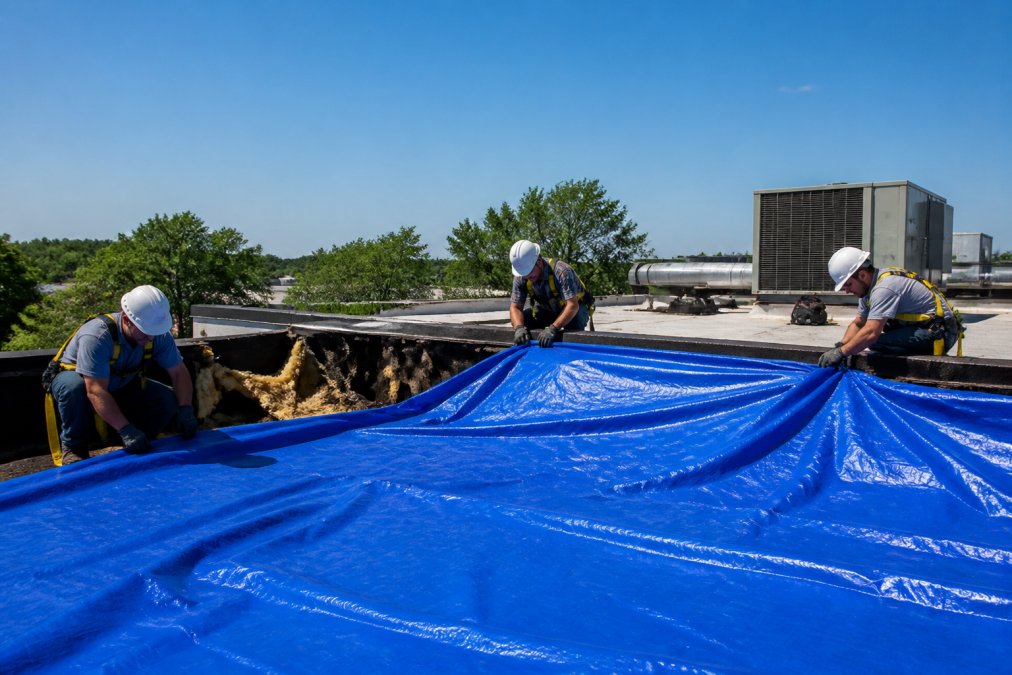
Immediate action after a storm is critical. If you suspect roof damage, contact a licensed roofing contractor immediately. Visual inspection from ground level often misses damage, a professional inspection identifies damage that would otherwise go undetected until leaks develop.
Temporary protection is sometimes necessary. Tarping damaged areas prevents water intrusion while permanent repairs are arranged. This is where having a trusted contractor relationship pays off, they can mobilize quickly to prevent interior damage.
Document all damage with photos and written notes. This documentation is essential for insurance claims. Photograph the damage from multiple angles and document the date and time. Keep records of any temporary repairs or water removal services. Insurance adjusters will want evidence of the damage and your response efforts.
Working with a Licensed Contractor and Insurance Claims
Selecting the right roofing contractor makes the difference between a successful repair and an ongoing problem. Verify licensing and insurance before work begins. A licensed contractor has demonstrated competency and is accountable to licensing authorities if standards aren't met.
Insurance is non-negotiable. Confirm that the contractor carries general liability insurance and workers' compensation. If a worker is injured on your property and the contractor lacks insurance, your business could face liability. Request a certificate of insurance and verify coverage limits are adequate.
Get detailed written estimates before work begins. The estimate should itemize materials, labor, timeline, and warranty terms. A vague estimate invites surprises. Certified Roofing Solutions Inc. provides detailed estimates that specify exactly what work will be performed and what the cost will be, no hidden charges or scope creep.
Insurance claims for storm damage require documentation and often require the insurer's approval before repairs begin. A contractor experienced with insurance claims understands the process and can facilitate communication between your insurance company and the repair team. This coordination prevents claim denials due to procedural issues.
Warranty terms vary by contractor and material. Understand what's covered and for how long. Material warranties from manufacturers typically cover defects in the product itself. Workmanship warranties cover the quality of installation and repairs. Both matter, a defective material with no labor warranty leaves you exposed if installation is flawless but the product fails.
Conclusion
Commercial roof maintenance isn't a luxury, it's essential asset protection. A strategic inspection and maintenance program extends roof life, prevents emergency repairs, and protects your building's interior from water damage. The cost of preventative maintenance is minimal compared to the cost of premature replacement or emergency repairs.
Certified Roofing Solutions Inc. provides comprehensive commercial roof inspection, maintenance planning, and repair services designed to protect your investment. Our team conducts detailed inspections, develops customized maintenance plans, and responds rapidly to emergency situations. Contact us today to schedule a free roof inspection and learn how preventative maintenance can extend your roof's life and protect your bottom line.
Frequently Asked Questions
How often should I schedule a commercial roof inspection?
Most commercial property managers should schedule roof inspections twice yearly, ideally in spring and fall, to catch seasonal damage early. After severe weather events like storms, schedule an immediate inspection to identify hidden damage before it becomes costly. A licensed contractor can evaluate your specific roofing system and recommend a tailored inspection schedule based on your roof's age, material type, and local weather patterns.
What is included in a preventative roof maintenance plan?
A comprehensive preventative roof maintenance plan includes regular inspections, debris removal from gutters and roof surfaces, flashing repairs, sealant reapplication, drainage system checks, and documentation of all work performed. The plan should outline seasonal tasks, specify inspection frequency, detail the roofing materials being maintained (TPO, EPDM, metal, or flat roof systems), and include warranty information. A licensed contractor will customize the plan to your commercial property's specific needs and building envelope requirements.
Is it better to repair or replace my commercial roof?
Repair makes sense if your roof is under 15 years old with isolated damage and the repair cost is less than 25% of replacement cost. If repairs exceed 25% of replacement cost, or if your roof is nearing the end of its life cycle (typically 15-25 years depending on material), replacement often provides better long-term value. A professional inspection can reveal hidden structural damage that tips the cost-benefit analysis toward replacement. Get a detailed estimate from a licensed contractor to compare upfront costs against future maintenance expenses.
How does the insurance claim process work for roof damage?
After storm damage, document all visible damage with photos and contact your insurance company promptly to file a claim. A licensed roofing contractor can assess the damage, provide a detailed repair estimate, and often work directly with your insurer during the claims process. Having a contractor who understands local building codes and permits helps ensure the claim covers all necessary work. Be transparent about pre-existing damage versus new storm damage to avoid claim denial, and ask your contractor to identify any hidden damage that may not be immediately visible but is covered under your policy.