 how-to
Avoiding Hidden Roofing Repair Costs: A Homeowner's Guide
Table of Contents
- Why Hidden Roofing Costs Spiral Out of Control
- What Is Covered Under Storm Damage Roof Insurance
- Common Hidden Costs Contractors Don't Mention Upfront
- How to Read a Roofing Estimate and Spot Missing Items
- Questions to Ask a Roofing Contractor Before Hiring
- Preventive Maintenance vs. Emergency Repairs: The Cost Difference
- Protecting Your Investment: Warranty and Insurance Considerations
- Conclusion
- Frequently Asked Questions
Last Updated: August 17, 2026
Why Hidden Roofing Costs Spiral Out of Control
Homeowners often discover that avoiding hidden roofing repair costs requires more than a quote and contract. A contractor inspects visible damage, provides an estimate, and you approve the work. Then mid-repair, they uncover structural issues, water damage, or deteriorated flashing that wasn't apparent initially. Suddenly, your bill doubles.
This happens because most contractors quote only what they can see from the ground or a quick roof scan. At Certified Roofing Solutions Inc., we've found that the gap between initial estimates and final invoices stems from three sources: incomplete initial inspections, vague estimate language, and homeowner misunderstandings about insurance coverage.
A small leak ignored for six months becomes water infiltration that damages attic insulation, wood framing, and creates mold remediation costs that dwarf the original repair. Understanding what drives these hidden costs upfront is the only way to protect your budget and your home.
What Is Covered Under Storm Damage Roof Insurance
Storm damage roof insurance coverage depends entirely on your policy language and damage type. Most homeowners insurance policies cover sudden, accidental damage from storms, wind, hail, and lightning strikes, but NOT damage from lack of maintenance or gradual deterioration.
Your policy typically covers repairs to restore your roof to its pre-storm condition. However, the insurance adjuster's determination of what's "storm-related" versus "pre-existing" directly affects your payout. If they find your roof was already failing due to age or poor maintenance, they may deny coverage for portions of the repair.
Deductibles apply to storm damage claims. A typical residential deductible ranges from $500 to $2,500, though some policies use a percentage of your home's insured value (1-5%) instead. If your repair costs $8,000 and your deductible is $1,500, you pay $1,500 and insurance covers $6,500.
Insurance typically covers only repairs, not full roof replacement. If your roof is 15 years old and a storm damages 30% of it, insurance may pay to repair that section but won't fund a full replacement. Preventive maintenance prevents the scenario where a storm damage claim becomes an insurance dispute over what's "necessary."
Common Hidden Costs Contractors Don't Mention Upfront
Structural damage discovered during repairs
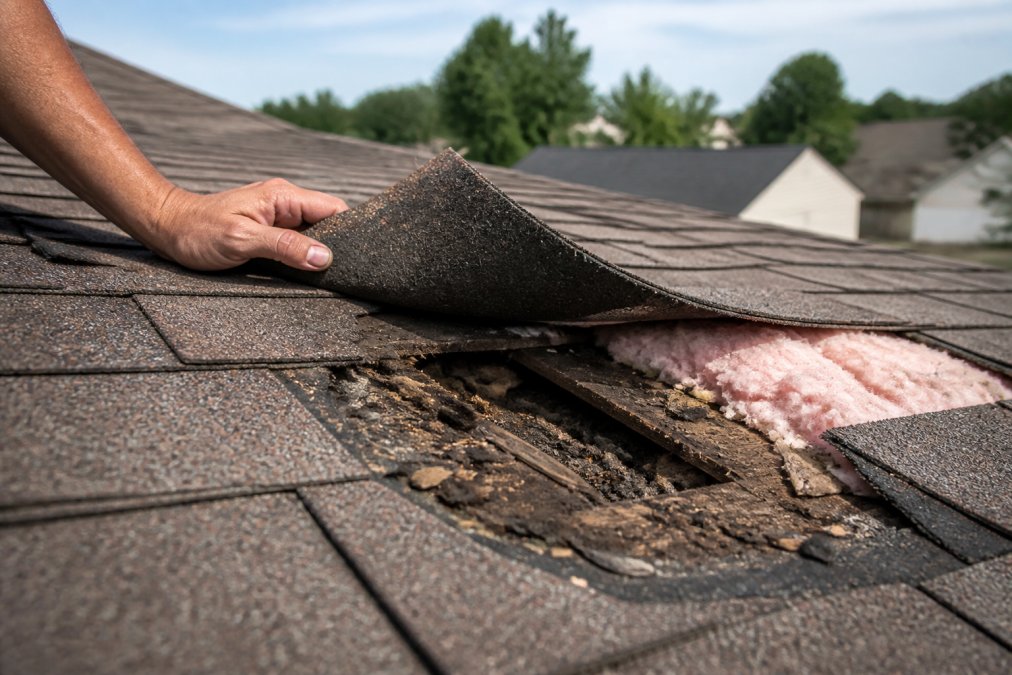
Once a contractor removes damaged shingles, they can see what's underneath. Decking, the wooden layer beneath shingles, may be rotted, warped, or water-damaged. If compromised, it must be replaced before new shingles go down. Roof trusses or rafters may show water damage or pest damage once exposed. Termites, carpenter ants, or roof rats can hollow out structural members over years without obvious exterior signs. Repairing or replacing structural elements costs $2,000 to $10,000 depending on extent and is rarely mentioned in initial estimates because contractors genuinely couldn't see it beforehand.
A small leak ignored for two years can cause structural damage that costs five times the original repair. Homeowners who catch problems early through roof inspections avoid this trap entirely.
Moisture damage and mold remediation
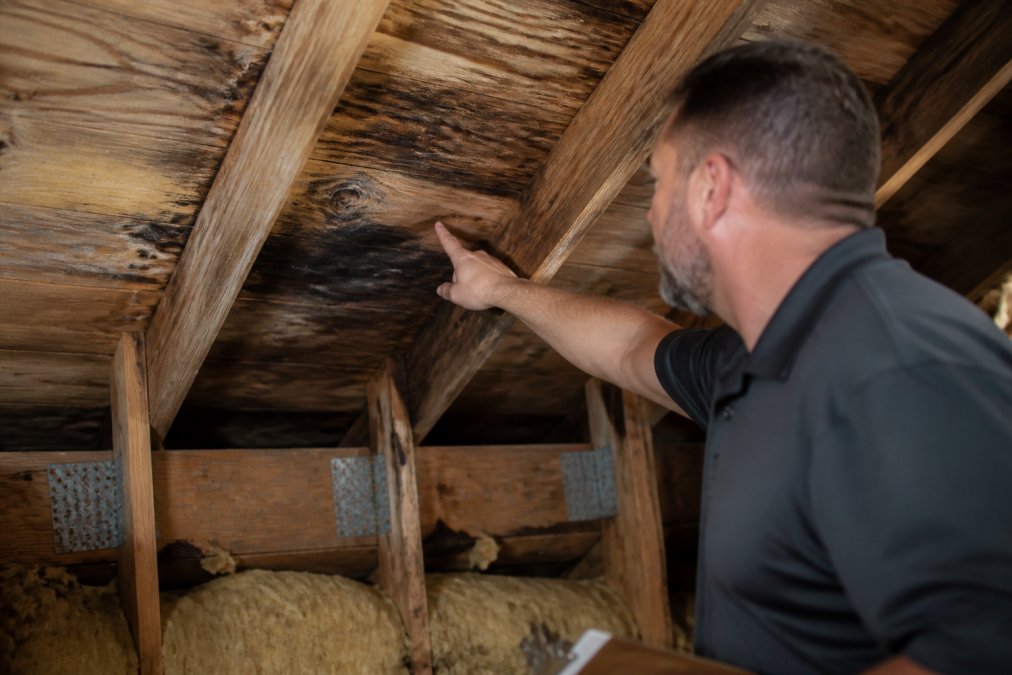
Water infiltration from roof leaks soaks into insulation, drywall, and wooden framing. Over time, this creates conditions for mold growth. When a contractor finds mold in the attic, they must refer you to a mold remediation specialist. Mold remediation is not part of roofing work but is often discovered during roof repairs, and homeowners are shocked to learn they need another $1,500 to $5,000 for mold testing, containment, and removal before the roof repair can be completed.
Damaged insulation also requires replacement. Wet insulation loses its R-value. A contractor may quote roof repair at $6,000, but once they start work, they discover 40% of the attic insulation is saturated. Replacing that insulation adds $1,200 to $2,000 to your bill.
Underlayment and flashing replacement
Underlayment is the barrier between your roof deck and shingles. Over time, it becomes brittle, cracks, or separates from the deck. Roofers often don't replace underlayment unless visibly damaged, but if they find deterioration during repairs, replacement is necessary for proper function.
Flashing, the metal strips that seal joints where the roof meets chimneys, vents, skylights, and walls, also deteriorates. Corroded or loose flashing is a primary source of leaks. A contractor may quote only shingle replacement, but once on the roof, they find flashing needs replacement too. Quality flashing replacement adds $500 to $2,000 depending on how many penetrations your roof has.
How to Read a Roofing Estimate and Spot Missing Items
A detailed roofing estimate should break down labor, materials, and scope clearly. The best estimates include line items for shingles (with brand and grade specified), underlayment, flashing, labor hours, disposal of old materials, and any additional work like deck repair or ventilation improvements.
Look for these specific items in any estimate:
- Shingle specifications: Brand, style, and warranty should be named. "Architectural shingles" is too vague; you need "GAF Timberline HD in Charcoal."
- Underlayment: Should specify type (synthetic, felt, etc.) and whether it's included.
- Flashing: Should list what flashing is included (roof-to-wall, chimney, vents, etc.) or note that flashing is assessed on-site.
- Labor: Should specify whether labor includes debris removal and cleanup.
- Permits and inspections: Should note if permits are included and who handles inspection fees.
- Warranty: Should detail what's covered, materials, workmanship, and duration.
- Contingency clause: Should state how additional costs are handled if damage is discovered during work.
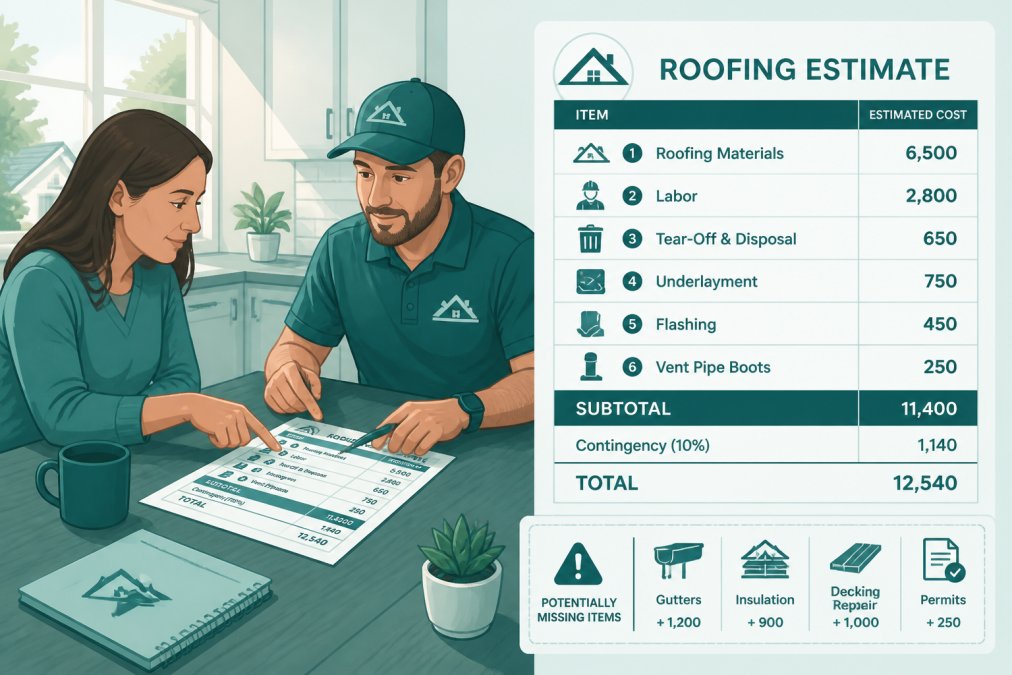
Red flags include vague language like "roof repair as needed," no material breakdown, no mention of what happens if hidden damage is found, and no warranty details. Unusually low estimates should prompt you to ask what's being left out.
The contingency clause is critical. A good estimate includes language like: "If structural damage or water damage is discovered during repair, we will notify you with a detailed scope and cost before proceeding." This prevents you from being blindsided by charges.
Questions to Ask a Roofing Contractor Before Hiring
Before signing any contract, ask these questions:
-
What is your inspection process? Do they spend 30 minutes or 2 hours? Do they go into the attic? Do they use thermal imaging or drones? A thorough inspection catches problems upfront.
-
What happens if you find damage I didn't know about? How will they notify you? Will they provide a written estimate for additional work before proceeding?
-
Are permits included? Who pulls them? Who pays inspection fees? Building permits typically cost $200-$500.
-
What warranty do you offer on labor and materials? Reputable contractors offer at least a 5-year labor warranty and pass through manufacturer warranties on shingles (often 25-30 years).
-
How do you handle disposal of old roofing materials? Some contractors include this; others charge extra. Disposal can cost $500-$1,500.
-
Will you help with the insurance claim? Will they work with your adjuster? Will they document damage with photos and detailed reports?
-
What is your payment schedule? Legitimate contractors don't demand full payment upfront. A typical schedule is 50% deposit, 50% on completion.
-
Are you licensed and insured? Verify this independently. Ask for proof of liability insurance and workers' compensation.
Preventive Maintenance vs. Emergency Repairs: The Cost Difference
Preventive maintenance is roof inspections and minor repairs performed regularly to catch problems before they become expensive. This might include clearing debris from gutters, replacing damaged shingles, resealing flashing, or repairing minor leaks. Done annually or biannually, preventive maintenance typically costs $300-$800 per year.
Emergency repairs happen when you ignore problems until they become critical. A small leak becomes large. Damaged shingles multiply. Water infiltration spreads. By the time you call a contractor, you need structural repairs, mold remediation, and possibly roof replacement. Emergency repairs often cost 3-5 times more than preventive work would have.
Consider this scenario: A homeowner notices a few curling shingles and a small leak in the attic during spring. Preventive maintenance would address this with targeted shingle replacement and flashing repair, costing around $1,200. Instead, they ignore it. By fall, water damage has spread to the attic insulation and framing. Now the repair requires decking replacement, structural repair, mold remediation, and full shingle replacement, costing around $8,000.
Roof inspections are the foundation of preventive maintenance. A professional inspection identifies issues like missing or damaged shingles, deteriorated flashing, poor ventilation, and early signs of water infiltration. Inspections typically cost $150-$300 and often prevent thousands in damage.
Many roofing warranties require annual maintenance inspections. If you skip inspections and later file a claim, the manufacturer may deny it because you failed to maintain the roof per warranty terms. Preventive maintenance protects both your roof and your warranty coverage.
Protecting Your Investment: Warranty and Insurance Considerations
Your roofing investment is protected by two mechanisms: the manufacturer's warranty on materials and the contractor's warranty on labor.
Manufacturer warranties on shingles typically range from 20 to 50 years depending on shingle grade. These warranties cover defects in the product but often require proof that the roof was installed correctly and maintained per warranty terms. If you don't perform preventive maintenance or if improper installation is discovered, the manufacturer can void coverage.
Contractor warranties on labor typically range from 2 to 10 years. This covers workmanship defects, improper installation, flashing that wasn't sealed correctly, or inadequate ventilation. A 5-year labor warranty is standard for quality contractors.
After storm damage, you file a claim, the adjuster inspects, and they determine what's covered. If the adjuster finds pre-existing damage or poor maintenance, they may deny portions of your claim or reduce your payout. Documentation helps: photos of regular maintenance, receipts for previous repairs, and records of inspections all support your claim.
Some contractors specialize in working with insurance adjusters. They'll prepare detailed damage assessments, take photos, and communicate directly with the insurance company. This speeds the claims process and often results in higher payouts. When hiring a contractor after storm damage, prioritize this capability.
If your roof warranty was voided due to lack of maintenance, your insurance claim may also be denied or reduced. The insurance company can argue that the damage was preventable with proper maintenance. This is why preventive maintenance protects both your warranty and your insurance coverage.
Conclusion
Hidden roofing repair costs exist because most homeowners and even some contractors don't account for what gets discovered once work begins. Structural damage, water infiltration, mold, and deteriorated underlayment are invisible until the roof is open. The solution is threefold: get a detailed inspection upfront, hire a contractor who includes a contingency clause in their estimate, and perform preventive maintenance to catch problems before they compound.
At Certified Roofing Solutions Inc., we help homeowners navigate this complexity with thorough inspections, detailed estimates that account for likely discoveries, and transparent communication about what's covered by insurance. We assist with claims documentation and work directly with adjusters to maximize your coverage. If you're facing roof damage or need preventive maintenance to protect your investment, book an appointment today to get a comprehensive assessment and clear estimate.
Frequently Asked Questions
What are the common hidden costs in a roof repair estimate?
Hidden costs often emerge once work begins. Structural damage like rotted decking, water infiltration affecting underlayment, mold remediation, flashing replacement, and attic ventilation issues frequently aren't visible in initial inspections. Material-specific costs also vary: asphalt shingles may conceal damage to the substrate, while metal roofing repairs might require specialized fasteners or sealants. Always request a contingency line item (typically 10-15% of the total estimate) and ask your contractor to clarify what happens if additional damage is discovered during the project.
How do I know if a roofing quote is missing essential items?
A complete estimate should itemize labor, materials, permits, debris removal, underlayment replacement, flashing work, and attic ventilation assessment. It should specify the roofing material by name and grade, warranty terms, and a breakdown of costs by section. Missing elements like flashing inspection, water infiltration assessment, or structural integrity checks are red flags. Compare multiple estimates line-by-line; significant price differences usually indicate one contractor is omitting necessary work rather than offering a better deal.
What is covered under storm damage roof insurance?
Most homeowners insurance policies cover sudden, accidental damage from hail, wind, and fallen trees, but exclude wear and tear or gradual deterioration. Deductibles typically range from $250 to $1,000 or higher. Coverage depends on your policy's replacement cost value versus actual cash value. Water infiltration damage is covered if caused by the storm event itself, but mold remediation may require additional coverage. Document damage with photos immediately, and request your contractor provide detailed damage assessment and repair estimates to support your claim.
Why does roof repair cost increase once work begins?
Once roofers remove damaged shingles or sections, hidden damage becomes visible: rotted decking, compromised underlayment, pest infestation, or structural issues that weren't apparent from ground level or initial inspection. Material prices may also shift if contractors discover the roof requires more coverage area than estimated. This is why reputable contractors include contingency clauses and communicate immediately when additional work is needed. Request a change order process upfront so you approve costs before work proceeds beyond the initial scope.