 ultimate-guide
What Is a Commercial Roof Warranty? 2026 Guide
Table of Contents
- What Is a Commercial Roof Warranty and What Does It Actually Cover?
- Manufacturer vs. Contractor Warranties: Two Different Contracts
- What's Covered: Materials, Labor, and Leak Coverage
- Common Exclusions and Limitation Clauses
- Commercial Roof Warranty Types: NDL, Pro-Rated, and Single-Source
- How Long Do Commercial Roof Warranties Last?
- Commercial Roof Maintenance Requirements to Keep Coverage Valid
- How to File a Commercial Roof Warranty Claim
- Warranty Transferability and Insurance vs. Warranty: What Property Owners Miss
- Frequently Asked Questions
Last Updated: September 16, 2026
What Is a Commercial Roof Warranty and What Does It Actually Cover?
A commercial roof warranty is a written contractual obligation in which a manufacturer or contractor agrees to repair or replace defective roofing system components within a defined period. It is not a maintenance plan, and it is not insurance. At Certified Roofing Solutions Inc., we walk property managers through these documents every week, and the confusion almost always starts with that distinction.
Manufacturer vs. Contractor Warranties: Two Different Contracts
Manufacturer warranties cover materials. Contractor warranties cover workmanship. Property owners routinely assume one document covers both, which is why so many claims fail at the first review.
| Warranty Type | Covers | Typically Issued By | Common Duration |
|---|---|---|---|
| Manufacturer material | Defective membrane, flashing, insulation | Roof system maker | 10-30 years |
| Contractor workmanship | Installation error, seam failure | Installing contractor | 1-10 years |
| Single-source (NDL) | Materials and labor together | Manufacturer (via certified contractor) | 10-30 years |
What's Covered: Materials, Labor, and Leak Coverage
Standard coverage varies widely, but most commercial roof warranties address four categories: the roof membrane, flashing and edge metal, thermal insulation, and the labor to perform remedial repairs. Leak coverage is where the language gets slippery.
Common Exclusions and Limitation Clauses
Exclusion clauses are where warranties quietly narrow. Typical exclusions include:
- Damage from hail, wind above the rated threshold, or lightning
- Foot traffic, dropped tools, or damage from other contractors
- Ponding water caused by structural deflection or blocked drains
- Alterations made without manufacturer approval
- Failure to perform required preventative maintenance
- Building settlement or substrate movement
Commercial Roof Warranty Types: NDL, Pro-Rated, and Single-Source
The three commercial roof warranty types differ mainly in who pays for labor and how the payout declines over time. Most guides stop there. The part that actually determines your financial exposure is the proration schedule buried in the contract.
How Proration Schedules Actually Work
A proration schedule is a table that assigns a coverage percentage to each year of the warranty term. Two schedules with the same 20-year term can produce wildly different outcomes.
- Straight-line proration: coverage declines by equal increments. On a 20-year term, year 10 carries roughly 50% coverage, year 15 roughly 25%, year 19 roughly 5%.
- Front-loaded proration: coverage drops sharply in the early years and then flattens. A schedule might fall to 40% by year five and 10% by year ten, leaving almost nothing for the back half of the term.
- Non-prorated (NDL): coverage stays at 100% for the full term. This is the structure that justifies the higher upfront price.
Matching the Warranty Type to the Building
NDL coverage tends to make sense on high-value roofs where a mid-term failure would be a capital event, large distribution centers, medical facilities, and buildings where a leak would disrupt operations. Pro-rated coverage can be a reasonable fit for shorter-hold properties or roofs approaching the end of their service life, provided the owner understands the declining payout. Single-source coverage is worth pursuing whenever multiple trades touch the roof assembly, because it removes the coordination risk that otherwise lands on the owner.
How Long Do Commercial Roof Warranties Last?
Terms typically run 10, 15, 20, or 30 years, depending on the roof membrane and warranty tier. A single-ply TPO or EPDM system might carry a 20-year NDL warranty, while a metal roof assembly may offer a longer term on the finish but a shorter one on weathertightness.
Proration Schedules and What They Mean for You
A proration schedule defines how the manufacturer's liability declines over the warranty term. A simple schedule might reduce coverage by equal increments each year. A more aggressive one front-loads the reduction, so coverage drops sharply in the first five years.
Commercial Roof Maintenance Requirements to Keep Coverage Valid
Every commercial roof warranty carries maintenance requirements, and failing them voids coverage. Most require documented inspections at least once or twice per year, prompt repair of any damage, and keeping drains and gutters clear.
The Role of Maintenance Logs and Inspection Records
A maintenance log is your proof of compliance. It should record the date of each inspection, who performed it, what was found, and what was repaired. Photographs of the roof at each inspection add weight.
How to File a Commercial Roof Warranty Claim
Filing a claim starts with documentation, not a phone call. Gather your warranty certificate, maintenance logs, and photographs of the problem before you contact anyone.
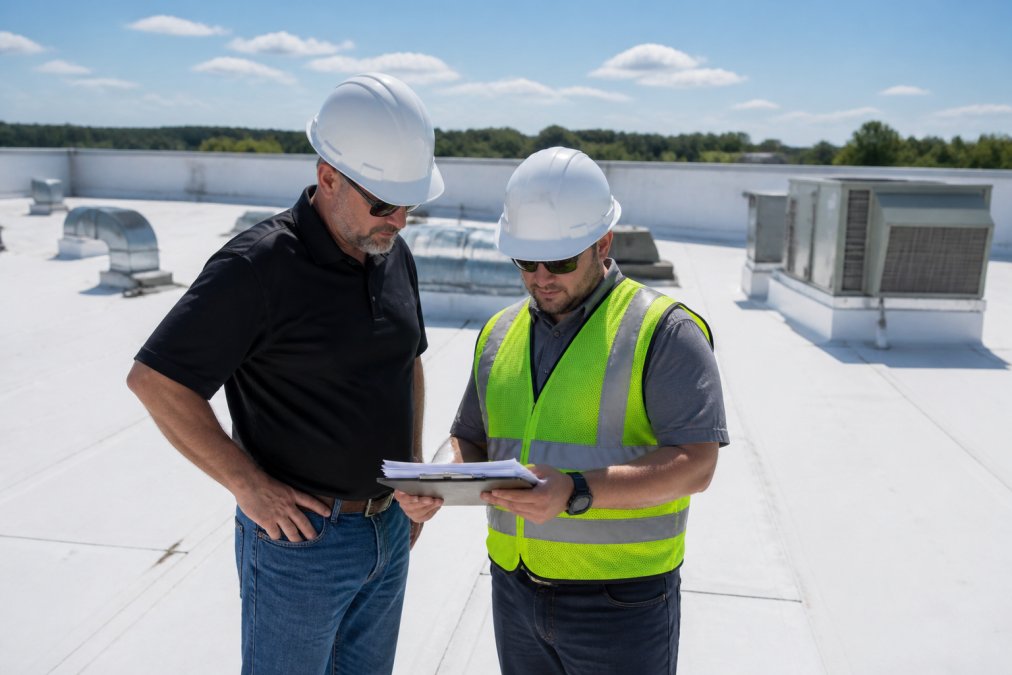
Follow these steps:
- Confirm the warranty is still active and maintenance requirements were met
- Photograph the leak or damage from multiple angles, including surrounding roof area
- Contact the warranting party in writing, not just by phone
- Request a written inspection report and claim reference number
- Keep every email and document in one file
What to Document Before You Call
Before any claim call, assemble: the original warranty certificate, the installation date and contractor certification, all maintenance and inspection records, dated photographs, and a written description of when the problem first appeared. A claim with this package moves faster and is far harder to deny on procedural grounds.
Warranty Transferability and Insurance vs. Warranty: What Property Owners Miss
Warranty transferability lets a new owner inherit the remaining coverage when a building sells, but only if the transfer is executed correctly. This is the single most overlooked warranty issue in commercial real estate transactions, and it is where coverage quietly dies.
How Transferability Works in Practice
Most manufacturer warranties are written to the original building owner, not to the roof. When the property changes hands, the warranty does not automatically follow. The typical requirements are:
- Written notice to the manufacturer within a set window, often 30 to 60 days of the sale. Some manufacturers allow longer; some require notice before closing.
- A transfer fee, which varies by manufacturer and warranty tier. It is usually modest relative to the coverage value, but it must be paid.
- Proof of maintenance, meaning the inspection logs and repair records for the life of the roof. This is where most transfers fail.
- Confirmation that the roof was installed by a certified contractor and that no unapproved alterations were made.
What Buyers and Sellers Should Do at Closing
Sellers should assemble the warranty certificate, the transfer form, the maintenance log, and the installation documentation before the property is listed. Buyers should make the warranty transfer a condition of closing, with the transfer confirmation in hand before funds move. A warranty that is "transferable" on paper but never actually transferred is worth nothing to the new owner.
Insurance vs. Warranty: Two Different Contracts, Two Different Triggers
Insurance and warranty are not interchangeable, and confusing them is the second thing property owners get wrong. The distinction is legal, not semantic.
- Property insurance responds to sudden, accidental events: hail, wind, fire, vandalism, and similar perils. It is a risk-transfer contract, and the trigger is an event.
- A manufacturer's warranty responds to defects in materials or workmanship. It is a contractual obligation from the manufacturer, and the trigger is a defect, not an event.
Frequently Asked Questions
What does a 20-year roof warranty cover?
A 20-year commercial roof warranty typically covers manufacturing defects in the roof membrane, flashing, and other system components. Most full-system warranties include labor and materials for approved repairs. Leak coverage depends on the warranty tier: NDL (no dollar limit) covers repair costs entirely, while pro-rated warranties reduce the manufacturer's share each year. Storm damage, installation error, and neglect are usually excluded.
How often should a commercial roof be inspected to maintain warranty compliance?
Most manufacturers require at least one professional inspection per year, and some specify twice yearly. Commercial roof maintenance requirements also include keeping gutters and drains clear, documenting repairs, and using certified contractors for any work on the roof assembly. Missing an inspection or using an uncertified roofer can void your commercial roof warranty entirely.
What is the difference between a manufacturer warranty and a contractor workmanship guarantee?
A manufacturer warranty covers defects in the materials they produced, such as membrane flaws or adhesive failures. A contractor workmanship guarantee covers installation error: improper seam welds, wrong fasteners, or poor flashing details. Both matter. A single-source warranty combines them so you have one point of contact, which simplifies claims and eliminates finger-pointing between parties.
Does a commercial roof warranty cover leaks caused by severe weather?
No. Standard commercial roof warranties exclude damage from hail, wind above specified speeds, hurricanes, and other weather events. Those losses fall under your property insurance policy. This is why understanding insurance vs. warranty is critical: the warranty handles defects, the insurance handles sudden damage. If a leak starts at a seam that was already failing, that may be a warranty issue even if a storm made it worse.
How can I determine if my existing roof is still under warranty?
Check your building's closing documents, contractor files, or the original installation paperwork for a warranty registration number. You can also contact the manufacturer directly with the building address and approximate installation date. If the warranty was transferred when you bought the property, there should be a transfer record. Without documentation, manufacturers may deny coverage even if the roof is within the warranty period.
Are commercial roof warranties worth the investment?
They are worth it when the warranty includes labor and materials, has a clear proration schedule, and the installer follows manufacturer specifications. A warranty with too many exclusion clauses or a short NDL period offers limited protection. The real value comes from combining a solid warranty with a preventative maintenance plan, because most claims are denied due to poor maintenance records, not because the defect was invalid.